
Whole House Surge Protector Cost and Benefits for Homeowners
Whole house surge protector installation cost and benefits explained: protect appliances and electronics. Call (833)-439-3727 for trusted local electricians.

By Alice Miller
Learn more about Circuit Breaker Panel or Fuse Box Installation for guides, costs, and what to expect.
Compare Circuit Breaker Panel or Fuse Box Installation Pros Near You

Enter your ZIP code to compare top-rated local professionals and request free quotes.
Your home is packed with sensitive electronics: the refrigerator, the HVAC system, the washing machine, the router, the smart TV, and the phone charger on your nightstand. Each one is a small investment that adds up to thousands of dollars. When a power surge rolls through your neighborhood, it does not care about brand names or warranties. It simply overwhelms circuits and fries whatever is in its path. A whole house surge protector is the first line of defense, and understanding the installation cost and benefits helps you decide whether it belongs in your electrical panel.
This guide breaks down what a whole house surge protector actually does, how it differs from the power strip under your desk, what installation involves, and what you can expect to pay. You will also learn which surge events it protects against, which ones it cannot stop, and how to pair it with other protective measures for smart-home and HVAC equipment. By the end, you will have a clear picture of whether this upgrade is worth the money for your household.
Whole House Surge Protector vs Power Strips: What Is the Difference?
A power strip with surge protection is a point-of-use device. It sits between one outlet and a few devices, and it absorbs excess voltage before it reaches those specific items. That is useful for a computer or a television, but it does nothing for the wiring behind your walls. A whole house surge protector is installed at the main electrical panel, where power enters the home. It clamps voltage spikes at the source and protects every circuit in the house, including the outlets you cannot see and the hardwired equipment you rarely think about.
The difference matters because most surge damage does not happen through a single outlet. It happens through the electrical panel. A lightning strike miles away, a utility grid switching event, or a large appliance cycling on and off can send a pulse through the service entrance. Point-of-use strips may catch a small fraction of that energy, but they are not designed to handle the full force of a whole-home event. A panel-mounted protector is. It is also a one-time installation that protects dozens of devices at once, rather than requiring you to buy a strip for every room.
Think of it this way: a power strip is a seatbelt for one passenger, while a whole house surge protector is the reinforced frame around the entire vehicle. You still want seatbelts, but the frame is what keeps the whole structure intact. Many homeowners use both: a panel-mounted protector as the primary defense and point-of-use strips for especially sensitive electronics like computers and home theater systems.
How Whole House Surge Protector Installation Works
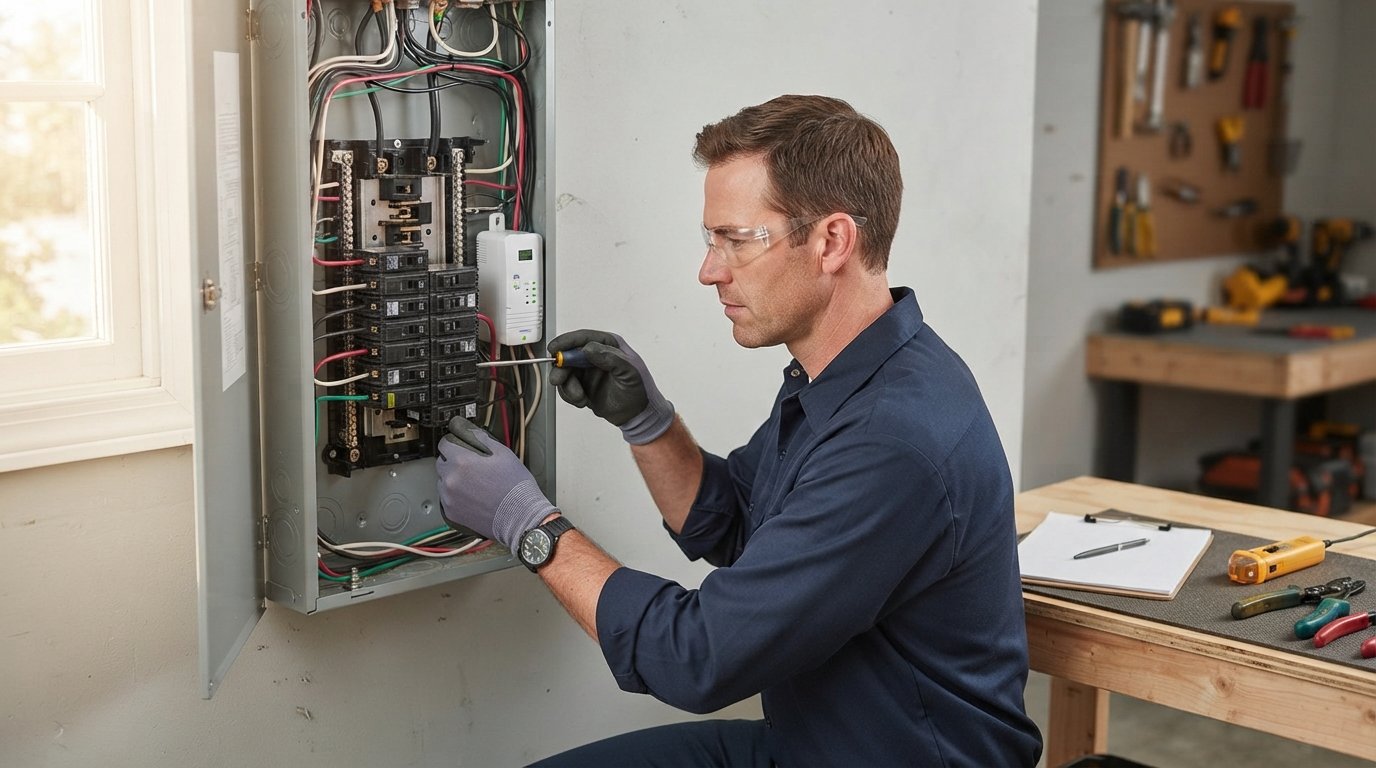
Installation happens at the main electrical panel, also called the load center. The protector is a compact device that mounts next to or inside the panel and connects to the hot bus bars and the neutral bar. It also requires a connection to a dedicated circuit breaker, typically a two-pole breaker rated for the protector. The goal is to create the shortest, straightest path to ground so that surge energy is diverted safely before it travels into your home's wiring.
A licensed electrician will first assess your panel to confirm there is enough space for the protector and the breaker. Older panels may be full, and some may not have a reliable ground connection. In those cases, the electrician may need to install a new grounding electrode or recommend a panel upgrade, which adds to the project scope. The electrician will also check the panel's amperage rating and the condition of the wiring. A whole house protector is only as effective as the grounding system it relies on, so this step is not optional.
Once the panel is deemed ready, the installation itself usually takes one to three hours. The electrician mounts the protector, connects the wiring, installs the breaker, and tests the system. In many jurisdictions, a permit is required for electrical panel work. The electrician typically pulls the permit and schedules an inspection, which may add a few days to the timeline. After the work is complete, you should receive documentation showing the protector's specifications, warranty terms, and the electrician's license information. Keep this paperwork for insurance and future reference.
If your home has a separate meter base or an outdoor disconnect, the electrician may recommend a protector at that location as well. Some models are designed for outdoor installation, while others are strictly for indoor panels. The right choice depends on your service entrance configuration and local code requirements. A qualified electrician can explain the options and help you choose a protector with the appropriate surge current rating for your home's electrical load.
Whole House Surge Protector Installation Cost Breakdown
The total cost of a whole house surge protector installation typically ranges from $300 to $800 for a standard residential project, with most homeowners spending around $500. That range includes the protector unit, labor, and basic materials. However, several factors can push the price higher or lower, and it helps to understand each component before you request quotes.
The protector itself usually costs between $100 and $300. Entry-level models handle basic surge events, while higher-capacity units with advanced monitoring and longer warranties cost more. Labor runs roughly $150 to $400, depending on local rates and the complexity of the panel. If a permit is required, expect an additional $50 to $200. If your panel needs upgrades, such as a new grounding electrode or a replacement panel, the project can climb to $1,500 or more. Homes with older wiring or insufficient panel space are more likely to encounter these add-ons.
Here is a quick breakdown of the typical cost components:
- Surge protector unit: $100 to $300 depending on capacity and features
- Electrician labor: $150 to $400 for standard installation
- Permit and inspection: $50 to $200, varies by jurisdiction
- Panel upgrades or grounding work: $200 to $1,000+ if needed
- Optional whole-home surge protection for HVAC or pool equipment: $100 to $300 per additional device
These figures are national averages. In high-cost metro areas, labor rates can be significantly higher. In rural areas, they may be lower, but travel fees can offset the difference. The best way to get an accurate number is to request multiple quotes from licensed electricians in your area. When comparing quotes, ask whether the price includes the permit, the inspection, and any grounding upgrades. A low quote that excludes these items is not a true comparison.
For homeowners planning broader electrical or generator work, it helps to coordinate projects. For example, if you are already considering a backup power system, our guide on whole house generator installation cost and sizing explains how to plan the electrical panel work so that both upgrades can be completed efficiently.
What a Whole House Surge Protector Does and Does Not Protect Against
A whole house surge protector is designed to clamp voltage spikes that enter through the electrical service lines. It responds in nanoseconds, diverting excess energy to ground before it reaches your appliances. This makes it highly effective against the most common surge sources: utility grid switching, neighborhood transformer events, and large appliances cycling on and off inside the home. It also provides a layer of protection against indirect lightning strikes, meaning strikes that hit the power lines or the ground nearby rather than your roof directly.
However, it is not a force field. A direct lightning strike carries enormous energy, and no residential surge protector can absorb a direct hit. In those cases, the protector may sacrifice itself to protect the panel, but damage can still occur. The device also does not protect against surges that enter through other pathways, such as cable lines, telephone lines, or satellite dishes. For complete coverage, you need surge protection on those entry points as well, often in the form of small inline protectors or point-of-use devices.
It is also important to understand that surge protectors have a limited lifespan. Each surge event degrades the protective components slightly. A high-quality unit may last five to ten years, while a cheap unit may fail after a few significant events. Many modern protectors include indicator lights or audible alarms that signal when the unit has reached end-of-life and needs replacement. Some models offer a warranty that covers connected equipment if the protector fails, but these warranties have conditions and deductibles. Read the fine print before relying on that promise.
Finally, a whole house protector does not replace the need for proper grounding and bonding. If your home's grounding system is inadequate, the protector cannot divert surge energy effectively. This is why a professional assessment is critical. An electrician will verify that the grounding electrode conductor is properly sized and connected, and that the neutral and ground bars are correctly bonded. Without that foundation, the protector is just a piece of hardware with limited benefit.
Pairing Surge Protection with Smart-Home and HVAC Equipment
Modern homes rely on sensitive electronic controls in places that did not exist a generation ago. Variable-speed HVAC systems, smart thermostats, tankless water heaters, and pool pumps all contain circuit boards that are vulnerable to voltage spikes. A whole house surge protector at the panel protects these hardwired systems, but many manufacturers also recommend secondary protection at the equipment disconnect. This is especially true for HVAC condensers and pool pumps, which sit outdoors and are exposed to nearby lightning and utility events.
Smart-home devices add another layer of complexity. Hubs, cameras, doorbell transformers, and automated lighting controllers are often plugged into outlets throughout the house. While the panel-mounted protector reduces the overall risk, point-of-use surge strips on critical electronics provide an extra buffer. The best approach is layered protection: a whole house protector at the service entrance, secondary protectors on major equipment disconnects, and quality surge strips for computers, entertainment systems, and networking gear.
It also helps to consider how these upgrades fit into a broader home improvement plan. If you are already hiring a contractor for electrical work, ask whether they offer surge protection as part of the service. When comparing bids, make sure the contractor is licensed and insured, and that the scope of work clearly states what is included. You can find pre-vetted electrical contractors and request multiple quotes through PlanRemodel's contractor directory, which helps homeowners compare options without pressure.
Is a Whole House Surge Protector Worth the Cost?
For most homeowners with modern electronics and appliances, the answer is yes. The installation cost is modest compared to the replacement cost of a single HVAC control board, a refrigerator, or a home theater system. A $500 upgrade that protects thousands of dollars in equipment and reduces the risk of fire from surge-related failures is a reasonable investment. It also adds a small but measurable value to the home's electrical system, which may appeal to buyers during a future sale.
The benefits extend beyond hardware replacement. Surges can cause subtle damage that shortens the lifespan of appliances without causing immediate failure. A refrigerator may run less efficiently, a washing machine may develop control board glitches, or a smart thermostat may lose connectivity. These issues are frustrating and expensive to diagnose. A whole house protector reduces the frequency of these events, which can lower repair bills and extend the service life of your equipment.
Homeowners insurance may also factor into the decision. Some policies cover surge damage, but deductibles and claim limits can reduce the payout. A surge protector does not replace insurance, but it can reduce the likelihood of filing a claim in the first place. That can help you avoid premium increases and the hassle of documenting damaged property. If you are planning a larger electrical upgrade, such as a panel replacement or a generator installation, bundling the surge protector with that work can save on labor costs.
Before hiring an electrician, verify their license, insurance, and experience with panel-mounted surge protectors. Ask for references and confirm that the quote includes permit fees and any necessary grounding work. A reputable contractor will explain the protector's specifications, warranty terms, and maintenance requirements. They will also advise you on whether your panel is compatible with a standard unit or requires a different approach. Taking these steps ensures that the installation delivers the protection you expect.
A whole house surge protector is not a glamorous upgrade, but it is one of the most practical electrical improvements a homeowner can make. It sits quietly in your panel, ready to divert dangerous voltage spikes before they reach the devices you rely on every day. The installation cost is predictable, the benefits are tangible, and the peace of mind is worth the investment. If you are ready to protect your home's electrical system, start by requesting quotes from licensed electricians in your area and comparing the scope of work carefully.