
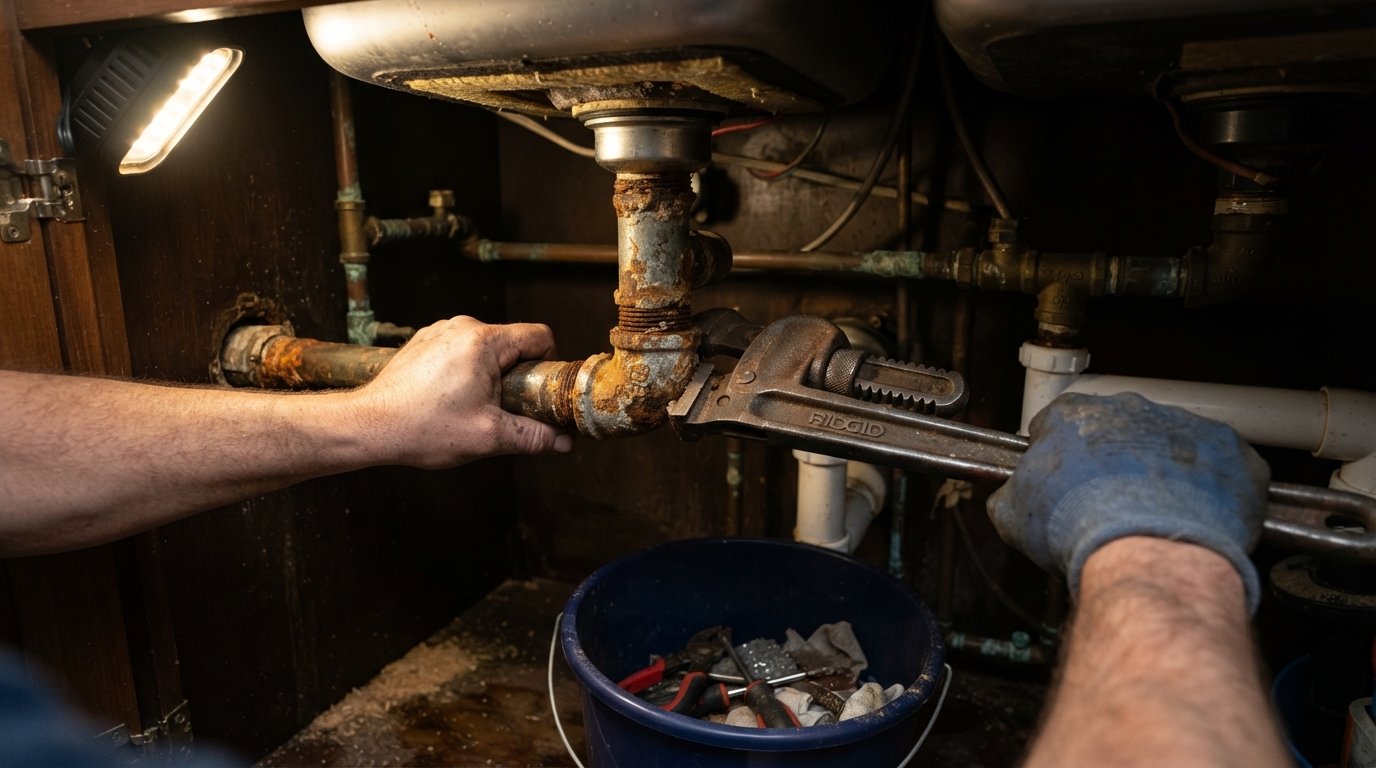
Galvanized Pipe Replacement Cost and Failure Signs
Recognize failing galvanized pipes and understand replacement costs. Call (833)-439-3727 for expert help and avoid surprise plumbing bills.

By Grace Ingram
Learn more about Plumbing Pipe Installation or Replacement for guides, costs, and what to expect.
Compare Plumbing Pipe Installation or Replacement Pros Near You

Enter your ZIP code to compare top-rated local professionals and request free quotes.
If your home was built before 1970, there is a good chance it still has galvanized steel plumbing. These pipes were once a marvel of durability, but they have a dirty secret: they rust from the inside out. What starts as a minor inconvenience, like reduced water pressure or slightly discolored water, can escalate into a full-blown emergency with burst pipes and water damage. Understanding the galvanized pipe replacement cost and signs it is failing is essential for any homeowner facing this aging infrastructure. This guide breaks down the warning signs, the difference between partial and whole-house repiping, what the job entails, and how to hire the right professional for the work.
Why Galvanized Pipes Fail and What It Means for Your Home
Galvanized pipes are steel pipes coated with a layer of zinc to prevent rust. For decades, this was the standard for residential plumbing because it was strong and relatively corrosion-resistant. However, the zinc coating is not permanent. Over time, it erodes, especially when exposed to hot water and certain water chemistries. Once the zinc is gone, the underlying steel begins to corrode. Rust and mineral deposits accumulate on the inner walls, narrowing the passage for water. This internal buildup is the root cause of most galvanized pipe problems, and it happens slowly, often without obvious signs until the pipe is severely compromised.
The consequences of failing galvanized pipes go beyond just reduced water flow. As the pipes corrode, they can leach trace amounts of lead and other metals into your water supply, posing health risks. The structural integrity of the pipe weakens, leading to pinhole leaks that can cause hidden water damage inside walls and floors. In severe cases, a pipe can burst, flooding your home. For homeowners, this means that ignoring the signs of failure is not an option. The good news is that recognizing the symptoms early can help you plan for replacement before a small leak becomes a major disaster.
Signs Your Galvanized Pipes Are Failing
Galvanized pipes rarely fail overnight. They give warning signs, but those signs are often subtle at first. Being attentive to changes in your plumbing system can save you from costly emergency repairs. Here are the most common indicators that your galvanized pipes are on their last legs.
- Low water pressure: If you notice that the water flow from your faucets or showerheads has gradually decreased, it could be due to mineral buildup inside the pipes. This is especially noticeable if multiple fixtures are affected simultaneously.
- Brown or discolored water: Rusty water, particularly when you first turn on the tap after it has been sitting, is a clear sign of internal corrosion. The water may appear brown, yellow, or reddish.
- Pinhole leaks: Small leaks that appear on the outside of pipes, often near joints, indicate that the pipe wall has thinned. These leaks can cause water stains on walls and ceilings and can lead to mold growth.
- Corrosion at joints: Visible rust or corrosion around pipe fittings and joints is a sign that the protective zinc layer has worn away. This is often where leaks start.
- Frequent repairs: If you find yourself calling a plumber repeatedly for the same or different leaks, it is a strong indication that the entire system is deteriorating.
These signs should not be ignored. A single pinhole leak might be patched, but if you are seeing multiple symptoms, it is likely time to consider repiping. A qualified plumber can perform a thorough inspection, sometimes using camera technology, to assess the internal condition of your pipes and recommend the best course of action.
Partial Repipe vs. Whole-House Repipe: Weighing the Options
When faced with failing galvanized pipes, homeowners have two main choices: a partial repipe or a whole-house repipe. The decision depends on the extent of the corrosion, your budget, and your long-term plans for the home.
A partial repipe involves replacing only the most damaged sections of pipe, typically those that are easily accessible or showing active leaks. This can be a temporary fix that buys you some time, but it does not address the underlying problem. If your pipes are failing in one area, the rest of the system is likely not far behind. Partial repipes can also be less effective because the new pipes may be connected to old, corroded ones, which can restrict flow and lead to further issues down the line.
A whole-house repipe, on the other hand, replaces all the galvanized pipes in your home with modern materials like copper or PEX. This is a more comprehensive solution that eliminates the root cause of the problem and provides reliable water pressure and clean water for decades. While the upfront cost is higher, it often saves money in the long run by avoiding repeated repairs and water damage. For older homes with widespread corrosion, a whole-house repipe is usually the recommended approach.
To make an informed decision, it is wise to get multiple quotes from reputable plumbers. Sites like Homes.Contractors can connect you with pre-vetted professionals in your area who can assess your situation and provide detailed estimates for both partial and whole-house repiping.
What Repiping Involves: Process, Access, and Permits
Understanding the repiping process can help you prepare for the disruption and set realistic expectations. A whole-house repipe is a significant project that typically takes several days to complete, depending on the size of your home and the complexity of the plumbing layout.
The first step is planning and permits. Your contractor will need to obtain the necessary permits from your local building department. This ensures the work meets current plumbing codes and will be inspected for safety and quality. The cost of permits is usually included in the contractor's quote, but it is something to clarify.
Next comes the actual work. The plumber will need to access the pipes, which often means cutting into walls and ceilings. In some cases, pipes can be routed through attics or crawl spaces to minimize demolition, but typically, some wall patching will be required afterward. The old galvanized pipes are removed and replaced with new copper or PEX tubing. The plumber will then test the system for leaks and ensure proper water pressure throughout the house. After the plumbing is complete, you will need to patch and paint the walls, which is often not included in the plumber's quote.
It is important to discuss with your contractor who is responsible for patching and restoring walls. Some plumbers offer drywall repair as an add-on service, while others leave it to you. Clarifying this upfront can prevent surprises. Also, be prepared for the water to be shut off for extended periods during the day, so plan accordingly.
Galvanized Pipe Replacement Cost: What to Expect
The cost of replacing galvanized pipes varies widely based on several factors. On average, homeowners can expect to pay between $4,000 and $15,000 for a whole-house repipe, but in some cases, it can exceed $20,000. Understanding what drives these costs will help you budget and evaluate quotes.
The primary cost factors include the size of your home, the accessibility of the pipes, the chosen material (copper is more expensive than PEX), and local labor rates. For example, a small single-story home with a crawl space might cost less to repipe than a larger two-story home with pipes buried in slabs. Additionally, if there are complications like asbestos insulation or extensive wall damage, the price will increase.
A partial repipe might cost a few hundred to a few thousand dollars, depending on the scope, but as mentioned, it is often a temporary fix. When requesting quotes, ask for a detailed breakdown of labor, materials, permits, and any restoration work. This will allow you to compare bids accurately.
For those also considering upgrades to their heating and cooling systems, our guide on HVAC replacement cost and savings provides similar cost breakdowns and tips for planning major home system replacements.
Hiring and Vetting a Repiping Plumber
Choosing the right plumber for your repiping project is critical. This is a major investment, and you want a contractor who is licensed, insured, and experienced in repiping older homes. Start by getting referrals from friends, family, or neighbors who have had similar work done. You can also use online directories like PlanRemodel to find qualified professionals in your area.
When vetting a plumber, verify their license and insurance. Ask for proof of both, and check with your state's licensing board to ensure they are in good standing. Request references from recent repiping jobs and follow up with those homeowners to ask about their experience. Get at least three written estimates and compare them carefully. The lowest bid is not always the best choice; look for a contractor who provides a detailed scope of work, a clear timeline, and a warranty on their labor and materials.
Also, ask about their approach to wall patching and restoration. A good plumber will be transparent about what is included and what is not. Finally, trust your instincts. If a contractor is pushy, evasive, or unwilling to put things in writing, it is a red flag. A professional will take the time to answer your questions and make you feel comfortable with the process.
Frequently Asked Questions About Galvanized Pipe Replacement
How long do galvanized pipes last?
Galvanized pipes typically last 20 to 50 years, depending on water quality and maintenance. Many homes built before 1970 are already past their expected lifespan, so if you have galvanized pipes, it is wise to have them inspected.
Can I replace only the visible pipes?
Replacing only visible pipes is a partial repipe and may not solve the problem if hidden pipes are also corroded. It is often more cost-effective in the long run to replace the entire system.
Will repiping increase my home's value?
Yes, a whole-house repipe with modern materials is an attractive feature for homebuyers and can increase your home's value by improving water pressure and eliminating the risk of leaks.
How do I know if my pipes are galvanized?
You can check by looking at exposed pipes in your basement or crawl space. Galvanized pipes are silver-gray and have a threaded fitting. You can also use a magnet; galvanized steel is magnetic, while copper and PEX are not.
By understanding the signs of failure and the costs involved, you can make informed decisions about your home's plumbing. If you suspect your galvanized pipes are failing, do not wait for a catastrophic leak. Contact a qualified plumber today to assess your situation and provide you with options.