
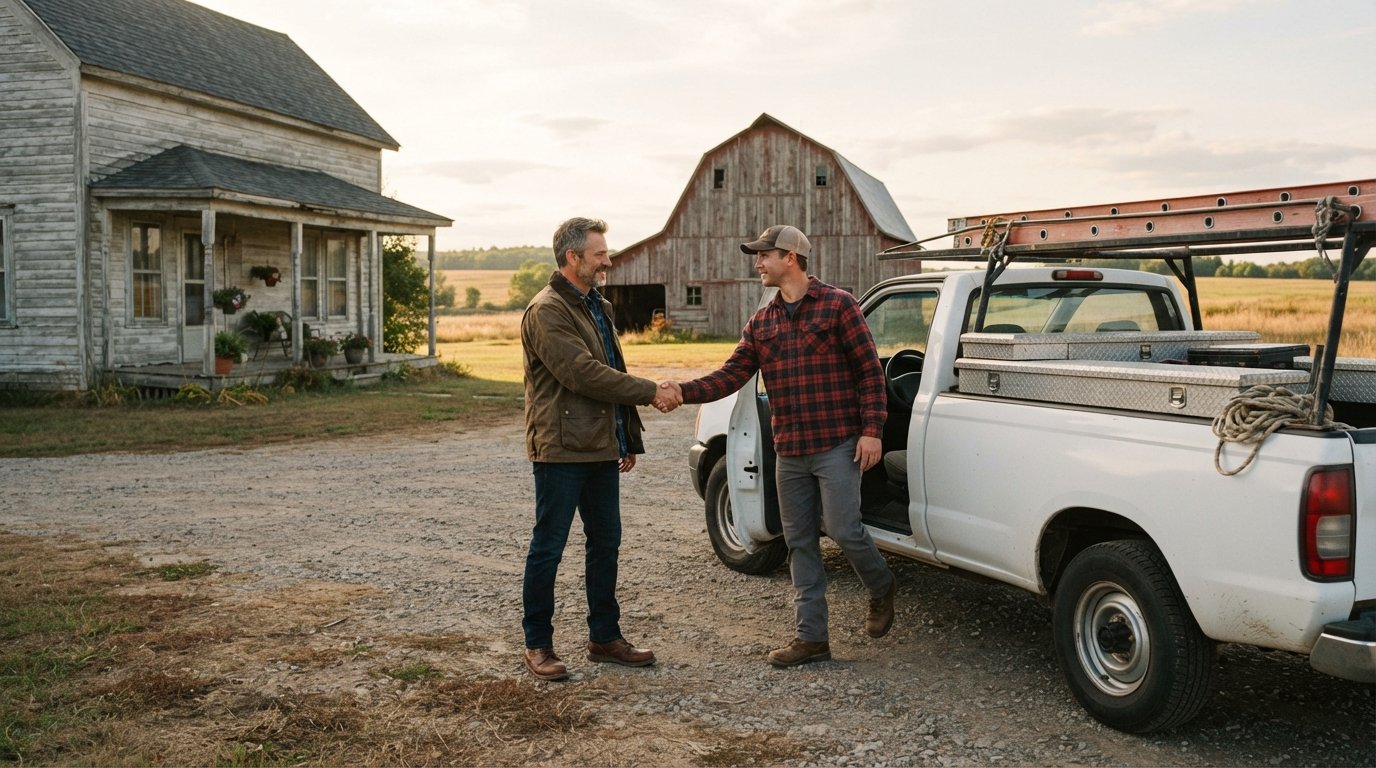
How to Find a Contractor When You Live in a Rural Area
Find reliable rural contractors with our practical guide. Call (833)-439-3727 for expert help today.

By Aaron Turner
Learn more about General Contracting for guides, costs, and what to expect.
Compare General Contracting Pros Near You

Enter your ZIP code to compare top-rated local professionals and request free quotes.
Finding a reliable contractor is rarely easy, but when you live in a rural area, the challenge can feel downright daunting. With fewer local professionals, longer travel distances, and limited word-of-mouth networks, the usual methods of sourcing and vetting help can fall short. Yet rural homeowners face the same urgent repair needs, renovation dreams, and maintenance requirements as anyone else. This guide walks you through practical, field-tested strategies for finding and hiring a contractor when you live far from the city, so you can move forward with confidence and avoid costly mistakes.
Where to Look Beyond the Major Directories
Online directories are a natural first stop, and platforms like Homes.Contractors can connect you with pre-vetted professionals who serve your area. But in rural regions, many qualified contractors are small operations that do not invest heavily in digital marketing. To find them, you need to dig deeper into local networks and physical channels that city dwellers often overlook.
Start with local builders' associations and trade groups. Even in less populated counties, chapters of the National Association of Home Builders (NAHB) or state-level contractor associations maintain member lists. These contractors have met basic licensing and insurance requirements, and they often serve wide rural territories. A quick call to the association office can yield a handful of vetted names that do not appear on mainstream search platforms.
Supply yards are another goldmine. Lumber yards, hardware stores, and masonry suppliers interact daily with contractors who buy materials. The staff knows which builders are reliable, who pays their bills on time, and who does quality work. Strike up a conversation with the counter staff and ask for recommendations. Similarly, your neighbors, local farmers, and community Facebook groups can provide firsthand referrals that carry more weight than anonymous online reviews.
Do not underestimate the value of a drive around the area. Look for job sites with contractor signs, and note the names. If you see a well-run project, stop and ask the homeowner about their experience. Rural communities are often tight-knit, and a contractor with a solid local reputation will be happy to share references.
For more structured guidance on selecting the right professional for larger projects, see our article on when to hire a general contractor for your renovation, which explains how a general contractor can manage multiple trades and streamline your project even in remote locations.
Verifying Licenses and Insurance When the Contractor Is From a Neighboring County
In rural areas, your best contractor may live 30 or 50 miles away, often in a different county or even a different state. That distance adds a layer of complexity to verification, but it does not make it impossible. In fact, many rural contractors are accustomed to working across county lines and carry the necessary credentials to do so legally.
The first step is to understand your state's licensing requirements. Most states require general contractors to hold a state-issued license, but some rural areas have reciprocity agreements with neighboring states. Check your state's contractor licensing board website to confirm the license number and status. Do not rely on the contractor's word alone; always verify through official channels. If the contractor is based in another state, ask whether they are licensed to work in your state. If not, they may still be able to work as a specialty subcontractor under a licensed general contractor, but you need to clarify that arrangement upfront.
Insurance is equally critical. Request a certificate of insurance directly from the contractor's insurer, not from the contractor. The certificate should show general liability coverage and, if the contractor has employees, workers' compensation insurance. For out-of-county contractors, confirm that their policy covers work performed in your location. Some policies have geographic exclusions, so a quick call to the insurance agent can save you from a nasty surprise if an accident occurs.
Here is a checklist for verifying an out-of-area contractor:
- Confirm the license number and expiration date with your state's licensing board.
- Request a certificate of insurance showing general liability and workers' comp.
- Ask for the insurance agent's contact information and verify coverage for your address.
- Check for any complaints or disciplinary actions through the state board or local consumer affairs office.
- Request references from other rural clients in your county or a neighboring one.
Once you have verified the basics, dig into the contractor's reputation. Rural networks are small, so a few phone calls to local suppliers or fellow homeowners can reveal patterns of behavior. If a contractor has a history of abandoned jobs or shoddy work, word travels fast. Trust your instincts and do not rush the vetting process.
Travel and Mobilization Charges to Expect
When a contractor has to travel significant distances to reach your property, you should expect to see travel or mobilization charges on the estimate. These fees are legitimate and cover the cost of transporting crew, equipment, and materials to a remote site. However, they should be transparent and reasonable. Understanding how these charges are calculated will help you budget accurately and negotiate fairly.
Mobilization fees typically cover the initial setup: moving heavy equipment, setting up temporary facilities, and bringing in materials that cannot be sourced locally. For rural projects, these costs can range from a few hundred to several thousand dollars, depending on the scope and distance. Some contractors include mobilization in their overall bid, while others list it as a separate line item. Always ask for a breakdown.
Travel time for the crew is another factor. If the contractor's home base is two hours away, they may charge for drive time or require a per diem for overnight stays on multi-day projects. These costs add up, but they are often negotiable. For example, you might agree to provide lodging or meals in exchange for a reduced mobilization fee, or you could schedule the work during a slower season when the contractor is more flexible.
To avoid surprises, discuss travel and mobilization charges before signing a contract. Ask specifically:
- Is there a fixed mobilization fee, or is it calculated based on distance?
- Will you charge for travel time, and at what rate?
- Are there any additional fees for remote sites, such as fuel surcharges or equipment transport?
- Can we adjust the schedule to reduce travel costs (e.g., bundling multiple small jobs in the area)?
By addressing these questions upfront, you can compare bids fairly and avoid misunderstandings later. Remember that the lowest bid may not be the best value if it excludes necessary travel costs; a transparent higher bid is often safer.
Scheduling and Availability Realities in Low-Density Areas
Rural contractors often juggle projects across a wide geographic area, which means their schedules fill up quickly. Unlike in cities, where you can often find someone available within a week, rural homeowners may wait weeks or even months for a qualified professional. Understanding these scheduling realities will help you plan effectively and reduce frustration.
Seasonal demand plays a big role. In many rural areas, construction activity peaks in spring and summer, while winter slows down. If your project is not urgent, consider scheduling during the off-season when contractors are more available and may offer better rates. For emergency repairs, such as a failed well pump or a leaking roof, you need a contractor who offers emergency services. Build a shortlist of reliable pros before an emergency hits, so you are not scrambling to find help in a crisis.
Communication is key. When you contact a rural contractor, be clear about your timeline and flexibility. If you can accommodate a flexible start date, say so; many contractors appreciate the ability to fit your job between larger projects. Conversely, if you have a hard deadline, be upfront about it and ask whether the contractor can commit. A reliable contractor will be honest about their availability rather than overpromising.
Another strategy is to bundle projects. If you have several small repairs or improvements, combine them into a single larger job. This makes the trip more worthwhile for the contractor and can reduce your overall costs. For example, instead of hiring someone to fix a deck and separately to paint the house, ask if they can do both during the same visit.
Finally, consider joining a local home improvement co-op or neighborhood group that pools requests. By coordinating with neighbors, you can attract contractors who might otherwise skip your area due to distance. Collective bargaining can also lead to better pricing and priority scheduling.
How to Structure a Contract When You Cannot Get Multiple Local Bids
In urban areas, homeowners are advised to get at least three bids to compare prices and scope. In rural areas, finding even one qualified contractor can be tough, let alone three. When multiple local bids are not feasible, you need to adapt your approach to ensure you still get a fair deal and protect yourself legally.
First, expand your search radius. Contact contractors in neighboring counties or even across state lines. While travel costs may be higher, the competition can work in your favor. Use online directories and referral networks to identify professionals willing to travel. Even if you end up with only two bids, the comparison is still valuable.
If you truly cannot get multiple bids, focus on structuring a contract that minimizes risk. A well-drafted contract should include:
- Detailed scope of work: Describe every task, material, and finish. Ambiguity leads to disputes.
- Payment schedule: Never pay the full amount upfront. A typical schedule might be 10-20% deposit, progress payments as milestones are met, and a final payment upon completion and inspection.
- Change order process: Outline how changes will be documented and priced. Verbal agreements are a recipe for trouble.
- Timeline and penalties: Include a start date, completion date, and any penalties for delays (though rural contractors may resist penalties, so negotiate reasonably).
- Warranty and lien releases: Require a warranty on workmanship and conditional lien releases from subcontractors and suppliers to protect against mechanic's liens.
Even without multiple bids, you can benchmark costs. Use online cost guides and resources like PlanRemodel to research typical price ranges for your project type in your region. This gives you a baseline to evaluate whether a bid is reasonable. Also, ask the contractor to break down the bid into labor and materials so you can see where the money is going.
Consider hiring an independent home inspector or construction consultant to review the contract and bid before you sign. For large projects, this small investment can save you thousands. Additionally, check references thoroughly and visit past projects if possible. A contractor with a solid track record is more likely to deliver quality work even if they are the only bid you receive.
Finally, trust your gut. If a contractor seems evasive, rushes you to sign, or demands a large upfront payment, walk away. There are honest professionals out there, even in remote areas, and it is worth the effort to find one.
Leveraging Technology and Community Resources
Technology has narrowed the gap between rural and urban homeowners. Online directories, review sites, and social media groups can connect you with contractors who serve your area. Homes.Contractors, for instance, allows you to submit a project request and receive multiple quotes from pre-vetted professionals, even in less populated regions. The platform's localized content and ratings by state help you identify contractors who are familiar with the unique challenges of rural construction.
Community resources are equally valuable. Local extension offices, farm bureaus, and rural development councils often maintain lists of recommended contractors. These organizations vet professionals based on community feedback and can be a trusted source of referrals. Attend local home and garden shows, county fairs, or trade days; these events are prime opportunities to meet contractors face-to-face and gauge their professionalism.
Do not overlook the power of social media. Facebook groups for your town or county are often bustling with recommendations and warnings. Join these groups and ask for advice. Be specific about your project and location, and you will likely receive several leads. Just remember to verify credentials independently, as recommendations are subjective.
In summary, finding a contractor in a rural area requires creativity, diligence, and patience. By tapping into local networks, verifying credentials thoroughly, understanding travel costs, planning around scheduling constraints, and structuring a solid contract, you can secure quality workmanship and protect your investment. With the right approach, your rural home improvement project can be a success.
Learn more about General Contracting for guides, costs, and what to expect.
Compare General Contracting Pros Near You
Enter your ZIP code to compare top-rated local professionals and request free quotes.