
Home Warranty vs. Homeowners Insurance: Repair Differences
Understand the difference between home warranty and homeowners insurance for repairs, plus one key step to avoid surprise bills. Call (833)-439-3727 for guidance.

By Grace Ingram
Find Local Pros Near You

Enter your ZIP code to compare top-rated local professionals and request free quotes.
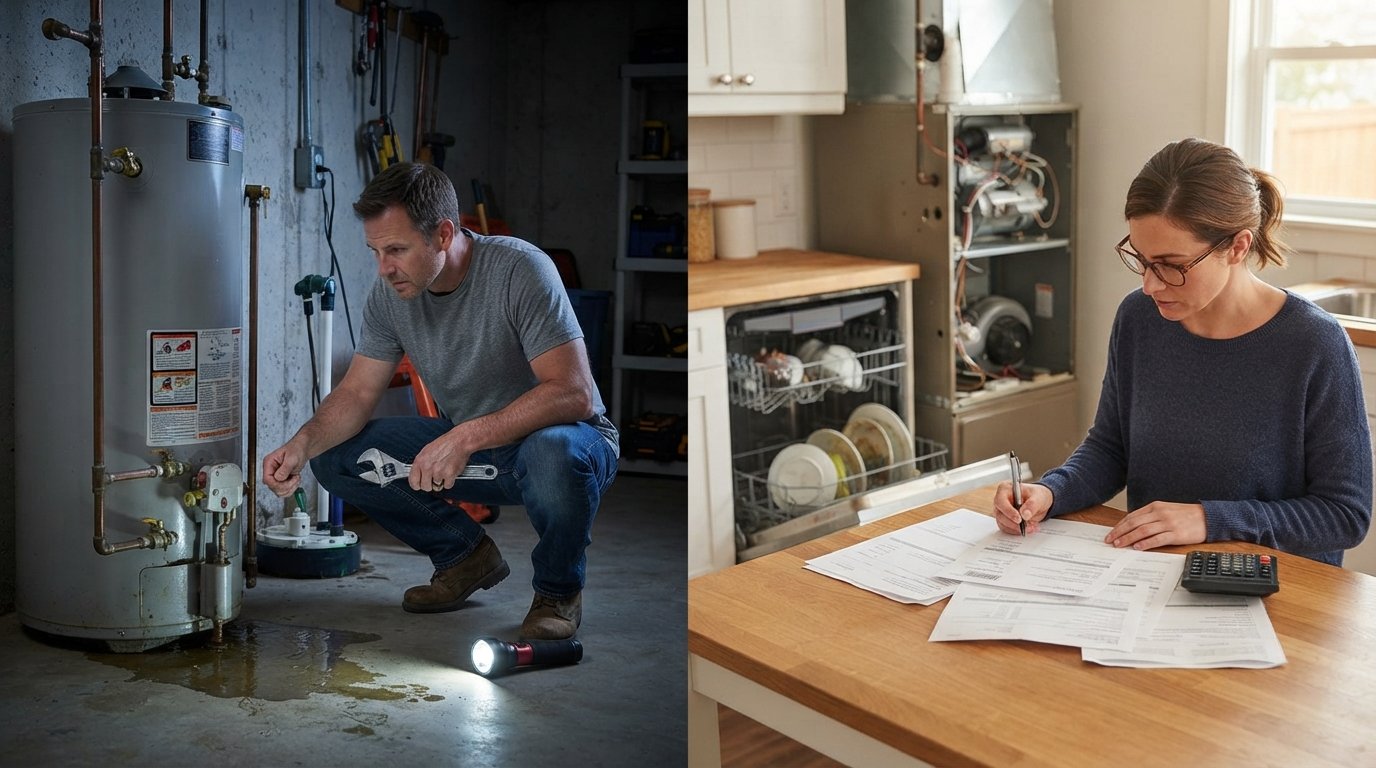
When the water heater bursts or the furnace quits in January, most homeowners reach for one of two safety nets they have heard about: a home warranty or a homeowners insurance policy. Both sound like they protect your home from repair bills, yet they operate on completely different principles and cover very different types of events. Understanding the difference between home warranty and homeowners insurance for repairs is critical because relying on the wrong one can leave you paying thousands out of pocket while assuming you were covered. This guide breaks down exactly what each product covers, where the gaps are, and how to handle the gray areas that cause the most claim disputes.
What a Home Warranty Typically Covers: Systems and Appliances, Not Structure
A home warranty is a service contract, not insurance. You pay an annual or monthly premium, and in exchange the warranty company agrees to repair or replace specific household systems and appliances that break down due to normal wear and tear. The coverage list varies by provider and plan tier, but most basic plans include items such as the water heater, furnace, central air conditioning, electrical wiring, plumbing systems, and kitchen appliances like the refrigerator, oven, and dishwasher. Some providers offer optional add-ons for pools, spas, wells, and septic systems.
The defining feature of a home warranty is that it focuses on the mechanical and appliance components inside your home, not the house itself. A warranty will not pay to fix your roof, walls, foundation, or flooring. It also will not cover damage caused by a specific event like a fire or a burst pipe that floods a room; that is the domain of insurance. Instead, the warranty responds when an eligible item simply wears out or fails from age. For example, if your 12-year-old dishwasher stops cleaning dishes and the repair technician determines the motor failed from normal use, a home warranty may cover the repair or replacement, minus your trade service fee.
That trade service fee, often between $75 and $125 per visit, is a key cost to understand. Even when the claim is approved, you pay this fee each time a contractor comes out. Warranty companies also set their own caps on coverage per item and per year, and they may require you to use their pre-approved network of technicians. This network requirement is a common source of frustration because it limits your ability to hire an independent contractor you trust, and it can lead to delays if the assigned provider is busy or unfamiliar with your specific equipment.
What Homeowners Insurance Covers Versus Excludes
Homeowners insurance is a true insurance policy that protects your home and personal property against sudden, accidental events known as perils. Standard HO-3 policies typically cover damage from fire, lightning, windstorms, hail, vandalism, theft, and certain water damage events like a burst pipe that suddenly releases water inside the walls. The policy also provides liability coverage if someone is injured on your property and pays for additional living expenses if your home becomes uninhabitable after a covered loss.
What insurance does not cover is just as important. Homeowners insurance explicitly excludes damage caused by normal wear and tear, deterioration, rust, mold (in most cases), insect infestation, and lack of maintenance. It also excludes damage from earthquakes and floods unless you purchase separate endorsements or policies. If your roof leaks because it is 25 years old and the shingles have worn out, insurance will likely deny the claim. But if a windstorm tears off shingles and rain pours into your living room, that same leak may be covered because the proximate cause was the storm, not age.
This distinction between sudden events and gradual deterioration is the heart of the difference between home warranty and homeowners insurance for repairs. Insurance is designed for unpredictable catastrophes. Warranties are designed for predictable breakdowns of systems and appliances. Neither product is intended to cover routine maintenance or the slow decay that every home experiences over time.
Why Normal Wear and Tear Repairs Fall Through Both
The most common misconception among homeowners is that one of these products will cover any repair. In reality, ordinary wear and tear is the gray zone where both home warranties and homeowners insurance often leave you on your own. Insurance excludes it by definition, and warranties, while ostensibly designed for wear and tear, often deny claims by attributing the failure to pre-existing conditions, improper installation, or lack of maintenance.
Consider a homeowner whose air conditioning compressor fails after 15 years of service. The homeowner files a warranty claim expecting a covered repair. The warranty company sends a technician who notes that the compressor failed because the system was never serviced, the coils are dirty, and the unit was undersized for the home. The claim is denied for lack of maintenance. The homeowner then turns to insurance, which denies the claim because the failure was mechanical wear and tear, not a sudden event. The homeowner pays the full replacement cost out of pocket and may still owe the warranty trade fee for the diagnostic visit.
This scenario repeats across appliances and systems every day. The lesson is that neither product eliminates the need for a home maintenance budget. Homeowners should set aside 1 to 3 percent of their home's value annually for repairs and maintenance, regardless of whether they carry a warranty or insurance. That fund is what covers the gaps that neither product addresses.
For a deeper look at how insurance claims are evaluated when water damage is involved, see our guide on home insurance claims for roof leaks and water damage. It explains how adjusters distinguish between sudden events and long-term deterioration, which is the same logic that applies when you are deciding whether to file a claim at all.
Common Home Warranty Claim Disputes to Anticipate
Home warranty disputes are common enough that homeowners should go in with clear expectations. The most frequent conflicts arise from coverage caps, pre-existing condition exclusions, and the network contractor requirement. A warranty might advertise that it covers your plumbing system, but the fine print caps total plumbing payouts at $1,500 per year. If a slab leak requires a $4,000 repair, you are responsible for the difference. Similarly, many warranties exclude systems that were not properly maintained or that failed due to code violations, improper installation, or lack of capacity for the home.
Another frequent dispute involves the cash-out option. Some warranties allow you to take a cash payment instead of a repair, but the amount is often based on a depreciated value or a pre-negotiated rate that is far below the actual replacement cost. Homeowners who want to hire their own independent contractor instead of using the warranty network often find that the cash-out offer does not cover the real market price.
To reduce the risk of disputes, homeowners should take these steps before signing a warranty contract:
- Read the coverage limits and per-item caps carefully, and ask for a sample contract before purchase.
- Confirm whether pre-existing conditions are excluded and how the company defines them.
- Ask whether you can use your own licensed contractor or whether the network is mandatory.
- Check the company's complaint history with your state insurance department or consumer protection agency.
- Document all maintenance and repairs, because proof of upkeep is your best defense against a denial.
Even with these precautions, the warranty model has structural limits. It is a business, and the company profits by collecting premiums and paying out less in claims. That does not make warranties worthless, but it does mean homeowners should treat them as a budgeting tool for smaller, predictable failures rather than a comprehensive safety net.
Using an Independent Contractor Instead of the Warranty Network
One of the biggest practical differences between home warranty and homeowners insurance for repairs is who controls the repair process. With insurance, after a covered loss you generally have the right to choose your own licensed contractor, subject to the insurer's approval of the scope and price. With a home warranty, the company typically assigns a contractor from its network, and you have little say in who shows up or how quickly the work is done.
Many homeowners prefer to hire an independent contractor for several reasons. You can vet the contractor's license, insurance, and reviews yourself. You can get multiple quotes and compare prices. You can build a relationship with a local professional who knows your home. And you can avoid the delays that come when a warranty network is backed up or when the assigned technician lacks expertise in your specific system.
The trade-off is cost. An independent contractor will charge market rates, and you will pay the full bill unless you have a warranty that offers a cash-out option. But for major repairs, the difference between a warranty cash-out and a real market quote can be substantial. Homeowners should run the numbers before assuming the warranty is the cheaper path. A $500 warranty cash-out toward a $3,000 HVAC replacement is not much help if you can afford the full repair and want it done right the first time.
When you are ready to find qualified local professionals for any repair, whether it is a warranty denial or a planned upgrade, a directory like PlanRemodel can connect you with pre-vetted contractors in your area. The platform lets you request multiple quotes so you can compare pricing and credentials before committing.
Key Differences at a Glance
To summarize the core distinction, here is how the two products compare on the dimensions that matter most for repairs:
- What it covers: A home warranty covers systems and appliances (HVAC, plumbing, electrical, kitchen appliances) against normal wear and tear. Homeowners insurance covers the structure and personal property against sudden, accidental perils like fire, wind, hail, and burst pipes.
- What triggers a claim: Warranties respond to breakdowns from age or normal use. Insurance responds to a specific event that causes sudden damage.
- Who chooses the contractor: Warranty companies typically assign a network contractor. Insurance generally lets you choose your own licensed professional, subject to approval.
- Cost structure: Warranties charge a premium plus a trade service fee per visit and have coverage caps. Insurance charges a deductible and covers up to policy limits.
- Exclusions: Both exclude maintenance and wear and tear in different ways. Warranties may deny for pre-existing conditions or lack of maintenance. Insurance excludes deterioration, mold, and earth movement.
Neither product is a substitute for the other. A homeowner with a warranty still needs insurance for catastrophic events, and a homeowner with insurance still needs a maintenance budget or warranty for the appliances and systems that will eventually fail. The smartest approach is to understand the difference between home warranty and homeowners insurance for repairs, carry the coverage that matches your risk tolerance, and keep a reserve fund for the gaps.
Before you file a claim or sign a warranty contract, take time to review your policy documents and warranty terms side by side. If a repair is denied, ask for the specific exclusion in writing and consider getting an independent inspection. And when you need work done, whether it is a covered repair or a full replacement, compare quotes from multiple licensed contractors to make sure you are getting a fair price and quality workmanship.