
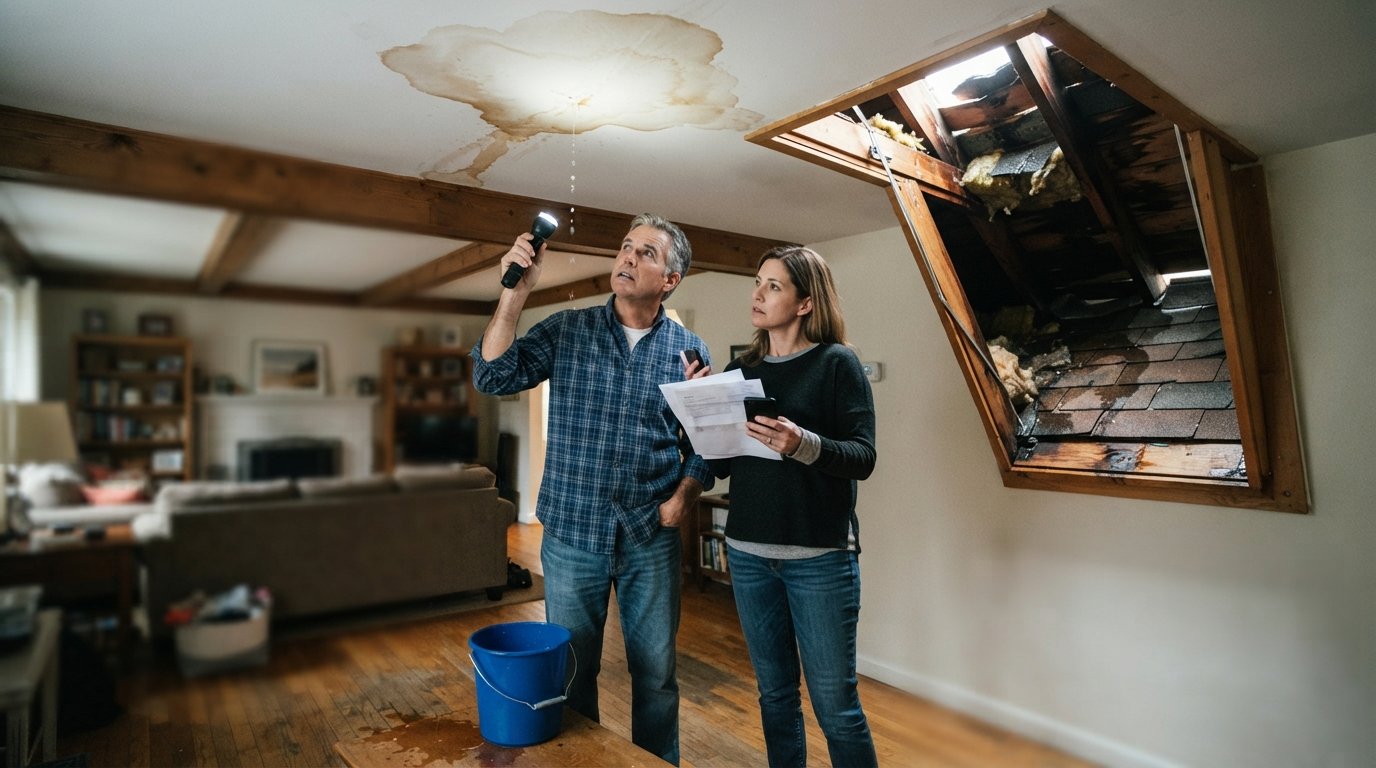
Home Insurance Claims for Roof Leaks and Water Damage
Navigate home insurance claims for roof leaks and water damage with confidence. Call (833)-439-3727 for expert contractor guidance and support.
By Adnan Nazir
Learn more about Roof Repair or Maintenance for guides, costs, and what to expect.
Compare Roof Repair or Maintenance Pros Near You

Enter your ZIP code to compare top-rated local professionals and request free quotes.
Water dripping through your ceiling at 2 a.m. is one of the most stressful moments a homeowner can face. Beyond the immediate scramble for buckets and towels, there is the looming question of who pays for the repairs. Home insurance claims for roof leaks and water damage are among the most common, and most frequently disputed, filings in the country. Understanding exactly what your policy covers, what it excludes, and how to document your loss can mean the difference between a fully funded repair and thousands of dollars out of pocket.
This guide walks you through the claims process from the first sign of moisture to the final settlement check. You will learn how insurers evaluate roof leaks, why maintenance history matters, and how to present your case in a way that maximizes your recovery. Whether the damage came from a violent storm or a slow, hidden leak, the steps you take in the first 48 hours largely determine the outcome.
How Insurers Classify Roof Leaks and Water Damage
Insurance companies do not treat all water damage the same. The distinction between a sudden, accidental loss and a gradual, maintenance-related problem is the single biggest factor in whether a claim is approved or denied. A sudden loss might be a tree limb crashing through shingles during a windstorm, allowing rain to pour into your attic. A gradual loss is a worn-out flashing that has been seeping for months, slowly rotting decking and insulation.
Most standard homeowners policies (HO-3 and similar forms) cover water damage when it results from a peril listed in the policy, such as windstorms, hail, or the weight of ice and snow. They typically exclude damage caused by lack of maintenance, normal wear and tear, or continuous leakage that the homeowner should have addressed. This is why the same visible outcome, a stained ceiling and buckled floor, can be covered in one home and denied in another.
Insurers also differentiate between the roof structure itself and the interior contents. Many policies will pay to repair or replace the roof covering if it was damaged by a covered peril, and they will pay for water damage to the interior. However, some older policies or actual cash value policies may depreciate the roof payment, leaving you with a smaller check. It is critical to read your declarations page and understand whether your roof is scheduled for replacement cost or actual cash value.
To further complicate matters, some policies include a separate windstorm or hail deductible, often expressed as a percentage of the dwelling limit (for example, 2% of $300,000 = $6,000). That deductible applies before any payout. Homeowners in storm-prone states like Florida and Texas frequently see these percentage deductibles, and they can significantly reduce the amount you receive for a roof claim.
Covered Perils vs. Excluded Perils
Every policy contains a list of covered perils and a list of exclusions. Covered perils usually include fire, lightning, windstorm, hail, explosion, riot, aircraft, vehicles, smoke, vandalism, theft, and volcanic eruption. Weight of ice, snow, or sleet is also common. If a roof leak stems directly from one of these events, the resulting water damage is generally covered.
Exclusions almost always include neglect, intentional loss, freezing of pipes (unless you took reasonable care), and continuous or repeated seepage of water over 14 days or more. Mold is often excluded or capped at a low limit unless it results from a covered peril. This means that if your roof has been leaking slowly for weeks and mold has developed, the mold remediation may not be covered even if the initial water damage was.
Understanding these categories helps you frame your claim correctly. When you speak with the adjuster, emphasize the sudden and accidental nature of the event. Provide evidence such as weather reports, photos of the damaged roof, and any emergency repair invoices. If the loss was truly gradual, be honest, but be prepared for a denial or a partial payment. In some cases, a public adjuster or contractor can help you document the timeline in a way that supports coverage.
Step-by-Step: Filing a Home Insurance Claim for a Roof Leak
Filing a claim is a process, not a single phone call. The order in which you do things matters, and a misstep can cost you thousands. The following steps outline the best practice sequence, from the moment you discover the leak to the final settlement.
- Protect your home from further damage. Your policy requires you to mitigate additional loss. This means placing tarps, moving furniture, and extracting standing water. Keep receipts for any emergency supplies or temporary repairs. Do not make permanent repairs until the adjuster has seen the damage, unless it is necessary to prevent imminent collapse.
- Document everything. Take clear, well-lit photos and videos of the leak source, the damaged ceiling, walls, floors, and any ruined belongings. Use a moisture meter if you have one. Write down the date and time you first noticed the leak, and note any weather events that preceded it.
- Review your policy and call your insurer. Report the claim as soon as possible. Many policies have a prompt notice requirement, and delays can lead to denial. Have your policy number ready and ask for the claim number and the name of the assigned adjuster.
- Meet the adjuster and provide evidence. The adjuster will inspect the roof and interior. Be present if possible, and point out all areas of damage. Provide your photos, receipts, and a written timeline. If the adjuster misses something, politely bring it to their attention.
- Get a professional estimate. Before you accept the insurer's offer, get a detailed estimate from a licensed roofing contractor. The insurer's estimate may not include code upgrades, matching shingles, or proper disposal fees. A contractor's estimate gives you a benchmark for negotiation.
After the adjuster's visit, you will receive a settlement letter and a check, often minus your deductible and any depreciation. If the amount is insufficient, you have the right to appeal. Submit your contractor's estimate along with a written explanation of the discrepancies. Many insurers will issue a supplemental payment if the additional costs are justified.
If your claim is denied, do not give up immediately. Ask for the denial in writing, citing the specific policy language. You can request a re-inspection, hire a public adjuster (who works for you on a contingency fee), or file a complaint with your state's department of insurance. Persistence often pays off, especially when the denial is based on a misinterpretation of the cause of loss.
Common Reasons Roof Leak Claims Are Denied
Denials are frustrating, but they are rarely random. Insurers deny roof leak claims for a handful of predictable reasons, and knowing them ahead of time can help you avoid the same fate.
- Wear and tear. If the roof was already at the end of its life, the insurer will argue that the leak was inevitable and not the result of a sudden event.
- Lack of maintenance. Missing shingles, cracked flashing, and clogged gutters are maintenance issues. If you have not kept up with basic roof care, the insurer may deny the claim.
- Improper installation. If the roof was installed incorrectly, the resulting leak may be excluded as a construction defect. Your recourse may be against the original installer, not the insurer.
- Long-term leakage. Damage that occurred over weeks or months is often excluded as continuous seepage.
- Policy exclusions for mold. Even if the water damage is covered, mold remediation may be capped or excluded, leaving you with a significant bill.
To avoid these pitfalls, keep a record of all roof maintenance, including receipts for repairs and inspections. After a storm, have a licensed roofer inspect the roof and document any storm-related damage. This documentation can be the difference between a covered claim and a denial. If you are unsure about the cause of a leak, a professional inspection is worth the cost.
Another common issue is the failure to report a claim promptly. Some policies require notice within a specific number of days, and if you delay, the insurer may deny coverage. Even if you are not sure whether the damage exceeds your deductible, reporting it early protects your rights. You can always withdraw the claim later if you decide to pay out of pocket.
Documenting Your Claim for Maximum Recovery
Documentation is the backbone of a successful claim. The more evidence you provide, the harder it is for the insurer to undervalue or deny your loss. Start by creating a claim file, either physical or digital, and keep everything in one place.
Your file should include: photos and videos of the damage, a written timeline of events, receipts for emergency repairs and temporary housing, a list of damaged personal property with values, and all correspondence with the insurer. If you have a home inventory, now is the time to use it. If not, walk through your home and record everything that was damaged, including furniture, electronics, and clothing.
For the roof itself, get a written report from a licensed roofing contractor. The report should describe the cause of the leak, the extent of damage, and the estimated cost to repair or replace. It should also note any code-required upgrades, such as new underlayment or ice and water shield, that the insurer may need to cover. Many contractors will provide this report for free if you are considering hiring them for the repair.
If your claim involves a storm, obtain a copy of the local weather report or a storm verification letter. This can prove that a covered peril occurred at the time of the leak. For example, if you claim that hail damaged your roof, a weather report showing hail in your area on that date strengthens your case. Similarly, if a windstorm blew off shingles, a wind speed report can be persuasive.
Finally, consider hiring a public adjuster for large or complex claims. Public adjusters are licensed professionals who represent you, not the insurance company. They typically charge a percentage of the settlement (often 10-20%), but they can often recover more than the insurer's initial offer. For a claim involving extensive water damage, mold, and structural repairs, their expertise can be well worth the fee.
Working with Contractors After a Roof Leak Claim
Once your claim is approved, you need a reliable contractor to perform the repairs. The contractor you choose will also play a role in the claims process, especially if supplemental payments are needed. Here are some tips for selecting the right professional.
Start by getting multiple estimates. A single estimate gives you no leverage. Three or more estimates help you understand the market rate and identify any outliers. Make sure each estimate is detailed, including labor, materials, disposal, permits, and any code upgrades. Avoid contractors who demand full payment upfront or who offer to "handle" your insurance claim for you. In most states, it is illegal for a contractor to act as a public adjuster without a license.
Verify that the contractor is licensed, bonded, and insured. Ask for their license number and call your state's licensing board to confirm it is active. Request a certificate of insurance for both general liability and workers' compensation. If they cannot provide it, walk away. An uninsured contractor who gets injured on your property could sue you, and your homeowner's policy may not cover it.
Check references and read online reviews. A contractor with a history of unsatisfied customers or unresolved complaints is a red flag. Ask for addresses of recent projects and, if possible, visit them. A reputable contractor will be proud to show off their work. Also, ask about warranties. A good roofing contractor will offer a workmanship warranty in addition to the manufacturer's material warranty.
When you find a contractor you trust, get a written contract that spells out the scope of work, the price, the payment schedule, and the timeline. Never pay more than a small deposit upfront (typically 10-20%). Hold back a portion of the payment until the work is complete and you have passed any required inspections. This protects you if the contractor fails to finish the job or if problems arise later.
If your claim requires coordination between the contractor and the insurer, the contractor can provide documentation and photos to support a supplemental claim. Some contractors are experienced in insurance work and know how to speak the adjuster's language. This can be a significant advantage, especially if the initial settlement was low.
For homeowners who need help finding qualified, pre-vetted contractors, resources like PlanRemodel offer directories and educational guides to simplify the selection process. You can compare local professionals, review their credentials, and request multiple quotes without obligation. This kind of platform can save you time and reduce the risk of hiring an unreliable contractor.
Preventing Future Roof Leaks and Water Damage
After the claim is settled and the repairs are complete, your focus should shift to prevention. A proactive maintenance routine can spare you from another stressful claim and keep your home dry for years to come.
Schedule a professional roof inspection at least once a year, and after any major storm. A roofer can spot early signs of trouble, such as cracked flashing, loose shingles, or deteriorated sealant. Addressing these small issues promptly can prevent water from entering your home. If you have trees near your roof, trim branches to prevent them from scraping or falling onto the shingles. Keep gutters and downspouts clear of debris so water drains away from the foundation.
Inside your home, watch for warning signs of a leak: dark stains on ceilings or walls, peeling paint, musty odors, or a sudden increase in your water bill. If you notice any of these, investigate immediately. A small leak can become a major problem in a matter of weeks, especially in humid climates where mold thrives. By catching it early, you can often repair the damage for a few hundred dollars instead of thousands.
Consider upgrading your roof to impact-resistant shingles if you live in an area prone to hail or high winds. Many insurers offer discounts for impact-resistant roofing, and the reduced risk of damage can lower your premiums. Similarly, installing a water leak detection system can alert you to hidden leaks before they cause extensive damage. These devices are relatively inexpensive and can be a smart investment for any homeowner.
Finally, review your insurance policy annually with your agent. Make sure your coverage limits are adequate to rebuild your home at current construction costs. If you have made improvements, such as a new roof or addition, update your policy to reflect the increased value. And if you live in a high-risk area, ask about flood insurance, which is separate from standard homeowners policies and often necessary for full protection.
Understanding home insurance claims for roof leaks and water damage empowers you to act quickly and confidently when the unexpected happens. From the first drip to the final repair, the steps you take determine whether your claim is a smooth process or a financial nightmare. By documenting thoroughly, communicating clearly, and working with reputable professionals, you can protect your home and your wallet.
Learn more about Roof Repair or Maintenance for guides, costs, and what to expect.
Compare Roof Repair or Maintenance Pros Near You
Enter your ZIP code to compare top-rated local professionals and request free quotes.