
What Happens If a Contractor Is Not Licensed in Your State?
Unlicensed contractors can void warranties and sink insurance claims. Call (833)-439-3727 to find pre-vetted, licensed pros who protect your home.
By Adnan Nazir
Learn more about General Contracting for guides, costs, and what to expect.
Compare General Contracting Pros Near You

Enter your ZIP code to compare top-rated local professionals and request free quotes.
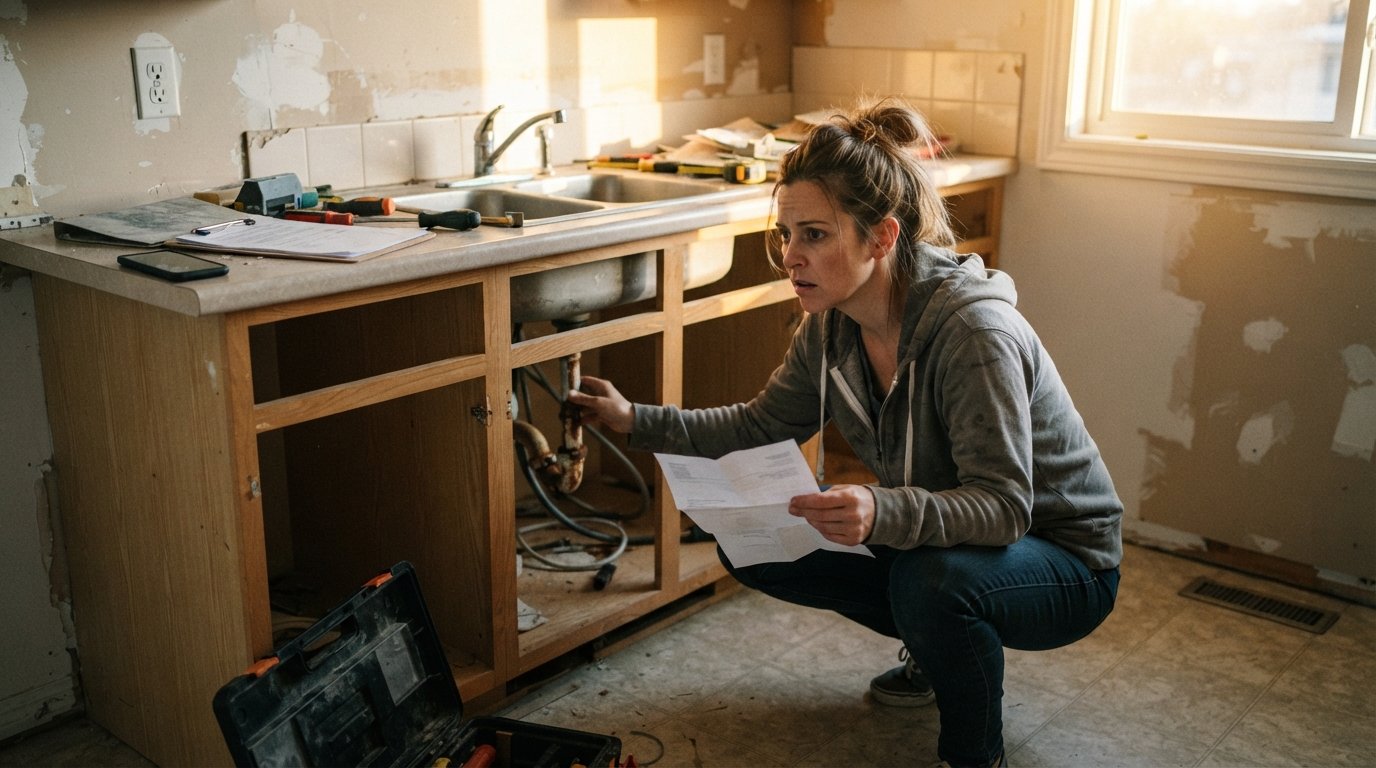
You hired someone to remodel your kitchen, and the work looked fine at first. Then the plumbing failed inspection, your insurance company denied the claim, and the contractor stopped answering calls. A quick search reveals the truth: they never held a state license. This scenario plays out in thousands of American homes every year, and the consequences reach far beyond a botched paint job. When you ask, "what happens if a contractor is not licensed in my state," the answer touches your wallet, your home's legal status, your insurance coverage, and your ability to recover money. Understanding these risks before you sign a contract can save you tens of thousands of dollars and months of frustration.
Why Unlicensed Work Can Void Warranties and Jeopardize Insurance Claims
Manufacturers and material suppliers often condition their warranties on proper installation by licensed professionals. A roofing shingle warranty, for example, may be void if the installer lacked the required state license. The same holds for HVAC equipment, windows, and certain plumbing fixtures. When a contractor is unlicensed, the manufacturer can legally deny a claim for defective materials because the installation did not meet the terms of the warranty. You are left paying for replacements out of pocket, even if the product itself was faulty.
Homeowners insurance presents an even bigger problem. Most standard policies exclude damage caused by unlicensed or uninsured work. If an unlicensed contractor causes a fire, flood, or structural failure, your insurer may deny the claim entirely. Some policies include a "faulty workmanship" exclusion, but that exclusion typically applies only when the work was performed by a licensed professional. With an unlicensed contractor, the insurer can argue that the damage resulted from an illegal or unqualified act, leaving you with no coverage for a catastrophic loss. Before any project begins, confirm that your policy will respond to incidents involving the contractor you hire.
The financial exposure does not stop at denied claims. If an unlicensed worker is injured on your property, your homeowner liability coverage may not apply because the worker was not lawfully employed. The injured person could sue you directly, and you could be responsible for medical bills, lost wages, and pain and suffering. Workers' compensation insurance, which licensed contractors must carry, normally shields homeowners from these claims. Without it, you become the deep pocket.
Can You Recover Money From an Unlicensed Contractor?
Recovering money from an unlicensed contractor is possible, but it depends heavily on your state's laws and how quickly you act. Many states allow homeowners to sue for refunds, actual damages, and sometimes punitive damages. Some statutes even permit recovery of triple the amount paid if the contractor was unlicensed at the time of the contract. However, collecting a judgment is a separate challenge. If the contractor has no assets or has disappeared, a court order may be worth little. Still, several legal avenues exist.
First, check whether your state has a "recovery fund" for homeowners harmed by unlicensed contractors. Several states, including California and Florida, maintain funds that can reimburse homeowners up to a statutory limit. These funds typically require a court judgment or a final order from the licensing board before paying out. Second, you can file a complaint with the state licensing board or the attorney general's office. While these agencies may not recover your money directly, they can impose fines, revoke the contractor's ability to operate, and sometimes order restitution as part of a settlement.
Third, small claims court offers a lower-cost path for disputes under a certain dollar amount, which varies by state (often between $5,000 and $25,000). You do not need a lawyer in most small claims courts, and the filing fees are modest. Gather every document: the contract, payment receipts, photos, text messages, and any inspection reports. The absence of a license is often enough to win a judgment because many states automatically deem unlicensed contracts unenforceable. That means the contractor cannot sue you for unpaid work, and you may be entitled to a full refund of what you already paid.
Finally, consider mediation or arbitration if the contract includes such clauses. These processes are faster and cheaper than litigation, but they still require solid evidence. Before pursuing any dispute, verify the contractor's license status yourself through your state's online database. If you are unsure how to check, resources like PlanRemodel's contractor directory can help you understand what to look for and connect you with pre-vetted professionals in your area.
Permit and Inspection Problems When Work Is Unpermitted
Unlicensed contractors often skip permits to save time and money, but the consequences land on you. Work performed without a permit is considered illegal construction in most jurisdictions. When you later try to sell your home, a buyer's inspector or title search may reveal the unpermitted work. The buyer may demand a price reduction, or the sale may fall through entirely. Even if you stay in the home, your local building department can order you to remove or correct the work at your own expense, sometimes years after it was completed.
Insurance companies also scrutinize permits. If a fire or flood originates in an unpermitted addition or renovation, the insurer may deny the claim on the grounds that the work was never inspected or approved. Mortgage lenders may refuse to finance a home with unpermitted structures, and appraisers may value the property as if the work does not exist. The financial hit can be substantial.
Correcting unpermitted work is rarely simple. You must hire a licensed contractor to bring the work up to code, pay for new permits, and schedule inspections. In some cases, the building department requires you to open walls or remove finishes so inspectors can see the underlying work. The cost of retrofitting often exceeds the original project budget. Before hiring anyone, ask for the permit number and verify it with your local building department. A legitimate contractor will gladly provide it.
How to Check a License Before Signing and Document Verification
Prevention is far easier than recovery. Before you sign any contract or make a deposit, verify the contractor's license through your state's licensing board website. Most states offer a free online lookup that shows the license number, status, expiration date, and any disciplinary actions. Do not rely on a license number printed on a business card; verify it independently. If the contractor claims to be exempt from licensing (for small jobs under a certain dollar amount, for example), confirm that exemption with the board.
Document everything. Keep a copy of the license verification page, the contractor's certificate of insurance, and a signed contract that includes the license number. Take photos of the contractor's vehicle and any identification they provide. If a dispute arises later, this documentation proves you acted in good faith. Also, ask for a written lien waiver from subcontractors and suppliers. Unlicensed contractors often fail to pay their suppliers, who can then place a mechanic's lien on your home. A lien waiver protects you from paying twice for the same materials.
Here is a quick verification checklist to follow before hiring:
- Look up the license number on your state's official licensing board website and confirm the status is "active" and the expiration date is current.
- Request a certificate of insurance for general liability and workers' compensation, and call the insurer to confirm the policy is in force.
- Ask for the permit number for your specific project, then verify it with your local building department.
- Check for disciplinary actions or complaints on the licensing board site and with your local consumer protection agency.
After you have verified the license, review the contract carefully. It should include the contractor's license number, a detailed scope of work, a payment schedule tied to milestones, and a statement of warranty. If the contractor cannot or will not provide these items, walk away. For a deeper dive into protecting your investment, see our guide on how to inspect a contractor's work before final payment, which walks you through the final walkthrough and payment holdback process.
Options for Resolving Disputes, Including State Licensing Boards
If you discover that your contractor is unlicensed, act quickly. The first step is to stop making payments and document the current state of the work. Send a written demand letter via certified mail, stating that the contractor is unlicensed and that you are terminating the contract. Request a full refund of all payments made. Keep a copy of the letter and the delivery receipt. In many states, an unlicensed contractor cannot legally enforce the contract, so your demand carries legal weight.
Next, file a complaint with your state licensing board. Even if the contractor was never licensed, the board can investigate and impose civil penalties. Some boards also have the authority to order restitution. File a separate complaint with your state attorney general's consumer protection division. These agencies track patterns of fraud and may pursue criminal charges if the contractor has a history of unlicensed work. You can also report the contractor to the Better Business Bureau and leave reviews on platforms like Homes.Contractors to warn other homeowners.
If the amount in dispute is significant, consult a construction attorney. Many offer free or low-cost initial consultations. An attorney can advise you on state-specific remedies, including whether you can recover treble damages or attorney's fees. For smaller amounts, small claims court remains a practical option. Prepare a timeline of events, gather all evidence, and be ready to explain why the lack of a license matters under your state's law. In some states, the contractor's unlicensed status is an automatic defense to any claim they bring against you for unpaid work.
Finally, consider whether your state has a contractor recovery fund. These funds are designed to compensate homeowners who have been harmed by licensed contractors, but some also cover unlicensed work if the homeowner can prove fraud. Check the eligibility requirements on your state's licensing board website. The process can take months, but it may be the only way to recover money from a contractor who has vanished.
When you are ready to hire a replacement contractor, use a trusted directory to find pre-vetted professionals. Homes.Contractors connects homeowners with licensed contractors across the country, offering multiple free quotes and localized ratings. You can also call (833)-439-3727 for guidance on your next steps. Do not let one bad experience stop you from completing your project; the right licensed professional can fix the mistakes and restore your home's value.
Learn more about General Contracting for guides, costs, and what to expect.
Compare General Contracting Pros Near You
Enter your ZIP code to compare top-rated local professionals and request free quotes.