What Is a Scope of Work Contractor: A Homeowner’s Guide

You’ve finally decided to remodel your kitchen, replace the roof, or finish the basement. You’ve talked to a few contractors, and one hands you a proposal with a phrase you don’t recognize: “scope of work.” It sounds official, even a little intimidating. But that document,if it’s done right,is actually the single most important piece of paper in your entire project. Without a clear scope of work, you can end up with unexpected costs, unfinished details, and a lot of frustration. Understanding what a scope of work contractor provides will save you money, stress, and time.
Understanding What Is a Scope of Work Contractor
A scope of work (often called an SOW) is simply a detailed, written description of every task a contractor will perform on your home. It lists the materials they’ll use, the timeline for completion, and the specific results you should expect. Think of it as the blueprint for your project,not just the physical blueprint, but the agreement that keeps everyone on the same page.
When you hire a contractor, the scope of work defines the boundaries of the job. It tells you exactly what is included (and, just as importantly, what is not included). For example, a roofing SOW might specify the brand of shingles, the underlayment type, how many layers of old roofing will be removed, and whether dumpster fees are covered. Without these details, verbal promises can slip away, and you might end up paying extra for basic necessities.
This document is most important for large or complex projects,whole-home renovations, additions, roofing replacements, or extensive repairs. However, even smaller jobs like bathroom updates or fence installations benefit from a written SOW. Every homeowner, regardless of project size, should request one before any work begins.
Why This Matters for Your Home
Without a clear scope of work, your project is vulnerable to miscommunication. A contractor might assume you want builder-grade materials, while you expect premium finishes. Or they might plan to reuse existing plumbing, while you assumed everything would be new. These misunderstandings can lead to change orders,expensive additions to the original contract,that blow your budget.
More importantly, a missing or vague SOW can affect safety and long-term durability. If the contractor doesn’t specify how they’ll handle structural supports, waterproofing, or electrical loads, you could end up with a home that looks great but hides serious risks. Over time, those shortcuts can lead to leaks, cracks, or even electrical hazards that cost thousands to fix.
When you take the time to review and approve a detailed scope of work, you protect your investment. You also set clear expectations for timelines, payment schedules, and cleanup. In our guide on what is scope of work, we explain how this simple document can prevent most common contractor disputes.
If you notice signs of this issue in your home, it may help to speak with a qualified contractor. Request a free quote or call to explore your repair or remodeling options.
Common Problems Homeowners Experience
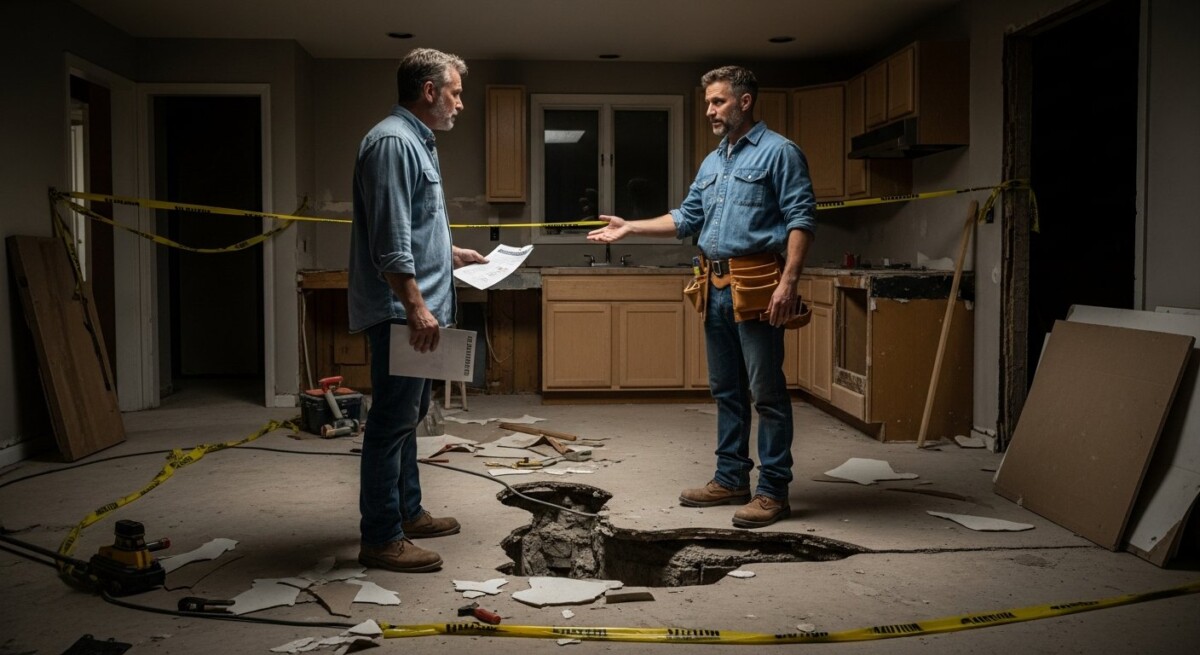
Homeowners often discover the importance of a scope of work only after something goes wrong. A contractor might start demolition but then claim that “moving that wall” was never included. Or they might finish the job but leave you with a pile of debris and a bill for disposal you didn’t expect. These problems are far too common.
The root cause is almost always a lack of written detail. When you rely on handshake agreements or vague proposals, you leave room for interpretation. Contractors may honestly forget details, or less scrupulous ones may intentionally omit tasks to give a lower bid,then charge you later for the “extras.”
Here are the most common issues homeowners face when a scope of work is missing or poorly written:
- Scope creep: The project grows beyond the original agreement, and costs spiral upward.
- Unfinished details: Trim work, caulking, painting, or cleanup are left incomplete.
- Material disputes: You expected hardwood but got laminate, or a specific brand wasn’t used.
- Permit problems: The contractor doesn’t pull required permits, leaving you liable.
- Timeline delays: Without milestones, the project drags on for weeks or months.
- Payment conflicts: You pay for work that isn’t finished to your satisfaction, and you have no written proof of what was promised.
How Professionals Solve the Problem
Experienced contractors know that a solid scope of work protects everyone. They will walk you through each line item, explain what it means, and answer your questions before you sign. A reputable contractor wants you to understand exactly what you’re paying for, because that builds trust and reduces the chance of disputes later.
Here is how a professional contractor typically develops and follows a scope of work:
- On-site inspection: The contractor visits your home, measures, takes photos, and notes any special conditions (like asbestos, old wiring, or rot).
- Detailed proposal: They write a proposal that includes every task, material specification, brand, color, and model number where applicable.
- Timeline and milestones: They include start and end dates, plus key checkpoints (e.g., rough-in inspection, final walkthrough).
- Payment schedule: Payments are tied to completed milestones, not just calendar dates.
- Change order process: The SOW explains how changes will be handled, including written approval and cost adjustments.
- Cleanup and warranty: They specify who handles daily cleanup, final trash removal, and what warranty coverage applies.
Professional work is safer and more reliable because the scope of work is grounded in real-world experience. A contractor who has done hundreds of similar projects knows the hidden steps,like reinforcing a floor before tiling, or adding vapor barriers,that a DIY guide might miss. For a deeper look at how these documents work in practice, read our article on what is a scope of work contractor.
A professional inspection can reveal hidden issues before they become expensive repairs. Compare contractor quotes here or call to discuss your project.
Warning Signs You Should Not Ignore
You don’t need to be a construction expert to spot red flags. Many warning signs are obvious once you know what to look for. If a contractor hesitates to provide a written scope of work, that is a major red flag. Likewise, if their proposal is a single paragraph with no details, walk away.
Pay attention during the estimate process. Does the contractor measure carefully, ask questions about your preferences, and take notes? Or do they give you a quick price and rush off to the next job? The level of detail during the quote often reflects the level of care during the actual work.
Here are specific warning signs that your project may be headed for trouble:
- Vague language: The proposal says “install flooring” without specifying type, brand, or installation method.
- No material list: You aren’t told what brands, models, or grades of materials will be used.
- No timeline: The contractor says “we’ll start soon” but gives no date or duration.
- Pressure to sign: They offer a “discount today only” if you sign without reading.
- Large upfront payment: They demand 50% or more before any work begins.
- No mention of permits: They say permits aren’t needed for your project (they usually are).
What Affects the Cost of Repairs or Installation
The price of your project depends on many factors, and a good scope of work will itemize them so you can see where your money goes. Labor costs vary by region and by the complexity of the job. A simple bathroom vanity replacement costs far less than a full gut renovation with new plumbing and electrical.
Materials are another major factor. Standard builder-grade materials are cheaper, but they may not last as long. If you choose premium hardwood, custom cabinetry, or energy-efficient windows, your scope of work will reflect those higher costs. Accessibility also matters,a roof with a steep pitch costs more to work on than a low-slope roof. Older homes often require additional work to bring wiring, plumbing, or insulation up to current code.
Finally, the size of the project drives the overall price. A scope of work that covers a single room will be far less expensive than one covering an entire floor. The best way to understand your specific costs is to get a detailed, written estimate from at least three contractors. That way, you can compare scopes side by side and see exactly what each one includes.
Costs can vary depending on the condition of your home. The best way to know the price is to get a personalized estimate. Request free quotes from contractors or call today.
How to Choose the Right Contractor
Selecting the right contractor is about more than just the lowest price. You want someone who communicates clearly, respects your time, and stands behind their work. The scope of work is your best tool for evaluating candidates,if they can’t write a clear one, they probably can’t manage your project well.
Start by asking for recommendations from friends or neighbors who have had similar work done. Then, interview at least three contractors. Request a written scope of work from each, and compare them. Pay attention to which contractor includes the most detail,that’s usually a sign of thoroughness and professionalism.
Here are practical tips for choosing the right contractor:
- Verify licenses and insurance: Ask for proof of liability insurance and workers’ compensation. A licensed contractor is held to state standards.
- Read online reviews: Look for consistent feedback about communication, timeliness, and quality.
- Ask for references: Call past clients and ask about their experience, especially regarding the scope of work.
- Get multiple quotes: Don’t settle for the first estimate. Comparing quotes helps you spot outliers,both too high and too low.
- Read the scope of work carefully: Make sure it covers permits, cleanup, material disposal, and a warranty.
Long-Term Benefits of Professional Work
Investing in a professional contractor with a clear scope of work pays off for years to come. Your home will be safer, more comfortable, and more energy-efficient. A properly installed roof, for example, can last 25,30 years with minimal maintenance. A poorly installed one might need repairs within five years.
Professional work also boosts your home’s resale value. When you sell, buyers (and their inspectors) will look for permits, warranties, and signs of quality craftsmanship. A detailed scope of work serves as proof that the job was done right. It can even be included in your home’s documentation to reassure future buyers.
Finally, you gain peace of mind. Knowing exactly what was done, with what materials, and by whom means you can relax and enjoy your updated home. You won’t lie awake wondering if the contractor skipped a step. That clarity is worth more than any discount a vague proposal might offer.
What happens if a contractor doesn’t provide a scope of work?
If a contractor refuses to provide a written scope of work, consider it a major warning sign. Without one, you have no legal protection if the work is incomplete or substandard. Find another contractor who is willing to put everything in writing.
Can I write my own scope of work for a contractor?
Yes, you can draft a list of what you want done, but most contractors prefer to write their own SOW using industry-standard language. You can use your list as a starting point for discussion, then ask the contractor to formalize it in their proposal.
Does a scope of work include a payment schedule?
Yes, a complete scope of work typically includes a payment schedule tied to specific milestones. For example, you might pay 20% at signing, 30% after demolition, 30% after rough-in inspection, and 20% upon final completion and walkthrough.
How detailed should a scope of work be?
The more detailed, the better. A good SOW includes specific product names, model numbers, colors, installation methods, and cleanup procedures. If it feels too detailed, that’s actually a sign of a thorough contractor.
What is the difference between a scope of work and a contract?
A scope of work is a section within a larger contract. The contract includes legal terms like payment terms, dispute resolution, and cancellation policies. The scope of work describes the actual tasks and materials. Both are essential.
Can a scope of work be changed after signing?
Yes, but changes should be handled through a formal change order. Both you and the contractor should sign the change order, and it should specify any cost or timeline adjustments. Never agree to changes verbally.
Do I need a scope of work for a small repair?
Even for small repairs, a written scope of work is helpful. It prevents misunderstandings about the extent of the repair, the materials used, and the final cost. For small jobs, a one-page SOW is usually sufficient.
How do I know if a scope of work is fair?
Compare it to quotes from at least two other contractors. If one SOW includes tasks the others omit, ask why. A fair SOW is clear, complete, and matches what you discussed during the estimate. If something seems missing, ask for clarification before signing.
A clear scope of work is the foundation of any successful home improvement project. It protects your budget, your timeline, and your peace of mind. Before you hire anyone, make sure you have a written document that spells out every detail. The best way to start is by comparing quotes from several contractors so you can see what a thorough scope of work looks like. Request multiple estimates, read them carefully, and choose the contractor who treats your home with the same care you do.