
Steel Entry Door Replacement Cost and Installation Guide
Steel entry door replacement cost and installation explained, from $800 to $3,500. Call 8334393727 for free quotes from local pros.
By Alexia Mabel
Learn more about Door Installation for guides, costs, and what to expect.
Compare Door Installation Pros Near You

Enter your ZIP code to compare top-rated local professionals and request free quotes.
A steel entry door is one of the smartest investments a homeowner can make, blending security, energy efficiency, and curb appeal into a single upgrade. But before you commit, you need a clear picture of what steel entry door replacement cost and installation actually involves. Prices swing widely based on door style, hardware, labor rates, and whether your frame needs work. This guide breaks down every cost component, walks you through the installation process, and shows you how to compare contractor quotes without getting blindsided by hidden fees.
What Drives Steel Entry Door Replacement Cost
The total price of a steel entry door replacement depends on several moving parts. The door slab itself is only one line item. You also pay for the frame, hardware, labor, disposal of the old door, and any structural adjustments. On average, homeowners across the United States spend between $800 and $3,500 for a complete steel entry door replacement, with most projects landing in the $1,200 to $2,200 range. That range widens or narrows based on the factors below.
Door quality matters more than most people expect. A basic 24-gauge steel door costs far less than a heavy 16-gauge or 20-gauge model with a polyurethane foam core. The gauge number works inversely: lower numbers mean thicker, stronger steel. Entry doors typically range from 24-gauge (builder grade) to 16-gauge (heavy duty). Insulated cores, thermal breaks, and factory-applied finishes add cost but also improve energy performance and longevity.
Size and configuration also change the math. A standard 36-inch by 80-inch single door is the most affordable option. Double doors, sidelights, transoms, and custom widths push the price up quickly. If you have an older home with a non-standard rough opening, expect to pay for framing modifications. Those modifications can add $200 to $600 depending on the extent of the work.
Hardware is another cost lever. A basic knob and deadbolt set might cost $40. A smart lock with keypad entry, Wi-Fi connectivity, and auto-lock features can run $200 to $400. Hinges, weatherstripping, thresholds, and door sweeps add another $50 to $150. None of these items are optional if you want a secure, weather-tight installation.
Labor rates vary by region and season. In metro areas like Miami or Houston, skilled carpenters may charge $75 to $120 per hour. In smaller towns, the same work might cost $50 to $80 per hour. A standard replacement takes four to six hours for a pre-hung door, longer if the frame is damaged or the opening is out of square. Emergency or weekend installations often carry a premium.
Average Cost Breakdown by Project Type
Not all steel entry door projects are the same. A simple swap of a pre-hung door into an existing frame is the least expensive scenario. A full replacement that includes new framing, trim, and exterior finishing costs significantly more. Below is a realistic breakdown of what you can expect to pay for different project scopes.
- Basic pre-hung steel door replacement: $800 to $1,500 (door, labor, basic hardware, disposal)
- Mid-range insulated steel door with smart lock: $1,500 to $2,500 (better door, upgraded hardware, minor trim work)
- Premium steel door with sidelights or custom size: $2,500 to $4,500 (custom fabrication, structural adjustments, high-end finish)
- Full replacement with frame repair and exterior refinishing: $3,000 to $6,000 (new frame, siding repair, painting or staining)
These figures include materials and labor but exclude permits, which may be required in some jurisdictions. Always ask your contractor whether permits are included in the quote. A missing permit can stall your project or create problems when you sell your home.
It also helps to compare steel doors with other materials. Fiberglass doors often cost more upfront but resist dents and moisture better. Wood doors offer classic looks but require more maintenance. Steel remains the most affordable option for homeowners who want security and energy efficiency without a premium price tag. For a deeper look at how steel compares to other exterior door materials, see our guide on exterior door replacement cost for steel entry doors.
Installation Process: What Happens on Installation Day
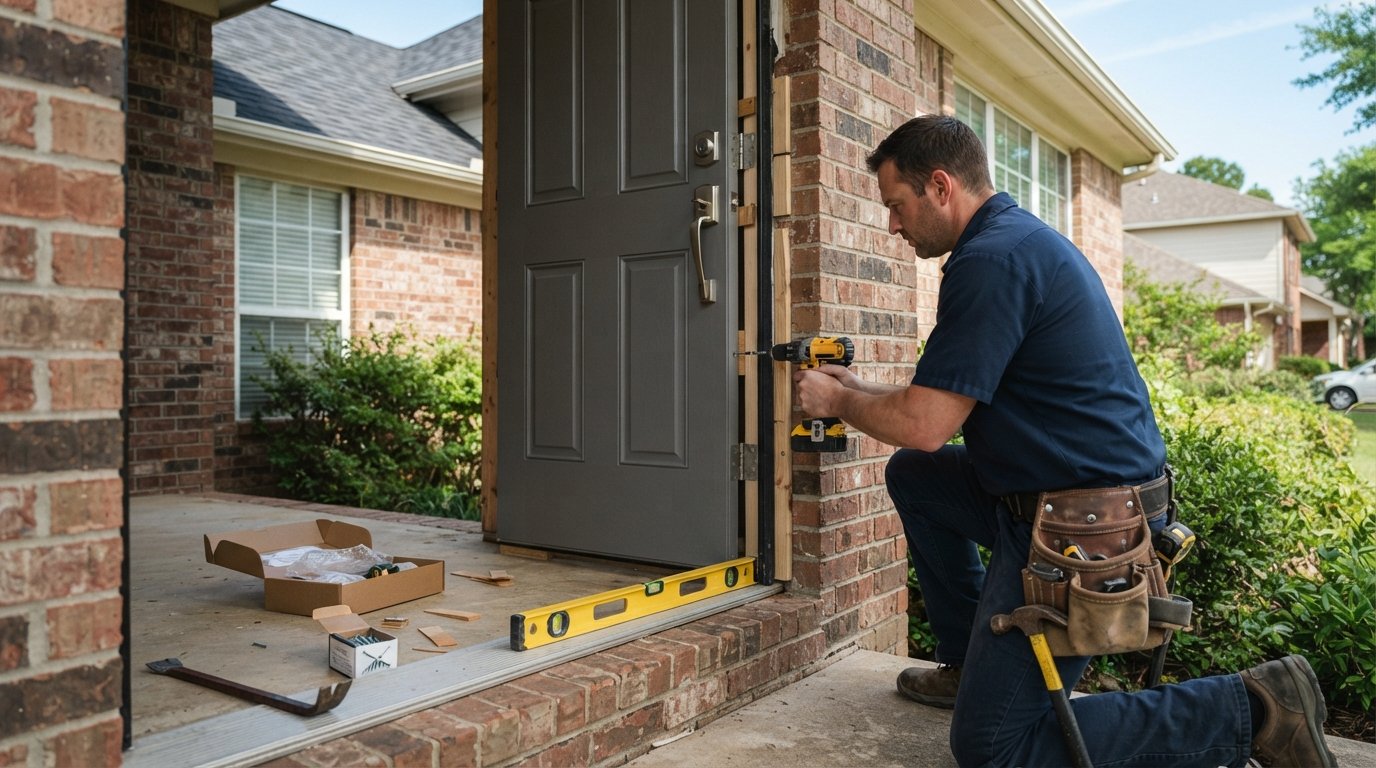
Understanding the installation process helps you ask the right questions and spot potential problems before they become expensive. A professional steel entry door installation follows a predictable sequence. Knowing these steps also lets you evaluate whether a contractor is cutting corners.
- Remove the old door and inspect the frame. The installer takes out the existing door and checks the rough opening for rot, warping, or water damage. If the frame is compromised, it must be repaired or replaced before the new door goes in.
- Prepare the opening. The installer cleans the threshold, checks for level and plumb, and applies flashing or sill pan to direct water away from the interior. Skipping this step leads to leaks and premature door failure.
- Set the new door. For a pre-hung unit, the installer slides the door and frame into the opening, shims it into position, and checks that the door swings freely and latches correctly. For a slab replacement, the installer hangs the door on the existing hinges and adjusts the fit.
- Secure and seal. The installer drives screws through the frame into the wall studs, insulates gaps with low-expansion foam, and applies caulk or weatherstripping to create a tight seal.
- Install hardware and trim. The lockset, deadbolt, handleset, and any smart lock components go on last. The installer also attaches interior and exterior trim, then tests the door for smooth operation.
Most installations wrap up in a single day. If the contractor discovers hidden damage, such as a rotted sill or pest infestation, the project may stretch to two days and add $300 to $800 in repair costs. A reputable contractor will document the damage with photos and provide a revised quote before proceeding.
After installation, test the door yourself. Open and close it several times. Check that the deadbolt engages smoothly. Look for daylight around the edges, which signals a poor seal. Run your hand along the frame to feel for drafts. If anything feels off, raise it with the contractor immediately, while the crew is still on site.
How to Compare Contractor Quotes Without Getting Burned
Getting multiple quotes is the single best way to control steel entry door replacement cost and installation quality. But comparing quotes is not as simple as picking the lowest number. You need to compare scope, materials, warranties, and timelines side by side. A cheap quote that excludes disposal, trim, or permits can end up costing more than a mid-range quote that covers everything.
Start by requesting at least three written estimates. Each quote should include the door brand, model, gauge, core type, finish, hardware specifications, labor, disposal, and any applicable permits. If a quote says "install door" without listing these details, ask for a revised version. Vague quotes are a red flag for change orders later.
Check licenses and insurance before you sign anything. Ask for the contractor's license number and verify it with your state or local licensing board. Request a certificate of insurance for general liability and workers compensation. If the contractor cannot provide these documents, walk away. Uninsured workers on your property create liability risks that fall on you.
Read the warranty terms carefully. Door manufacturers typically offer limited lifetime warranties on the door slab, but labor warranties come from the installer and may last only one to five years. Ask what happens if the door fails to latch, leaks, or rusts prematurely. A strong labor warranty signals that the contractor stands behind the work.
Finally, get everything in writing. A detailed contract should include the project scope, start and completion dates, payment schedule, and a process for handling changes. Never pay the full amount upfront. A typical schedule is 30 to 50 percent as a deposit, with the balance due upon completion and your final walkthrough.
If you want to streamline the process, you can use a platform like FreeQuotes.Contractors to request multiple free quotes from pre-vetted local contractors. That saves you the legwork of calling around and lets you compare offers in one place.
Ways to Save on Steel Entry Door Replacement
You do not have to pay full retail for a quality steel door installation. A few strategic moves can shave hundreds of dollars off your project without sacrificing results. The key is to plan ahead and avoid urgent, must-fix situations that give contractors pricing power.
Off-season scheduling is one of the easiest ways to save. Spring and summer are peak remodeling seasons, so contractors charge more and book out weeks in advance. Scheduling in late fall or winter often unlocks lower labor rates and faster turnaround. Some contractors offer discounts for weekday installations during slow periods.
Choosing a standard size and style also reduces cost. Custom doors require special orders, longer lead times, and higher fabrication fees. A standard 36-inch by 80-inch steel door in a common color is almost always cheaper and faster to install. If you want a custom look, consider adding paint or trim rather than ordering a custom door.
Buying the door yourself and hiring a contractor for installation is another option, but it comes with tradeoffs. You may save on the markup, but you also take on responsibility for measuring, ordering, and handling warranty claims. Many contractors prefer to supply the door so they can control quality and fit. Discuss this option with your contractor before you commit.
Finally, check for local, state, or utility rebates. Some energy-efficient doors qualify for tax credits or rebates through utility programs. The savings are usually modest ($50 to $200), but every bit helps. Ask your contractor if the door you are considering qualifies for any incentives.
Common Mistakes to Avoid
Homeowners often make avoidable mistakes that drive up steel entry door replacement cost and installation headaches. Knowing these pitfalls ahead of time can save you money and frustration.
- Choosing a door based on price alone. The cheapest door may have a thin gauge, poor insulation, or a finish that peels within a few years. Pay attention to gauge, core material, and warranty.
- Skipping the frame inspection. If the existing frame is rotted or warped, installing a new door without repairs leads to leaks, drafts, and premature failure. Always budget for potential frame work.
- Hiring an unlicensed contractor. Unlicensed work may fail inspection, void your homeowner insurance, and leave you without recourse if something goes wrong. Verify credentials every time.
- Ignoring the finish. Steel doors require proper priming and painting to resist rust. Factory-finished doors cost more but last longer. If you paint a bare steel door, use a high-quality exterior paint and follow the manufacturer's instructions.
- Not testing the door after installation. A door that sticks, leaks air, or fails to latch is a problem you should catch immediately. Test it thoroughly before the crew leaves.
Avoiding these mistakes keeps your project on budget and ensures the door performs as expected for years. A steel entry door is a long-term investment, so treat the installation with the same care you would give any major home improvement.
Frequently Asked Questions
How long does a steel entry door last?
A quality steel entry door can last 15 to 30 years or more with proper maintenance. The finish is usually the first thing to fail, so repainting or refinishing every five to seven years extends the door's life. Dents and rust are the main enemies. Choosing a heavier gauge and an insulated core improves durability.
Do I need a permit to replace an entry door?
Permit requirements vary by city and state. Some jurisdictions require a permit for any exterior door replacement, while others only require one if you change the size of the opening or modify the structure. Ask your contractor and your local building department. Skipping a required permit can cause problems during a home sale or insurance claim.
Can I replace just the door slab and keep the existing frame?
Yes, if the existing frame is in good condition and the new slab matches the dimensions and hinge placement. Slab replacement is cheaper than a full pre-hung installation, but it requires precise measurements and may not be possible if the frame is damaged or out of square. A contractor can advise you after inspecting the opening.
Is a steel door better than fiberglass?
Steel and fiberglass each have strengths. Steel is generally cheaper, stronger against impact, and available in more styles. Fiberglass resists dents and moisture better and can mimic wood grain more convincingly. For most homeowners, steel offers the best balance of cost, security, and energy efficiency. Fiberglass makes sense in coastal or high-humidity areas where rust is a concern.
Replacing a steel entry door is a manageable project when you know what drives the cost and how to vet your contractor. Expect to pay between $800 and $3,500 for most installations, with premium or complex projects running higher. Focus on quality materials, verified labor, and a clear written contract. With the right preparation, your new steel door will improve security, lower energy bills, and boost your home's curb appeal for decades.