
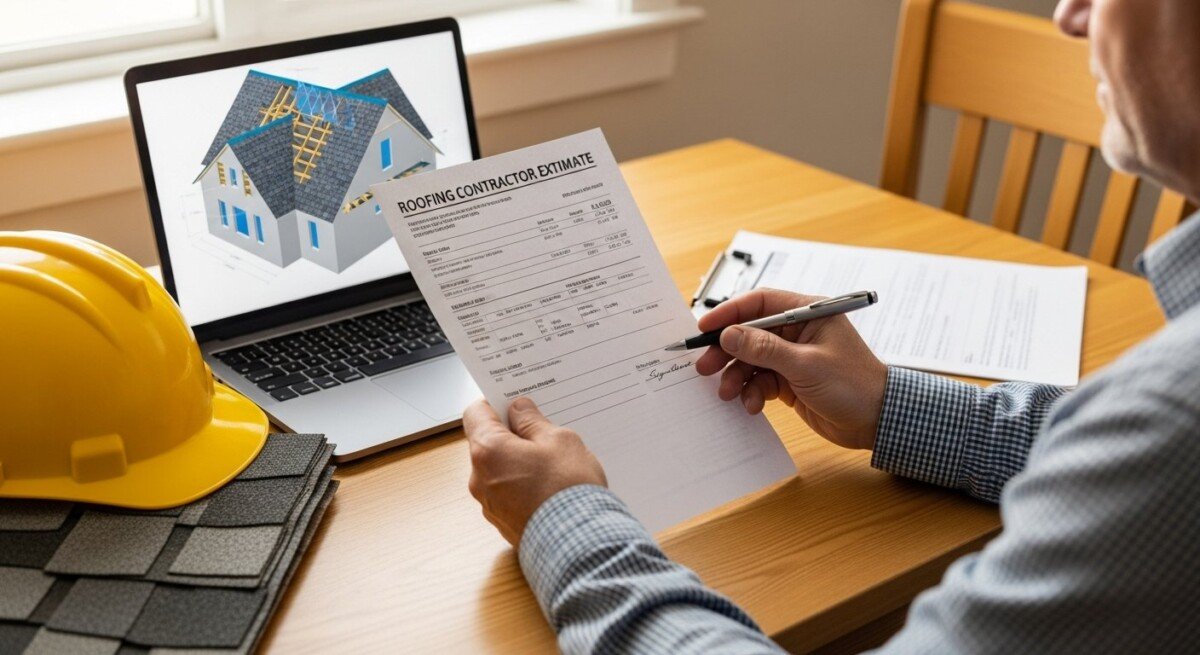
Understanding Your Roofing Contractor Estimate Example
Learn what to look for in a professional roofing contractor estimate example. Our guide helps you understand costs, compare quotes, and avoid hidden fees for your project.
By Alexia Mabel
Learn more about Roof Repair or Maintenance for guides, costs, and what to expect.
Compare Roof Repair or Maintenance Pros Near You

Enter your ZIP code to compare top-rated local professionals and request free quotes.
Getting a new roof or a major repair is a significant investment in your home. When that first estimate arrives, it can feel overwhelming. Is this price fair? What am I actually paying for? A clear, detailed roofing contractor estimate is your roadmap to a successful project and your best tool for making an informed decision. Let’s break down exactly what you should see in a professional estimate, so you can compare quotes with confidence and choose the right contractor for your home.
For a free, detailed roofing estimate with transparent pricing, call 📞833-439-3727 or visit Get Your Estimate today.
A Simple Breakdown of a Roofing Estimate
A roofing estimate is more than just a final price. It’s a detailed document that outlines the scope of work, materials, labor, and terms of the project. Think of it as a blueprint for the entire job, written in plain language and numbers. A good estimate leaves no room for surprises, setting clear expectations for both you and the contractor.
Professional contractors provide these estimates to show you exactly what you’re getting for your investment. It transforms a vague idea like “replace the roof” into a concrete plan with specific products, timelines, and costs. This transparency is the foundation of a trustworthy working relationship.
Key Sections in Every Estimate
While formats vary, every thorough roofing estimate should include several core sections. You’ll see your contact information and the contractor’s licensing and insurance details at the top. The heart of the document is the scope of work, which lists every task to be performed. Next comes the materials list, specifying brands, colors, and quantities of shingles, underlayment, flashing, and vents. Finally, a clear cost breakdown and payment terms outline the financial agreement.
Why a Detailed Estimate Matters for Homeowners
An estimate protects you. It prevents misunderstandings about what work will be done and what materials will be used. Without a detailed estimate, you risk agreeing to a price for a basic shingle job, only to find out later that critical components like ice and water shield or proper ventilation weren’t included, leading to costly change orders.
It also allows for true apples-to-apples comparisons. If you get three estimates, but one is a single-page quote with just a total price and another is a five-page itemized list, you’re not comparing the same service. The detailed estimate empowers you to ask informed questions and ensures you are evaluating contractors based on the same quality of materials and scope of work. This clarity is essential for budgeting and prevents financial strain down the line.
Ready for a transparent, no-surprise estimate on your roofing project? Contact our trusted local roofing professionals today for a free, detailed assessment.
Common Issues with Vague Estimates
The biggest red flag is an estimate that’s vague or missing key details. This often leads to disputes, unexpected costs, and dissatisfaction with the final result. A quote that just says “Replace roof – $12,000” is a recipe for trouble. You have no way of knowing what that price includes or excludes.
These issues usually stem from a contractor cutting corners on the planning process or, worse, intentionally leaving things out to present a lower “sticker price” to win the job. Once work begins, they then inform you that necessary items are “extras.” This practice, known as low-balling, puts homeowners in a difficult position.
- Lump-Sum Pricing: One total price with no line-item breakdown.
- Missing Material Specifications: Not listing the brand, type, or warranty of shingles and underlayment.
- Omitted Critical Components: Skipping items like drip edge, starter shingles, or proper attic ventilation.
- Unclear Waste Removal: Not stating who is responsible for cleanup and disposal of old materials.
- Vague Timelines: No projected start and completion dates.
How Professionals Create a Comprehensive Estimate
A reputable contractor starts with a thorough on-site inspection. They measure your roof’s squares (100 square feet), assess the decking condition, examine flashing around chimneys and vents, and check your attic ventilation. This hands-on evaluation is crucial for an accurate estimate.
Next, they translate their findings into a detailed proposal. They specify every material, from the synthetic underlayment brand to the color and style of architectural shingles, the type of metal flashing, and the model of ridge vents. Labor is clearly defined, outlining the process of tear-off, deck preparation, installation, and cleanup. Finally, they include all necessary permits, warranties, and a clear schedule. This meticulous process, as outlined in our guide to choosing the right roofing contractor, is what separates true professionals from the rest.
Don’t settle for guesswork on your most important home investment. Get a free, itemized estimate from our certified team and see the difference clarity makes.
Signs You Should Not Ignore on an Estimate
Your estimate should be a document that builds confidence. If you feel confused or see warning signs, trust your instincts. A professional is happy to explain every line item until you understand. If a contractor is evasive or pressures you to sign quickly, consider it a major red flag.
Pay close attention to the warranty section. It should clearly distinguish between the manufacturer’s warranty on the materials and the contractor’s workmanship warranty. A strong workmanship warranty (often 5-10 years or more) shows the contractor stands behind their installation quality. Be wary of estimates that lack a written workmanship warranty altogether.
- High Pressure to Sign Immediately: Legitimate estimates come with a reasonable review period.
- Request for Large Upfront Payment: A deposit is normal, but paying more than 10-30% upfront is risky.
- Missing License or Insurance Info: The contractor’s license number and proof of liability/workers’ comp insurance should be listed.
- No Physical Business Address: Be cautious of contractors operating solely out of a truck with a P.O. box.
- Vague or Verbal-Only Warranties: All guarantees must be in writing on the estimate.
Cost Factors and What Affects Your Roofing Price
Many factors influence the final number on your estimate. The size and pitch of your roof are the most basic,steeper, more complex roofs require more labor and safety equipment. The choice of materials causes the largest price swing; basic 3-tab shingles cost significantly less than premium architectural shingles, metal roofing, or tile.
For a free, detailed roofing estimate with transparent pricing, call 📞833-439-3727 or visit Get Your Estimate today.
Other critical cost factors include the condition of your roof deck. If wood needs to be replaced after tear-off, that adds material and labor. The complexity of your roof’s design with valleys, dormers, and skylights increases installation time. Your geographic location and local disposal fees also play a role. A transparent estimate will account for these variables clearly, so you understand where your money is going.
Understanding these factors is key to evaluating roofing contractor quotes fairly. Let us provide you with a honest, factor-by-factor estimate for your specific home.
How To Choose the Right Roofing Professional
Start by seeking multiple detailed estimates. Use them not just to compare price, but to compare value,the quality of materials, the thoroughness of the scope, and the professionalism of the presentation. Verify the contractor’s license and insurance independently, and check online reviews and references for past customers.
Choose a contractor who communicates clearly, answers all your questions patiently, and provides a robust, written estimate. They should be someone you feel comfortable having on your property for several days. Remember, the cheapest option is often the most expensive in the long run if it leads to poor workmanship and early repairs.
- Get at least 3 detailed, written estimates.
- Verify licensing, insurance, and Better Business Bureau standing.
- Read recent customer reviews and ask for references.
- Prioritize clear communication and professionalism over the lowest bid.
- Ensure all promises are documented in the estimate contract.
Long-Term Benefits for Your Home
Investing in a quality roof with a clear, professional estimate pays off for decades. A properly installed roof with high-grade materials protects your home from water damage, mold, and structural decay. It enhances your curb appeal and can significantly increase your property’s resale value.
Beyond protection, a good roof improves energy efficiency. Proper attic ventilation and quality materials help regulate attic temperature, reducing strain on your HVAC system and lowering utility bills. Most importantly, it provides peace of mind. Knowing your roof was installed correctly with a clear warranty means you can sleep soundly through every storm, confident your home and family are safe and dry.
Frequently Asked Questions
What should a roofing estimate include?
A complete estimate includes contractor contact and license info, a detailed scope of work, an itemized list of materials (brands, styles, quantities), labor costs, payment schedule, start/end dates, warranty details, and information on permits and cleanup. It should leave no question unanswered.
How long is a roofing estimate valid?
Most roofing estimates are valid for 30 to 90 days. Material prices can fluctuate, so contractors protect themselves with expiration dates. Always ask about the validity period and get a new quote if your project is delayed beyond that timeframe.
Is a roofing estimate free?
Yes, reputable roofing contractors almost always provide detailed estimates for free. This is a standard part of the sales and consultation process. Be wary of any company that charges a significant fee just to provide a quote.
What’s the difference between an estimate and a quote?
In roofing, the terms are often used interchangeably. However, an “estimate” can sometimes be a preliminary approximation, while a “quote” or “proposal” is typically a fixed-price offer for the specified work. Always clarify if the price is fixed or subject to change.
Why do roofing estimates vary so much?
Prices vary due to differences in material quality, scope of work included, overhead costs, and workmanship warranties. A very low estimate often excludes necessary items or uses inferior materials. A very high one may include premium options you don’t need. The detailed breakdown explains the variance.
Should I get a permit, or will the contractor?
The roofing contractor should typically pull the required building permits. This should be stated in the estimate. If a contractor asks you to get the permit, it may be a sign they are not properly licensed or insured to work in your area.
What is a “square” in roofing?
A “square” is a unit of measurement equal to 100 square feet of roof area. Roofing materials like shingles are often sold by the square. Your estimate should list the number of squares needed, helping you understand the material quantity and cost.
How much should I pay as a deposit?
A reasonable deposit is often 10% to 30% of the total project cost to secure materials and schedule your job. Be extremely cautious of contractors who demand 50% or more upfront. Payment schedules should be tied to project milestones, like completion of tear-off or installation.
Your roofing estimate is the first and most important step in a successful project. By understanding what to look for, you can move forward with confidence, knowing you’ve chosen a contractor who values transparency and quality as much as you do. A clear estimate today leads to a secure, beautiful roof over your head for years to come.
For a free, detailed roofing estimate with transparent pricing, call 📞833-439-3727 or visit Get Your Estimate today.
Learn more about Roof Repair or Maintenance for guides, costs, and what to expect.
Compare Roof Repair or Maintenance Pros Near You
Enter your ZIP code to compare top-rated local professionals and request free quotes.