
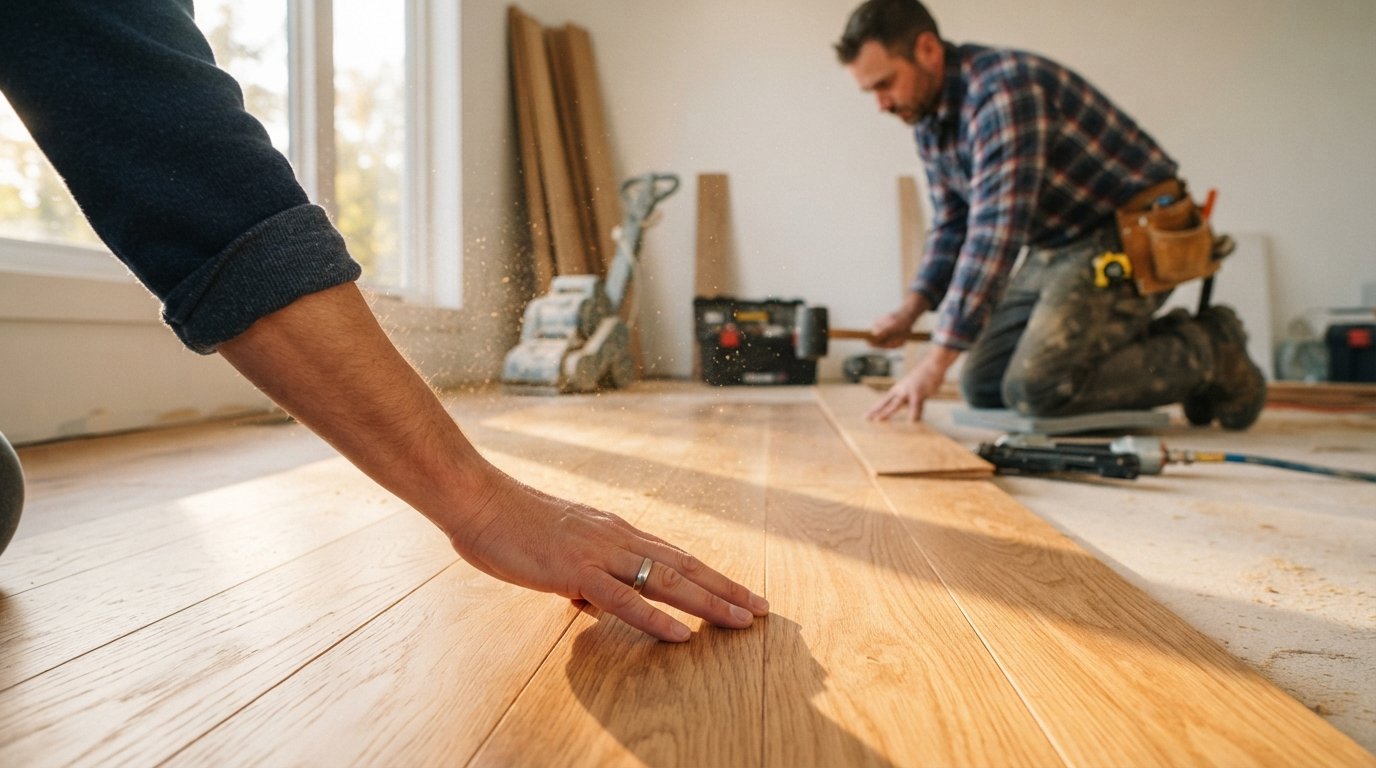
Hardwood Flooring Costs and Installation Tips for 2026
Discover real hardwood flooring costs, installation methods, and maintenance tips. Learn how to choose the right wood and get fair quotes from contractors.
By Alexia Mabel
Learn more about Floor Installation or Replacement for guides, costs, and what to expect.
Compare Floor Installation or Replacement Pros Near You

Enter your ZIP code to compare top-rated local professionals and request free quotes.
When you step into a room with genuine hardwood flooring, the difference is immediate. The warmth, the grain, the quiet sense of permanence: it feels substantial in a way that carpet or vinyl simply cannot match. But that feeling comes with a price, and not just the dollar amount on the invoice. Installing hardwood flooring is a commitment of time, money, and maintenance. Before you sign a contract or pick out a stain, you need a clear picture of what this project truly involves. This guide walks you through the real costs, the installation process, and the critical decisions that will determine whether your new floors look stunning for decades or become a constant source of regret.
Why Hardwood Flooring Remains a Top Choice
Hardwood flooring has held its status as the gold standard for home interiors for generations. Unlike trendy alternatives that fade in and out of style, wood floors have a timeless quality that complements virtually any design aesthetic, from rustic farmhouse to sleek modern. The natural variations in grain and color mean that no two planks are identical, giving your home a unique character that manufactured products struggle to replicate.
Beyond aesthetics, hardwood offers practical advantages that matter to homeowners. It is significantly more durable than carpet, and with proper care, it can last for 50 to 100 years. This longevity makes it a smart financial investment, particularly when you consider that real wood floors can increase your home's resale value. A 2025 report from the National Association of Realtors found that hardwood flooring recoups roughly 70% to 80% of its installation cost at resale, a figure that outpaces most other home improvements.
However, the benefits come with responsibilities. Hardwood is susceptible to scratches, dents, and moisture damage. It requires regular sweeping and periodic refinishing, which adds to its long-term cost. You need to weigh these factors against the undeniable beauty and durability to decide if hardwood is the right fit for your lifestyle, especially if you have pets, young children, or a busy household.
How Much Does Hardwood Flooring Really Cost?
The cost of a hardwood flooring project is influenced by several variables, but the most significant is the material you choose. The two main categories are solid hardwood and engineered hardwood, and each has its own price range and best-use scenarios.
Solid vs. Engineered: Price and Performance
Solid hardwood is exactly what it sounds like: a single piece of wood milled from a tree. It is typically 3/4 inch thick and can be sanded and refinished multiple times over its life. This makes it the most durable option, but it is also the most expensive. Prices for solid wood generally range from $5 to $15 per square foot for the material alone, with premium species like Brazilian cherry or walnut reaching $20 or more.
Engineered hardwood consists of a thin layer of real wood veneer bonded to a core of plywood or high-density fiberboard. This construction makes it more stable and resistant to moisture, allowing installation in basements or over concrete slabs where solid wood would fail. Engineered floors are also often cheaper, typically $4 to $12 per square foot, and they install faster because they can be floated, glued, or stapled without the need for a nail-down process.
When you add in underlayment, adhesive, trim, and labor, the total installed cost for hardwood flooring typically lands between $10 and $25 per square foot. For a standard 500-square-foot living area, that translates to $5,000 to $12,500. It is a significant outlay, but one that many homeowners view as a long-term investment rather than a disposable upgrade.
Labor Costs and Regional Variations
Labor is the second major cost component. Professional installation rates vary by region, but you can expect to pay anywhere from $3 to $8 per square foot for a standard installation. Complex layouts, such as herringbone or diagonal patterns, will push that figure higher. In urban areas with a high cost of living, like New York or San Francisco, labor rates can exceed $10 per square foot.
To get an accurate estimate for your specific project, it is essential to obtain multiple quotes from licensed contractors. This is where a service like Homes.Contractors becomes invaluable. Instead of calling around blindly, you can submit your project details and receive free, no-obligation quotes from pre-vetted professionals in your area. Comparing at least three estimates ensures you are getting a fair price and helps you spot any red flags in a contractor's proposal.
Choosing the Right Wood Species and Finish
The wood species you select affects not only the look of your floor but also its hardness, grain pattern, and price. The Janka hardness scale measures a wood's resistance to denting and wear, and it is a critical number to check before you buy. A higher rating means a more durable surface, which is particularly important in high-traffic areas.
Here are some common species and what they offer:
- Red Oak: A classic, affordable choice with a prominent grain. Janka rating of 1290, making it durable and easy to stain.
- White Oak: Slightly harder than red oak (Janka 1360) with a more subtle, wavy grain. Its natural resistance to moisture makes it ideal for kitchens.
- Hickory: One of the hardest domestic woods (Janka 1820), featuring dramatic grain variations. Excellent for high-traffic homes, but it can be challenging to stain evenly.
- Maple: A light, clean look with a fine, uniform grain. Janka rating of 1450, but it is prone to showing scratches more readily than oak.
- Brazilian Cherry (Jatoba): A rich, reddish-brown exotic wood with a Janka rating of 2350, offering extreme durability at a premium price.
Finish is the other key decision. Prefinished floors come with a factory-applied finish that is cured under UV light, making it harder and more uniform than a site-applied finish. Site-finished floors, on the other hand, allow for custom stain colors and a seamless, continuous surface with no beveled edges between planks. However, site finishing involves sanding and sealing on-site, which means more dust, fumes, and installation time.
Installation Methods Explained
How your hardwood flooring is installed has a major impact on its performance and longevity. The right method depends on the type of wood you choose and the condition of your subfloor. Here are the four primary installation techniques:
- Nail-Down: This is the traditional method for solid hardwood. The installer nails each plank to a wooden subfloor through the tongue of the board. It is secure and allows the wood to expand and contract naturally with humidity changes.
- Staple-Down: Similar to nail-down but uses staples instead of nails. It is faster and often used for engineered wood, but it can be less secure over time.
- Glue-Down: The planks are adhered directly to the subfloor with a strong adhesive. This is the preferred method for engineered hardwood over concrete slabs, and it provides excellent soundproofing.
- Floating: The planks click together and float over an underlayment without being attached to the subfloor. This is the quickest and most DIY-friendly method, but it can feel hollow underfoot and is not suitable for solid hardwood.
Each method has its own set of requirements. For example, a nail-down installation requires a clean, dry, and level wooden subfloor. If you are installing over concrete, you will need a glue-down or floating system. Your contractor should perform a moisture test on the subfloor before installation to prevent future warping or cupping.
Maintenance and Longevity: Protecting Your Investment
Once your hardwood floors are installed, the real work begins. Proper maintenance is not just about keeping them clean; it is about protecting the finish and the wood itself from premature wear. The good news is that the daily routine is simple: sweep or vacuum regularly to remove grit and dirt that can scratch the surface, and wipe up spills immediately to prevent moisture damage.
Every few years, you may need to apply a fresh coat of finish to high-traffic areas. This is known as screening and recoating, and it costs significantly less than a full refinish. A full sand-and-refinish, which removes the top layer of wood entirely, is typically needed every 10 to 15 years. It is a dusty, disruptive process that requires moving furniture and vacating the room for several days, but it can make your floors look brand new again.
To minimize scratches, place felt pads under furniture legs, use area rugs in entryways and high-traffic zones, and avoid walking on the floor with high heels or cleats. Also, be mindful of humidity levels. Hardwood expands and contracts with changes in moisture, so maintaining a consistent indoor humidity of 30% to 50% will prevent gaps and cupping.
DIY vs. Hiring a Professional: What You Need to Know
The idea of installing hardwood flooring yourself can be tempting, especially if you are handy and want to save on labor costs. Floating engineered floors are particularly DIY-friendly, and many homeowners successfully tackle them over a weekend. However, solid hardwood installation is a different beast. It requires specialized tools, such as a pneumatic nailer and a floor sander, and a steady hand to ensure tight joints and a level surface.
Here is a quick comparison to help you decide:
- Cost: DIY saves the $3 to $8 per square foot labor cost, but you will need to rent or buy tools, which can add up to $200 to $500.
- Time: A professional crew can install 500 square feet in 2 to 3 days. A DIYer might take a week or more, especially if it is their first time.
- Quality: Professionals have the experience to handle tricky corners, uneven subfloors, and proper acclimation, which reduces the risk of future problems.
- Warranty: Many manufacturers require professional installation to honor their warranty. DIY installation often voids it.
If you choose to hire a professional, the most important step is vetting contractors thoroughly. Ask for references, verify their license and insurance, and read reviews on platforms like Homes.Contractors, which features ratings by state to help you find trusted local pros. Remember, the cheapest quote is not always the best. Look for a contractor who communicates clearly, provides a detailed written estimate, and has a solid track record of completed projects.
How to Get Multiple Quotes and Avoid Common Pitfalls
One of the biggest mistakes homeowners make is accepting the first estimate they receive. Prices for the same project can vary by 30% or more between contractors, simply because of differences in overhead, experience, and how they value their time. To ensure you are getting a fair deal, you should obtain at least three quotes from different contractors.
When you request a quote, be sure to provide the same information to each contractor: the square footage, the type of wood you are leaning toward, and any special installation requirements. This makes it easier to compare apples to apples. Also, ask for a breakdown of costs, including materials, labor, and any additional fees for moving furniture or disposing of old flooring.
Here are some red flags to watch for during the quoting process:
- Vague or verbal estimates: A reputable contractor will provide a written, detailed proposal.
- Demanding a large deposit upfront: Standard practice is 10% to 20% down, with the balance due upon completion.
- No license or insurance: This is non-negotiable. Ask to see proof of both.
- Pressure tactics: A contractor who pushes you to sign immediately is not looking out for your best interests.
- Unusually low bids: If it sounds too good to be true, it probably is. Low bids often mean lower quality materials or shortcuts.
Using a referral platform like Homes.Contractors simplifies this process. You submit a single request for your hardwood flooring project, and the platform connects you with several pre-vetted contractors in your area. This not only saves you time but also gives you peace of mind knowing that each professional has been screened to some degree. You can then compare their quotes, read their ratings, and make an informed decision without the hassle of cold-calling.
Final Thoughts on Your Hardwood Flooring Project
Hardwood flooring is a significant investment that can transform the look and value of your home. By understanding the costs, materials, and installation methods, you can make choices that align with your budget and lifestyle. Whether you opt for the classic warmth of solid oak or the practical stability of engineered hickory, the key is to plan carefully, hire a qualified professional, and commit to ongoing maintenance. When done right, your hardwood floors will reward you with beauty and durability for decades to come. Take the first step today by gathering quotes from trusted contractors, and let your journey toward a stunning new floor begin.
Learn more about Floor Installation or Replacement for guides, costs, and what to expect.
Compare Floor Installation or Replacement Pros Near You
Enter your ZIP code to compare top-rated local professionals and request free quotes.