
Fire Damage Restoration: Steps to Rebuild Your Home
Discover the step-by-step fire damage restoration process, from insurance claims to choosing the right contractor, and learn how to rebuild your home with confidence.
By Adnan Nazir
Learn more about Water Damage Cleanup and Restoration for guides, costs, and what to expect.
Compare Water Damage Cleanup and Restoration Pros Near You

Enter your ZIP code to compare top-rated local professionals and request free quotes.
When fire strikes, the immediate aftermath can feel overwhelming. The smoke smell lingers, soot coats every surface, and the structural damage may not be fully visible yet. But here is the critical truth: the actions you take in the first 48 hours can significantly affect how much of your home and belongings you can save. Fire damage restoration is not a single task but a structured process that requires speed, expertise, and careful planning. This guide walks you through every stage, from securing your property to working with insurance and contractors, so you can navigate the recovery with confidence.
Understanding the Full Scope of Fire Damage
Fire damage is rarely limited to what the flames touch. The heat from a fire can weaken walls, warp metal fixtures, and crack glass even in rooms that never caught fire. Smoke travels through ductwork and seeps into insulation, drywall, and upholstery. Soot, which is acidic, can permanently etch surfaces like countertops, tile, and metal if left untreated. Water damage from firefighting efforts adds another layer of complexity, often causing mold within days.
Therefore, a professional fire damage restoration company will assess three distinct types of damage: structural, smoke and soot, and water. Structural damage involves the framework of your home, including the roof, walls, and foundation. Smoke and soot damage affects surfaces and air quality, while water damage comes from extinguishing the fire. Each type requires specialized equipment and techniques. For example, thermal fogging neutralizes smoke odors, while industrial dehumidifiers dry out structural cavities that are invisible to the naked eye.
Immediate Steps After the Fire Is Out
Your safety remains the top priority. Do not re-enter the home until the fire department declares it safe. Once you have clearance, take these steps to protect your property and your health:
- Contact your insurance company immediately to file a claim and ask about coverage for temporary housing.
- Secure the property: board up broken windows, doors, and holes in the roof to prevent further damage and unauthorized entry.
- Limit movement inside the home to avoid spreading soot. Place clean towels or drop cloths on floors and furniture.
- Remove valuable documents, jewelry, and heirlooms if it is safe to do so, and store them in a clean, dry place.
- Do not turn on utilities (electricity, gas, water) until a professional inspects and approves them.
These immediate actions help mitigate additional damage and set the stage for a smoother restoration process. While you wait for professionals, avoid using any electrical appliances or outlets, as water and fire can compromise wiring. Also, do not attempt to clean soot from walls or ceilings yourself. Improper cleaning can push soot deeper into porous surfaces, making professional restoration more difficult and costly.
Why Professional Fire Damage Restoration Matters
Attempting to handle fire damage as a DIY project is not realistic. The process requires industrial-grade equipment, specialized training, and a deep understanding of building codes and safety regulations. Professional restoration companies have the tools to extract water, dry structures, remove smoke odors, and clean or replace damaged materials. They also coordinate with your insurance adjuster, providing detailed documentation of the damage and the cost of repairs, which is essential for maximizing your claim.
Moreover, restoration professionals are trained to identify hidden issues, such as compromised electrical wiring or weakened load-bearing walls, that could pose serious safety risks. They also know how to clean different types of materials without causing further damage. For example, dry cleaning sponges are used on walls before wet cleaning, and specialized solvents are needed for metal surfaces to prevent rust and etching. The expertise of a certified restoration company not only speeds up the recovery but also ensures that your home is safe to live in again.
Choosing the Right Restoration Company
Selecting a qualified contractor is one of the most important decisions you will make during this process. Start by asking for referrals from your insurance company, but do not stop there. Research independent reviews, verify licenses and insurance, and check for certifications from organizations like the Institute of Inspection, Cleaning and Restoration Certification (IICRC). A reputable company will provide a detailed written estimate, explain the restoration plan, and answer your questions without pressure.
When comparing estimates, look beyond the bottom line. Consider the scope of work, the materials to be used, and the timeline. A lower bid may exclude critical steps like deodorization or structural drying. Also, ask about their experience with fire damage specifically, as it requires different skills than water or mold remediation. Once you have narrowed down your options, request references from recent fire restoration projects and contact them to ask about their experience.
The Fire Damage Restoration Process: A Step-by-Step Guide
Professional fire damage restoration typically follows a systematic sequence. Understanding this process helps you know what to expect and allows you to track progress.
1. Emergency Contact and Assessment
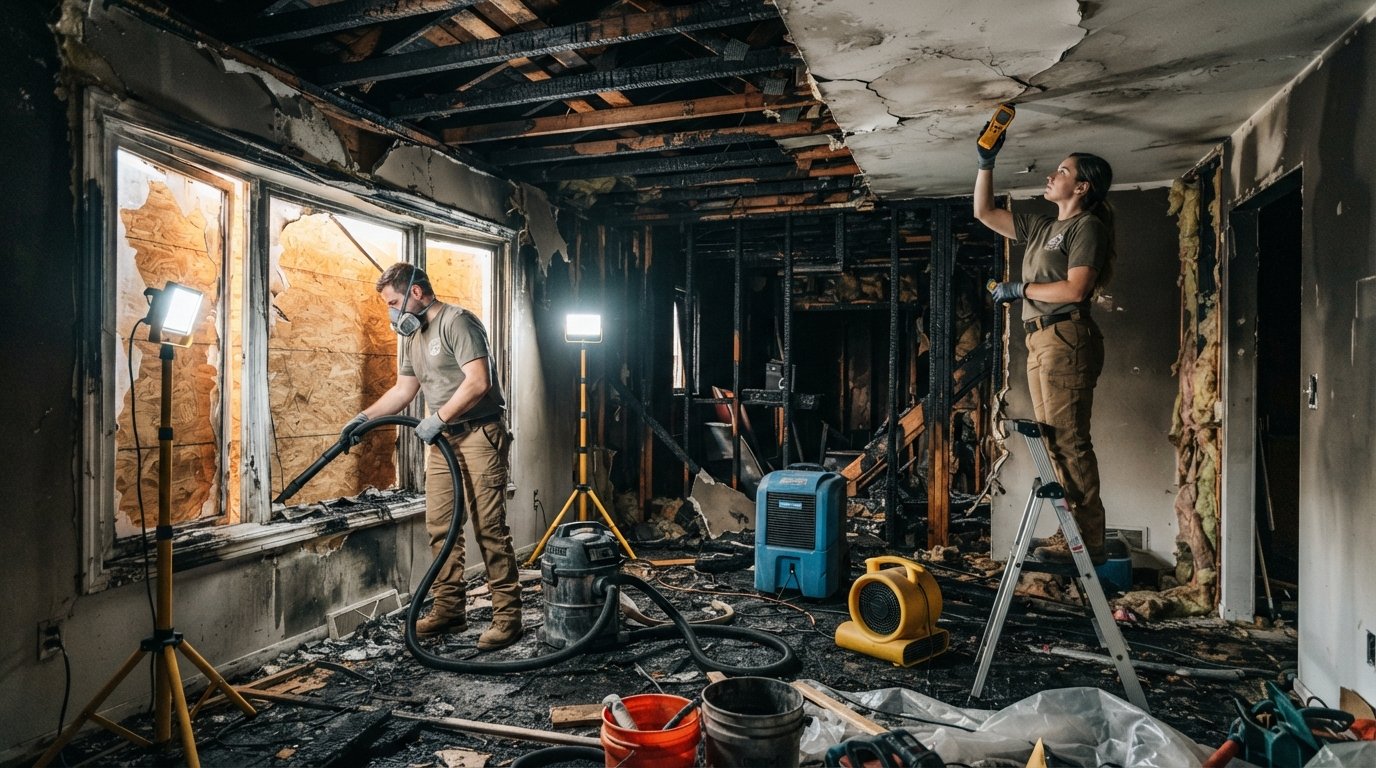
The restoration company begins with a thorough inspection of the property. They use moisture detectors, thermal imaging cameras, and other tools to assess the extent of damage. They will document everything with photos and notes for your insurance claim. Based on the assessment, they will provide a detailed plan and cost estimate.
2. Board-Up and Tarp Services
If your roof has holes or windows are broken, the crew will secure the property using plywood and heavy-duty tarps. This prevents further damage from weather, animals, and vandalism. This step is often covered by your insurance policy and is crucial for safety.
3. Water Removal and Drying
Firefighting efforts leave behind significant water. Restoration teams use pumps and extraction units to remove standing water, then place industrial air movers and dehumidifiers to dry the structure. This step is time-sensitive, as mold can begin to grow within 24 to 48 hours.
4. Soot and Smoke Removal
This is one of the most labor-intensive parts. Technicians use a combination of vacuuming with HEPA filters, dry cleaning sponges, and specialized chemical cleaners to remove soot from walls, ceilings, and floors. They also clean or replace HVAC filters and ductwork to prevent smoke particles from circulating.
5. Cleaning and Sanitizing
All salvageable belongings, including clothing, furniture, and electronics, are cleaned using ultrasonic methods, dry cleaning, or wet cleaning, depending on the material. The entire home is treated with antimicrobial agents to kill bacteria and prevent mold. Deodorization follows, using thermal fogging or ozone generators to neutralize smoke odors at the molecular level.
6. Restoration and Repair
The final phase involves repairing or rebuilding damaged areas. This can range from minor repairs like replacing drywall and painting to major reconstruction of entire rooms. The goal is to bring your home back to its pre-fire condition, often referred to as "pre-loss condition" in the insurance industry.
Each of these steps requires coordination between the restoration company, your insurance adjuster, and sometimes additional subcontractors like electricians or plumbers. A reliable restoration company will manage this coordination, keeping you informed and reducing your stress.
Navigating the Insurance Claim Process
Your homeowners insurance policy likely covers fire damage, but the claims process can be complex. Here are key strategies to ensure you receive a fair settlement:
- Review your policy to understand coverage limits, deductibles, and additional living expenses (ALE) coverage.
- Document everything: take photos and videos of all damage before any cleanup begins, and keep receipts for all expenses, including hotel stays and meals.
- Provide the insurance adjuster with the restoration company's detailed estimate. Do not accept the first offer if it seems too low; you have the right to negotiate or hire a public adjuster.
- Keep a log of all communications with your insurance company, including dates, names, and summaries of conversations.
It is common for initial estimates to miss certain damages, especially if they are not visible until demolition. The restoration company can help by providing supplemental estimates as hidden damage is discovered. Do not sign any final release forms until the work is complete and you are satisfied. If you encounter disputes, a public adjuster can advocate on your behalf for a fee, usually a percentage of the final settlement.
Preventing Future Fires: A Homeowner's Checklist
After going through the trauma of a fire, prevention becomes a priority. Use this checklist to reduce the risk of future incidents:
- Install smoke detectors on every level of your home and inside each bedroom. Test them monthly and replace batteries at least once a year.
- Keep a fire extinguisher in the kitchen, garage, and near any open-flame appliances. Learn how to use it with the PASS technique: Pull, Aim, Squeeze, Sweep.
- Have your electrical system inspected by a licensed electrician every few years, especially if your home is older.
- Clean dryer vents and lint traps after every load, and never leave the dryer running when you are not home.
- Maintain a clear space around heating equipment, including space heaters, furnaces, and fireplaces. Store flammable materials away from heat sources.
Prevention also extends to being cautious with candles, smoking materials, and cooking. The National Fire Protection Association reports that cooking is the leading cause of home fires, so never leave the stove unattended. Creating a family fire escape plan and practicing it twice a year can save lives, even if you have taken every preventive measure.
Cost of Fire Damage Restoration
The cost to restore a home after a fire varies widely based on the extent of damage, the size of the property, and your local labor rates. On average, homeowners spend between $3,000 and $30,000, but costs can exceed $100,000 for severe structural damage. Smoke damage alone can cost anywhere from $200 to $1,000 per room to clean. Water damage adds another layer, with drying services costing $500 to $3,000 or more.
Fortunately, most homeowners insurance policies cover fire damage, including the cost of cleaning, repairs, and temporary housing. However, you are responsible for your deductible, usually between $500 and $2,000. Be aware that your policy may have coverage limits for personal property, so inventory your belongings and consider adding a rider for high-value items like jewelry or art. While the cost is significant, the investment in professional restoration is far less than the cost of replacing your home entirely.
To get an accurate estimate for your situation, request quotes from multiple restoration companies. Many offer free inspections and provide itemized estimates that you can use to negotiate with your insurance. When using a referral platform like Homes.Contractors, you can quickly connect with pre-vetted restoration professionals in your area and compare their quotes, ensuring you find a qualified expert at a fair price.
Emotional Recovery and Moving Forward
The emotional toll of a house fire cannot be overstated. Beyond the physical loss, you are dealing with disrupted routines, stress, and grief. It is essential to give yourself and your family time to process these feelings. Seek support from friends, family, or a counselor if needed. Many communities have local chapters of organizations like the Red Cross that provide assistance and resources for fire victims.
While the restoration process is underway, focus on creating a sense of normalcy. Set up a temporary living space that feels comfortable, and maintain routines for meals, sleep, and work. Stay in regular communication with your restoration team and insurance adjuster so you feel informed and in control. Remember that rebuilding is a gradual process, and it is okay to ask for help, whether it is for managing paperwork or simply having a listening ear.
In the end, fire damage restoration is about more than repairing walls and replacing furniture. It is about reclaiming your sense of security and rebuilding your life. With the right team and a clear plan, you can navigate this challenging time and emerge with a home that is safe, comfortable, and ready for new memories.
Learn more about Water Damage Cleanup and Restoration for guides, costs, and what to expect.
Compare Water Damage Cleanup and Restoration Pros Near You
Enter your ZIP code to compare top-rated local professionals and request free quotes.