
DIY vs Hiring a Pro for Landscaping and Curb Appeal
DIY versus hiring a pro for landscaping and curb appeal projects comes down to cost, risk, and time. Call 8334393727 for trusted contractor quotes.

By Leo Dawson
Learn more about Outdoor Landscaping and Design for guides, costs, and what to expect.
Compare Outdoor Landscaping and Design Pros Near You

Enter your ZIP code to compare top-rated local professionals and request free quotes.
Your front yard is the first thing visitors, neighbors, and potential buyers see. It shapes perception before anyone steps through the door. That is why curb appeal projects carry so much weight: a trimmed hedge, a clean walkway, fresh mulch, and a healthy lawn can change how a home feels from the street. But when the weekend arrives and the project list grows longer than the daylight, the real question surfaces: should you handle it yourself, or should you bring in a professional? The answer is not the same for every homeowner, every budget, or every property. It depends on the scope of the work, the condition of your soil and hardscape, your available time, and how much risk you are willing to absorb. Understanding where DIY saves money and where it quietly costs more is the key to making a smart decision.
Why Curb Appeal Projects Are Different From Typical Home Repairs
Landscaping and curb appeal work sits at an unusual intersection of art, horticulture, and construction. A bathroom remodel happens behind closed doors. A landscaping mistake happens in public view, and it can take years to grow out of. That visibility raises the stakes. A poorly installed retaining wall can lean within a season. A tree planted too close to a foundation can cause structural problems that cost thousands to fix. A lawn seeded at the wrong time of year can fail completely, leaving mud where you expected green.
Unlike interior projects, curb appeal combines living systems with hardscape elements. You are managing soil chemistry, drainage patterns, sun exposure, plant hardiness zones, and structural loads all at once. That complexity is why some homeowners thrive with DIY and others end up paying twice: once for materials and again for a professional to correct the work. Before committing to either path, it helps to understand the true cost of home improvement projects in general, because landscaping often gets underestimated in the same way interior renovations do. Our guide on average remodeling project costs explains how homeowners can benchmark budgets before work begins, and the same logic applies to outdoor upgrades.
The season also matters. In many regions, planting windows are narrow. If you miss the right window for installing sod or shrubs, you may wait months for another chance. Professionals understand local timing because they work in it daily. DIYers often learn it the hard way. That timing pressure alone pushes many homeowners toward hiring help for at least part of the job.
Where DIY Landscaping Makes Sense
Not every curb appeal project requires a crew. Some tasks are genuinely beginner-friendly, low-risk, and satisfying to complete on your own. If you enjoy working outdoors, have basic tools, and can dedicate a few weekends, DIY can deliver real savings without much downside. The key is choosing projects where mistakes are cheap to fix and the learning curve is gentle.
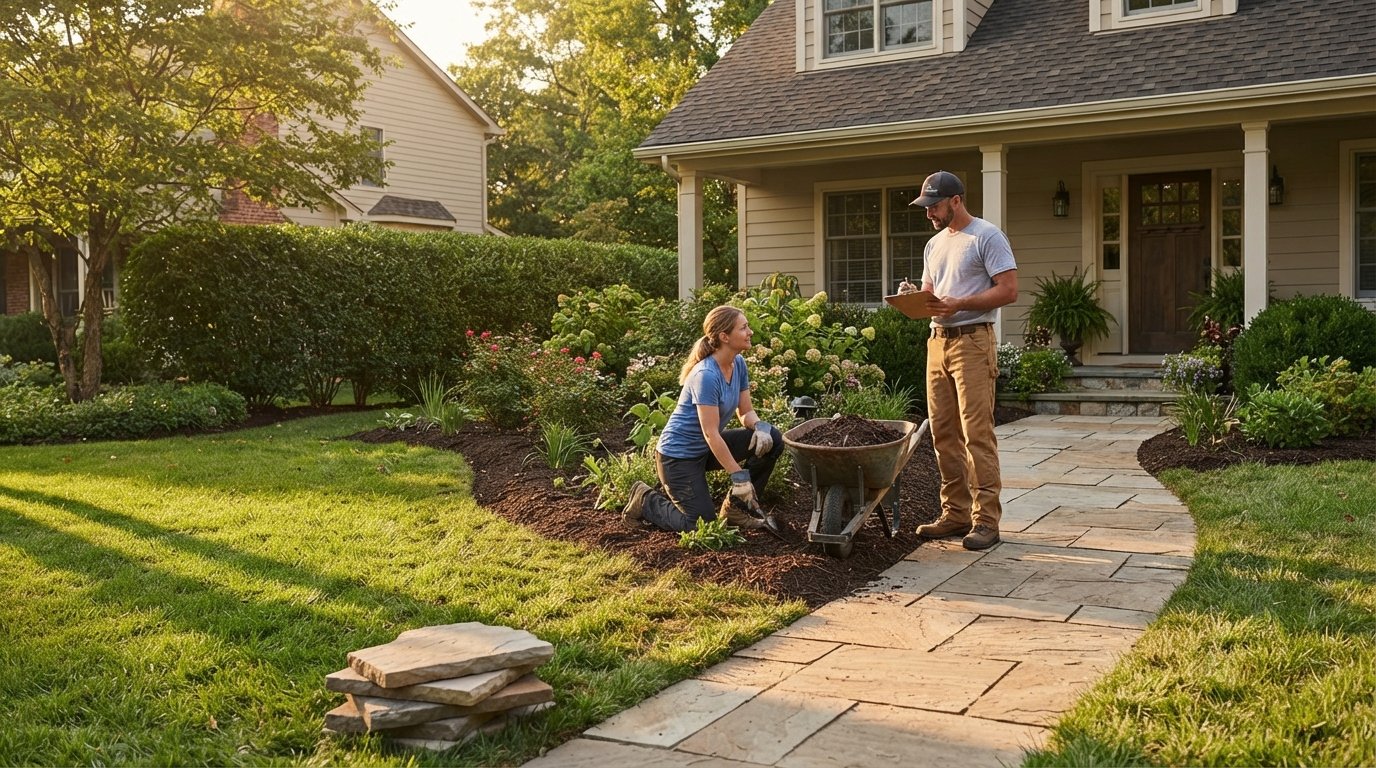
Mulching garden beds, for example, is one of the best DIY investments. You need a wheelbarrow, a rake, gloves, and patience. The worst-case scenario is uneven coverage, which you can correct in an afternoon. Planting annuals, edging beds, pressure-washing walkways, and painting a fence or mailbox are similarly forgiving. These tasks improve appearance quickly and rarely cause long-term damage if done imperfectly.
Here are the types of curb appeal work that typically suit a confident DIYer:
- Spreading mulch, compost, or topsoil in existing beds
- Planting annual flowers, small shrubs, or container gardens
- Pressure-washing driveways, patios, and siding
- Mowing, edging, and basic lawn maintenance
- Painting fences, shutters, and front doors
These projects share a common trait: they are reversible or easy to redo. If your mulch looks lumpy, you rake it again. If your flowers die, you replant next season. The financial risk is low, and the skills transfer to future projects. For homeowners who want to build confidence before tackling larger work, this is the right starting point.
When Hiring a Pro Becomes the Smarter Choice
Some landscaping and curb appeal projects cross a line where DIY stops being economical. That line usually involves structural work, heavy equipment, complex drainage, or mature plant installation. A retaining wall that holds back soil is not a decorative feature: it is a structural system. If it fails, it can damage foundations, cause erosion, and create liability. Building one correctly requires understanding load calculations, drainage gravel, geogrid reinforcement, and local code requirements. Most homeowners do not have that background, and the consequences of guessing are expensive.
Tree work is another clear example. Removing a large tree or even pruning high limbs involves chainsaws, heights, and falling debris. The insurance and safety risks alone justify hiring a licensed arborist. The same applies to irrigation systems, outdoor lighting tied to electrical lines, and hardscape installations like paver patios or stone walkways that must drain properly to avoid pooling water near your foundation.
Professional landscaping also brings design coherence. A designer can see how plantings will look in five years, not just next spring. They know which species will outgrow their space, which ones struggle in your soil, and how to layer textures and colors for year-round interest. That foresight prevents the common DIY mistake of planting too densely or choosing species that clash or die back.
If you decide to hire, the process matters as much as the decision. Homeowners who rush into contracts often overpay or end up with work that does not match their vision. Taking time to compare multiple quotes, verify licenses, and check references protects your investment. Homes.Contractors, a platform that connects homeowners with pre-vetted local pros, is built for exactly this step. You can request free quotes for landscaping and curb appeal work, compare options side by side, and choose a contractor who fits your budget and timeline. For larger projects that blend outdoor and indoor improvements, 180Remodel offers a similar contractor matching service across roofing, flooring, painting, and landscaping.
Cost Comparison: DIY Versus Hiring a Pro
Numbers tell part of the story, but not all of it. On paper, DIY looks cheaper because you are not paying labor. In practice, the gap narrows when you factor in tools, materials at retail prices, disposal fees, and the value of your time. Professionals buy materials at wholesale rates, own the equipment, and complete work in a fraction of the time. They also carry insurance, which protects you if something goes wrong on your property.
Consider a simple mulch refresh. A homeowner might spend $300 on mulch and a weekend of labor. A professional crew might charge $600 but finish in three hours and apply it evenly with proper depth. If your time is worth $50 per hour and you spend ten hours, your DIY cost is effectively $800. The math changes quickly.
For complex projects, the gap widens in favor of hiring. A paver patio installed incorrectly can shift, crack, or drain toward your house. Correcting it means removing materials, regrading, and reinstalling, which often costs more than the original professional quote. A retaining wall that fails can damage landscaping, cause erosion, and even affect your home's foundation. Those are not hypothetical risks; they are common outcomes when homeowners underestimate structural requirements.
Here is a simple framework for deciding:
- Estimate the total material cost at retail and compare it to a professional quote.
- Calculate your available hours and assign a realistic hourly value to your time.
- Identify the worst-case failure scenario and estimate the repair cost.
- Check whether the project requires permits, inspections, or specialized equipment.
- Decide if the savings justify the risk and time investment.
If the worst-case repair cost exceeds your savings, hiring a pro is the rational choice. If the project is low-risk and you have time, DIY can be rewarding and cost-effective.
Skills, Tools, and Time: The Hidden Variables
Every project demands three resources: skill, tools, and time. DIY works when you have enough of all three. It fails when one is missing. A homeowner with plenty of time but no skill may produce work that looks amateurish and reduces curb appeal rather than enhancing it. A homeowner with skill but no time may rush and make errors. A homeowner with both but no tools may spend more on equipment than a professional would charge for labor.
Tools are a particular sticking point. Landscaping often requires tillers, trenchers, plate compactors, sod cutters, and power augers. Buying these for one project is rarely economical. Renting is an option, but rental costs add up, and you still need to know how to operate the equipment safely. Professionals own these tools and use them daily, which means they work faster and with fewer mistakes.
Time is the variable homeowners most often underestimate. A project that looks like a weekend job can stretch into three weekends when weather, supplier delays, or unexpected soil conditions intervene. Professionals plan for these variables because they have seen them before. They order materials in advance, schedule around weather, and bring enough labor to finish on time. That reliability has real value, especially if you are preparing to sell your home or host an event.
Skill is the hardest variable to self-assess. Many homeowners overestimate their abilities because the work looks simple on video. Watching someone install a paver path is not the same as cutting, leveling, compacting, and edging hundreds of square feet yourself. If you are unsure, start with a small project and see how it goes. If you enjoy it and the result looks good, scale up. If not, hire help for the larger work.
How to Decide: A Practical Framework for Homeowners
The decision between DIY and hiring a pro is not about pride or frugality. It is about matching the project to your resources and risk tolerance. The best homeowners approach it like a business decision: they define the scope, gather information, compare costs, and choose the path that delivers the best outcome for their situation.
Start by categorizing the project. Is it maintenance, enhancement, or structural? Maintenance tasks like mowing, mulching, and pruning are almost always DIY-friendly. Enhancement projects like planting beds, adding lighting, or installing a small water feature can go either way depending on complexity. Structural work like retaining walls, drainage systems, and hardscape foundations should almost always go to a professional.
Next, assess your constraints honestly. How much time can you realistically commit? Do you have the tools, or will you need to rent or buy them? Are you comfortable with the physical demands? If any answer gives you pause, hiring help is not a failure; it is a smart allocation of resources. Professionals exist because these projects require expertise, and using that expertise is no different from hiring an accountant or an electrician.
Finally, consider the long-term view. Curb appeal projects are investments in your home's value and your daily enjoyment. A professional installation that looks great and lasts fifteen years may deliver far more value than a DIY attempt that saves money upfront but requires repairs or replacement in three years. The goal is not to spend the least; it is to get the best result for your budget. When you weigh the options with that mindset, the right choice often becomes clear.
Whether you pick up a shovel or a phone, the important thing is to move forward with a plan. Your home's exterior is a living, growing asset, and every improvement you make adds to its story.