
Carpet Installation Cost Guide for Homeowners in 2026
Learn how to budget for carpet installation, choose the right fiber and padding, and hire a qualified contractor for a flawless floor.
By Alexia Mabel
Learn more about Carpet Installation for guides, costs, and what to expect.
Compare Carpet Installation Pros Near You

Enter your ZIP code to compare top-rated local professionals and request free quotes.
Your living room floor feels tired, the bedroom carpet shows every paw print, and you finally decide it is time for a change. Carpet installation can transform the comfort and look of your home, but the process involves more than picking a color and scheduling a worker. From measuring square footage to comparing quotes, the choices you make affect both your budget and your satisfaction for years to come. This guide walks you through every stage of carpet installation, with practical advice to help you avoid costly mistakes and achieve a flawless finish.
Why Carpet Remains a Smart Flooring Choice
Hard surfaces like hardwood and tile dominate design magazines, yet carpet still holds a strong place in American homes. Carpet provides warmth underfoot, reduces noise between floors, and creates a cozy atmosphere that hard surfaces cannot match. For bedrooms, family rooms, and upstairs hallways, carpet feels softer and safer, especially for young children and older adults who may slip on slick floors.
Modern carpet technology has also improved stain resistance and durability. Many carpets now come with built-in protectors that repel spills and pet accidents, making them practical for busy households. Carpet also offers excellent insulation, which can lower heating costs in colder months. With a wide range of fibers, textures, and colors, you can find a carpet that suits your style and budget, from plush luxury to low-pile durability.
However, carpet installation is not a simple DIY task for most homeowners. Professional installation ensures proper stretching, seam placement, and pattern matching, which directly affect the carpet's lifespan and appearance. Understanding the full process before you start helps you communicate clearly with contractors and make informed decisions.
Understanding the True Cost of Carpet Installation
Many homeowners focus only on the price per square foot of the carpet itself, but the total cost includes several components. The base price of carpet ranges from $2 to $8 per square foot, depending on fiber quality and brand. Yet the final bill also covers padding, removal of old flooring, installation labor, and additional materials like tack strips and transition strips. These extras can add $3 to $6 per square foot, meaning the total cost often lands between $5 and $14 per square foot installed.
To give you a clearer picture, consider a 12 by 15 foot room, which equals 180 square feet. A mid-range carpet at $4 per square foot costs $720. Padding adds roughly $180, and professional installation runs about $450. Removing and disposing of old carpet may cost another $100. The total for this single room reaches around $1,450, and larger homes or staircases push that number higher.
Several factors influence the final quote, including the room's shape, the amount of furniture that must be moved, and whether stairs require installation. Stairs are notoriously labor-intensive and often cost $25 to $50 per step. Unusual room layouts with many corners or closets increase waste and labor time. Always ask contractors for a detailed breakdown of these costs so you can compare quotes accurately.
How to Measure and Estimate Your Carpet Needs
Before requesting quotes, measure your space carefully. Accurate measurements help you calculate the square footage and avoid purchasing too little or too much carpet. For a rectangular room, multiply the length by the width. For L-shaped rooms, divide the space into rectangles and add the totals. Include closets that need carpet, and remember that carpet is sold in rolls with standard widths of 12 or 15 feet, so you may need to buy more than the exact square footage to accommodate seams.
A professional installer will perform their own measurements, but having your numbers ready helps you verify the accuracy of their estimate. You can also use online carpet calculators to get a preliminary idea of material needs. When you request quotes, provide the same measurements to each contractor so you can compare prices fairly.
Here are the key components to include in your measurement and estimate:
- Square footage of the room, including closets and alcoves
- Number of steps if you are carpeting stairs (measure tread depth and riser height)
- Doorway widths and transition areas where carpet meets other flooring
- Furniture that will need to be moved or removed before installation
Once you have these details, you can request quotes from multiple contractors. Most professionals offer free estimates, and comparing at least three quotes gives you a solid baseline for pricing. Be wary of quotes that seem unusually low; they may indicate substandard materials or hidden fees.
Choosing the Right Carpet Fiber and Padding
The carpet fiber determines how the carpet feels, wears, and resists stains. Nylon is the most popular choice for its durability and resilience, making it ideal for high-traffic areas like living rooms and hallways. Polyester offers a soft, luxurious feel at a lower price point, but it may crush more easily in heavy-traffic zones. Olefin, also known as polypropylene, resists moisture and fading, making it suitable for basements or sunrooms, though it is less resilient under heavy weight. Triexta, a newer fiber, combines the softness of polyester with the durability of nylon, often at a mid-range price.
Padding, or carpet cushion, is just as important as the carpet itself. A good pad absorbs impact, extends carpet life, and provides comfort underfoot. Padding density and thickness matter more than price alone. Look for padding with a density rating of at least 6 pounds and a thickness of 7 to 8 inches for most residential applications. Cheap, thin padding can make even an expensive carpet feel flat and wear out quickly. Ask your contractor about pad options and include padding cost in your quote comparison.
Step-by-Step Guide to the Installation Process
Once you have selected your carpet and padding, a professional team will handle the installation, which typically takes one to two days for a standard room. The process involves several distinct steps, each requiring skill and attention to detail. Understanding these steps helps you prepare your home and know what to expect.
- Remove old flooring: The crew pulls up existing carpet, padding, and tack strips, then removes staples and nails from the subfloor.
- Prepare the subfloor: The installer checks for moisture, levelness, and damage, making minor repairs if needed.
- Install new tack strips: Wood strips with sharp pins are secured around the room's perimeter, holding the carpet in place.
- Lay padding: The cushion is cut to fit, stapled down, and taped at seams to prevent shifting.
- Cut and lay carpet: The carpet is unrolled, cut to approximate size, and allowed to acclimate to the room temperature.
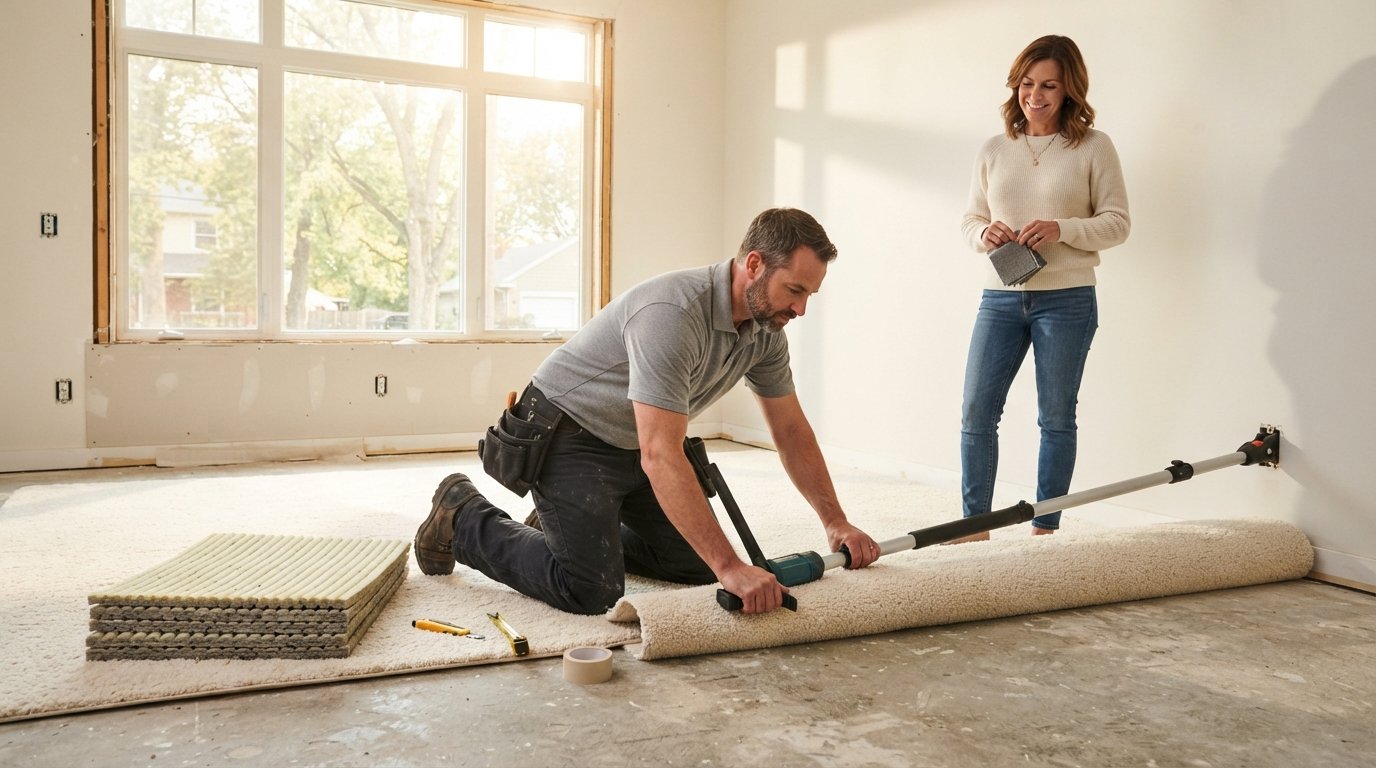
- Stretch and trim: Using a power stretcher, the installer pulls the carpet taut and hooks it onto the tack strips, then trims edges with a knee kicker.
- Seam and finish: Seams are joined with heat-activated tape, transitions are installed at doorways, and the edges are tucked neatly.
After installation, the crew will vacuum the new carpet to remove loose fibers and debris. They should also remove all old materials and debris from your property. Walk through the finished work with the installer before they leave, checking for wrinkles, visible seams, or uneven edges.
Choosing a Qualified Carpet Installer
The success of your carpet installation depends heavily on the skill of the contractor. A poorly installed carpet can show seams, ripple, or come loose within months, regardless of the carpet's quality. When searching for a professional, look for licensed and insured contractors with experience in carpet work. Ask for references and check online reviews on platforms like the Better Business Bureau or local home service directories.
Homes.Contractors simplifies this process by connecting you with pre-vetted contractors in your area. You can submit a single project request and receive multiple quotes from qualified professionals, allowing you to compare pricing, experience, and customer feedback. This approach saves time and ensures you are not relying on a single estimate that might be inflated or incomplete.
During the quote process, ask each contractor about their installation methods, particularly how they handle seams and stretching. Inquire about their warranty on labor, as reputable installers often guarantee their work for one to five years. A written contract should specify the carpet brand, style, padding, total cost, and timeline. Avoid contractors who ask for full payment upfront; a deposit of 25 to 50 percent is standard, with the balance due upon completion.
Preparing Your Home for Installation Day
Proper preparation makes installation smoother and prevents damage to your belongings. Move small furniture, breakables, and valuables out of the room before the crew arrives. If movers are not included in your contract, arrange to move large items like beds and sofas yourself. Clear closets and remove curtains or drapes that may hang near the floor. Also, remove any fragile items from walls, as vibrations from stretching can knock them down.
Ensure the work area is accessible, with a clear path for carrying heavy rolls of carpet. If the installers need to use stairs, keep them clear of obstacles. Plan for pets to stay in a separate area, as they may become stressed by the noise and unfamiliar activity. Finally, confirm that the room's temperature is moderate, ideally between 65 and 75 degrees Fahrenheit, as extreme temperatures can affect how the carpet handles.
On installation day, be present to answer questions and point out any specific concerns, such as a seam that must be placed in a low-traffic area or a transition to a different floor type. After the work is done, wait at least 24 hours before walking on the carpet to allow the adhesive and seams to set. You can then move furniture back, but consider using carpet protectors under heavy furniture legs to prevent indentations.
Post-Installation Care and Maintenance
New carpet needs a little time to settle, and you may notice some loose fibers or small wrinkles in the first days. Vacuuming regularly, at least once a week, removes dirt and prevents it from grinding into the fibers. For high-traffic areas, vacuum more frequently. Avoid using a vacuum with a rotating brush on the highest pile setting, as it can pull fibers.
Spills should be blotted immediately with a clean cloth, not rubbed, to prevent spreading. Use a carpet cleaner formulated for your fiber type, and test any product in an inconspicuous area first. Professional deep cleaning every 12 to 18 months can extend the carpet's life and restore its appearance. If you notice ripples or wrinkles developing after a few weeks, contact your installer to address them, as this may indicate improper stretching.
Carpet installation is a significant investment in your home's comfort and value. By understanding the costs, choosing quality materials, and hiring a reputable professional, you can enjoy a beautiful, durable floor for years. Use the resources at Homes.Contractors to find trusted contractors in your area, request competitive quotes, and make your carpet project a success.
Learn more about Carpet Installation for guides, costs, and what to expect.
Compare Carpet Installation Pros Near You
Enter your ZIP code to compare top-rated local professionals and request free quotes.