
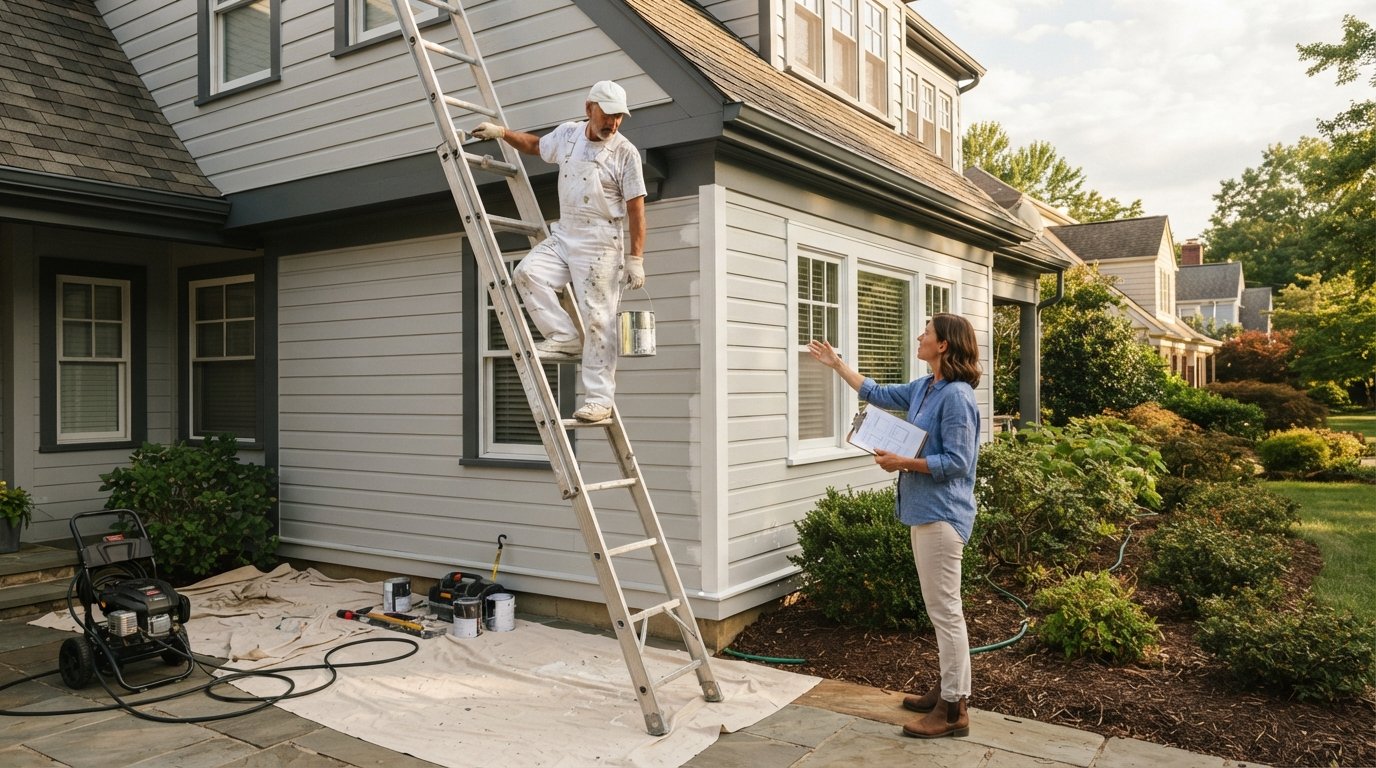
House Painting Quote Breakdown: What Is a Fair Price?
Understand every line of a house painting quote breakdown and fair price range. Call (833)-439-3727 to compare vetted painting pros near you.
By Adnan Nazir
Learn more about Exterior Painting for guides, costs, and what to expect.
Compare Exterior Painting Pros Near You

Enter your ZIP code to compare top-rated local professionals and request free quotes.
Your exterior paint is more than a cosmetic finish: it is the first line of defense against moisture, sun, and pests. So when a contractor hands you a painting quote, you are not just buying color, you are buying surface preparation, protection, and durability. Yet painting bids are notoriously vague, often leaving homeowners unsure whether they are comparing apples to apples or simply guessing at a fair price. This guide breaks down exactly what belongs in a professional house painting quote, how square footage and surface condition affect the bottom line, and how to spot a low bid that will cost you more in the long run.
The Anatomy of a Professional House Painting Quote
A legitimate painting quote is a scope of work, not a one-line estimate. It should clearly separate labor from materials and specify what will be done before a single drop of paint is opened. Without that detail, you cannot compare bids fairly or hold anyone accountable. A well-structured quote typically includes preparation, primer, paint, and labor as distinct line items, each with quantities and product names. When you request quotes through a referral platform like Homes.Contractors, you can ask each pro to use the same breakdown so you can compare line by line.
Preparation is the most overlooked and most important line item. It covers power washing, scraping loose paint, sanding rough edges, caulking gaps around windows and trim, and masking off windows, doors, and landscaping. A quote that lumps prep into a generic labor charge is a red flag. Primer is equally critical: it seals porous surfaces, blocks stains, and helps topcoats adhere. The paint line should name the brand, product line, sheen, and number of coats. Labor should reflect hours or square footage and include cleanup and disposal. Here is a simple checklist of what a complete quote should show:
- Prep details: washing, scraping, sanding, caulking, masking, and minor repairs
- Primer specification: product name and number of coats
- Paint specification: brand, line, sheen, and number of finish coats
- Labor and cleanup: hours or square footage, plus daily and final cleanup
- Warranty and payment terms: what is covered and when payments are due
If a quote is missing any of these elements, ask for a revised version before you sign. A contractor who cannot itemize is either inexperienced or hoping to hide costs. Either way, you deserve clarity before the ladder goes up.
How Square Footage, Stories, and Surface Condition Affect Pricing
No two houses cost the same to paint, even if they look similar from the curb. Square footage is the starting point, but it is only one factor. A single-story ranch with wide eaves is faster to paint than a two-story colonial with dormers, gables, and a steep roofline. Height adds labor time, safety equipment, and sometimes scaffolding or lifts. The condition of the existing surface matters just as much: peeling paint, bare wood, mildew, and chalky residue all require extra prep, which is where most of the cost actually lives. A house with failing paint can easily double the prep time compared to a well-maintained surface.
Material choices also move the number. Premium acrylic paints cost more per gallon but often last longer and cover in fewer coats. Specialty primers for cedar, masonry, or metal add cost but prevent premature failure. Trim and fascia work is slower than spraying broad siding, so a house with extensive trim will price higher. The number of colors and whether you are changing from a dark to a light shade can also affect the number of coats required. When you review bids, ask each contractor to state the assumed square footage, number of stories, and surface condition so you can see whether the prices are truly comparable or whether one bid is simply assuming less work.
Questions to Ask About Paint Brands, Coats, and Warranty
The difference between a two-year paint job and a ten-year paint job often comes down to product quality and film thickness. Ask every contractor which paint brand and product line they plan to use, and whether that is their standard or an upgrade. A fair quote should specify the number of finish coats (usually two) and whether primer is included. Be wary of any bid that promises a single coat as a cost-saving measure; one coat over a properly primed surface may look fine at first, but it will not hold up to weather and sun the way two coats will.
Warranty terms are another area where quotes diverge. A meaningful warranty covers peeling, blistering, and premature fading for a stated period, typically one to five years on labor, with the paint manufacturer covering product defects separately. Ask whether the warranty is prorated, what voids it, and whether it is transferable if you sell the house. Also confirm liability insurance and workers compensation coverage before work begins. A contractor who hesitates on these questions is not the one you want on a ladder above your prized shrubs.
Red Flags in Low Painting Bids and How to Compare Fairly
A low bid is not automatically a bargain. In painting, the cheapest quote often signals skipped prep, thin coats, or uninsured workers. Common red flags include a one-page quote with no line items, no mention of primer, cash-only payment requests, no physical address or license number, and pressure to sign immediately. If a bid is significantly lower than the others, ask what is excluded: prep, caulking, trim, or cleanup. Sometimes the difference is simply that one contractor is not carrying insurance, which shifts risk to you if someone is injured on your property.
To compare fairly, normalize every bid to the same scope. Create a simple comparison sheet with columns for prep, primer, paint brand, number of coats, warranty, and total price. Then ask each contractor to confirm the assumptions in writing. For a deeper look at the variables that drive exterior painting costs and how to evaluate fair quotes, see our guide on exterior house painting cost factors and fair quotes. When you are ready to gather multiple bids, you can use a directory of pre-vetted contractors to request free quotes and compare them side by side.
Negotiating Scope Without Compromising Results
Negotiation is not about squeezing the lowest price; it is about aligning scope, quality, and budget so the job lasts. If a quote is higher than you expected, ask the contractor to walk through the line items and identify where costs could be reduced without cutting corners on prep or primer. You might choose a slightly less premium paint line, reduce the number of colors, or phase the work over two seasons. What you should not do is skip prep or drop to a single coat, because those shortcuts are what cause premature peeling and repainting.
Another option is to handle some of the prep yourself, such as moving furniture, removing window screens, or power washing, if the contractor agrees and it does not void the warranty. Get any scope changes in writing, including the adjusted price and timeline. A fair contractor will welcome the conversation and explain the trade-offs clearly. For homeowners who want a broader directory of vetted professionals and educational resources, PlanRemodel offers a useful starting point to compare options before you commit.
What a Fair Price Actually Looks Like
Fair pricing in painting is not a single number; it is a range that reflects your home's size, condition, and the quality of materials and labor. As a general guide, exterior painting typically runs from $1.50 to $4.00 per square foot of surface area, with most single-family homes landing between $3,000 and $8,000 depending on prep and height. Interior painting often ranges from $2 to $6 per square foot, with trim and ceilings adding to the total. These are broad ranges, and local labor rates vary significantly by region, so use them as a sanity check rather than a rule.
The fairest price is the one that includes thorough prep, the right primer, two finish coats of a quality product, and a written warranty from an insured contractor. If a bid sits well below that standard, it is not a deal; it is a deferred cost. Take the time to compare at least three itemized quotes, ask the questions above, and verify credentials independently before you hire. Your home's exterior will thank you for the extra diligence with years of protection and curb appeal. PlanRemodel
Learn more about Exterior Painting for guides, costs, and what to expect.
Compare Exterior Painting Pros Near You
Enter your ZIP code to compare top-rated local professionals and request free quotes.