
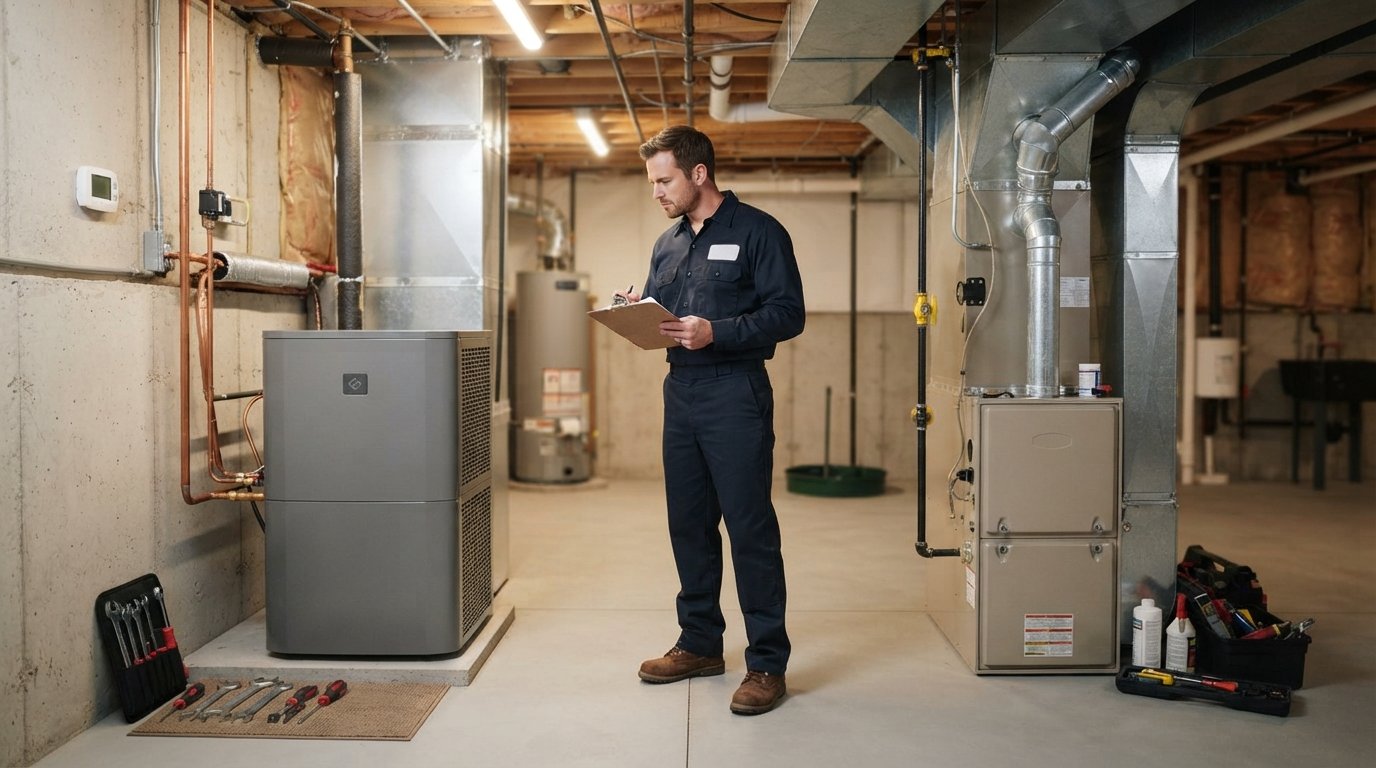
Heat Pump vs Furnace Replacement: A 2026 Comparison
Compare heat pump vs furnace replacement on cost, efficiency, and climate fit. Call (833)-439-3727 to get matched with local contractors and free quotes.

Learn more about Heating System Installation or Replacement for guides, costs, and what to expect.
Compare Heating System Installation or Replacement Pros Near You

Enter your ZIP code to compare top-rated local professionals and request free quotes.
When your old heating system finally gives out, the decision between a heat pump and a furnace replacement can feel overwhelming. You are not just choosing a box in the basement; you are locking in your home's comfort, your monthly energy bills, and your carbon footprint for the next 15 to 20 years. The right choice hinges on your climate, your budget, and how you plan to use your home. This heat pump vs furnace replacement comparison cuts through the marketing noise and gives you the practical, numbers-driven insight you need to make a confident decision.
How Heat Pumps and Furnaces Work: Two Very Different Approaches to Warmth
At their core, furnaces and heat pumps take opposite approaches to heating your home. A furnace generates heat by burning fuel, typically natural gas, propane, or heating oil, and then distributes that warm air through ductwork. This is a combustion process, and it is why furnaces can produce very high temperatures quickly. A heat pump, on the other hand, does not create heat; it moves it. Using electricity, a heat pump extracts heat from the outdoor air (even when it feels cold outside) and transfers it indoors. In the summer, the process reverses to cool your home.
This fundamental difference drives everything else in this comparison: efficiency, operating costs, and environmental impact. Because heat pumps move heat rather than burn fuel, they can deliver more heating energy than the electricity they consume. Modern cold-climate heat pumps can operate efficiently in temperatures as low as 5 degrees Fahrenheit or below, though performance varies by model. Furnaces, while less efficient in terms of energy conversion, offer robust, familiar performance and can be a reliable choice in regions where natural gas is cheap and electricity is expensive.
Upfront Costs: What You Will Pay to Replace Your System
The sticker price of a new system is often the first thing homeowners consider, and it is a major differentiator. For a standard furnace replacement, you can expect to pay anywhere from $3,000 to $7,000 installed, depending on the fuel type, efficiency rating, and whether you need ductwork modifications. High-efficiency gas furnaces sit at the upper end of that range, while electric furnaces are generally cheaper upfront.
Heat pump installation typically costs more, ranging from $5,000 to $12,000 for a complete system. The higher price reflects the more complex technology, the need for both heating and cooling components, and sometimes the requirement for electrical panel upgrades or ductwork adjustments. However, this upfront premium is often offset by lower operating costs and generous incentives. For a detailed breakdown of installation costs and what to expect from contractor quotes, you can explore our guide on repairing or replacing your water heater, which follows a similar decision framework.
When comparing quotes, always ask for a line-item breakdown that includes equipment, labor, permits, and any necessary modifications. This transparency helps you compare apples to apples and spot hidden costs. Homeowners in regions with high electricity rates should also factor in the potential for a electrical panel upgrade, which can add $1,500 to $3,000 to the project.
Operating Costs by Region: Where Heat Pumps Win and Where Furnaces Still Shine
Operating costs are where the heat pump vs furnace replacement comparison gets interesting, and the answer depends heavily on where you live. In mild climates like the Pacific Northwest or the Southeast, heat pumps are remarkably efficient and can slash your heating bills compared to electric resistance or propane furnaces. In these areas, the winter temperatures are moderate enough that the heat pump rarely struggles, and the added benefit of summer cooling makes it a year-round workhorse.
In colder regions like the Midwest or Northeast, the calculus shifts. While cold-climate heat pumps have improved dramatically, their efficiency drops as outdoor temperatures plunge. Homeowners with access to cheap natural gas often find that a high-efficiency furnace delivers lower monthly bills during the coldest months. However, if you rely on propane or oil, the operating cost gap narrows significantly, and heat pumps often become the cheaper option. To estimate your specific savings, use an online energy calculator or ask your contractor to run a fuel-cost comparison based on local utility rates.
- Mild climates (e.g., Southeast, Pacific Northwest): Heat pumps typically have lower annual operating costs.
- Cold climates with cheap natural gas (e.g., Midwest): High-efficiency furnaces can be more economical.
- Regions with expensive electricity or no gas access: Heat pumps often win on operating costs.
Keep in mind that these are general trends. Your home's insulation, ductwork condition, and thermostat habits all influence actual costs. A poorly sealed house will drain any system's efficiency, so consider a home energy audit before you commit.
Rebates and Tax Credits: The Financial Incentives That Tip the Scales
One of the most compelling reasons to choose a heat pump in 2026 is the wave of federal, state, and local incentives. The Inflation Reduction Act (IRA) offers a federal tax credit of up to $2,000 for qualifying heat pump installations, plus additional credits for electrical panel upgrades and energy efficiency improvements. Many states and utility companies pile on with their own rebates, which can range from a few hundred to several thousand dollars. In some cases, these incentives can erase the upfront cost premium entirely.
Furnaces, by contrast, have far fewer incentives. While high-efficiency gas furnaces may qualify for small rebates from some utilities, the federal tax credit for gas furnaces is limited. If you are replacing an old furnace, you may still find local utility rebates for upgrading to a higher-efficiency model, but the sums are generally smaller. Before you decide, check the Database of State Incentives for Renewables & Efficiency (DSIRE) and your local utility's website. A qualified contractor can also help you navigate the paperwork, which is why it pays to ask about incentives during the quoting process.
When you request quotes through a platform like PlanRemodel, you can connect with contractors who are well-versed in local rebate programs and can help you maximize your savings. This is especially valuable in states like California and New York, where incentive stacking can be complex.
When a Heat Pump Makes Sense (and When a Furnace Is Still the Better Choice)
Deciding between a heat pump and a furnace comes down to your specific circumstances. A heat pump is often the clear winner if you answer yes to several of the following: you live in a moderate climate, you already have or plan to add air conditioning, you want to reduce your carbon footprint, and you can take advantage of generous incentives. Heat pumps also make sense if you have an older home with ductwork that can handle the airflow, or if you are planning a larger renovation and can incorporate the upgrade.
A furnace, however, may still be the smarter choice if you live in an area with extremely cold winters and cheap natural gas, if your home lacks ductwork for a central heat pump (though ductless mini-splits are an option), or if your budget is tight and you need the lowest upfront cost. Furnaces are also simpler to repair and maintain, which can be a consideration if you plan to stay in your home for decades.
Many homeowners in cold climates choose a dual-fuel system: a heat pump for mild weather and a furnace as a backup for the coldest days. This hybrid approach can deliver the best of both worlds, though it comes with a higher upfront price. Your contractor can help you model the costs and benefits of a dual-fuel setup versus a single-system replacement.
What to Ask Contractors When Getting Quotes for Either System
Whether you lean toward a heat pump or a furnace, the quality of the installation matters as much as the equipment itself. When you solicit quotes, ask potential contractors a consistent set of questions to ensure you are comparing apples to apples. Start by requesting a Manual J load calculation, which determines the correct system size for your home. An oversized or undersized system will underperform and cost you more in the long run.
Next, ask about the contractor's experience with the specific technology. Heat pumps require different design considerations than furnaces, including proper refrigerant lines, defrost cycles, and thermostat compatibility. A contractor who primarily installs furnaces may not have the expertise to optimize a heat pump system. Also inquire about warranties, both on labor and equipment, and whether the contractor offers maintenance plans. Finally, ask for references from recent installations in your area and verify their license and insurance.
To streamline this process, consider using a referral service like Homes.Contractors, which pre-vets local professionals and allows you to request multiple free quotes with a single form. This saves you time and helps you avoid the risk of hiring an unqualified installer. Remember that the lowest bid is not always the best value; a slightly higher quote from a contractor who performs a thorough assessment and offers robust support is often the wiser investment.
Making Your Final Decision: A Step-by-Step Framework
To wrap up this heat pump vs furnace replacement comparison, here is a simple framework to guide your decision. First, calculate your total upfront cost, including equipment, labor, permits, and any necessary home upgrades, then subtract all available incentives. Second, estimate your annual operating costs using local fuel prices and efficiency ratings. Third, consider your climate and comfort preferences, including whether you want central air conditioning. Fourth, evaluate non-financial factors like environmental impact, noise levels, and maintenance requirements. Finally, gather at least three detailed quotes from qualified contractors and ask each one to explain their recommendations.
By following these steps, you can move forward with confidence, knowing you have weighed the trade-offs and chosen the system that best fits your home and budget. Whether you choose a heat pump or a furnace, the key is to work with a trusted professional who prioritizes proper sizing and installation. With the right information and the right contractor, your replacement project will deliver reliable comfort for years to come.
For more guidance on planning your project and connecting with top-rated local contractors, visit Homes.Contractors today.