
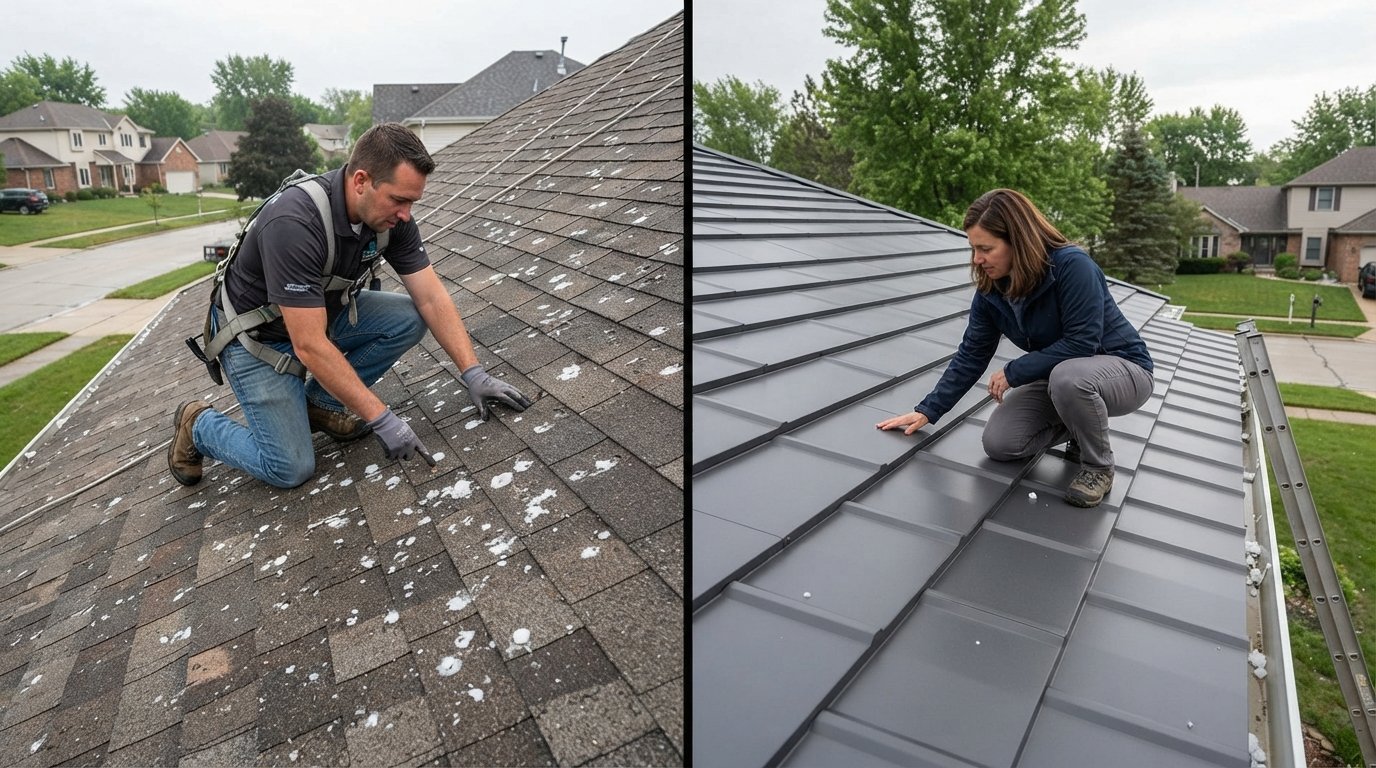
Hail Resistant Roof Materials Comparison for Homeowners
Compare hail resistant roof materials and find the best option for your home. Call (833)-439-3727 for expert guidance.

By Leo Dawson
Learn more about Roof Installation or Replacement for guides, costs, and what to expect.
Compare Roof Installation or Replacement Pros Near You

Enter your ZIP code to compare top-rated local professionals and request free quotes.
Your roof is the first line of defense against a hailstorm, and the material you choose can mean the difference between a minor cosmetic issue and a full replacement claim. Homeowners in hail-prone states face a dizzying array of options, each with its own impact rating, cost profile, and insurance implications. This hail resistant roof materials comparison cuts through the marketing claims and gives you the practical details you need to make a confident decision. Whether you are replacing a storm-damaged roof or building new, understanding how materials perform under fire from the sky will help you protect your home and your wallet.
Impact Ratings Explained: Class 3 vs. Class 4
When shopping for hail resistant roofing, you will quickly encounter the Class 3 and Class 4 impact ratings. These ratings come from testing standards like UL 2218, which measures a material's resistance to impact from steel balls dropped from various heights. Class 1 is the lowest rating, Class 2 is moderate, Class 3 indicates good resistance, and Class 4 represents the highest level of impact resistance available. For homeowners in areas that see frequent or severe hail, Class 4 is often the gold standard, but Class 3 products can be a cost-effective middle ground.
What do these ratings actually mean for your roof? A Class 4 shingle or panel has been proven to withstand impacts that would crack or puncture lesser materials. That does not mean it is invincible, but it dramatically reduces the likelihood of damage during a typical hailstorm. Many insurance companies recognize this and offer premium discounts for homes with Class 4 roofs. Some states even mandate discounts. For example, Texas and Colorado have regulations requiring insurers to offer credits for impact-resistant roofing. These discounts can range from 5% to 30% on your homeowner's premium, depending on the insurer and the material's specific rating.
It is important to note that impact ratings apply to the entire roofing system, not just the outer layer. Installation quality, underlayment, and decking all play a role in how the roof performs. A Class 4 shingle installed incorrectly may not deliver the expected protection. Therefore, always confirm that your contractor follows the manufacturer's installation instructions exactly, as deviations can void the impact rating and any associated insurance benefits.
Comparing the Main Hail Resistant Roof Materials
Three material categories dominate the hail resistant roofing market: metal, asphalt (specifically impact-resistant asphalt shingles), and synthetic options such as polymer or composite tiles. Each has distinct advantages and trade-offs in terms of cost, lifespan, and performance. The following comparison will help you weigh these factors against your budget and climate.
- Metal roofing (standing seam or stone-coated steel): Excellent impact resistance, often Class 4, with a lifespan of 40 to 70 years. Costs typically range from $8 to $16 per square foot installed. Metal reflects heat, improving energy efficiency, but can be noisy in rain and hail.
- Impact-resistant asphalt shingles: Class 3 or Class 4 rated, with a lifespan of 25 to 35 years. Costs are moderate, around $4 to $7 per square foot installed. These are the most common choice for hail-prone areas because they balance performance and affordability.
- Synthetic/composite tiles: Designed to mimic wood shake or slate, these offer Class 4 impact resistance and a lifespan of 30 to 50 years. Costs vary widely, from $6 to $12 per square foot installed. They are lightweight and resistant to rot and insects.
Beyond the upfront cost, consider maintenance and repair. Metal roofs are highly durable but can dent from very large hail, and repairs may require specialized labor. Asphalt shingles are easy to repair but may lose granules over time, which can affect impact resistance. Synthetic tiles are generally low-maintenance but may fade or crack under extreme temperature swings. Your local climate, including temperature extremes and typical hail size, should guide your choice.
For a deeper dive into comparing contractor bids for these materials, see our guide on how to compare roof replacement contractor quotes. It walks you through the line items that matter, from material specifications to warranty terms.
Hail Damage Claims, Deductibles, and Material Choice
Choosing a hail resistant roof is not just about physical protection; it is also a financial strategy. Many homeowners do not realize that their insurance deductible for hail damage may be a percentage of the home's insured value, often 1% to 5%. That means a $300,000 home could have a $3,000 to $15,000 deductible for a hail claim. If your roof sustains damage, you pay that deductible out of pocket before insurance covers the rest. A more impact-resistant roof reduces the chance you will ever need to file a claim, saving you both the deductible and the potential premium increase that comes with a claim.
Moreover, some insurers offer reduced deductibles or premium credits for Class 4 roofs. For instance, you might see your deductible waived or lowered for hail damage if your roof meets certain standards. These incentives can significantly improve the return on investment for a hail resistant roof. However, policies vary widely, so always check with your insurance agent before committing to a material. Ask specifically about discounts for Class 3 versus Class 4, and whether the credit applies to the entire premium or just the wind/hail portion.
Another critical point: if you file a hail claim, the insurance adjuster will assess the damage and may recommend a specific repair or replacement approach. Some policies require you to upgrade to impact-resistant materials if you are replacing the entire roof, especially in hail-prone regions. This can be a blessing, as it may partially fund your upgrade. But it also means you need to understand your policy's requirements before you sign a contractor agreement. A knowledgeable roofer can help you navigate the claims process, but ultimately you are responsible for verifying coverage.
Installation Requirements That Void Impact Ratings
Even the best Class 4 material will fail if installed improperly. Manufacturers specify strict installation guidelines to maintain the impact rating and warranty. Common installation errors that void ratings include:
- Using too few fasteners or incorrect fastener types.
- Failing to install the specified underlayment.
- Installing shingles in the wrong orientation or with improper overlap.
- Skipping the starter strip or using a non-compliant one.
- Not allowing proper attic ventilation, which can cause premature aging.
To protect your investment, insist that your contractor is certified by the manufacturer and follows the installation instructions to the letter. Ask for a copy of the manufacturer's installation guide and compare it to the work being done. Some manufacturers offer enhanced warranties if you use a certified installer, which can provide additional peace of mind. Remember, a voided impact rating means no insurance discount and potentially no warranty coverage for hail damage.
Also, be aware that roof deck condition matters. If the underlying decking is soft or damaged, it can compromise the performance of even the toughest roofing material. A thorough inspection before installation is essential. Reputable contractors will check for rot, loose boards, and proper nail spacing before laying new material. This step adds time and cost but is non-negotiable for a hail resistant roof that performs as promised.
Questions to Ask a Local Roofer Before Signing
Before you commit to a roofing project, especially one involving hail resistant materials, ask your prospective contractor these questions. Their answers will reveal their expertise and help you avoid costly mistakes.
- Are you certified by the manufacturer of the hail resistant product you are proposing? Can you show me your certification?
- What is the specific impact rating of the material, and can you provide documentation (UL 2218 classification)?
- How will you ensure the installation meets the manufacturer's requirements to maintain the impact rating?
- What is your experience with hail damage claims, and can you help me understand my insurance coverage?
- What warranties come with the material and your labor, and what voids them?
These questions also help you compare bids fairly. A low bid that skips certification or uses subpar underlayment is no bargain. For a comprehensive framework on evaluating contractor quotes, including red flags to watch for, see our related article on comparing roof replacement contractor quotes. It will help you align your material choice with a contractor who can deliver the promised performance.
Finally, consider using a resource like PlanRemodel to find pre-vetted contractors in your area. PlanRemodel offers a directory of qualified professionals and educational articles, making it easier to connect with roofers who specialize in hail resistant installations. Always verify credentials independently, as even vetted directories are a starting point, not a guarantee.
Making the Final Decision
Your choice of hail resistant roof material boils down to balancing upfront cost, long-term durability, and insurance incentives. For many homeowners, impact-resistant asphalt shingles offer the best value, providing Class 4 protection at a moderate price. Metal roofs are a premium option with exceptional lifespan and energy benefits, while synthetic tiles appeal to those seeking a specific aesthetic with strong impact resistance. Whichever you choose, prioritize proper installation and verify that your contractor follows manufacturer guidelines. By doing so, you can secure a roof that stands up to hail and potentially lower your insurance premiums for years to come.
Learn more about Roof Installation or Replacement for guides, costs, and what to expect.
Compare Roof Installation or Replacement Pros Near You
Enter your ZIP code to compare top-rated local professionals and request free quotes.