
Energy Efficient Home Upgrades That Pay You Back
Discover the most effective energy efficient home upgrades that lower bills, boost comfort, and increase property value. Start saving today.
By Adnan Nazir
Learn more about Weatherization for guides, costs, and what to expect.
Compare Weatherization Pros Near You

Enter your ZIP code to compare top-rated local professionals and request free quotes.
Every homeowner feels the sting of a high utility bill, especially during peak summer and winter months. But what if your house could work harder for you, consuming less energy while becoming more comfortable year round? Energy efficient home upgrades are no longer just about saving the planet; they are a direct route to lowering monthly expenses, increasing property value, and reducing your carbon footprint. For many, the challenge is knowing where to start and how to prioritize investments that truly deliver returns.
This guide cuts through the noise, offering a practical roadmap for upgrading your home's efficiency. We will explore the most impactful projects, from simple DIY fixes to larger renovations, and show you how to make informed decisions. Whether you are planning a major remodel or just want to tackle a few small improvements, understanding the full scope of energy efficient home upgrades is your first step toward a smarter, more cost-effective home.
Why Prioritize Energy Efficiency in Your Home?
Investing in energy efficiency is one of the most financially sound decisions a homeowner can make. According to the U.S. Department of Energy, the average American family spends at least $2,000 a year on utilities, with a significant portion wasted through drafts, outdated appliances, and poor insulation. By making strategic upgrades, you can cut these costs by 25% or more, freeing up hundreds of dollars annually for other priorities. This is not just a short-term saving; many upgrades pay for themselves over time through reduced energy bills, making them a smart investment in your property's future.
Beyond the direct financial benefits, these upgrades significantly enhance your daily living comfort. A well-insulated and properly sealed home maintains a consistent temperature, eliminating cold drafts in winter and hot spots in summer. You will also enjoy better indoor air quality, as many efficiency measures involve sealing gaps that can let in dust, pollen, and outdoor pollutants. This creates a healthier, more peaceful living environment for you and your family, proving that energy efficiency is about more than just numbers on a bill.
From a broader perspective, energy efficient home upgrades contribute to environmental sustainability by reducing the demand for fossil fuels and lowering greenhouse gas emissions. This is an increasingly important consideration for many homeowners who want to reduce their ecological impact. Furthermore, homes with high energy performance ratings often command higher resale values and appeal more to environmentally conscious buyers. In a competitive real estate market, a home with documented energy savings can be a significant differentiator, making your property more attractive and potentially increasing its market value.
High-Impact Upgrades: Where to Start
When planning your energy efficiency journey, it is wise to focus on projects that offer the best return on investment. A home energy audit, often offered by local utilities or contractors, can pinpoint exactly where your home is losing energy, helping you prioritize your spending. This professional assessment identifies areas like air leaks, insufficient insulation, and inefficient equipment, providing a clear action plan tailored to your home's specific needs. While some upgrades require a significant upfront investment, many offer substantial long-term savings.
Here are some of the most impactful areas to consider for your home improvement project, each offering a strong balance of cost and energy savings.
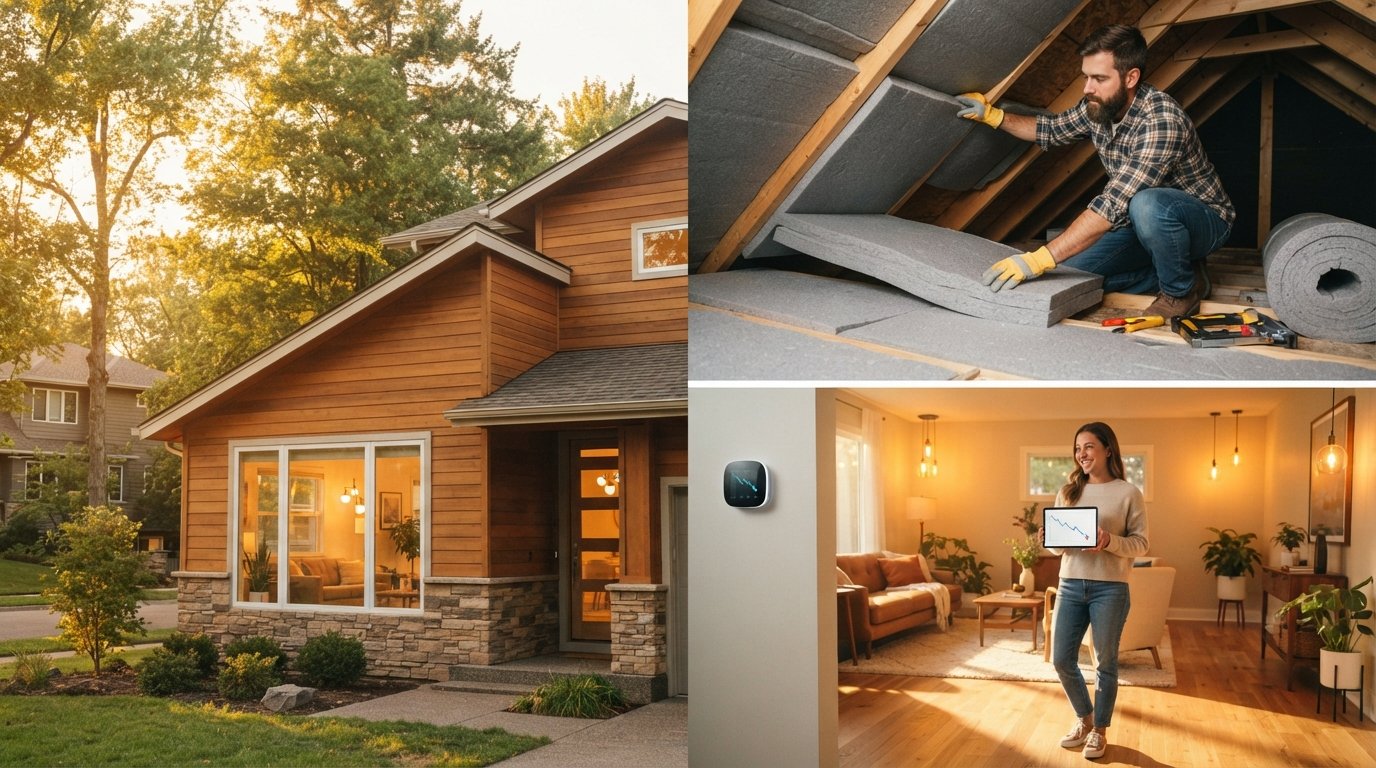
- Air Sealing and Insulation: This is often the most cost-effective upgrade, reducing heating and cooling loss by up to 20%. Sealing cracks and gaps around windows, doors, and in the attic, then adding insulation, creates a thermal barrier that keeps conditioned air inside.
- High-Efficiency HVAC Systems: Replacing an old, inefficient furnace or air conditioner with a modern, ENERGY STAR certified model can significantly reduce your energy consumption. These systems use advanced technology to provide better comfort while using less energy.
- Energy-Efficient Windows: Upgrading to double or triple-pane windows with low-emissivity (low-E) coatings reduces heat transfer, keeping your home warmer in winter and cooler in summer. This also reduces outside noise and improves overall comfort.
- Smart Thermostats: These devices learn your schedule and automatically adjust temperatures, optimizing energy use without sacrificing comfort. They can be controlled remotely via smartphone, allowing you to manage your home's climate from anywhere.
Each of these upgrades works together to create a more efficient building envelope. Air sealing and insulation are the foundation, preventing conditioned air from escaping. A high-efficiency HVAC system then operates less frequently and uses less energy to maintain the desired temperature. Efficient windows reduce heat gain and loss, further easing the load on your heating and cooling systems. Smart thermostats add a layer of intelligent control, ensuring energy is not wasted when you are away or asleep.
Harnessing Solar Energy: The Long-Term Winner
For homeowners looking to make a substantial impact on their energy bills and environmental footprint, solar energy systems are a powerful option. While the upfront cost is significant, the long-term financial benefits are compelling. Solar panels generate clean electricity from sunlight, offsetting your reliance on the grid. With federal tax credits and various state and local incentives, the net cost of installation has decreased substantially, making solar more accessible than ever. In some cases, you can even sell excess energy back to the grid through net metering programs, turning your meter backward and earning credits.
Before investing in solar, it is essential to assess your home's solar potential. Factors like roof orientation, shading from trees, and local climate all affect how much energy your panels can produce. A professional solar installer can evaluate your property and provide a detailed estimate of potential savings. The process involves installing photovoltaic (PV) panels, an inverter, and sometimes a battery storage system for backup power. While the initial investment can be high, many homeowners see a full return on investment within 7 to 15 years, followed by decades of nearly free electricity.
Integrating solar with other energy efficient home upgrades creates a synergistic effect. If your home is already well insulated and sealed, a smaller solar array can meet a larger percentage of your energy needs. This means lower upfront costs for the solar system and a faster payback period. Furthermore, pairing solar with a smart thermostat or an electric vehicle (EV) charger can maximize your energy independence. By combining efficiency measures with renewable energy generation, you create a truly sustainable home that is resilient to future energy price fluctuations.
Water Conservation as an Energy Saver
While often overlooked, water heating is one of the largest energy expenses in a home, accounting for about 18% of utility bills. Therefore, investing in water efficiency is a direct way to save energy. Simple fixes like installing low-flow showerheads and faucet aerators can significantly reduce hot water usage without compromising water pressure. These affordable upgrades provide an immediate, noticeable reduction in your energy bill. Additionally, fixing leaks promptly prevents both water and energy waste, as even a small drip can add up over time.
For a more substantial upgrade, consider a tankless or on-demand water heater. Unlike traditional storage tank models that constantly heat and reheat water, tankless systems heat water only when you turn on a tap. This eliminates standby energy loss, making them significantly more efficient. While the upfront cost is higher, they last longer and provide an endless supply of hot water. Another option is a heat pump water heater, which uses electricity to move heat from the air to the water, rather than generating heat directly. This technology is incredibly efficient, using up to 60% less energy than conventional electric water heaters.
When planning a bathroom or kitchen remodel, selecting WaterSense labeled fixtures is a smart move. These products are certified to be at least 20% more efficient than standard models. Upgrading to a dual-flush toilet or a high-efficiency washing machine can also yield substantial savings. These upgrades not only lower your utility bills but also reduce the strain on your plumbing system and contribute to community-wide water conservation efforts. By considering water as part of your energy strategy, you ensure a more holistic and cost-effective approach to home efficiency.
Financing and Planning Your Upgrade Journey
The cost of energy efficient home upgrades can vary widely, from a few hundred dollars for DIY weatherstripping to tens of thousands for a full solar installation or HVAC replacement. It is crucial to plan your projects carefully and explore all financing options available. Many local utilities offer rebates and incentives for energy efficiency improvements, and federal tax credits are available for certain upgrades like solar panels, heat pumps, and insulation. These incentives can significantly reduce your net costs, making high-efficiency options more affordable.
For larger projects, homeowners often use a combination of savings, home equity loans, or specialized energy efficiency mortgages (EEMs). An EEM allows you to borrow additional funds specifically for energy upgrades, based on the projected energy savings. This can be a smart option if you are already planning a major renovation or home purchase. Additionally, many states and localities offer Property Assessed Clean Energy (PACE) financing, which allows you to repay the cost of upgrades through a special assessment on your property tax bill. This can be an attractive option because it spreads the cost over many years and is tied to the property, not the individual.
When planning your upgrades, it is essential to work with qualified professionals. For tasks like insulation, HVAC replacement, and solar installation, hiring a licensed and insured contractor is critical. A reputable contractor will provide a detailed estimate, explain the options, and ensure the work is done correctly and up to code. Using a platform like Homes.Contractors can simplify the process of finding these professionals. You can request multiple quotes from pre-vetted contractors in your area, compare their proposals, and choose the one that best fits your needs and budget. This not only saves you time but also ensures you are getting a competitive price from a trusted expert.
Making the Right Choice for Your Home
Embarking on energy efficient home upgrades is a journey, not a destination. The key is to start with a comprehensive assessment and prioritize the projects that offer the greatest impact for your specific situation. Begin with low-cost, high-reward actions like sealing air leaks and adding insulation, then move on to larger investments like replacing old appliances or installing a smart thermostat. As you complete each project, you will see tangible results in your energy bills and overall home comfort.
Remember that a professional energy audit is the best first step. It provides a data-driven roadmap, eliminating guesswork and ensuring your investments are well-placed. From there, you can confidently select projects that align with your budget and goals. Whether you are aiming to reduce your carbon footprint, lower your monthly expenses, or increase your home's resale value, energy efficiency is a wise and rewarding investment. The long-term savings and enhanced comfort will provide a return that goes far beyond the initial cost.
As you move forward, take advantage of available resources and incentives. Consult with experts, get multiple quotes, and make informed decisions. By taking a strategic approach, you can transform your home into a model of efficiency, comfort, and sustainability. The journey may require effort and investment, but the payoff is a more affordable, comfortable, and valuable home for years to come.
Learn more about Weatherization for guides, costs, and what to expect.
Compare Weatherization Pros Near You
Enter your ZIP code to compare top-rated local professionals and request free quotes.