
DIY Versus Professional HVAC Repair: Your 2026 Decision Guide
Use this DIY versus professional HVAC repair decision guide to know which fixes are safe for you and when to call a licensed pro.
By Danica Leslie
Learn more about Heating System Repair or Maintenance for guides, costs, and what to expect.
Compare Heating System Repair or Maintenance Pros Near You

Enter your ZIP code to compare top-rated local professionals and request free quotes.
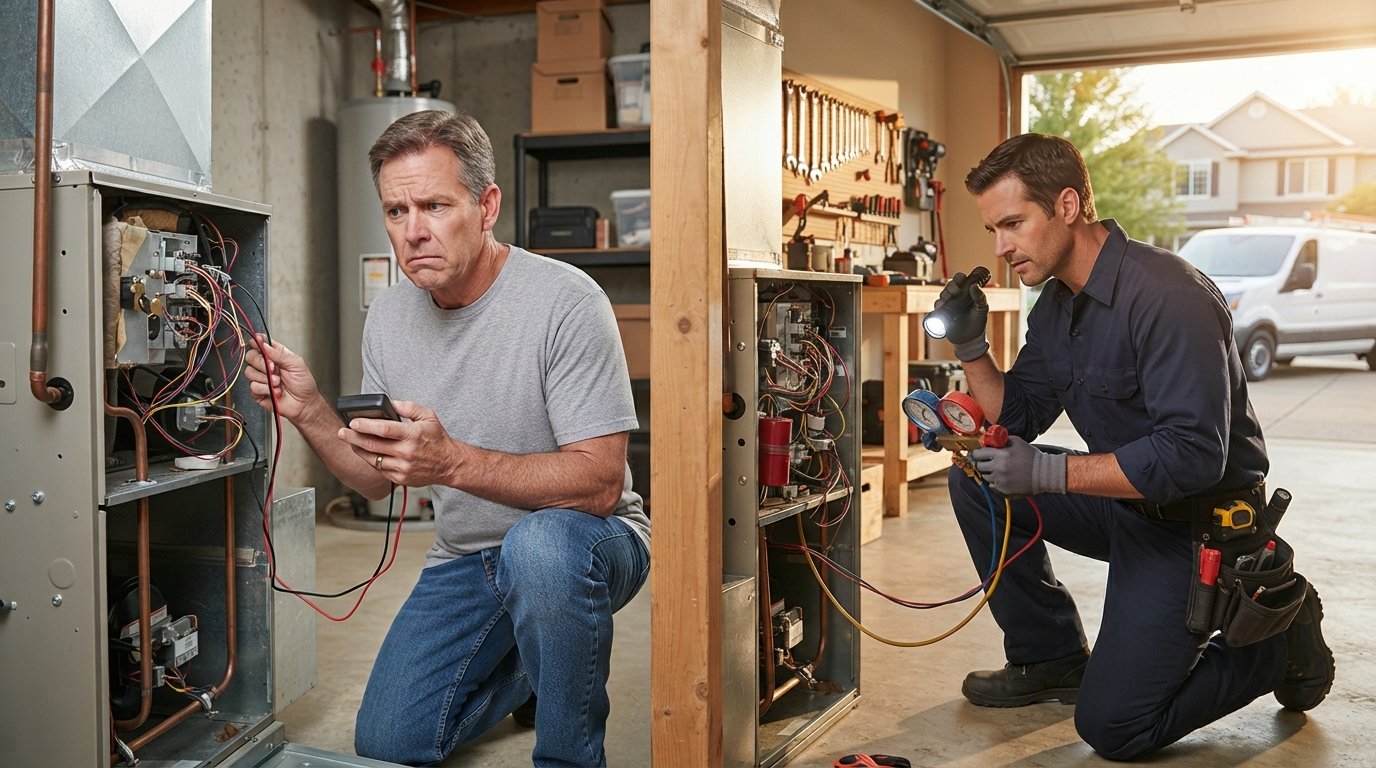
Your air conditioner dies on the hottest day of July. Your furnace quits in the middle of January. The first question that flashes through your mind is simple: can I fix this myself, or do I need to call a professional? That single decision can save you hundreds of dollars or cost you thousands in damaged equipment, voided warranties, and safety hazards. This DIY versus professional HVAC repair decision guide walks you through every factor you need to weigh so you can make a confident, informed choice.
HVAC systems are not like leaky faucets or squeaky door hinges. They combine high-voltage electricity, pressurized refrigerant, combustible gas, and complex mechanical components in a single unit. Some repairs are genuinely within reach for a handy homeowner. Others demand licensed expertise, specialized tools, and years of training. Knowing where that line falls is the difference between a smart weekend project and a costly mistake.
Why the DIY Versus Professional Decision Matters More Than Ever
HVAC repair costs have climbed steadily. A simple capacitor replacement that cost $150 a few years ago now runs $250 to $400 when a professional handles it. A refrigerant recharge can exceed $600. When a technician quotes you $1,200 for a repair, the DIY option looks tempting, and sometimes it is the right call. But the stakes are higher than most homeowners realize.
Modern HVAC systems are governed by federal regulations, manufacturer warranties, and local building codes. Handling refrigerant without EPA Section 608 certification is a federal violation. Tinkering with a gas furnace without a license can void your homeowner insurance coverage if something goes wrong. Even a seemingly harmless electrical repair can destroy a $2,000 control board if you skip a single diagnostic step.
The decision also affects your long-term costs. A botched DIY repair often leads to a second, more expensive professional visit. Worse, it can shorten the lifespan of your entire system. According to industry data, improper installation or repair contributes to nearly half of all HVAC system failures before the equipment reaches its expected service life.
Repairs You Can Safely Handle Yourself
Not every HVAC problem requires a service call. Several common issues are well within the capabilities of a careful homeowner with basic tools and a willingness to follow instructions. These tasks typically involve no refrigerant handling, no gas lines, and no high-voltage components beyond a simple disconnect.
Before you attempt any repair, always turn off power to the unit at the breaker and the disconnect switch. If your system uses natural gas or propane, shut off the gas supply as well. Safety is non-negotiable.
- Replacing air filters: This is the single most important maintenance task you can do. A clogged filter restricts airflow, raises energy bills, and can freeze the evaporator coil. Change it every one to three months depending on usage and pets.
- Cleaning condenser coils: Outdoor units collect dirt, leaves, and grass clippings. A gentle rinse with a garden hose (after powering down the unit) restores efficiency and prevents overheating.
- Resetting tripped breakers or float switches: A clogged condensate drain line can trigger a float switch that shuts down the system. Clearing the line and resetting the switch is a straightforward fix.
- Replacing a thermostat battery or reconnecting Wi-Fi: Sometimes the problem is not the HVAC system at all. A dead thermostat battery or a dropped network connection can mimic a major failure.
- Straightening bent condenser fins: A fin comb costs under $10 and can restore airflow through damaged outdoor coil fins.
These tasks require no special certification and pose minimal risk when you follow proper safety procedures. They also form the backbone of a preventative maintenance routine that can extend your system's life by years. If you are comfortable with these basic steps, you have already saved yourself several service calls.
However, if you notice that filters clog unusually fast or coils dirty quickly, the underlying issue may be ductwork leaks or poor system design. Those problems require a professional assessment and often fall under broader home improvement projects. For homeowners in regions with extreme weather, such as Arizona, maintaining your HVAC system is as critical as maintaining your roof. In fact, many of the same contractors who handle roof repair and replacement services in Arizona also coordinate with HVAC specialists to ensure your home envelope and mechanical systems work together efficiently.
Repairs That Require a Licensed Professional
Certain HVAC repairs are simply off-limits for DIYers, not because of difficulty alone but because of legal, safety, and warranty implications. Attempting these repairs without proper credentials can result in fines, voided warranties, and serious injury.
Refrigerant handling tops the list. The EPA requires Section 608 certification to purchase, handle, or dispose of refrigerants. Releasing refrigerant into the atmosphere is illegal and carries significant penalties. Even if you could buy the refrigerant, you need a manifold gauge set, a vacuum pump, and a recovery machine, tools that cost more than the repair itself.
Gas furnace repairs present similar hazards. A cracked heat exchanger can leak carbon monoxide into your home, an invisible and potentially fatal threat. Adjusting gas pressure or replacing gas valves without a license is both dangerous and illegal in most jurisdictions. Electrical repairs involving capacitors, compressors, or control boards also demand expertise. A capacitor can hold a lethal charge even after power is disconnected.
Beyond safety, consider your warranty. Most manufacturers require that repairs be performed by a licensed technician to keep the warranty valid. If you install a part incorrectly and it causes a compressor failure, you will pay for the entire system replacement out of pocket. That $200 DIY savings could turn into a $6,000 mistake.
How to Evaluate Your Own Skills and Limitations
Before you decide, take an honest inventory of your abilities and your tolerance for risk. Ask yourself a few pointed questions.
Do you understand basic electrical circuits and know how to use a multimeter safely? Can you read and follow a wiring diagram? Are you comfortable working in tight spaces around sharp metal edges and live wiring? Have you successfully completed similar repairs in the past? If you answered no to any of these, the professional route is almost certainly the better choice.
Also consider the time factor. A professional HVAC technician can diagnose and repair most issues in a single visit. A DIY attempt might stretch over multiple days, leaving your family without heating or cooling in extreme temperatures. That discomfort has real value, especially if you have young children, elderly family members, or pets.
Finally, think about the tools. A basic DIY toolkit will not cut it for most HVAC repairs. You may need a multimeter, a vacuum pump, refrigerant gauges, a torch, and specialized wrenches. Renting or buying these tools can erase your savings entirely.
A Step-by-Step Decision Framework
To make the DIY versus professional decision concrete, walk through this simple framework every time an HVAC issue arises.
- Identify the symptom precisely. Is the system blowing warm air? Not turning on at all? Making strange noises? Leaking water? The symptom narrows down the possible causes.
- Check the simple things first. Thermostat settings, breakers, filters, and float switches cause a surprising number of service calls. Rule these out before anything else.
- Assess the safety and legal risk. Does the repair involve refrigerant, gas, or high-voltage electrical components? If yes, stop and call a professional.
- Evaluate your skill and tool level. Be honest. If you lack the tools or the experience, the risk is not worth the reward.
- Calculate the true cost. Compare the professional quote not just to the part cost, but to the potential cost of failure: a voided warranty, a damaged system, or a safety hazard.
This framework works for any HVAC issue, from a minor thermostat glitch to a full system failure. When in doubt, choose the professional. The peace of mind alone is often worth the service fee.
The Role of Professional Contractors and How to Find Them
If your decision framework points to professional help, your next challenge is finding a qualified, trustworthy HVAC contractor. This step is just as important as the DIY versus professional decision itself. A bad contractor can create more problems than a botched DIY repair.
Start by asking for referrals from neighbors, friends, and family. Check online reviews on multiple platforms. Verify that the contractor holds a valid state license and carries both liability insurance and workers compensation coverage. Ask for proof of EPA certification for refrigerant handling. Get written estimates from at least three contractors before committing.
For a streamlined way to gather multiple quotes from pre-vetted local contractors, consider using a platform like FreeQuotes.Contractors. It connects homeowners with qualified professionals for HVAC and other home improvement projects, letting you compare bids side by side without pressure. This approach saves time and helps you avoid the risk of hiring an unqualified technician.
Remember that Homes.Contractors operates as a directory and referral resource, not a direct service provider. Always verify credentials independently and never pay in full before the work is complete and inspected to your satisfaction.
Preventative Maintenance: The Best DIY Investment
The smartest DIY strategy is not repairing your HVAC system after it breaks; it is preventing breakdowns in the first place. Regular maintenance reduces the need for emergency repairs, extends equipment life, and keeps your energy bills lower.
Set a recurring reminder to change filters, clean coils, and inspect the condensate drain. Schedule a professional tune-up once a year, ideally in spring for air conditioning and fall for heating. These tune-ups typically cost $80 to $150 and can catch small issues before they become expensive failures.
Keep a simple log of all maintenance and repairs. This record helps you track warranty periods, spot recurring problems, and provide useful history if you sell your home. A well-maintained HVAC system is a selling point that buyers notice.
If you are planning a larger home improvement project that involves HVAC, such as a ductwork redesign or a system replacement, treat it as a professional-only job from start to finish. The complexity and cost of these projects make DIY attempts financially reckless.
Making the Call with Confidence
Every HVAC repair decision comes down to a balance of risk, cost, and capability. Minor maintenance tasks are excellent DIY projects that save money and build confidence. Repairs involving refrigerant, gas, or complex electrical systems belong in the hands of licensed professionals. When you evaluate each situation with a clear framework, you protect your home, your wallet, and your family's safety.
Use this DIY versus professional HVAC repair decision guide as your reference whenever your system acts up. Start with the simple checks, assess the risks honestly, and do not hesitate to bring in an expert when the stakes are high. Your comfort and your budget will thank you.
Learn more about Heating System Repair or Maintenance for guides, costs, and what to expect.
Compare Heating System Repair or Maintenance Pros Near You
Enter your ZIP code to compare top-rated local professionals and request free quotes.