
DIY Versus Professional Contractor: A Decision Framework
Use this DIY versus professional contractor decision framework to weigh risk, time, and permits. Call (833)-439-3727 for expert help.

By Maya Griffin
Learn more about General Contracting for guides, costs, and what to expect.
Compare General Contracting Pros Near You

Enter your ZIP code to compare top-rated local professionals and request free quotes.
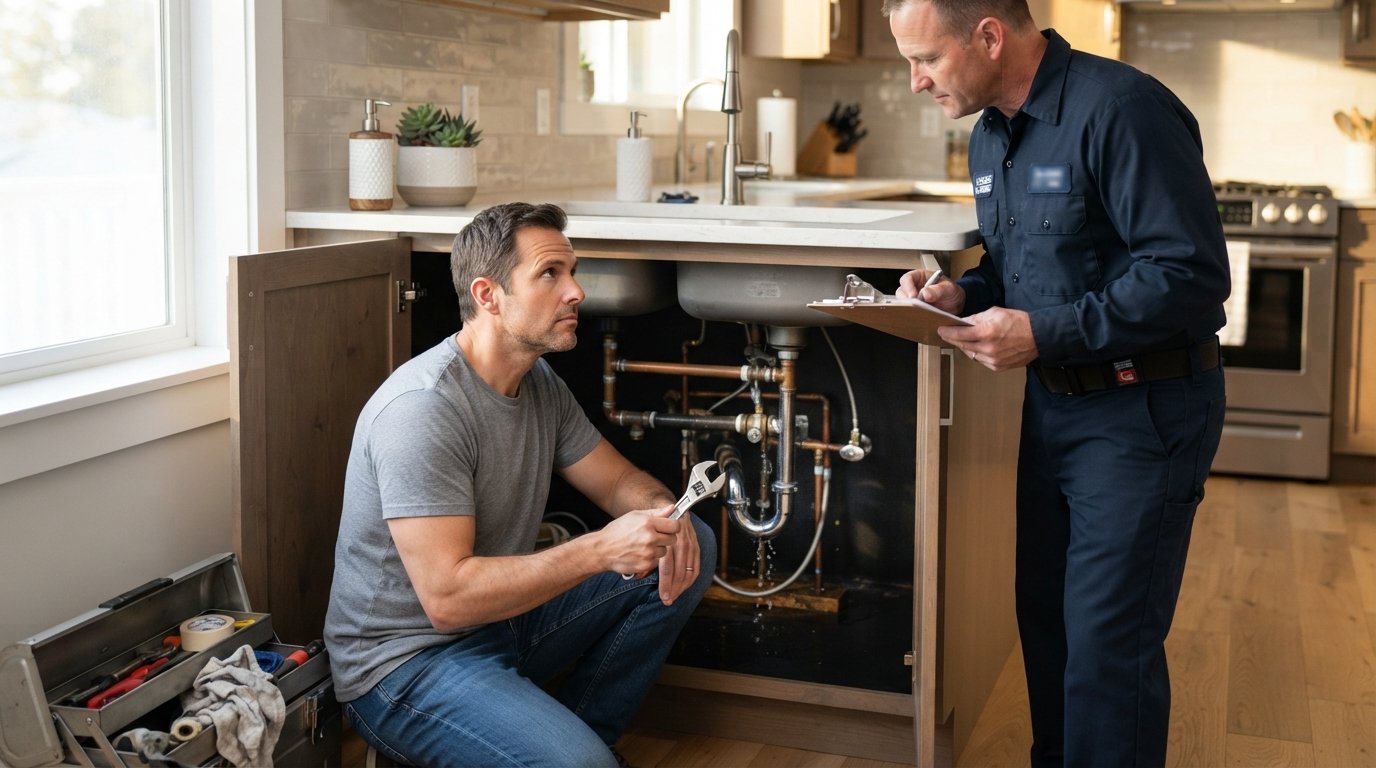
Your Saturday project starts with a burst pipe under the kitchen sink. Do you grab a wrench and a YouTube tutorial, or do you call a licensed plumber? That split-second decision can mean the difference between a $200 repair and a $5,000 water damage bill. Homeowners face this choice constantly, and the stakes are higher than most realize. The right answer is not always "hire a pro" or "do it yourself." It depends on risk, time, tools, codes, and your own skill set. This article gives you a clear, step-by-step framework to decide when to DIY and when to call a professional contractor, so you can protect your home, your budget, and your sanity.
Why the DIY Versus Professional Contractor Decision Matters More Than Ever
Home improvement spending in the United States continues to climb, and more homeowners are tackling projects themselves to save money. Yet the same enthusiasm that drives a successful DIY paint job can lead to catastrophic results when applied to electrical panels or load-bearing walls. The core issue is that not all projects carry the same risk profile. A botched paint job is cosmetic; a botched gas line is deadly. Understanding that spectrum is the first step in making a smart decision.
Many homeowners underestimate the hidden costs of DIY, from tool purchases to permit fees to the value of their own time. Others overestimate their ability to handle complex work because online tutorials make it look easy. The truth is that a balanced approach, one that weighs risk against reward, is the only reliable way to choose. This framework will help you evaluate any project, whether it is a simple faucet replacement or a full bathroom remodel, and decide whether to roll up your sleeves or call in a vetted professional.
Assessing Project Risk: The First Filter in Your Decision Framework
Before you think about cost or time, assess the risk. Some projects can cause injury, death, or major structural damage if done wrong. Others are benign. The highest-risk categories are electrical, plumbing, structural, and roofing. Each has its own red flags that should push you toward a licensed professional.
Electrical work is the most dangerous DIY category. According to the National Fire Protection Association, electrical failures or malfunctions cause tens of thousands of home fires each year. Tasks like replacing a light switch or outlet are relatively safe if you turn off the power, but anything involving the electrical panel, new circuits, or wiring inside walls should be left to a licensed electrician. Building codes require permits and inspections for most electrical work, and insurance companies may deny claims if unpermitted work causes a fire.
Plumbing carries similar risks. A simple clog or faucet swap is manageable for many homeowners, but moving supply lines, installing a new water heater, or repairing a sewer line requires a plumber. Water damage is insidious: a slow leak behind a wall can rot framing and spawn mold before you notice anything. Gas lines are an absolute no-go for DIY; mistakes can cause explosions or carbon monoxide poisoning.
Structural work, such as removing a wall or modifying a load-bearing beam, is another high-risk area. If you remove a wall that supports the floor above, you can cause sagging, cracks, or even collapse. Roofing is also risky due to fall hazards and the potential for leaks if flashing and underlayment are installed incorrectly. For any project in these categories, the safe default is to hire a licensed professional. To understand how risk applies specifically to heating and cooling systems, see our guide on DIY versus professional HVAC repair.
Time and Tool Costs That Offset DIY Savings
DIY often looks cheaper on paper because you only pay for materials. But your time has value, and specialized tools can be expensive. Before committing to a DIY project, calculate the true cost by adding up materials, tool purchases or rentals, permit fees, and the value of your time. If you would have to take unpaid time off work, that lost income counts against the savings.
Consider a simple example: installing a new tile floor in a bathroom. A pro might charge $1,500 to $2,500 for labor, while materials cost $500. If you DIY, you save the labor but need to buy or rent a wet saw ($200 to $500), trowels, spacers, and other tools ($100), and you might spend 20 to 30 hours on the job. If your time is worth $30 per hour, that is $600 to $900 of your time. Add the tool costs and the risk of mistakes, and the savings shrink considerably. For complex jobs, the gap often disappears entirely.
Tool costs are a major factor. Some tools, like a basic drill or hammer, most homeowners already own. But specialized tools for plumbing (pipe wrench, crimping tool), electrical (voltage tester, fish tape), or tile work (wet saw) can add hundreds of dollars. Renting is an option, but rental fees plus travel time eat into savings. For one-time projects, renting may still be cheaper than buying, but for projects you will repeat, buying might make sense. Always do the math before you start.
Permits and Code Requirements: When the Law Says Hire a Pro
Building codes exist to protect safety, and many projects require permits and inspections. In most jurisdictions, electrical, plumbing, structural, and mechanical work requires a permit. Some municipalities allow homeowners to pull permits for their own primary residence, but others require a licensed contractor. Even if you can pull your own permit, the work must meet code, and an inspector will check it. If you are not confident in your ability to meet code, hiring a pro is the safer bet.
Unpermitted work can create serious problems when you sell your home. Buyers and their inspectors will look for permits, and unpermitted work can delay or kill a sale. Insurance companies may deny claims for damage caused by unpermitted work. In some cases, you may be forced to tear out and redo the work to bring it up to code, which doubles the cost. Before starting any project, check with your local building department to understand permit requirements. If a permit is required, weigh whether you are prepared to handle the inspection process and meet all code requirements.
Licensing requirements vary by state and trade. Electricians, plumbers, and HVAC technicians are typically licensed, and hiring an unlicensed contractor can leave you liable for injuries or damage. Even if you DIY, you are responsible for meeting code. For projects that require a licensed professional, it is not worth the risk to go it alone. A professional contractor will handle permits and ensure the work passes inspection.
When DIY Mistakes Cost More Than Hiring a Professional
The most expensive DIY mistake is the one you have to fix twice. A poorly installed shower pan that leaks into the subfloor can cost thousands to repair. A miswired outlet can cause a fire. A removed load-bearing wall can require expensive structural repairs. These are not hypotheticals; they happen regularly, and the costs can far exceed what a professional would have charged.
Beyond the direct repair costs, DIY mistakes can lead to secondary damage. Water leaks cause mold, which requires professional remediation. Electrical errors can fry appliances or start fires. Structural errors can compromise the entire house. There is also the cost of your time and stress: fixing a mistake often takes longer than doing it right the first time, and the frustration can be significant.
To avoid these outcomes, be honest about your skill level. If you have never soldered copper pipe, do not start with a whole-house repipe. If you have never wired a circuit, do not attempt to add a new outlet. Start with small, low-risk projects and build your skills gradually. For anything beyond your comfort zone, hire a pro. The money you save by DIY is not worth the risk of a catastrophic mistake.
Hybrid Approaches: DIY Demo and Prep, Pro for Technical Work
You do not have to choose between all-DIY and all-pro. A hybrid approach often delivers the best value: you handle the unskilled labor (demolition, prep, cleanup) and hire a professional for the technical work (electrical, plumbing, structural). This strategy can save 20 to 40 percent on labor costs while ensuring the critical work is done safely and to code.
For example, if you are remodeling a bathroom, you can remove the old tile, vanity, and toilet yourself. You can also haul away debris and prepare the subfloor. Then hire a plumber to rough in new supply lines and a drain, an electrician to add a GFCI outlet, and a tile setter to install the new floor and shower. You save on the demolition labor, which is relatively unskilled, and you avoid the risk of a leaky shower or faulty wiring.
Similarly, for a kitchen remodel, you can demo cabinets and appliances, then bring in pros for electrical, plumbing, and countertop installation. For a deck build, you can dig footings and prepare the site, then hire a carpenter for framing and railing. The key is to clearly define the scope of work for each party and coordinate the schedule so the pro can start as soon as you finish. This approach requires more planning but can be a smart way to balance budget and safety.
Using a Decision Framework: A Step-by-Step Checklist
To make the DIY versus pro decision easier, use a simple checklist. Score each project on risk, time, tools, permits, and your skill level. If any factor is a red flag, lean toward hiring a pro. Here is a step-by-step framework you can apply to any project.
- Assess risk: Does the project involve electrical, plumbing, structural, or roofing work? If yes, it is high risk. Proceed with caution or hire a pro.
- Check permit requirements: Does your local building department require a permit? If so, are you allowed to pull it as a homeowner? If not, you must hire a licensed contractor.
- Evaluate your skill and experience: Have you done this type of work before? Do you have the necessary skills to meet code? If not, consider a pro.
- Calculate time and tool costs: Add up the cost of tools, materials, permits, and your time. Compare that to a professional quote. If the savings are small, hire a pro.
- Consider the downside: What is the worst-case scenario if you make a mistake? If it involves safety, health, or major structural damage, hire a pro.
If you are still unsure, get quotes from local contractors. You can request multiple free quotes through a reputable directory to compare prices and scope. This gives you a baseline for the professional cost, which you can weigh against your DIY estimate. It also helps you identify whether a hybrid approach might work. For a reliable way to find pre-vetted contractors, consider using PlanRemodel, a comprehensive online directory for homeowners in the United States.
Building Your Personal Decision Framework for Future Projects
The best way to handle the DIY versus pro question is to develop your own decision framework based on your skills, budget, and risk tolerance. Start by categorizing projects into three buckets: green (safe to DIY), yellow (hybrid or careful DIY with pro oversight), and red (hire a pro). Green projects might include painting, landscaping, or simple cosmetic updates. Yellow projects could be tiling a backsplash, replacing a faucet, or installing a ceiling fan (if you are comfortable with electrical). Red projects include anything structural, gas, or requiring a permit that you cannot pull yourself.
Over time, you will build confidence and skills, and some yellow projects may move to green. But it is important to be honest with yourself. Just because you watched a video does not mean you are qualified. If a project feels beyond your ability, trust that instinct. Hiring a professional is not a failure; it is a smart investment in your home's safety and value. And for projects you do tackle yourself, always prioritize safety and code compliance.
Remember that the goal is not to DIY everything or to hire out everything. The goal is to make informed decisions that protect your home and your wallet. Use the framework in this article, get multiple quotes when needed, and do not be afraid to ask for help. With a clear decision process, you can confidently navigate any home improvement project.
Learn more about General Contracting for guides, costs, and what to expect.
Compare General Contracting Pros Near You
Enter your ZIP code to compare top-rated local professionals and request free quotes.