
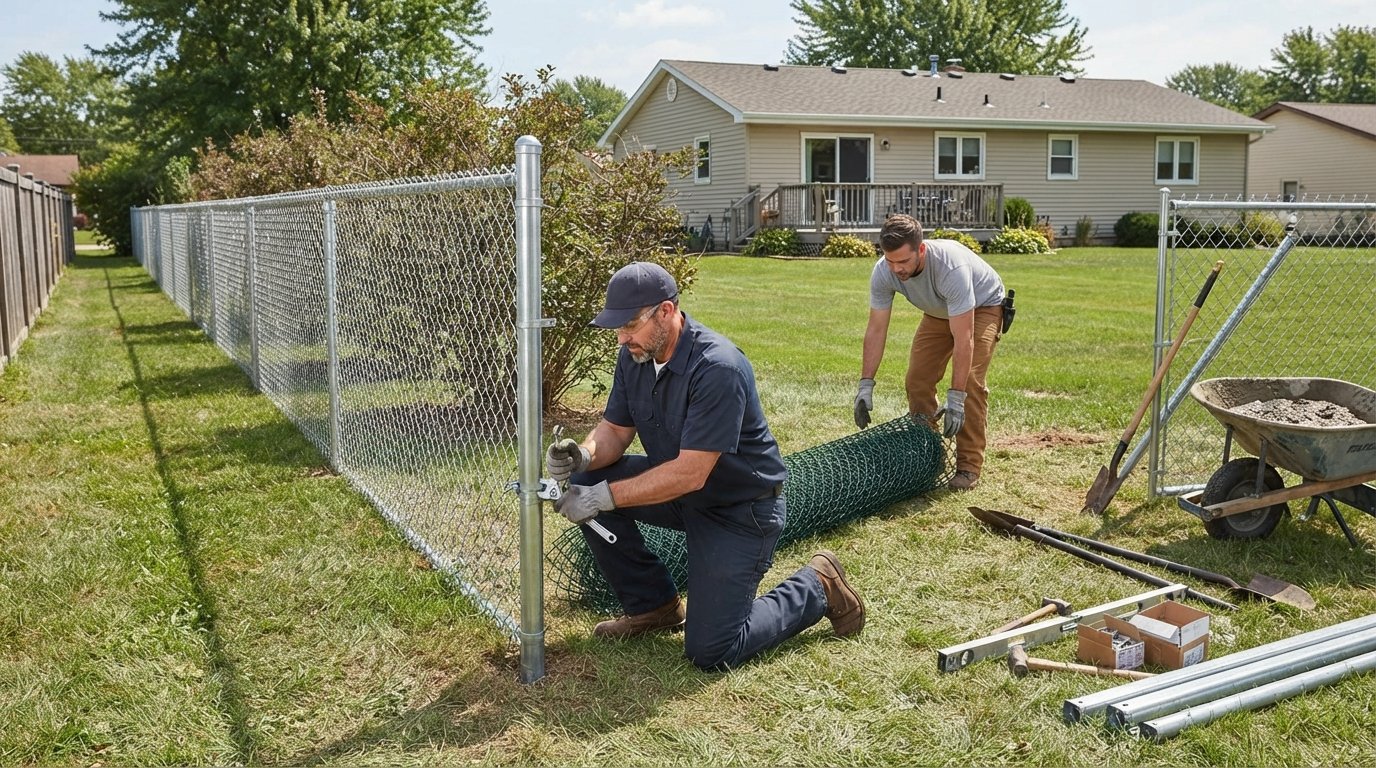
Average Cost to Replace a Chain Link Fence in 2026
The average cost to replace a chain link fence runs $1,500 to $4,500 for most yards. See what drives the price and how to compare contractor quotes.
By Alexia Mabel
Learn more about Fence and Gate Installation for guides, costs, and what to expect.
Compare Fence and Gate Installation Pros Near You

Enter your ZIP code to compare top-rated local professionals and request free quotes.
Replacing a chain link fence is one of those home projects that feels simple until you start collecting bids. One contractor quotes $1,800. Another says $4,200. A third asks whether you want galvanized or vinyl-coated, and suddenly the range makes sense. The average cost to replace a chain link fence in the United States falls between $1,500 and $4,500 for a typical residential yard, but that spread hides the variables that actually move your final bill: linear footage, height, gauge, coating, terrain, gate count, and local labor rates. Understanding how each factor interacts will help you budget accurately and compare contractor estimates without getting blindsided by add-ons.
What Drives the Average Cost to Replace a Chain Link Fence
Chain link is the most affordable fencing option per linear foot, which is why it remains a top choice for pet containment, property boundaries, and pool enclosures. But "affordable" does not mean uniform. Two homes on the same street can pay wildly different prices for what looks like the same fence. The difference almost always comes down to materials and site conditions.
On the materials side, the three biggest cost levers are wire gauge, coating, and post schedule. A 11.5-gauge wire (thinner) costs less than a 9-gauge wire (thicker and more durable). Galvanized steel is the baseline; vinyl-coated or color-coated chain link adds 20 to 35 percent to material costs but resists rust and looks better against landscaping. Posts come in different weights and diameters, and terminal posts at corners and gates must be heavier than line posts.
Site conditions matter just as much. A flat, clear yard with soft soil is a contractor's dream. Rocky ground, tree roots, slopes, and old fence removal all add labor hours. If the old fence has concrete footings that need to be broken out, expect a disposal fee and extra time. These are the line items that turn a $2,000 estimate into a $3,500 invoice if they are not discussed upfront.
Here is a quick breakdown of the factors that most influence your quote:
- Linear footage: Most residential fences run 100 to 300 feet; pricing typically starts per linear foot.
- Fence height: 4-foot fences cost less than 6-foot fences, which are standard for privacy and pets.
- Wire gauge and coating: 9-gauge vinyl-coated costs more than 11.5-gauge galvanized.
- Gates: Each walk gate or drive gate adds $150 to $600 or more depending on width and hardware.
- Removal and disposal: Tearing out an old fence adds $2 to $5 per linear foot in most markets.
Once you know which of these apply to your property, you can start benchmarking quotes against realistic ranges instead of guessing.
National Price Ranges by Fence Height and Material
For a standard 4-foot galvanized chain link fence, most homeowners pay between $10 and $20 per linear foot installed. A 6-foot fence with heavier gauge wire and vinyl coating typically runs $18 to $35 per linear foot. These installed prices include posts, rails, tension wire, hardware, and basic labor. They do not include permits, removal of an existing fence, or unusual site work.
To put that in perspective, a 150-foot backyard fence at 4 feet tall with one walk gate might land between $1,800 and $2,700 in a mid-cost market. The same fence at 6 feet with vinyl coating and two gates could easily reach $4,000 to $5,500. Coastal areas, dense urban markets, and regions with rocky soil push pricing toward the higher end. Rural areas with low labor costs often come in below the national average.
Material choice also shifts the math. Galvanized chain link is the budget option. Vinyl-coated chain link costs more but holds up better in humid climates and near sprinkler lines. If you are comparing chain link to wood, vinyl, or aluminum fencing, chain link usually wins on upfront price but may lose on privacy and curb appeal. That trade-off is worth weighing before you commit.
How Much Does Chain Link Fence Removal Add?
Replacing a fence almost always means removing the old one first. Some contractors bundle removal into the installation quote; others list it separately. Either way, you are paying for it. Removal costs typically range from $2 to $5 per linear foot, depending on how the old fence was installed and what condition it is in.
Concrete-set posts are the biggest variable. A post set in a concrete footing has to be dug out or broken free, which takes time and equipment. If the old fence is rusted through or leaning, removal may be faster because the posts come out more easily. If the old fence is structurally sound and set in concrete, removal can take longer than installing the new fence.
Disposal is another line item. Some municipalities charge by weight or volume at the landfill, and contractors pass that cost through. If you want to save money, you can ask whether the contractor will leave the old materials on site for your own disposal, but confirm this in writing before work begins so there are no surprises.
Labor Rates and Regional Price Differences
Labor typically accounts for 40 to 60 percent of a chain link fence replacement project. That is why the same fence costs more in San Francisco than in rural Ohio. Local wage rates, fuel costs, permit requirements, and contractor availability all feed into the hourly rate you see on your estimate.
In high-cost coastal markets, installation labor can run $60 to $90 per hour. In the Midwest and South, $35 to $55 per hour is more common. If your property has slopes, tight access, or landscaping that needs protection, expect labor hours to climb. A fence line that runs through a garden bed or along a retaining wall takes longer to install than one across open lawn.
Permits are a separate cost. Many municipalities require a fence permit, especially for front-yard fences or fences over a certain height. Permit fees vary widely, from $25 to several hundred dollars. Your contractor should know local requirements, but it is ultimately your responsibility to confirm that the fence meets setback and height rules. Skipping the permit can lead to fines or forced removal, which wipes out any savings.
When you compare bids, ask each contractor to break out labor, materials, removal, and permits. That level of detail makes it much easier to spot an outlier and understand why one quote is higher than another.
Chain Link Fence Cost by Project Size
Project size affects the per-foot price because fixed costs (equipment, mobilization, permit fees) get spread across more linear feet. A small 50-foot fence might cost $18 to $25 per foot installed, while a 300-foot fence might drop to $12 to $18 per foot. The larger the job, the more negotiating room you have on labor and material pricing.
Here are typical installed price ranges for common project sizes, assuming standard 4-foot galvanized chain link with one gate:
- 50 feet: $900 to $1,500
- 100 feet: $1,400 to $2,400
- 150 feet: $1,800 to $3,200
- 200 feet: $2,400 to $4,000
- 300 feet: $3,300 to $5,500
These numbers assume relatively flat ground and easy access. Add 15 to 30 percent for slopes, rocky soil, or extensive removal. Add another 10 to 20 percent for premium coatings or heavier gauge wire. If your project includes multiple gates, price each gate separately so you can see exactly what you are paying for.
When to Repair Instead of Replace
Not every damaged chain link fence needs full replacement. If the fabric is torn but the posts and rails are solid, you can often replace just the mesh for a fraction of the cost. If a single post is bent or rusted, a contractor can cut it out and set a new one without disturbing the rest of the fence. These targeted repairs typically cost $300 to $800 depending on scope.
Full replacement makes more sense when the fence is rusted through in multiple places, when posts are leaning or failing, or when you want to change the height or style. If your fence is more than 15 to 20 years old and showing widespread corrosion, replacement is usually the better long-term investment. Repairing a failing fence piece by piece often costs more over five years than replacing it once.
If you are unsure which path makes sense, get quotes for both repair and replacement. A reputable contractor will tell you honestly whether repair is viable or whether you are throwing money at a fence that is past its service life. For more guidance on evaluating contractor pricing and credentials, see our guide on the average cost to hire a contractor, which walks through how to compare bids and avoid common hiring mistakes.
How to Get Accurate Chain Link Fence Quotes
The best way to avoid overpaying is to get multiple quotes and compare them line by line. A single bid tells you what one contractor charges; three bids tell you what the market looks like in your area. The goal is not always to pick the cheapest option. It is to pick the quote that is complete, transparent, and backed by a contractor who communicates clearly.
Before you request quotes, measure your fence line and note the number of gates you need. Take photos of the existing fence and any problem areas, such as slopes or concrete footings. This information helps contractors give you accurate numbers instead of vague estimates that balloon later.
When you review each quote, check for the following:
- Scope of work: Does it include removal, disposal, and cleanup?
- Materials spec: What gauge wire, coating, and post size are included?
- Permits: Who pulls the permit, and is the fee included?
- Timeline: When will work start and finish, and what happens if weather delays it?
- Warranty: What does the contractor guarantee, and for how long?
Ask each contractor to explain anything that looks unclear. A good contractor will welcome the questions. If someone pressures you to sign on the spot or refuses to put details in writing, that is a red flag. You can also use a platform like FreeQuotes.Contractors to request multiple quotes from local fencing professionals and compare them side by side without committing to any single company.
Ways to Reduce Your Chain Link Fence Replacement Cost
There are legitimate ways to bring your project cost down without sacrificing quality. The easiest is to schedule the work in the off-season. Fencing contractors are busiest in spring and summer, so late fall and winter installations often come with more flexible pricing. You may also save by choosing standard galvanized chain link instead of vinyl-coated, as long as the appearance trade-off is acceptable to you.
Clearing the fence line before the crew arrives saves labor hours. If you remove brush, move patio furniture, and mark irrigation lines yourself, the crew can start installing immediately. On larger projects, you can ask about a cash discount or a reduced rate for paying a deposit upfront, but always get the terms in writing and never pay more than a reasonable deposit (typically 10 to 30 percent).
Finally, consider phasing the project. If your budget is tight, you can replace the most visible or most damaged section first and complete the rest later. This approach costs more per foot overall because the contractor has to mobilize twice, but it spreads the expense across two budget cycles. Just make sure the first phase leaves the fence secure and functional.
What to Expect During Installation
A typical residential chain link fence installation takes one to three days, depending on length, terrain, and weather. Day one usually involves marking the fence line, digging post holes, and setting posts in concrete. The concrete needs time to cure, so the mesh and rails typically go up on day two or three. Gates are hung last and adjusted for smooth operation.
You should expect some noise, dirt, and disruption. Crews will dig holes, mix concrete, and stretch wire, which can be loud. Pets and children should be kept indoors while work is in progress. At the end of the job, walk the fence line with the contractor, check that gates latch properly, and confirm that all debris has been removed before you make the final payment.
Chain link fences are not glamorous, but they are practical, durable, and relatively inexpensive. Knowing the average cost to replace a chain link fence, and understanding what moves that number up or down, puts you in a much stronger position when you sit down with contractors. Get at least three quotes, ask detailed questions, and do not rush the decision. A fence that is installed correctly will last 15 to 20 years or more, which makes the upfront research well worth the effort.