
Aging in Place Home Modifications: Accessibility and Value
Aging in place home modifications for accessibility and value protect your independence and boost resale appeal. Call 8334393727 for vetted contractor quotes.
By Alexia Mabel
Learn more about Home Modification for Accessibility for guides, costs, and what to expect.
Compare Home Modification for Accessibility Pros Near You

Enter your ZIP code to compare top-rated local professionals and request free quotes.
The decision to remain in your own home as you grow older is about more than comfort. It is about preserving independence, staying connected to your community, and protecting one of your most significant financial assets. Yet the typical American home was not designed with aging bodies in mind. Narrow doorways, high cabinets, and slippery bathroom floors can turn a familiar space into a daily obstacle course. The good news is that strategic aging in place home modifications for accessibility and value can solve both problems at once. They make your home safer and easier to navigate, and they can increase your property's resale appeal. This article explains which upgrades deliver the strongest return, how to plan and budget for them, and how to find qualified professionals who understand the unique demands of senior-friendly remodeling.
Why Aging in Place Modifications Matter More Than Ever
The vast majority of older adults say they want to stay in their current home for as long as possible. That preference has driven a surge in demand for accessible design features that blend seamlessly with everyday living. Unlike institutional-looking grab bars and hospital-style ramps, modern aging in place modifications can look like thoughtful design choices: a curbless shower that feels like a spa, a wider hallway that improves flow, or a kitchen with pull-out shelves that make cooking easier for everyone. These changes support safety without sacrificing style or resale value.
From a financial perspective, the calculus is compelling. The cost of a few strategic modifications is often a fraction of what you would pay for assisted living or a nursing home. When you compare the one-time expense of a walk-in tub or a stairlift to monthly care facility fees, the value becomes clear. Moreover, many accessibility upgrades overlap with universal design principles that appeal to buyers of all ages. A home that works for a 75 year old with mobility challenges also works for a young family with a stroller or a visiting parent recovering from surgery.
Contractors who specialize in this niche can help you prioritize projects based on your budget and long-term goals. If you are unsure where to start, a good first step is to request multiple quotes from pre-vetted professionals who have experience with accessibility retrofits. Platforms like FreeQuotes.Contractors connect homeowners with local contractors who can assess your home and recommend cost-effective solutions. Getting several estimates helps you compare approaches and avoid overpaying for unnecessary work.
High-Impact Modifications That Deliver Accessibility and Value
Not all home modifications are created equal. Some offer a dramatic improvement in safety and daily function for a relatively modest investment, while others are more expensive and may not recoup their cost at resale. The following upgrades consistently rank among the best choices for homeowners who want to age in place without compromising their home's marketability.
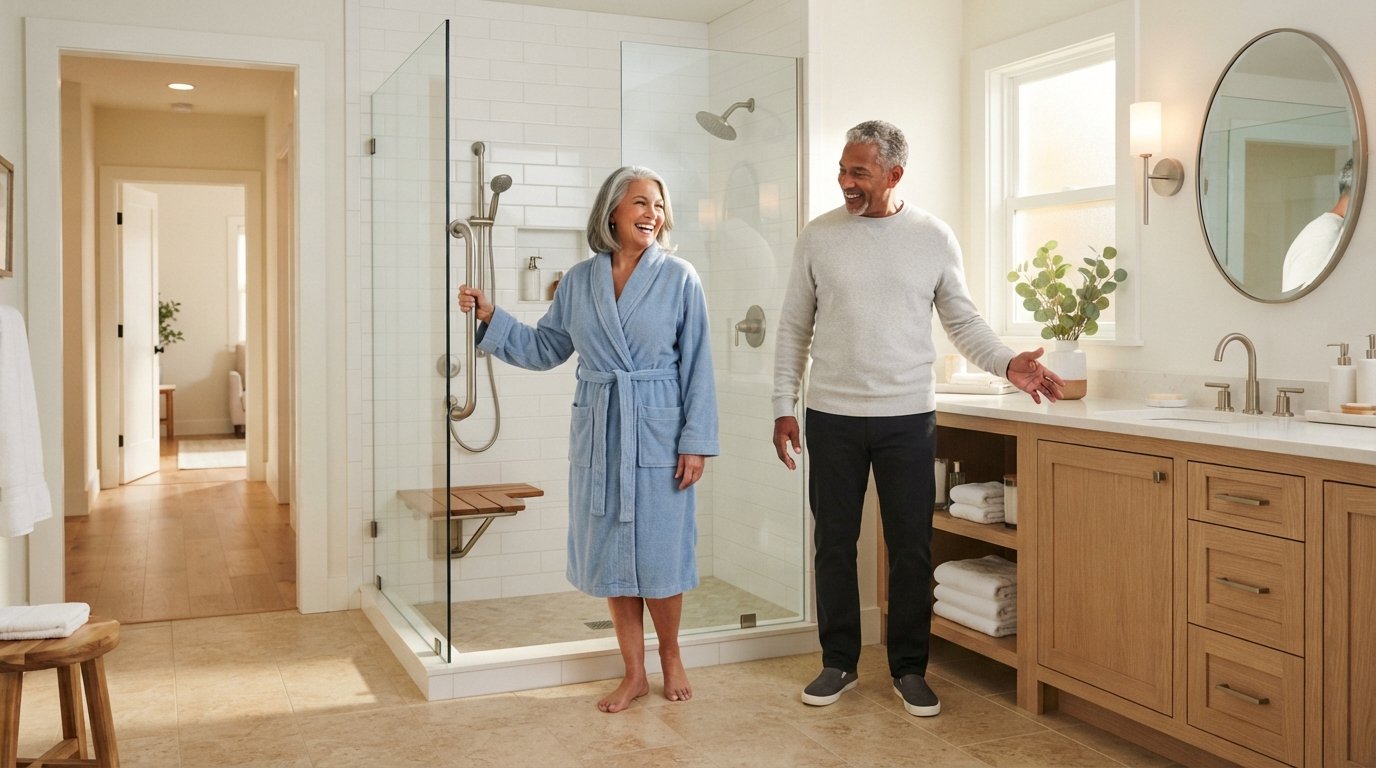
- Zero-threshold shower or walk-in tub: Eliminates the need to step over a high tub wall, reducing fall risk. Curbless showers are increasingly popular among buyers of all ages and can make a bathroom feel larger and more modern.
- Comfort-height toilet: A taller toilet (17 to 19 inches) is easier to use for people with knee or hip issues. This is a low-cost change that can be done during any bathroom remodel.
- Lever-style door handles and faucets: Replacing round knobs with lever handles improves grip for arthritic hands and costs very little. It is a simple swap that makes a big difference in daily usability.
- Improved lighting: Motion-sensor lights in hallways, bathrooms, and stairways reduce the risk of falls. Bright, layered lighting also makes a home feel more welcoming to potential buyers.
- Grab bars and reinforced walls: Installing grab bars in the shower, tub, and near the toilet provides critical support. For a seamless look, choose bars that match your fixtures and install them during a remodel so blocking can be added behind the walls.
These modifications are often the first step because they address the most common causes of home accidents among older adults. Falls in the bathroom are particularly dangerous, so prioritizing that room makes sense. At the same time, many of these changes overlap with general home improvement trends. A curbless shower, for example, is a selling point for buyers who want a clean, contemporary look. Lever handles are considered a premium feature in many new homes. By framing your accessibility upgrades as design improvements, you protect your home's appeal to a broad range of buyers.
For larger projects, such as widening doorways or converting a garage into a main-floor bedroom, the cost and complexity increase. These changes can be transformative for aging in place, but they require careful planning and a contractor who understands structural requirements. If you are considering a major renovation, it pays to consult with a professional early. You can explore how material choices affect resale value in our guide on how to choose materials that raise home resale value, which pairs well with accessibility planning.
Budgeting and Financing Your Aging in Place Project
Every home is different, so there is no one-size-fits-all price tag for aging in place modifications. A simple bathroom update with grab bars and a comfort-height toilet might cost a few hundred dollars, while a full kitchen remodel with accessible appliances and lowered countertops can run into the tens of thousands. The key is to prioritize projects that address your most pressing safety concerns first, then phase in additional improvements as your budget allows.
Start by getting a professional assessment. A contractor with experience in accessible design can walk through your home and identify hazards you might not notice, such as uneven flooring, poor lighting, or inadequate support in key areas. They can also recommend cost-effective solutions that meet your needs without overspending. When you request quotes, be clear about your goals: do you want to stay in the home for five years, ten years, or longer? The answer will shape which modifications are worth doing now and which can wait.
Financing options for these projects are similar to those for any home improvement. You might use savings, a home equity loan, a reverse mortgage, or a government program such as a VA home modification grant for veterans. Some states and municipalities offer low-interest loans or grants for accessibility improvements. It is worth researching what is available in your area. Also, keep in mind that some modifications may qualify as medical expenses for tax purposes if they are prescribed by a doctor. Consult a tax professional for details.
Choosing the Right Contractor for Accessibility Upgrades
Not every contractor has experience with aging in place design. You want someone who understands the specific requirements of accessible remodeling, from proper blocking for grab bars to the nuances of curbless shower construction. When you interview candidates, ask about their training and whether they have completed similar projects. Look for certifications such as Certified Aging in Place Specialist (CAPS) from the National Association of Home Builders. This designation indicates that the contractor has received specialized education in designing and building for older adults.
It is also important to verify credentials independently. Homes.Contractors does not warrant or guarantee any work performed, so you should always check licenses, insurance, and references yourself. Ask for a written contract that details the scope of work, materials, timeline, and payment schedule. Avoid paying a large deposit upfront, and never pay in full until the job is complete and you have inspected the work. A reputable contractor will welcome your questions and provide clear answers.
To simplify the process of finding qualified professionals, consider using a referral platform that pre-vets contractors in your area. This can save you time and reduce the risk of hiring an unqualified person. You can also check ratings and reviews from other homeowners in your state. The goal is to find a contractor who listens to your needs, offers practical solutions, and delivers quality work on time and within budget.
Maximizing Return on Investment
While the primary goal of aging in place modifications is to improve your quality of life, it is smart to consider resale value. Some upgrades offer a higher return than others. For example, a minor bathroom remodel that includes accessibility features can recoup a significant portion of its cost at resale. The same is true for a kitchen update that improves function without a full overhaul. On the other hand, highly specialized features like a stairlift or a wheelchair ramp may not appeal to all buyers and could even be seen as a drawback if they are difficult to remove.
To maximize value, focus on changes that have broad appeal. Universal design principles, which aim to make spaces usable by people of all ages and abilities, are a safe bet. Features like wider doorways, lever handles, and no-step entries are attractive to families with young children, people with temporary injuries, and older adults alike. They also make a home feel more spacious and modern. When you plan your project, think about how each modification will be perceived by a future buyer. If a feature is easily removable or can be reframed as a design upgrade, it is less likely to hurt your resale potential.
Another way to protect your investment is to document your improvements. Keep receipts, permits, and before-and-after photos. When you sell, you can use this documentation to show buyers that the work was done professionally and with high-quality materials. This can justify a higher asking price and speed up the sale process.
Planning for the Long Term
Aging in place is not a one-time project; it is an ongoing process. As your needs change, you may need to adapt your home further. It helps to think in phases. Start with the most critical safety upgrades, such as bathroom grab bars and improved lighting. Then, as time and budget allow, tackle larger projects like widening doorways or remodeling a kitchen. By planning ahead, you can avoid emergency renovations and spread the cost over several years.
It is also wise to involve family members in the planning process. They can help with research, attend contractor interviews, and provide input on what features would be most helpful. If you are planning for a parent, consider their preferences and daily routines. The best modifications are those that fit seamlessly into their life and do not make them feel like a patient in their own home.
Finally, remember that aging in place modifications are an investment in your independence and well-being. They can reduce the risk of falls, make daily tasks easier, and allow you to stay in the home you love for years to come. With careful planning and the right professionals, you can achieve both accessibility and value.
Learn more about Home Modification for Accessibility for guides, costs, and what to expect.
Compare Home Modification for Accessibility Pros Near You
Enter your ZIP code to compare top-rated local professionals and request free quotes.