
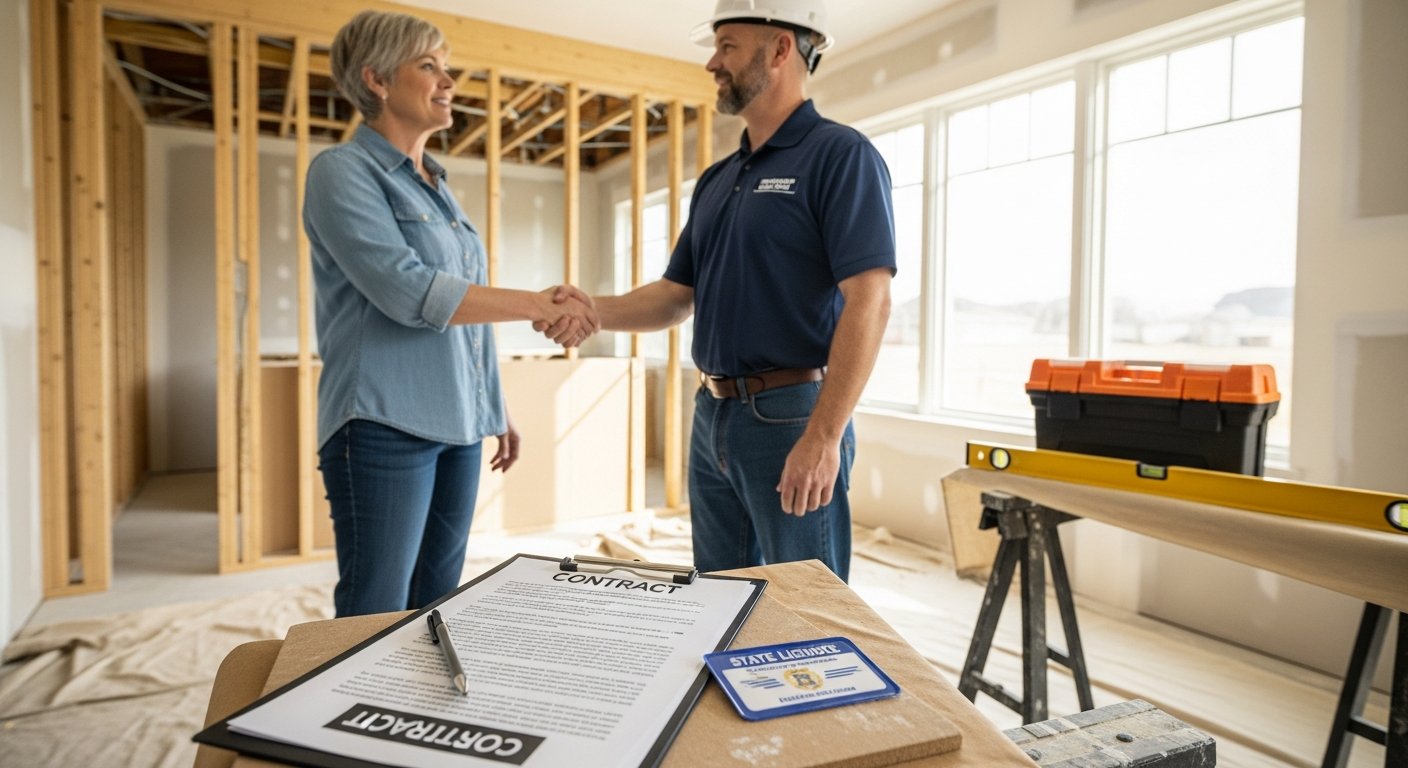
Why Licensed Contractors Matter for Home Projects
Hiring licensed contractors protects your home and budget. Learn the key benefits, how to verify credentials, and what risks to avoid.
By Alexia Mabel
Learn more about General Contracting for guides, costs, and what to expect.
Compare General Contracting Pros Near You

Enter your ZIP code to compare top-rated local professionals and request free quotes.
Hiring a contractor for a home improvement project is a significant decision. The difference between a smooth, successful renovation and a stressful, costly ordeal often comes down to one key factor: whether you hire licensed contractors. While the temptation to save money with an unlicensed handyman or a friend of a friend can be strong, the risks far outweigh the potential savings. A license is not just a piece of paper; it is a public declaration that a contractor has met specific state and local requirements, proving their knowledge, financial stability, and commitment to professional standards. This article will guide you through why verifying a contractor's license is the single most important step you can take to protect your home, your finances, and your peace of mind.
For homeowners, the process of finding a reliable professional can feel overwhelming. You need someone who shows up on time, completes quality work, and respects your budget. The most effective way to filter out unqualified individuals is to focus on licensed contractors. These professionals have passed exams, secured bonds, and obtained the necessary insurance. They are accountable to a licensing board, which means you have recourse if something goes wrong. Without this layer of protection, you are essentially gambling with your largest asset. This comprehensive guide will break down the benefits, the verification process, and the common pitfalls to avoid, ensuring you make an informed choice for your next project.
What Does a Contractor License Actually Prove?
A contractor's license is a formal authorization issued by a state or local government agency. It signifies that the individual or company has met specific legal and professional standards to perform construction work. The requirements vary by state, but they generally include passing a trade and business law exam, demonstrating relevant experience, and providing proof of financial solvency. This process ensures that licensed contractors have a baseline level of competency and knowledge. They understand building codes, safety regulations, and ethical business practices, which are essential for any successful project.
Beyond the exam, licensing also mandates ongoing education in many states. This means licensed contractors are more likely to be up to date on the latest building materials, techniques, and energy-efficient solutions. They are also required to carry workers' compensation and liability insurance, which protects you from being held liable for injuries or property damage that occur on your property. An unlicensed individual may not have this coverage, leaving you financially exposed if an accident happens. Therefore, a license is a comprehensive marker of professionalism and accountability, offering a level of security that is impossible to get from an unverified worker.
Top Benefits of Hiring Licensed Contractors
Choosing a licensed professional offers a multitude of advantages that go far beyond simple compliance. These benefits directly impact the quality of your project, your financial security, and your overall stress level. Here are the most critical advantages to consider:
- Protection from Liability: Licensed contractors carry the required insurance, so you are not liable for on-site accidents or damages.
- Adherence to Building Codes: They are knowledgeable about local codes and permits, ensuring your project passes inspections and is safe.
- Financial Recourse: If work is substandard or incomplete, you can file a complaint with the licensing board, which can take disciplinary action.
- Higher Quality Workmanship: Their professional reputation and requirement for ongoing education often lead to superior craftsmanship.
- Proper Subcontractor Management: They are responsible for hiring and paying subcontractors, preventing liens from being placed on your home.
These benefits are not just theoretical. They translate into real-world peace of mind. For example, if a contractor's employee falls off a ladder, their workers' compensation insurance covers the medical bills. Without that, you could be sued. Similarly, if an unlicensed contractor fails to pull a permit and the work is later discovered, you may be forced to tear it out and redo it at your own expense. Licensed contractors mitigate these risks by ensuring the work is done correctly and legally from the start. This protection is invaluable, especially for larger projects like kitchen remodels or roof replacements.
How to Verify a Contractor's License
Verifying a license is a straightforward process that takes only a few minutes but can save you from years of headaches. Do not just take the contractor's word for it; always check with the appropriate state or local licensing board. Most states have an online database where you can search for a contractor by name or license number. This search will confirm that the license is active and in good standing. You should also look for any past complaints or disciplinary actions against the contractor, as this history can be a red flag.
When you speak with a contractor, ask for their license number and the name of the agency that issued it. Then, visit that agency's website to verify the information. Additionally, confirm that their license covers the specific type of work you need. For example, a general contractor's license may not cover electrical or plumbing work, which often requires a separate specialty license. You can also check for proof of insurance by asking for a certificate of insurance directly from their insurance provider. This document should list your name and property address, confirming coverage for your specific project. Taking these steps ensures you are hiring a true professional, not just someone who claims to be one.
The Risks of Hiring Unlicensed Contractors
The allure of a lower bid from an unlicensed contractor can be tempting, but the potential consequences are severe. Without a license, there is no guarantee of quality, safety, or accountability. These individuals often operate without permits and insurance, which can lead to a host of legal and financial problems. If they make a mistake, you have little to no legal recourse, and they may simply disappear, leaving your project unfinished. This is particularly common with door-to-door repair offers or after a major storm, when unlicensed scammers prey on vulnerable homeowners.
Moreover, hiring an unlicensed contractor can void your homeowner's insurance policy. If a fire or structural failure occurs due to their faulty work, your insurance company may deny your claim, leaving you with massive out-of-pocket costs. You may also face fines from your local government for failing to obtain the necessary permits. In some cases, you might even be required to demolish the unpermitted work. The initial savings on the contractor's bid are almost always eclipsed by the cost of fixing their mistakes, paying for legal battles, or covering medical bills from an on-site accident. The true cost of hiring an unlicensed contractor is far higher than any upfront discount.
How to Check Credentials and References
Once you have confirmed a contractor's license, it is still wise to check their references and review their past work. A reputable contractor will have a portfolio of completed projects and a list of references you can contact. When you call these references, ask about the quality of the work, whether the project stayed on schedule and within budget, and how the contractor handled any issues that arose. This firsthand feedback provides valuable insight into the contractor's work ethic and reliability, which a license alone cannot guarantee.
In addition to references, you should also verify their physical business address and check if they have any complaints filed with the Better Business Bureau. A long-standing business with a physical office is generally more stable and accountable than a contractor who only works out of a cell phone and a truck. You can also ask to see their insurance certificate, which should list both liability and workers' compensation coverage. This is especially important because if a subcontractor is injured on your property and the contractor is not insured, you could be held responsible. By conducting these checks, you are building a complete picture of the contractor's professionalism and trustworthiness, ensuring you make a fully informed hire.
The Role of Quotes and Contracts
Even with a licensed contractor, a detailed, written contract is essential. This document serves as the blueprint for your project, outlining the scope of work, materials to be used, payment schedule, and project timeline. A clear contract protects both you and the contractor by setting expectations and preventing misunderstandings. When you request quotes, make sure you are comparing like for like. The lowest bid may not be the best deal if it cuts corners on materials or excludes necessary work. Licensed contractors are typically more transparent about their pricing, as they are accountable to a professional standard.
Your contract should also include a clause for change orders. This specifies how changes to the original plan will be handled, including any additional costs. This is a common area where disputes arise, so having a clear process in place is crucial. Furthermore, the contract should detail the warranty on both materials and workmanship. A reputable contractor will stand behind their work and offer a guarantee. Before signing, review the contract carefully and ask questions about anything you do not understand. This level of diligence is a sign of a serious homeowner and will be respected by professional contractors. It also ensures that you have a clear, enforceable agreement that guides the project from start to finish.
Using Homeowner Resources for a Safer Project
For homeowners who want to simplify the process of finding and verifying contractors, online directories and informational resources can be tremendously helpful. Platforms like Homes.Contractors are designed to connect you with qualified professionals in your area. They often provide detailed service directories, educational articles, and even ratings by state, which can help you narrow down your options. These resources can also provide answers to common questions about projects like roofing, HVAC, or bathroom remodeling, giving you the knowledge you need to make informed decisions.
One of the most effective features of such platforms is the ability to request multiple quotes from different contractors. This allows you to compare prices, services, and professionalism without having to contact each one individually. You can then use the information you have learned about licensing and verification to evaluate each bid. This approach not only saves you time but also ensures you are considering a wide range of qualified candidates. By combining the convenience of a directory with your own due diligence, you can significantly increase your chances of hiring the right licensed contractor for your project. This proactive approach is the best way to ensure a successful and stress-free home improvement experience.
Regional Considerations for Licensing
It is important to remember that contractor licensing is regulated at the state and local levels, which means requirements can vary significantly. For example, a state like California has rigorous licensing laws, while other states may have more relaxed regulations. Local cities and counties may also have their own permit and licensing requirements. This is why it is crucial to verify the specific requirements for your area. A contractor who is licensed in one state may not be qualified to work in another without obtaining a local license or permit. Always check with your local building department to understand the rules that apply to your project.
If you are considering a project in a specific region, such as a home renovation in Dallas or a new roof in Arizona, take the time to research the local licensing landscape. The Homes.Contractors platform offers localized content and a ratings-by-state feature, which can be a valuable starting point. By understanding your region's specific requirements, you can ensure that your contractor is fully compliant and that your project will pass any necessary inspections. This regional awareness not only protects you but also ensures that your project is completed to the highest standard, in accordance with local laws and regulations. It is a critical step in the process that should never be overlooked.
Conclusion
Hiring licensed contractors is not just a best practice; it is a fundamental step in protecting your home and your financial well-being. The license is your assurance of quality, safety, and accountability, and it provides a clear path for recourse if something goes wrong. While the process of verifying credentials and comparing quotes may take a little extra time, the peace of mind it provides is priceless. By choosing a licensed professional, you are making a wise investment in your property and your future.
Remember, your home is one of your most valuable assets. Do not put it at risk by cutting corners on the hiring process. Always verify the license, check references, and ensure you have a comprehensive contract in place. Use the resources available to you, such as online directories and informational hubs, to make the process easier. By following these guidelines, you can confidently move forward with your home improvement project, knowing that you have taken all the necessary steps to ensure its success.
Learn more about General Contracting for guides, costs, and what to expect.
Compare General Contracting Pros Near You
Enter your ZIP code to compare top-rated local professionals and request free quotes.