
Tile Flooring Pros and Cons: A Homeowner's Guide
Explore tile flooring options, costs, and installation tips. Learn how to choose the right tile and find a qualified contractor for your project.
By Chelsea Kris
Learn more about Tile Installation and Replacement for guides, costs, and what to expect.
Compare Tile Installation and Replacement Pros Near You

Enter your ZIP code to compare top-rated local professionals and request free quotes.
Tile flooring remains a top choice for homeowners who want durability, style, and easy maintenance. From kitchens and bathrooms to entryways and living rooms, tile offers a hard surface that stands up to heavy foot traffic while adding a touch of elegance. But choosing the right tile is not just about picking a color you like. You need to understand the different materials, installation methods, and long-term care requirements. This guide walks you through everything you need to know about tile flooring, from the initial selection process to finding the right contractor for the job.
Why Tile Flooring Is a Smart Investment
Tile flooring is one of the most versatile options available. It works in nearly every room of the house, and it can mimic the look of natural stone, wood, or even concrete. The hard surface is resistant to scratches, stains, and water damage, making it ideal for areas that see spills or moisture. Unlike carpet, tile does not trap dust, pollen, or pet dander, which is a significant advantage for households with allergies. And because tile is so durable, it can last for decades when properly installed and maintained.
From a financial perspective, tile can add value to your home. Buyers often view tile as a premium feature, especially in kitchens and bathrooms. A well-chosen tile floor can be a selling point that sets your home apart in a competitive market. However, the upfront cost can be higher than some other flooring options, so it is important to weigh the long-term benefits against the initial investment.
Another key benefit is energy efficiency. Tile has natural thermal mass, which means it can absorb heat during the day and release it at night. This can help stabilize indoor temperatures, particularly in climates with significant temperature swings. Pairing tile with radiant heating systems can make it even more comfortable underfoot, a feature many homeowners appreciate during colder months.
Types of Tile Flooring Materials
Not all tile is created equal. You have several material options, each with its own strengths and weaknesses. Understanding these differences is crucial for making the right choice for your space and budget.
Ceramic Tile
Ceramic tile is one of the most popular and affordable choices. It is made from clay that is fired in a kiln, and it is available in a vast array of colors, patterns, and finishes. Ceramic tiles are typically glazed, which gives them a protective layer that resists moisture and stains. They are suitable for most indoor applications, including floors, walls, and countertops. The main drawback is that ceramic can be prone to chipping if heavy objects are dropped on it, and the glaze can wear down over time in high-traffic areas.
Porcelain Tile
Porcelain tile is a type of ceramic that is denser and less porous. It is fired at higher temperatures, making it more durable and water-resistant than standard ceramic. Porcelain can be used indoors and outdoors, and it is an excellent choice for bathrooms, kitchens, and entryways. Many porcelain tiles are designed to mimic natural stone or wood, offering a high-end look at a fraction of the cost. The trade-off is that porcelain is harder and more challenging to cut, which can increase installation labor costs.
Natural Stone Tile
Natural stone tiles, such as marble, granite, travertine, slate, and limestone, offer a unique, upscale appearance. Each stone has its own character, with natural variations in color and veining. Marble and granite are prized for their elegance and longevity, while slate and travertine provide a more rustic, textured feel. Natural stone is heavy and requires professional installation. It also needs regular sealing to protect against stains and moisture. This is the most expensive option, but for many homeowners, the beauty and durability are worth the price.
Other Options: Glass, Cement, and Terrazzo
Glass tile is often used as an accent or in backsplashes, but it can also be used on floors in low-traffic areas. It is non-porous and easy to clean, but it can scratch and is slippery when wet. Cement tile is handmade and offers a distinctive, artisanal look. It is durable but must be sealed to prevent staining. Terrazzo, a composite material made from chips of marble, quartz, granite, or glass, is experiencing a resurgence in popularity. It is extremely durable and can be customized to match any design scheme, but it is also heavy and requires professional installation.
Tile Flooring Cost and Budgeting
The cost of tile flooring varies widely based on the material, quality, and installation complexity. On average, you can expect to pay between $7 and $25 per square foot for materials and installation. Simple ceramic tiles are on the lower end, while high-end natural stone or large-format porcelain can push the price higher. It is essential to get multiple quotes from contractors to ensure you are getting a fair price for your specific project.
When budgeting, do not forget about the additional costs that often come with tile installation. Underlayment, backer board, grout, sealant, and trim pieces can add up quickly. You may also need to account for demolition and removal of existing flooring, which is an additional labor charge. Ask your contractor for a detailed breakdown of all costs, including any potential for unexpected expenses, such as subfloor repairs.
Here are some key cost factors to keep in mind:
- Tile material: Ceramic is the most budget-friendly, while natural stone and large-format porcelain are more expensive.
- Installation complexity: Diagonal patterns, intricate layouts, and cuts around corners or fixtures increase labor time and cost.
- Subfloor preparation: If your subfloor is uneven or damaged, it will need to be leveled or repaired before tile can be laid.
- Geographic location: Labor rates vary by region, so costs in urban areas are often higher than in rural areas.
- Additional materials: Grout, spacers, backer board, and sealant are extra expenses that are sometimes overlooked.
After listing these factors, it becomes clear that the lowest quote is not always the best. A cheaper bid might exclude essential steps like subfloor prep or quality underlayment, which can lead to problems down the road. Always compare the scope of work, not just the total price, when evaluating contractor estimates.
Tile Flooring Installation: What to Expect
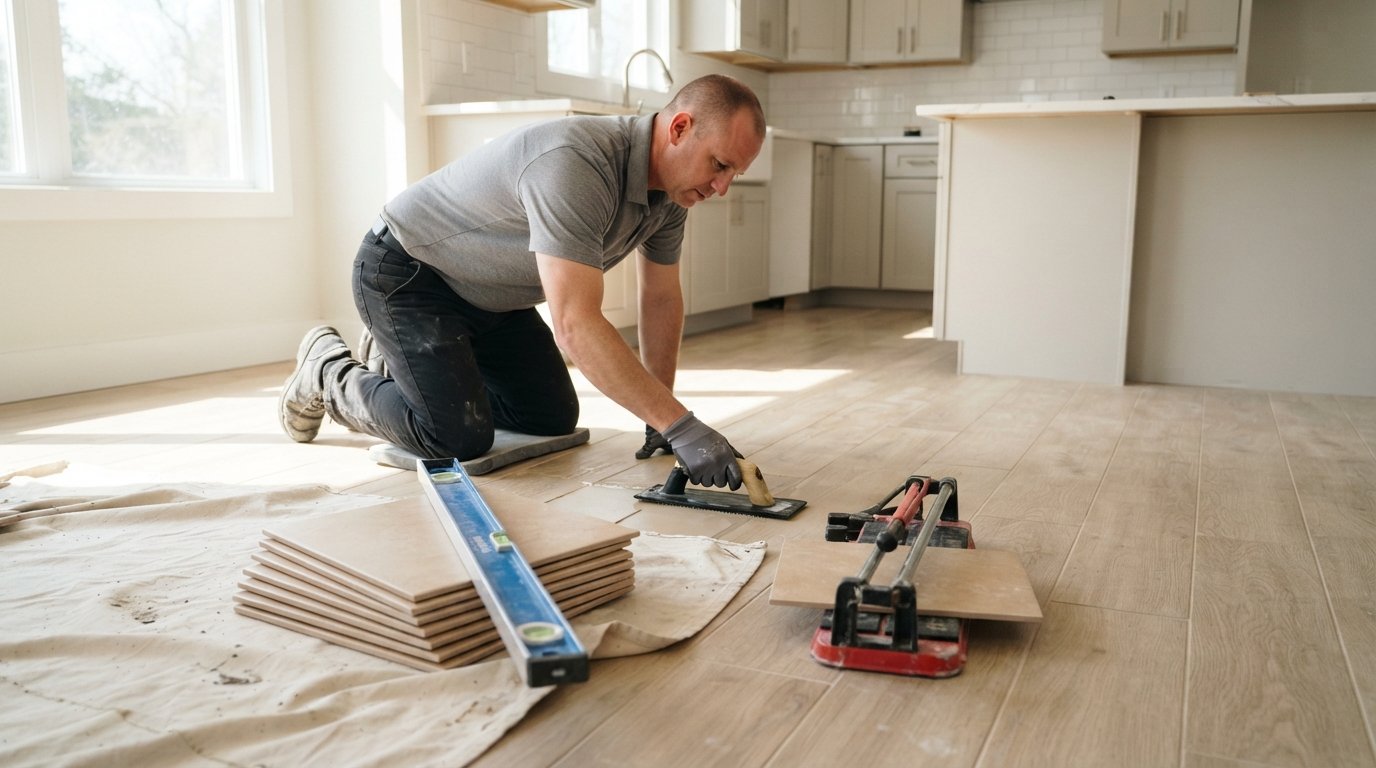
Proper installation is the key to a long-lasting tile floor. The process begins with preparing the subfloor, which must be clean, dry, and level. A cement backer board is typically installed over the subfloor to provide a stable surface and prevent moisture from seeping into the tile. The tile is then laid in a thin layer of mortar, with spacers used to keep consistent gaps between each piece. After the mortar sets, grout is applied to fill the joints, and a sealant is added to protect the grout and the tile itself.
While some experienced DIYers tackle tile installation, it is a labor-intensive and technically demanding job. Mistakes in layout, cutting, or mortar application can result in uneven tiles, cracked pieces, or water damage. Hiring a professional contractor ensures the job is done correctly the first time. A skilled installer will also have the right tools for cutting tile, especially for materials like porcelain or natural stone that require specialized equipment.
The timeline for installation depends on the size of the area and the complexity of the project. A small bathroom floor can be completed in a day, while a large kitchen or multiple rooms may take several days. After the tile is laid, you will need to wait at least 24 hours before walking on it, and 48 to 72 hours before grouting. Full curing can take up to a week, during which you should avoid heavy furniture or foot traffic.
Tile Flooring Maintenance and Care
One of the major selling points of tile is its low maintenance requirements. Regular sweeping or vacuuming removes dirt and grit, and mopping with a pH-neutral cleaner keeps the surface looking fresh. Avoid using harsh chemicals or abrasive scrubbers, as they can damage the grout or the tile's finish. For natural stone, use a cleaner specifically designed for that type of stone, and reapply sealant every one to two years to maintain protection.
Grout lines are the most vulnerable part of a tile floor. They can absorb moisture and develop mold or mildew, especially in bathrooms. To avoid this, wipe up spills promptly and ensure the area is well-ventilated. If you notice cracked or missing grout, repair it as soon as possible to prevent water from seeping under the tiles. A professional can also re-grout the entire floor if the grout is badly stained or damaged.
Despite its durability, tile is not indestructible. Heavy objects dropped from a height can crack or chip the tile. Keep a few extra tiles from the installation so you can replace damaged pieces if needed. You should also use felt pads under furniture legs to prevent scratching, and place mats at entryways to reduce the amount of grit that is tracked onto the floor.
Finding the Right Tile Flooring Contractor
Selecting the right contractor is just as important as choosing the right tile. A skilled installer can make a mediocre tile look great, while a poor installation can ruin even the most expensive material. Start by asking for recommendations from friends, family, or neighbors who have had tile work done. You can also use online directories like Homes.Contractors to find pre-vetted professionals in your area. These platforms allow you to compare multiple quotes and read reviews from other homeowners.
When interviewing potential contractors, ask for proof of licensing and insurance. A reputable contractor will be happy to provide these documents. Also, ask for references from recent tile installation projects, and check them. Look at the quality of the work, paying attention to the alignment of the tiles, the consistency of the grout lines, and the overall finish. A good contractor will also provide a detailed written estimate that outlines the scope of work, materials, timeline, and payment schedule.
Before making your final decision, get at least three quotes. This gives you a sense of the going rate for your project and helps you spot any unusually low or high bids. Keep in mind that the cheapest option is not always the best. A slightly higher price may reflect better materials, more experience, or a more thorough scope of work. When you have the quotes, compare them side by side, and do not hesitate to ask questions or negotiate.
Using a directory like Homes.Contractors can simplify this process. The platform connects you with multiple contractors who are pre-screened for quality and reliability. You can submit a single request and receive customized quotes from several professionals, saving you time and effort. This approach also gives you the leverage of comparing offers, which can help you get a better price and ensure you are hiring someone who is a good fit for your project.
Tile vs. Other Flooring Options
Tile is a strong contender, but it is worth comparing it with other popular flooring materials to see which one fits your lifestyle best. Hardwood offers warmth and timeless appeal, but it is susceptible to water damage and scratches. Laminate is a budget-friendly alternative, but it cannot be refinished and may not last as long as tile. Vinyl is waterproof and comfortable underfoot, but it can be prone to dents and may not add as much resale value. Tile excels in durability, water resistance, and ease of cleaning, making it the preferred choice for wet areas and high-traffic zones.
Another consideration is comfort. Tile is a hard, cold surface, which can be uncomfortable to stand on for long periods. Radiant heating can mitigate this, but it is an additional expense. Area rugs can also add warmth and softness, but they require regular cleaning. If you have elderly family members or young children, the hard surface of tile can be a safety concern, as falls can result in more serious injuries than on softer flooring.
Ultimately, the best flooring choice depends on your priorities. If you value longevity, low maintenance, and water resistance, tile is an excellent option. If you prefer a softer, warmer surface underfoot, you might consider hardwood or carpet for living areas and reserve tile for kitchens and bathrooms. Many homeowners choose a combination of materials, using tile where it performs best and other flooring types where comfort is a higher priority.
Trends and Design Ideas for Tile Flooring
Tile flooring is not just functional; it is also a design statement. In recent years, large-format tiles have become increasingly popular because they create a seamless, modern look with fewer grout lines. Wood-look porcelain tiles offer the warmth of hardwood with the durability of tile, and they are available in a range of shades and textures. Geometric patterns, such as hexagons and arabesques, add visual interest and can be used to create a focal point in a room.
For a classic, timeless look, consider subway tile in a brick pattern. This style works well in bathrooms and kitchens and can be adapted to a variety of color schemes. Mosaic tiles, which are small pieces mounted on a mesh sheet, are perfect for adding intricate details to a backsplash or accent wall. When choosing a design, think about how it will coordinate with your cabinetry, countertops, and wall colors. A neutral tile makes it easy to change other elements of the room later. A bold pattern might be more distinctive, but it can limit your future design options.
Another trend is the use of patterned cement tiles, which are available in a wide range of colors and motifs. These tiles can create a vibrant, eclectic look that reflects your personal style. They are particularly popular in entryways, mudrooms, and outdoor spaces. If you are unsure which direction to take, consult with a designer or use an online visualizer tool to see how different tiles will look in your space. Many tile showrooms offer samples that you can take home to see how they look in your lighting.
Final Thoughts on Tile Flooring
Tile flooring is a versatile, durable, and attractive option for any home. With the right material, proper installation, and regular maintenance, it can provide decades of service and enhance the value of your property. Whether you opt for budget-friendly ceramic, premium porcelain, or natural stone, the key is to plan carefully and work with qualified professionals. Take the time to research materials, compare quotes, and check references. A little upfront effort will ensure your tile floor is a source of pride for years to come.
Ready to start your tile flooring project? The first step is to connect with experienced contractors who can bring your vision to life. Visit Homes.Contractors to request free quotes from pre-screened flooring specialists in your area. With multiple options to choose from, you can find the perfect balance of quality and cost, and get your project underway with confidence.
Learn more about Tile Installation and Replacement for guides, costs, and what to expect.
Compare Tile Installation and Replacement Pros Near You
Enter your ZIP code to compare top-rated local professionals and request free quotes.