
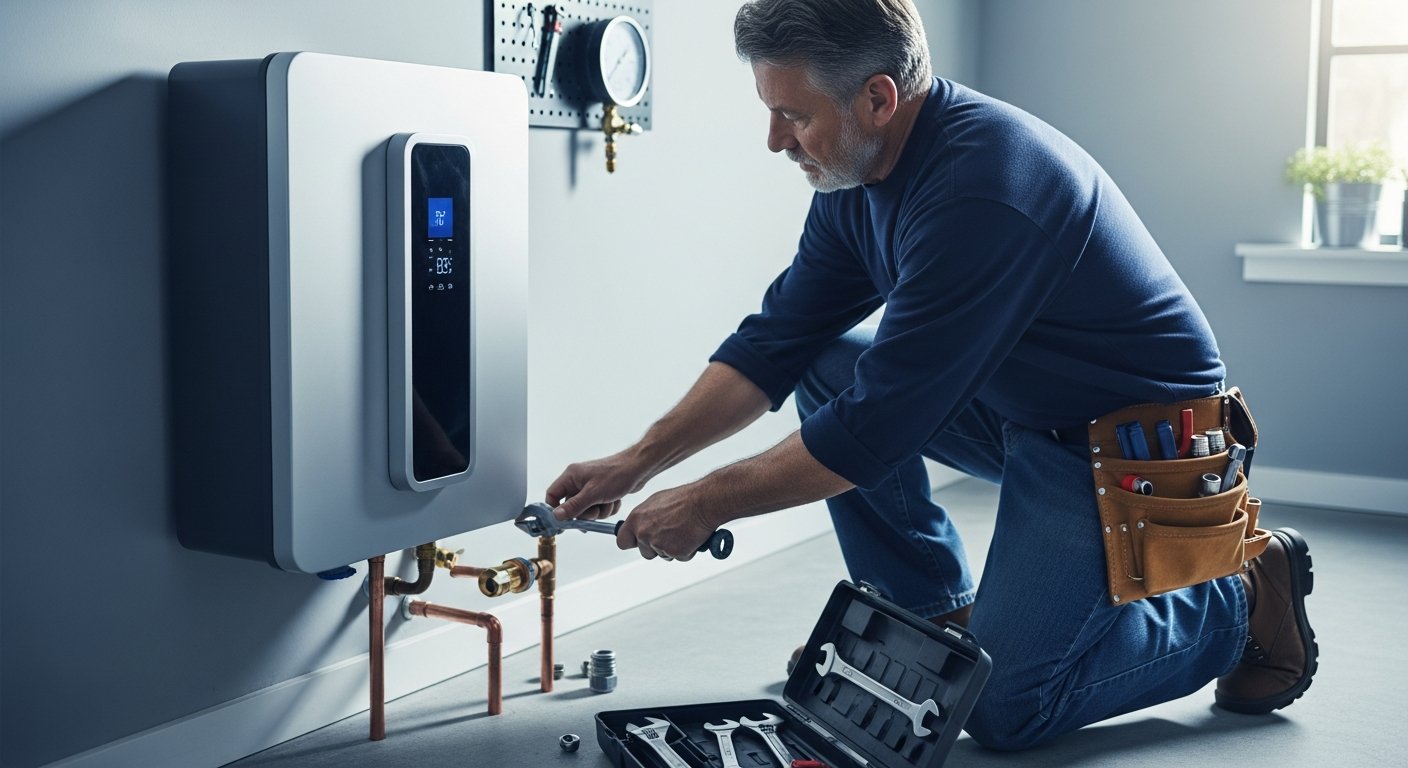
Tankless Water Heater Pros and Cons: A Homeowner Guide
Weigh the pros and cons of a tankless water heater: energy savings, endless hot water, higher upfront cost, and installation realities.
By Alexia Mabel
Learn more about Water Heater Installation or Replacement for guides, costs, and what to expect.
Compare Water Heater Installation or Replacement Pros Near You

Enter your ZIP code to compare top-rated local professionals and request free quotes.
When your trusty storage tank water heater starts showing its age, you may notice rust-colored water, strange rumbling noises, or a steady drip from the base. That is when many homeowners start researching replacement options. A tankless water heater, also called an on-demand unit, has become a popular answer. Instead of storing 40 to 50 gallons of hot water, these units heat water directly as it flows through the device. The idea of endless hot water and lower energy bills sounds great, but you need to look at the full picture before you commit to a change. This guide compares the real-world benefits, costs, and installation demands of tankless systems so you can decide if one is right for your home.
How a Tankless Water Heater Works
A traditional storage tank water heater keeps a large reservoir of water hot around the clock. It cycles on and off to maintain the set temperature, even when nobody is using water. That constant heating process is called standby heat loss. A tankless water heater eliminates that standby loss entirely. When you open a hot water tap, cold water travels through the unit. A powerful gas burner or electric heating element warms the water instantly as it flows to the fixture. When you close the tap, the unit shuts off completely.
Because there is no storage tank, you never run out of hot water in the middle of a shower. The tradeoff is that a tankless unit delivers a specific flow rate, measured in gallons per minute (GPM). If you try to run the washing machine, dishwasher, and two showers at the same time, you can exceed the unit's capacity. That is why correct sizing is so important. A licensed plumber or HVAC contractor will calculate your home's peak hot water demand and recommend a unit with enough GPM output for your household size and typical usage patterns.
Key Benefits of Going Tankless
Homeowners choose a tankless water heater for several compelling reasons. The most obvious benefit is the endless supply of hot water. If you have a large family or guests staying over, you will never have to wait for a tank to refill and reheat. The second major benefit is energy efficiency. According to the U.S. Department of Energy, tankless units can be 24% to 34% more energy efficient than storage tank models for homes that use 41 gallons or less of hot water daily. Even for heavier users, the efficiency gain is around 8% to 14%.
Beyond efficiency and endless hot water, tankless units also last longer. A conventional tank heater typically lasts 10 to 15 years. A well-maintained tankless unit can last 20 years or more. That longer lifespan can offset the higher upfront cost. Tankless units also take up far less space. You can mount one on a wall, freeing up valuable floor space in a garage, closet, or utility room. That extra room could be used for storage or a small workbench.
Here is a quick summary of the main advantages:
- Continuous hot water: No more cold showers after the tank drains.
- Energy savings: No standby heat loss means lower monthly energy bills.
- Longer equipment life: Many units last 20 years with proper care.
- Compact design: Wall-mounted units free up floor space.
- Reduced leak risk: No tank means no catastrophic tank failure or flooding.
These benefits are significant, but they come with tradeoffs that you must weigh carefully. Let us look at the upfront costs and installation challenges that can surprise some homeowners.
The Real Costs and Installation Challenges
The biggest barrier for many homeowners is the initial purchase price. A tankless water heater unit itself can cost anywhere from $500 to $2,500 depending on the brand, capacity, and fuel type. Compare that to a standard tank heater, which typically costs $300 to $1,000. But the unit cost is only part of the story. Installation is more complex and therefore more expensive. A licensed plumber must often modify gas lines, install a larger vent pipe, and possibly add a dedicated electrical circuit. These extra labor and material costs can push the total installation price to $1,200 to $3,500 or more.
In contrast, replacing a comparable storage tank water heater usually costs $800 to $1,800 installed. The higher installation cost for tankless units is one of the main reasons some homeowners hesitate. Another challenge is the need for a higher gas supply rate. Many older homes have gas lines that are too small to supply enough fuel for a tankless unit. Upgrading the gas line is an additional expense. For electric tankless units, the electrical panel may need an upgrade to handle the high amperage draw. These hidden costs can add up quickly, so you must get a detailed quote from a contractor before you commit.
You also need to think about maintenance. Tankless units have a heat exchanger that can scale up over time if your water is hard. Periodic descaling is recommended, usually once a year. This service can cost $100 to $200 per visit. If you skip maintenance, the heat exchanger can fail, and replacement is expensive. Some manufacturers require proof of regular descaling to honor the warranty. Factor this ongoing maintenance into your total cost of ownership.
Tankless vs. Storage Tank: A Side-by-Side Comparison
To make a smart decision, you need a clear comparison of the two main water heater types. Here is a breakdown of the most important factors for homeowners:
- Upfront cost: Tankless units cost more to purchase and install.
- Operating cost: Tankless units are more energy efficient, lowering monthly bills.
- Lifespan: Tankless units last 20+ years vs. 10 to 15 years for tanks.
- Hot water supply: Tankless provides endless hot water; tanks can run out.
- Space requirements: Tankless units are wall-mounted and compact.
- Maintenance: Tankless units need periodic descaling; tanks may need anode rod replacement.
When you look at the numbers, the long-term savings can be substantial. A family of four using about 50 gallons of hot water per day could save $100 to $200 per year on energy costs with a tankless unit. Over a 15-year period, that adds up to $1,500 to $3,000 in savings. Those savings help offset the higher upfront cost. However, if you plan to move within five years, you may not recover the extra investment. Consider how long you intend to stay in your home.
Sizing and Fuel Type Considerations
Choosing the right size tankless water heater is not a simple one-size-fits-all calculation. You need to consider both the flow rate and the temperature rise needed in your climate. The flow rate is the amount of hot water your household uses at peak times. A typical shower uses about 2.5 GPM, a washing machine uses about 2 GPM, and a dishwasher uses about 1.5 GPM. If two people shower while the dishwasher runs, you need a unit that can handle at least 6.5 GPM. The temperature rise is the difference between your incoming groundwater temperature and your desired hot water temperature. In colder northern states, the incoming water is much colder, so the unit has to work harder to heat it. That means you may need a larger unit than a homeowner in a warm southern state.
Fuel type is another critical decision. Gas tankless units are more common and can handle higher flow rates. They are ideal for larger households. Electric tankless units are smaller and less expensive, but they may struggle to provide enough hot water for simultaneous uses. They are better suited for point-of-use applications, like a single bathroom or a kitchen sink. If you have solar panels, an electric tankless unit might be a good match. A qualified contractor can help you determine the right size and fuel type for your specific situation. Do not rely on guesswork, as an undersized unit will lead to lukewarm showers and frustration.
What to Expect During Installation
The installation process for a tankless water heater is more involved than a simple tank swap. Here is a general idea of what a professional installer will do. First, they will assess your current plumbing, gas line, and venting setup. They will check the gas line size and pressure. If the line is too small, they will need to run a larger line from the meter. They will also check your venting configuration. Tankless units often require a special high-efficiency vent that can be made of PVC. This vent must be installed according to the manufacturer's specifications to prevent dangerous backdrafts.
Next, the installer will mount the unit on a wall, preferably near the main water line and gas supply. They will connect the water lines and gas line. They will also install a condensation drain, as tankless units produce acidic condensate that needs to be neutralized and drained. Finally, they will test the unit, check for leaks, and adjust the temperature settings. The entire process usually takes between four and eight hours, depending on the complexity of your home's setup. Some installations may require a second day if the gas line or electrical panel needs major upgrades.
Because of these variables, it is essential to get a detailed written quote from a licensed contractor. The quote should itemize the unit cost, labor, materials, permits, and any additional work like gas line upgrades. Comparing at least three quotes will give you a realistic range and help you avoid overpaying.
Is a Tankless Water Heater Worth It for Your Home?
The answer depends on your household's hot water usage, your budget, and how long you plan to stay in your home. If you have a large family that frequently runs multiple water appliances at once, a tankless unit will eliminate the frustration of running out of hot water. If you are focused on reducing your environmental impact and energy bills, the higher efficiency is a strong selling point. If you have a small home or a single bathroom, a smaller tankless unit may be more affordable and still meet your needs.
On the other hand, if your budget is tight and you need a simple replacement, a high-efficiency storage tank water heater may be a more practical choice. The lower upfront cost is attractive, and modern tank heaters are more efficient than older models. If you are planning to sell your home within a few years, you may not recoup the extra cost of a tankless unit. However, a tankless system can be a selling point for eco-conscious buyers.
Another factor to consider is rebates and incentives. Many utilities and state programs offer rebates for installing energy-efficient appliances, including tankless water heaters. These rebates can significantly reduce the net cost. Your contractor or local utility company can provide information on available incentives in your area.
Choosing a Qualified Contractor
Because tankless water heater installation is more complex than a standard tank replacement, choosing the right contractor is critical. A poorly installed unit can lead to gas leaks, carbon monoxide issues, or poor performance. Look for a licensed plumber or HVAC contractor with specific experience installing tankless units. Ask for references and check online reviews. A reputable contractor will perform a load calculation to determine the correct size for your home. They will also obtain the necessary permits and schedule inspections.
When you request quotes, ask about the warranty on both the unit and the labor. The best contractors stand behind their work with a labor warranty of at least one year. They should also explain the maintenance requirements and offer a maintenance plan if available. Using a directory like Homes.Contractors can simplify your search. You can connect with pre-vetted professionals in your area and compare multiple quotes without any obligation. That way, you can make an informed decision with confidence.
Before you finalize your choice, ask each contractor these questions:
- How many tankless installations have you completed in the past year?
- Can you provide a detailed written estimate that includes all potential costs?
- Will you handle the necessary permits and inspections?
- Do you offer a warranty on your installation work?
- Can you provide references from recent tankless installations?
Getting clear answers will help you avoid surprises and ensure you get a quality installation that meets local building codes.
Ultimately, a tankless water heater is a smart long-term investment for many homeowners. It offers energy savings, endless hot water, and a longer lifespan. But it requires a higher upfront investment and a commitment to regular maintenance. By understanding the full picture, you can decide if it is the right choice for your family. Use the free quote tools on Homes.Contractors to get estimates from qualified professionals in your area. With the right information and the right contractor, you can enjoy reliable, efficient hot water for decades to come.
Learn more about Water Heater Installation or Replacement for guides, costs, and what to expect.
Compare Water Heater Installation or Replacement Pros Near You
Enter your ZIP code to compare top-rated local professionals and request free quotes.