
Sewer Line Inspection and Repair Warning Signs
Recognize the warning signs of a failing sewer line early to avoid costly emergency repairs. Learn what symptoms to watch for and how to act fast.
By Alexia Mabel
Learn more about Plumbing Drain Repair for guides, costs, and what to expect.
Compare Plumbing Drain Repair Pros Near You

Enter your ZIP code to compare top-rated local professionals and request free quotes.
A backed-up drain or a patch of extra-green grass in your yard might seem like a minor inconvenience, but these are often the first whispers of a failing sewer line. For homeowners, the sewer line is that hidden, essential artery running beneath the lawn, connecting your home to the municipal system. When it fails, the consequences are rarely cheap and always messy. Recognizing the early warning signs of a sewer line problem can be the difference between a simple, affordable repair and a catastrophic, multi-thousand-dollar replacement that destroys your landscaping and disrupts your entire household. Understanding what to look for, and when to call a professional for a sewer line inspection, is critical for protecting your home and your budget.
The Silent Alarm: Why Early Detection Matters
Most homeowners never think about their sewer line until it stops working entirely. By the time a complete blockage occurs, the damage is often already done. Tree roots have likely infiltrated a crack, the pipe may have collapsed, or years of grease and debris have created an immovable dam. A proactive approach, centered on recognizing the initial warning signs, can save you from a crisis. An inspection performed at the first hint of trouble is far less invasive and expensive than emergency repairs after a flood or backup.
The cost of ignoring these signs is staggering. A minor crack can be repaired with a spot fix or a trenchless liner, often for a few hundred to a couple of thousand dollars. A full collapse, however, requires excavating the entire line, replacing the pipe, and restoring the landscaping. This can easily run into the tens of thousands of dollars. Furthermore, a backup can expose your family to harmful bacteria and sewage, creating a health hazard that requires professional cleanup. Early detection is not just about saving money; it is about safeguarding your home's value and your family's well-being. When you spot the signs, the next step is scheduling a professional inspection to confirm the diagnosis and discuss options.
Top Warning Signs Your Sewer Line Is in Trouble
Your home communicates its plumbing health through a variety of signals. Some are obvious, like a foul odor, while others are more subtle, like a slow-draining sink. Learning to read these signs is the first step in protecting your property. Here are the most common indicators that your sewer line needs immediate attention.
- Multiple Slow Drains: If one sink is slow, you might have a local clog. If every drain in your house, from the kitchen sink to the shower to the toilet, is draining sluggishly, the problem is almost certainly in the main sewer line.
- Gurgling Noises: A gurgling sound from your toilet or drains after you use a fixture on a different floor is a classic sign of a venting issue or a blockage in the main line. It indicates air is being sucked through the water trap due to negative pressure.
- Sewage Odors: A persistent smell of rotten eggs or sewage inside or outside your home is a major red flag. If the odor is strongest near a floor drain, in the basement, or in the yard near the sewer line, a break or blockage is likely.
- Water Backups: The most severe sign is when water backs up into your bathtub, shower, or laundry sink when you flush a toilet or run the washing machine. This indicates a complete or near-complete blockage that must be addressed immediately.
Beyond these internal signs, there are external clues that can point to a sewer line issue. Unusually lush, green patches of grass in your yard, even during dry spells, can indicate that sewage is leaking into the soil and acting as a fertilizer. Conversely, sunken areas or soggy spots in the lawn could mean the soil is saturated with wastewater. If you notice these external signs, especially in combination with any internal ones, it is time to call a professional.
What to Do When You Spot the Signs
Once you have identified one or more of these warning signs, it is crucial to act quickly and methodically. Panicking or trying to fix the problem with chemical drain cleaners can make things worse. Chemical cleaners are often ineffective against major blockages, can damage your pipes, and pose a risk to the plumber who eventually has to snake the line. The first step is to stop using water as much as possible. Limit flushing, showering, and running the dishwasher or washing machine until a professional has assessed the situation.
Your next step is to call a licensed and insured plumbing contractor. However, not all plumbers specialize in sewer line diagnostics. You need a professional who has the equipment and expertise to perform a thorough sewer line inspection, typically using a specialized camera. When you call, explain the symptoms you have observed. This helps the contractor arrive prepared with the right tools. It is also wise to get multiple quotes for the inspection and any potential repair work. You can use a platform like FreeQuotes.Contractors to connect with pre-vetted local plumbing professionals in your area, ensuring you receive competitive bids and can compare their diagnostic approaches and repair estimates. This not only helps you find the best price but also gives you confidence that you are hiring a qualified expert.
The Power of a Professional Sewer Camera Inspection
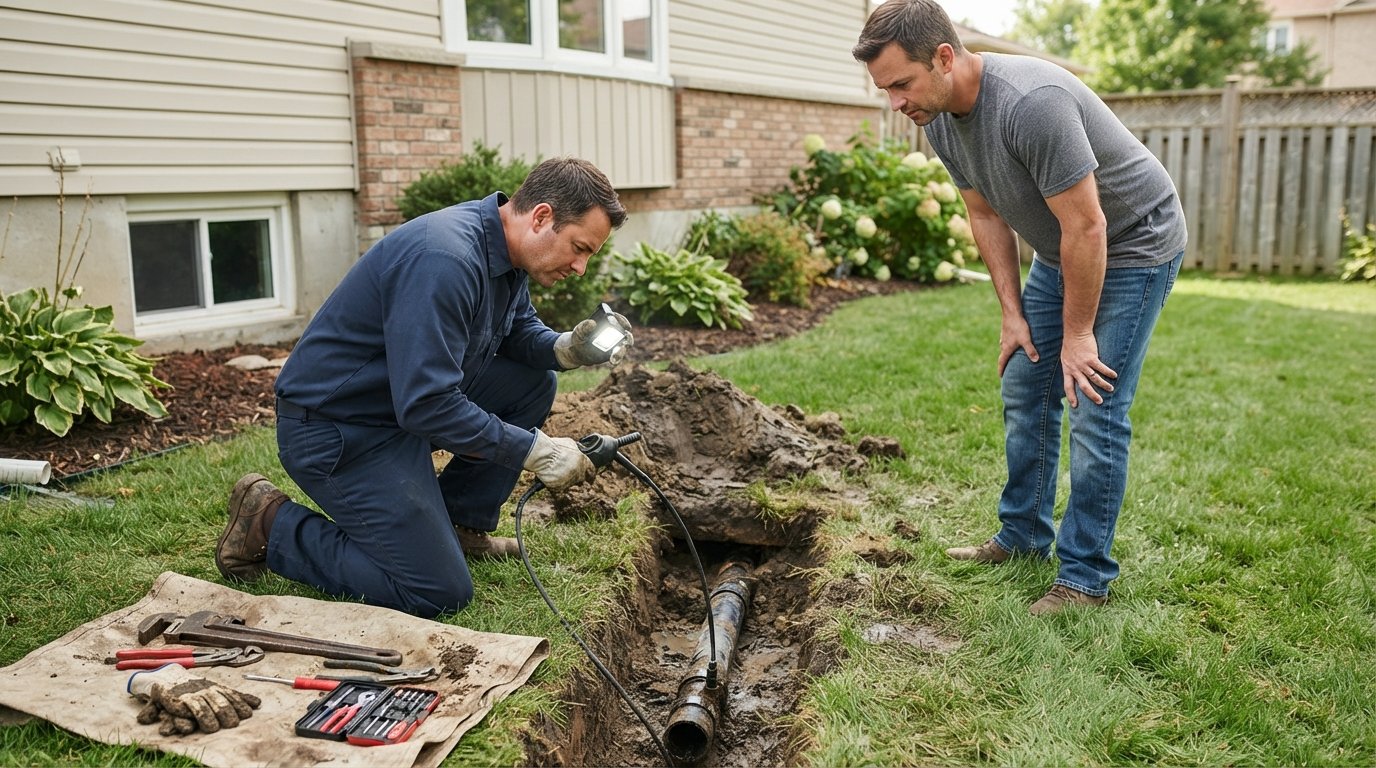
A professional sewer line inspection is the gold standard for diagnosing problems. It involves inserting a high-resolution, waterproof camera attached to a flexible rod into your sewer line through a cleanout access point. The camera transmits live video to a monitor, allowing the plumber to see the exact condition of the pipe from the inside. This technology transforms a guessing game into a precise diagnosis.
During the inspection, the plumber is looking for several specific issues:
- Blockages: The camera can identify the exact location and nature of a clog, whether it is a buildup of grease, a mass of toilet paper, or a foreign object.
- Tree Root Intrusion: Even the smallest crack in a pipe can allow tree roots to enter. The camera reveals the extent of the root infiltration, which can range from a few fine hairs to a dense mat that completely blocks the line.
- Pipe Damage: The inspection can identify cracks, fractures, misaligned joints, and sections of pipe that have collapsed or bellied (sagged due to soil settling).
- Corrosion and Scale: Over time, older pipes, especially those made of cast iron or clay, can corrode or develop a buildup of scale, which narrows the pipe and restricts flow.
After the inspection, the plumber will provide a report, often with video footage or photos, and recommend the best course of action. This could range from a simple, high-pressure jetting to clear a blockage to a more complex repair like a trenchless pipe lining or a full pipe replacement. Having this visual evidence is invaluable for making an informed decision and for getting accurate quotes for the repair work.
Common Repair Methods and Their Warning Signs
Once a diagnosis is made, your contractor will recommend a repair method. The right choice depends on the type and severity of the damage, the material of your pipe, and your budget. Understanding the common repair options can help you have a more productive conversation with your contractor and evaluate their recommendations.
Trenchless Repairs: These methods are increasingly popular because they minimize excavation and preserve your landscaping. Pipe lining, or Cured-in-Place Pipe (CIPP), involves inserting an epoxy-saturated felt tube into the damaged pipe and inflating it. Once cured, it creates a new, seamless pipe within the old one. Pipe bursting involves pulling a new, high-density polyethylene (HDPE) pipe through the old one, fracturing the old pipe outward in the process. These methods are ideal for pipes that are cracked or root-infested but still structurally sound enough to guide the new liner.
Traditional Excavation: For severely damaged or collapsed pipes, or for pipes with significant bellies, traditional excavation may be necessary. This involves digging a trench to expose the damaged section of pipe, removing it, and replacing it with new PVC or ABS pipe. While more disruptive and expensive, it is sometimes the only viable option. The warning signs that point to a need for this type of repair include a complete collapse, severe misalignment, or a pipe that is so deteriorated that a liner cannot be installed.
The cost of these repairs varies widely. A simple spot repair might cost a few hundred dollars, while a full line replacement can cost $5,000 to $15,000 or more, depending on the length of the line, the depth, and the complexity of the job. This is why getting multiple, detailed quotes is essential. A quote should specify the repair method, the length of pipe to be repaired or replaced, the materials to be used, and any warranty information.
Prevention: Protecting Your Sewer Line
While some sewer line problems are unavoidable due to age or soil conditions, many are preventable. By adopting a few simple habits, you can significantly reduce the risk of a major blockage or failure. The most important step is to be mindful of what goes down your drains.
Never pour grease, oil, or fat down the kitchen sink. These substances solidify as they cool and are a leading cause of blockages. Instead, pour them into a container and dispose of them in the trash. Similarly, avoid flushing wipes, paper towels, feminine hygiene products, or anything other than human waste and toilet paper. Even products labeled "flushable" can clog sewer lines because they do not break down as quickly as toilet paper. For older homes, consider having a professional inspect the sewer line every one to two years, especially if you have large trees in your yard.
If you are planning a major landscaping project, be aware of where your sewer line runs. Planting trees and shrubs with aggressive root systems, like willows, maples, and poplars, near the line is an invitation for future problems. If you have an older home with a clay or cast iron sewer line, it is wise to budget for a future replacement. These materials are prone to cracking, root intrusion, and corrosion. Knowing the age and material of your sewer line can help you anticipate potential issues and plan accordingly. When it is time to tackle a project, whether a sewer repair or a larger renovation, using a resource like Homes.Contractors can help you find qualified professionals in your area.
Financing Your Sewer Line Repair
A sewer line repair is rarely a planned expense, and the cost can be a significant financial burden for many homeowners. Fortunately, there are several options to help manage the cost. Many plumbing contractors offer financing plans, which can break the cost into manageable monthly payments. It is worth asking about this when you receive your quote. You can also explore home equity loans or lines of credit, which often have lower interest rates than other types of borrowing.
If the repair is necessary due to a sudden event, like a tree root causing a sudden collapse, your homeowner's insurance policy might provide some coverage. However, standard policies typically exclude damage from wear and tear, root intrusion, and old age. It is essential to review your policy and speak with your insurance agent to understand exactly what is covered. Some policies offer an optional rider for sewer line coverage. When you get quotes from contractors, ask them if they can provide detailed documentation, including the camera inspection video and a written diagnosis, which you can submit to your insurance company if you plan to file a claim.
In some cases, a repair might be covered by a home warranty or a service line protection plan. These are separate from homeowner's insurance and are designed specifically to cover the cost of repairing or replacing buried utility lines. If you do not have one of these plans, it is worth considering for the future, as a sewer line replacement can be a major expense. Regardless of your financing method, getting multiple quotes is the most effective way to ensure you are getting a fair price for the necessary work.
Recognizing the warning signs of a sewer line problem and acting quickly is the best way to protect your home from costly and disruptive damage. From slow drains and gurgling toilets to foul odors and lush patches of grass, your home has a language of its own. Listening to these signals and calling a professional for a thorough inspection can transform a potential disaster into a manageable repair project. By staying informed and proactive, you can ensure your sewer line remains out of sight and out of mind, just as it should be.
Learn more about Plumbing Drain Repair for guides, costs, and what to expect.
Compare Plumbing Drain Repair Pros Near You
Enter your ZIP code to compare top-rated local professionals and request free quotes.