
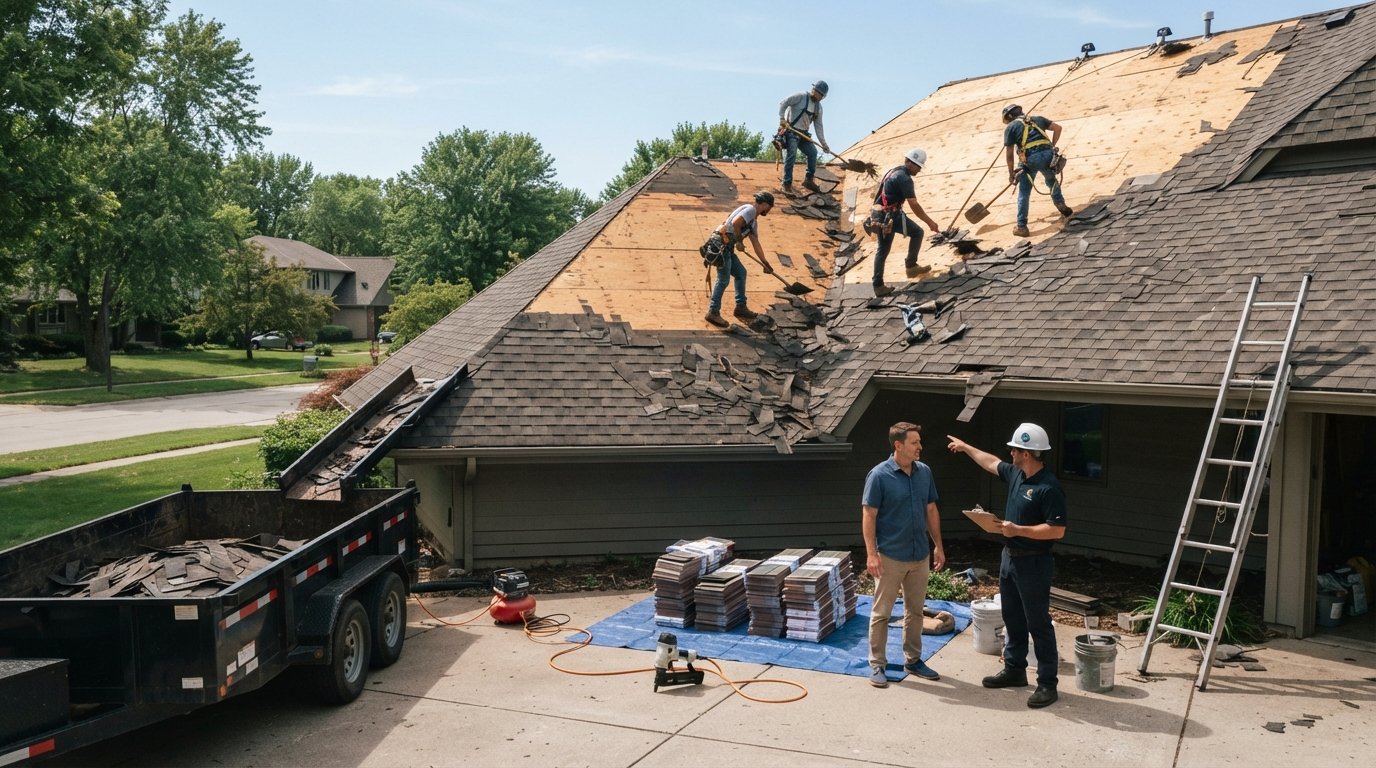
Roof Replacement Cost: 2026 Pricing Breakdown
A roof replacement costs $9,000 to $25,000 on average. Learn the key factors that impact your final quote and how to compare contractor bids.
By Alexia Mabel
Learn more about Roof Installation or Replacement for guides, costs, and what to expect.
Compare Roof Installation or Replacement Pros Near You

Enter your ZIP code to compare top-rated local professionals and request free quotes.
Few home expenses create more anxiety than a roof replacement. It is a major project, and the numbers quoted by contractors can vary wildly, leaving you confused and uncertain. You might have heard figures ranging from $5,000 to over $30,000, and that wide gap does little to help you plan. The truth is that roof replacement cost is not a single number. It is a calculation based on your home's size, the materials you choose, your location, and even the time of year you schedule the work. Understanding these variables is the first step to getting a fair price and avoiding costly surprises.
This guide breaks down the real costs involved in a roof replacement for 2026. We will move beyond the average price tag and look at what drives the final estimate. You will learn how to read a contractor's bid, what questions to ask, and how to set a realistic budget that protects your home and your finances. By the end, you will have a clear framework for navigating this significant investment with confidence.
What Is the True Average Cost of a Roof Replacement?
Nationally, homeowners in 2026 typically pay between $9,000 and $25,000 for a full roof replacement on a standard single-family home. This range is broad because it includes different roofing materials, labor rates, and regional variations. The most common choice, asphalt shingles, usually falls between $10,000 and $18,000 for a 2,000 square foot home. However, this is just a starting point. The final number depends heavily on the specifics of your property and the choices you make.
To get a more accurate figure for your situation, you need to consider the size of your roof, measured in roofing squares. A roofing square is 100 square feet. Most contractors price their work per square, which makes it easier to compare bids across different companies. For asphalt shingles, you might see prices from $350 to $700 per square, while premium materials like metal or tile can cost $800 to $1,500 or more per square. These figures include both materials and labor, which is the standard way to quote a project.
Beyond the basic per-square price, there are other factors that can change the final estimate. The pitch or steepness of your roof affects labor difficulty. A steep roof requires more safety equipment and takes longer, which increases cost. The number of stories in your home also matters, as working on a two-story house is more complex than a single-story ranch. Finally, the condition of your existing roof deck plays a role. If your contractor discovers rotted wood during the tear-off, you will face additional charges for replacing that structural base.
Key Factors That Drive Roof Replacement Cost
Several elements combine to determine your final invoice. Understanding them helps you ask the right questions and avoid paying for things you do not need. Here are the primary cost drivers to keep in mind when you start gathering estimates.
- Roof Size and Complexity: Larger roofs need more materials and labor. Features like valleys, skylights, chimneys, and dormers add complexity and increase the time required to install the new roof properly.
- Material Choice: Asphalt shingles are the most budget-friendly. Metal, tile, slate, and wood shakes are more expensive but offer different aesthetics and lifespans. Your choice will significantly impact the total project cost.
- Labor and Local Rates: Labor costs vary by region and contractor demand. In areas with a high cost of living or high demand for roofing services, expect to pay more for skilled professionals.
- Roof Pitch and Accessibility: A steep roof or one that is difficult to access requires more safety measures and time. This is often reflected in a higher per-square price.
- Existing Roof Condition: If your current roof has multiple layers, it will take longer to tear off. If the wood deck underneath is damaged, repairs will add to the total cost.
Each of these factors can add or subtract thousands of dollars from your estimate. For example, a simple asphalt shingle roof on a single-story home in a low-cost area might price out at $9,000. The same home with a steep pitch, two stories, and a metal roof could easily reach $30,000. By getting multiple detailed quotes, you can see how each contractor weighs these variables and adjust your budget accordingly.
How to Compare Contractor Quotes and Avoid Overpaying
One of the most important steps in managing your roof replacement cost is getting multiple estimates. Industry experts recommend at least three quotes from different contractors. This not only gives you a range of prices but also allows you to compare how each company approaches the project. A cheap bid is not always a bargain, and an expensive one does not guarantee quality. What matters is that the quotes are detailed and transparent.
When you receive a quote, look for a breakdown that includes the specific materials (brand and type of shingles, underlayment, flashing, vents), the estimated labor hours, and the cost per roofing square. The quote should also specify the warranty on both the materials and the workmanship. A contractor who offers a 10-year workmanship warranty is likely more confident in their installers than one who offers only a one-year guarantee. If a quote seems vague or unusually low, ask for clarification. Often, low bids omit critical steps like replacing flashing or installing new underlayment, which can lead to problems later.
Red Flags in a Roofing Quote
Be wary if a contractor asks for a large deposit upfront, pushes you to sign quickly, or offers to waive your insurance deductible. These are common signs of a storm-chaser or a less reputable company. A legitimate contractor will walk you through the quote, answer your questions, and give you time to make a decision. They will also provide proof of insurance and local licensing without hesitation. Taking the time to vet each contractor can save you from a costly mistake and ensure your roof is installed correctly the first time.
Material Costs: From Asphalt to Metal and Tile
Your choice of roofing material is the single biggest factor in your roof replacement cost. Each material offers a different balance of price, durability, and visual appeal. Understanding these options is essential for making an informed decision that fits your budget and your home's style.
Asphalt shingles remain the most popular choice in the United States, and for good reason. They are affordable, easy to install, and available in a wide range of colors. Architectural shingles, which are thicker and more durable than basic three-tab shingles, are the standard for most replacements. They typically cost between $300 and $450 per square. A premium option like impact-resistant shingles can add another $100 to $200 per square. On average, an asphalt shingle roof will last 20 to 30 years with proper maintenance.
If you are looking for a longer lifespan and are willing to invest more upfront, metal roofing is a compelling alternative. Metal roofs can last 50 years or more and are highly resistant to fire, wind, and hail. They are also more energy-efficient, reflecting heat and potentially lowering your cooling bills. The cost, however, is significantly higher. Expect to pay between $600 and $1,200 per square for a standing seam metal roof, depending on the type of metal and the complexity of the installation. Concrete, clay, and slate tiles are at the top of the price range, often costing $1,000 per square or more. They offer a distinctive look and exceptional durability but require a stronger roof structure to support their weight.
Hidden Costs and Unexpected Expenses
Even with a detailed quote, there are potential costs that can catch you off guard. The most common is the discovery of rotted or damaged roof decking. When the old shingles are removed, the contractor can finally see the condition of the wood underneath. If moisture has caused decay, those sections need to be replaced before the new roof can go on. This is not a scam; it is an unavoidable part of the job. To protect yourself, ask your contractor how they handle these discoveries. Many will agree to a per-sheet price for plywood or OSB replacement, so you know the cost upfront.
Another hidden cost can be related to your home's flashing. Flashing is the metal installed around chimneys, vents, and valleys to prevent water intrusion. Over time, it can corrode or be damaged during the tear-off. A quality contractor will include new flashing in their quote, but some will try to reuse old pieces. Insist on new flashing, as this is a critical part of the roofing system. Additionally, you may face permit fees, which vary by municipality, and disposal fees for the old roofing material. A reputable contractor will list these in their estimate. If they do not, ask for a written explanation of all potential fees before work begins.
How to Finance Your Roof Replacement
Once you have a clear picture of the roof replacement cost, you need to figure out how to pay for it. Homeowners often use a mix of savings, insurance, and financing options. If your roof has been damaged by a storm, your homeowners insurance may cover the cost of a replacement, minus your deductible. In that case, you will need to work with your insurance adjuster and get quotes from contractors that align with the insurance settlement. If your roof is simply old and worn, you will need to cover the expense yourself.
For those who do not have the full amount in savings, there are several financing paths. Many roofing companies offer payment plans through third-party lenders, which can be convenient but may carry high interest rates. A home equity loan or home equity line of credit (HELOC) often offers lower rates, but it uses your home as collateral. Another option is a personal loan, which is unsecured and can be used for any purpose. Before committing to any financing, compare the annual percentage rate (APR) and total repayment amount. A $15,000 roof financed at 15% interest over five years will cost you significantly more than the same roof financed at 8%.
A practical strategy is to set a budget for your roof replacement and then get quotes that fit within that range. Be honest with contractors about your budget. They can often suggest material or design changes that lower the cost without sacrificing quality. For example, choosing a simpler shingle profile or a less expensive underlayment can reduce the price. The goal is to get a durable, well-installed roof that protects your home for decades, not to overspend on unnecessary upgrades.
Regional Differences in Roof Replacement Cost
Where you live has a significant impact on what you will pay for a new roof. Labor rates vary from state to state, and local building codes can require different materials or installation methods. For instance, homes in the South and Southeast, like Florida and Texas, often need impact-resistant shingles to withstand hurricanes. These materials cost more, but they are necessary for the region's weather patterns. In the Northeast, harsh winters and ice dams may require additional underlayment and ventilation, which adds to the project cost.
To get a reliable estimate for your area, it is best to use a service that connects you with local contractors. A platform like Homes.Contractors can help you find pre-vetted roofing professionals in your state or city. You can request multiple quotes and compare them side by side. This localized approach ensures that the prices you see are relevant to your market and that the contractors are familiar with local building codes and weather challenges.
Getting Quotes Through Homes.Contractors
When you are ready to move forward, consider using Homes.Contractors to streamline the process. The platform simplifies the search for qualified professionals by allowing you to submit one project request and receive up to four free, no-obligation quotes from local contractors. This approach saves you time and gives you a solid basis for comparison. You can evaluate each quote against the factors discussed here, ensuring you understand the breakdown and the total roof replacement cost.
The benefits of using a directory like this are clear. First, you get access to a network of pre-vetted professionals who have been screened for licensing and insurance. Second, you can read reviews and see ratings for contractors in your state, giving you more confidence in your choice. Finally, the platform is designed to be educational, with a comprehensive FAQ hub and detailed service guides. You can use these resources to prepare for your project and make informed decisions. By leveraging these tools, you are not just getting a price; you are getting the peace of mind that comes from working with a reputable pro.
Final Thoughts on Planning Your Roof Replacement
A roof replacement is a significant financial commitment, but it is also an investment in the safety and value of your home. By understanding the key cost drivers, getting multiple quotes, and choosing the right materials, you can manage the expense and avoid surprises. Remember that the cheapest bid is not always the best value. Focus on finding a contractor who offers a fair price, a clear contract, and a strong warranty. The roof over your head protects everything you own, so it is worth doing right.
As you move forward, use the insights from this guide to ask better questions and plan your budget with confidence. Whether you are dealing with a storm emergency or planning a proactive upgrade, the process is the same: educate yourself, compare your options, and choose a professional you trust. With the right preparation, your roof replacement can be a smooth and rewarding project that adds lasting value to your home.
Learn more about Roof Installation or Replacement for guides, costs, and what to expect.
Compare Roof Installation or Replacement Pros Near You
Enter your ZIP code to compare top-rated local professionals and request free quotes.