
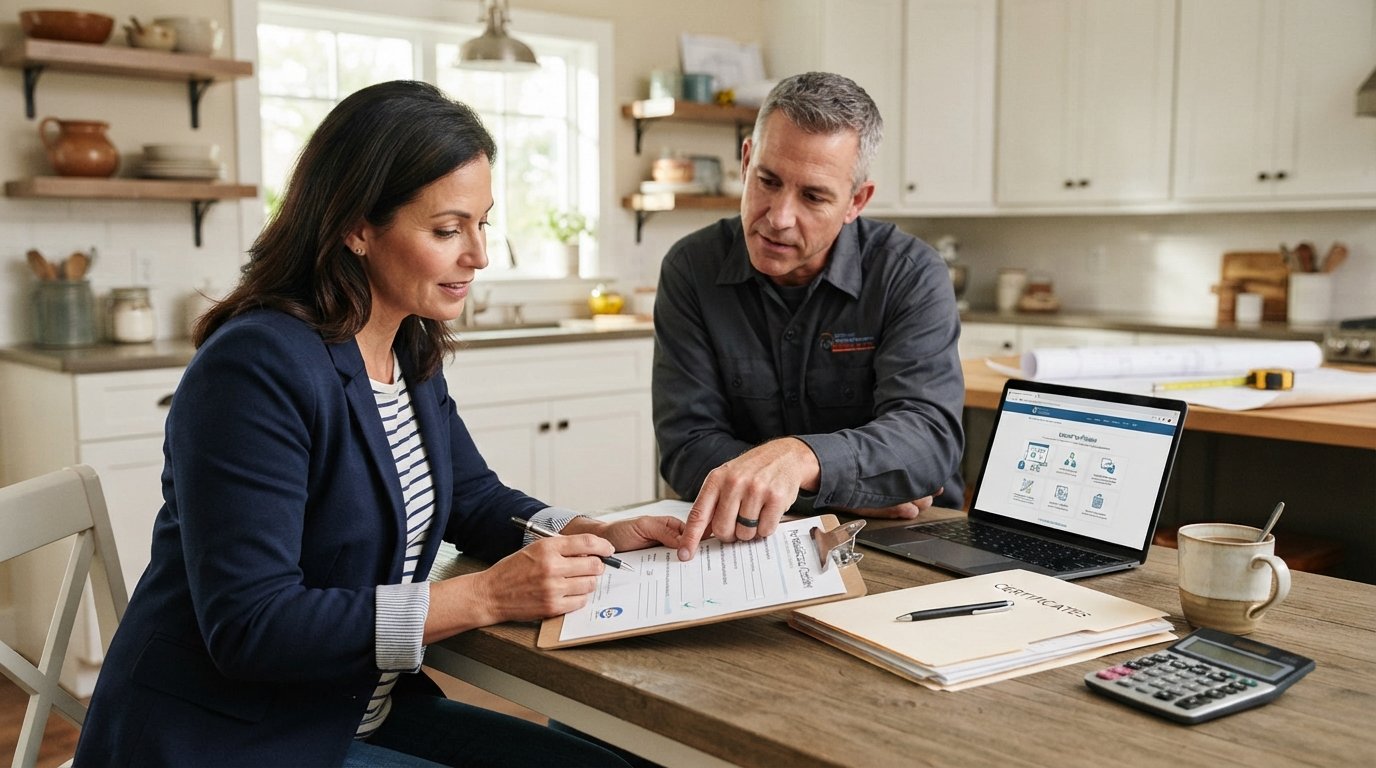
Pre-Qualification Checklist Before Requesting Contractor Estimates
A pre-qualification checklist before requesting contractor estimates helps you verify licenses, insurance, and references, so you avoid costly hiring mistakes.
By Chelsea Kris
Learn more about General Contracting for guides, costs, and what to expect.
Compare General Contracting Pros Near You

Enter your ZIP code to compare top-rated local professionals and request free quotes.
Requesting contractor estimates without first vetting the professionals you invite into your home is like signing a contract before reading it. You might get lucky, but the odds are not in your favor. The pre-qualification phase is the single most important step in protecting your budget, your timeline, and your sanity. It is the process of verifying that a contractor is licensed, insured, financially stable, and culturally aligned with your project goals before you ever ask them to spend time pricing your job. Done correctly, pre-qualification transforms the estimate-gathering process from a stressful gamble into a controlled, informed comparison of qualified professionals.
Most homeowners skip this step entirely. They call three companies from a search engine, accept the lowest bid, and hope for the best. That approach frequently leads to change orders, delays, substandard work, and in the worst cases, abandoned projects. This guide provides a comprehensive pre-qualification checklist before requesting contractor estimates, walking through every verification step, red flag, and documentation requirement you need to screen contractors effectively. By the end, you will have a repeatable system for building a shortlist of trustworthy pros, which means the estimates you receive will be accurate, comparable, and grounded in reality.
Why Pre-Qualification Matters More Than the Estimate Itself
An estimate is only as reliable as the contractor who provides it. A low number from an unlicensed, uninsured, or inexperienced contractor is not a deal; it is a liability. When you pre-qualify contractors, you are not just checking boxes. You are gathering the data you need to interpret their estimates correctly. A licensed contractor with verifiable insurance and a documented history will price a job differently than a handyman operating without credentials, and that price difference often reflects real risk allocation.
Consider this: if an uninsured contractor damages your property or injures a worker on your site, your homeowner insurance policy may deny the claim because you failed to verify coverage. If a contractor is not licensed, you may have no legal recourse when work fails inspection or remains incomplete. If a contractor is financially unstable, your deposit may vanish into a pile of unpaid supplier bills. Every one of these scenarios is preventable through pre-qualification.
The pre-qualification checklist before requesting contractor estimates also protects your time. Contractors invest hours in site visits, measurements, material research, and proposal writing. When you invite unqualified bidders, you waste their time and yours. More importantly, you dilute your ability to compare apples to apples. A shortlist of five pre-qualified contractors produces five serious, detailed estimates. A list of five random names produces chaos.
Finally, pre-qualification gives you leverage. When you can demonstrate that you have already verified licenses, insurance, and references, contractors know they are dealing with a professional homeowner. That often leads to more accurate pricing, fewer games, and better communication throughout the project. To understand how accurate contractor estimates are and why some bids miss the mark, it helps to see the full picture of how estimates are built and where they commonly go wrong.
The Core Pre-Qualification Checklist: Ten Verification Points
Before you request a single estimate, run every candidate through the following ten-point checklist. This is the backbone of the pre-qualification checklist before requesting contractor estimates. Each point is designed to be verifiable within minutes using public records, direct questions, and document requests.
- Verify the contractor license. Check your state or local licensing board database. Confirm the license number, status, expiration date, and classification. Some states require specialty licenses for roofing, electrical, plumbing, or HVAC work. A general contractor license may not cover these trades.
- Confirm general liability insurance. Request a Certificate of Insurance (COI) showing current general liability coverage. The policy should list your project address or at least confirm coverage in your state. Call the insurance agent to verify the policy is active and has not been cancelled.
- Confirm workers compensation insurance. If the contractor has employees, they must carry workers comp. If they claim to be a sole proprietor with no employees, ask for a written exemption or waiver. Without this, you may be liable for injuries on your property.
- Check for a physical business address. A post office box or virtual office is a red flag. Legitimate contractors have a verifiable place of business where you can send correspondence and, if necessary, serve legal documents.
- Look up business registration and standing. Search your state secretary of state website for the business entity. Confirm it is active and in good standing. Check for any registered complaints with the state attorney general or consumer protection agency.
- Review online reputation across multiple platforms. Check Google Reviews, BBB, Yelp, and Angi. Look for patterns in negative reviews. One bad review may be an outlier; repeated complaints about the same issue (late arrival, poor cleanup, unexpected charges) are disqualifying.
- Ask for three recent local references. Request references from projects completed in the last twelve months, ideally within your zip code. Call each reference and ask specific questions about budget adherence, timeline, communication, and whether they would hire the contractor again.
- Verify trade-specific certifications. For roofing, look for manufacturer certifications (GAF, Owens Corning). For HVAC, check NATE certification. For solar, check NABCEP. These certifications indicate specialized training and often required for warranty validity.
- Confirm bond coverage. Many states require contractors to carry a surety bond. This bond provides a financial remedy if the contractor fails to complete the work or violates licensing laws. Ask for the bond number and verify it with the bonding company.
- Screen for financial stability. Ask how long the business has operated under the current name and ownership. Check for liens or judgments against the business using county court records. A contractor with a history of unpaid suppliers or subcontractors may be on the verge of insolvency.
This checklist is not optional, and it is not a one-time task. Re-verify insurance and license status annually, especially if you are planning a multi-phase renovation. Contractors lose licenses, let insurance lapse, and change business entities. What was true six months ago may not be true today.
How to Ask the Right Questions Without Alienating Contractors
Some homeowners hesitate to ask pre-qualification questions because they fear offending contractors or appearing difficult. In reality, professional contractors expect these questions. They keep their documents ready and appreciate homeowners who take the process seriously. The key is to frame your requests as standard due diligence, not as accusations.
Start with a brief phone or email screening before scheduling an on-site visit. This saves everyone time. You can ask about license numbers, insurance coverage, typical project range, and availability without committing to a site visit. If a contractor refuses to provide a license number over the phone, that is a clear red flag. Move on.
When you request documents, be specific. Instead of asking, "Are you insured?" ask for a Certificate of Insurance naming you or your project as a certificate holder. Instead of asking, "Are you licensed?" ask for the license number and the name of the licensing board. Specific requests yield specific, verifiable answers.
Here is a sample script you can adapt for phone or email screening:
- "Before we schedule a site visit, can you provide your state license number and a current Certificate of Insurance for general liability and workers compensation?"
- "How many projects exactly like mine have you completed in the last year, and can you share two or three local references?"
- "Do you use subcontractors or employees for this type of work, and are they covered under your insurance?"
- "What is your process for handling change orders, and how do you document them?"
- "What is your typical payment schedule, and do you require a deposit?"
Notice that these questions are factual and neutral. They do not accuse the contractor of anything. They simply establish the baseline information you need to decide whether to invite them to bid. Contractors who answer promptly and completely are likely organized and professional. Contractors who dodge, delay, or become defensive are telling you something important about how they will behave during the project.
Once you have answers, document everything. Keep a spreadsheet with columns for license number, insurance expiration, bond status, reference check results, and any red flags. This spreadsheet becomes your shortlist. Only contractors who pass every checkpoint should receive an invitation to provide an estimate.
Red Flags That Should Disqualify a Contractor Immediately
Some warning signs are so serious that they warrant immediate disqualification, regardless of how competitive the estimate might be. Ignoring these red flags is the most common mistake homeowners make during the pre-qualification phase.
First, any contractor who demands full payment upfront or a large cash deposit before work begins should be disqualified. Legitimate contractors typically require a deposit for materials, but it should be a reasonable percentage (often ten to thirty percent) and should be documented in a written contract. Demands for fifty percent or more upfront, especially in cash, suggest cash flow problems or intent to defraud.
Second, contractors who cannot or will not provide a written contract should be avoided. A verbal agreement is nearly impossible to enforce. A proper contract should include scope of work, materials specifications, timeline, payment schedule, change order procedures, warranty terms, and dispute resolution mechanisms. If a contractor resists putting things in writing, walk away.
Third, be wary of contractors who pressure you to sign immediately or who offer a "today only" discount. High-pressure sales tactics are a hallmark of predatory contractors. Legitimate professionals understand that homeowners need time to review estimates and make informed decisions. They do not use artificial urgency to close deals.
Fourth, contractors who refuse to provide references or who provide only references from out-of-state projects should be scrutinized. Local references are essential because they allow you to verify work quality and because local building codes and climate conditions vary widely. A contractor who cannot produce three recent local references may be new to the area, which is not automatically disqualifying, but it does require extra caution.
Fifth, check for a pattern of complaints with your state licensing board or consumer protection agency. One complaint may be a misunderstanding. Multiple complaints about the same issue (failure to complete work, failure to refund deposits, poor workmanship) indicate a systemic problem. Do not become the next complaint.
Building Your Shortlist and Requesting Estimates
Once you have screened candidates using the pre-qualification checklist before requesting contractor estimates, you are ready to build your shortlist. Aim for three to five contractors. Fewer than three limits your ability to compare pricing and approach. More than five becomes unwieldy and increases the likelihood that some contractors will decline to bid because they sense they are being used as filler.
When you invite contractors to provide estimates, be clear about your expectations. Provide a written scope of work that outlines what you want done, the materials you prefer (or ask them to propose materials), your timeline, and your budget range if you are comfortable sharing it. Contractors who understand your constraints can provide more accurate estimates. Contractors who are kept in the dark may pad their bids to protect against unknowns.
Schedule site visits so that each contractor has adequate time to inspect the work area, take measurements, and ask questions. Do not rush this process. A thorough site visit is the foundation of an accurate estimate. If a contractor spends only ten minutes at your home and sends a detailed estimate the next day, question how they arrived at their numbers.
After you receive estimates, compare them line by line. Look for differences in scope, materials, labor, permits, and contingency allowances. A lower total may simply reflect a narrower scope or cheaper materials. A higher total may include permits, debris removal, or a longer warranty. The goal is not to find the cheapest bid; it is to find the bid that offers the best value for the scope and quality you need.
For homeowners who want to streamline the process of finding pre-vetted contractors and requesting multiple estimates, platforms like FreeQuotes.Contractors connect you with local professionals who have already been screened for licensing and insurance. This can reduce the time you spend on initial verification, allowing you to focus on comparing project approaches and pricing. However, even when using a referral platform, you should still perform your own due diligence. Verify licenses, call references, and confirm insurance before signing any contract.
Remember that the pre-qualification checklist before requesting contractor estimates is not a one-time event. It is a habit. Every time you hire a contractor, run the checklist. Over time, you will build a personal database of trusted professionals for different trades, which makes future projects faster and less stressful.
Finally, keep in mind that pre-qualification does not guarantee a perfect project. Even the most qualified contractor can encounter unexpected conditions, material delays, or communication breakdowns. But pre-qualification dramatically reduces the risk of catastrophic outcomes. It ensures that the professionals you invite into your home have the credentials, insurance, and track record to handle your project responsibly. That peace of mind is worth every minute you invest in the screening process.