
Understanding Local Contractor Price Quotes for Homeowners
A practical guide for homeowners on understanding, comparing, and using local contractor price quotes to make informed decisions for repairs and remodels.
By Chelsea Kris
Learn more about Exterior Painting for guides, costs, and what to expect.
Compare Exterior Painting Pros Near You

Enter your ZIP code to compare top-rated local professionals and request free quotes.
You notice a crack in your living room ceiling, or your bathroom floor feels a bit soft, or you finally decide it’s time to update that outdated kitchen. Your first thought is likely, “How much is this going to cost?” So, you start searching for local contractor price quotes, hoping for a clear number. But the quotes you receive can be confusingly different, leaving you unsure about what’s fair, what’s included, and who to trust. Ignoring the issue or choosing based solely on the lowest number can lead to bigger problems, unexpected costs, and a project that causes more stress than satisfaction.
Understanding Local Contractor Price Quotes
A local contractor price quote is a detailed estimate for completing a specific home repair or remodeling project. It’s more than just a bottom-line number. It’s a breakdown of the costs for materials, labor, permits, and any other expenses required to finish the job correctly.
Prices vary because every home and project is unique. A contractor must assess the scope of work, the condition of your home, the quality of materials you choose, and the time required. This is why getting multiple quotes is so important,it helps you understand the market rate for your specific needs.
What’s Included in a Good Quote?
A trustworthy quote is detailed and transparent. It should clearly list the work to be done, the specific materials (including brands, grades, and quantities), a projected timeline, and the total cost. Vague quotes that just state a lump sum can lead to misunderstandings and surprise charges later on.
Why This Matters for Your Home
Getting accurate and comparable quotes is crucial for protecting your biggest investment: your home. A well-executed project enhances your home’s safety, functionality, and value. Conversely, a poor job based on a misleading quote can do the opposite.
Choosing a contractor based on an incomplete or unrealistic quote often leads to shortcuts. These shortcuts can compromise structural integrity, create safety hazards like electrical or plumbing failures, and result in repairs that don’t last. The initial “savings” quickly disappear when you have to pay another professional to fix the mistakes.
If you notice signs of this issue in your home, it may help to speak with a qualified contractor. Request a free quote or call to explore your repair or remodeling options.
Common Problems Homeowners Experience
Homeowners often face similar frustrations when navigating contractor quotes. The process can feel overwhelming, especially when you’re not sure what you’re looking at. One common issue is the “apples to oranges” problem, where quotes are so different in detail that they’re impossible to compare fairly.
Another frequent challenge is the unexpected surprise. This happens when a quote seems low, but once work begins, the contractor discovers “unforeseen issues” that significantly increase the final bill. A detailed quote from a reputable pro helps minimize these surprises by accounting for likely scenarios.
- Huge price gaps between estimates with no clear explanation for the difference.
- Vague or incomplete descriptions of the work and materials to be used.
- Pressure to sign immediately with a “today-only” discount.
- Unrealistically low estimates that seem too good to be true (they usually are).
- Reluctance to provide references or proof of insurance and licensing.
- Large upfront payment demands before any materials are delivered or work begins.
How Professionals Solve the Problem
A professional contractor brings clarity, expertise, and reliability to your project. They start with a thorough assessment of your home’s needs. This allows them to create a realistic plan and a detailed quote that serves as a roadmap for the entire project.
Their experience lets them anticipate challenges, source quality materials at better rates, and manage the complex sequence of tasks efficiently. This structured approach, outlined in a clear quote, protects you from cost overruns and ensures the job is done to code and built to last. For a deeper look at what goes into these figures, our guide on understanding construction contractor price estimates breaks down each component.
- Initial Consultation & Assessment: The contractor visits your home to understand the project scope, take measurements, and identify any potential underlying issues.
- Detailed Proposal Creation: They prepare a written quote specifying materials, labor, timeline, payment schedule, and warranty information.
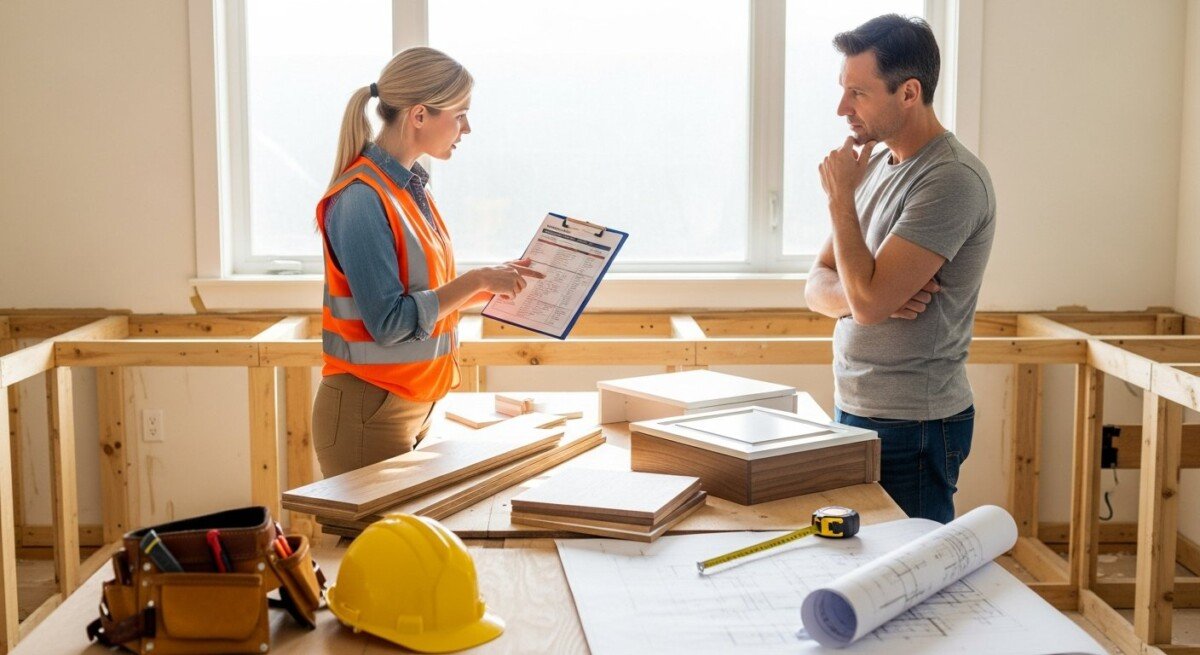
- Clear Communication: They walk you through the quote, answer all your questions, and ensure you understand what you’re paying for.
- Professional Execution: Licensed, insured crews perform the work according to the agreed plan, adhering to building codes and best practices.
- Final Walkthrough & Follow-up: They ensure your complete satisfaction and address any minor items before considering the project complete.
A professional inspection can reveal hidden issues before they become expensive repairs. Compare contractor quotes here or call to discuss your project.
Warning Signs You Should Not Ignore
Sometimes, the need for a contractor isn’t about a desired remodel but a necessary repair. Knowing the warning signs can help you act before a small issue becomes a major, costly disaster. Addressing problems early is almost always more affordable than waiting for a full failure.
Listen to your home. Strange sounds, new smells, and visual changes are often its way of asking for help. Proactive maintenance and timely repairs preserve your home’s value and keep your family safe. Don’t dismiss these signs as minor inconveniences.
- Water stains on ceilings or walls, which can indicate a leaky roof or pipe.
- Sagging floors or rooflines, a potential sign of structural issues.
- Persistent mold or mildew, often pointing to excess moisture and poor ventilation.
- Flickering lights or frequently tripping circuit breakers, signaling electrical problems.
- High energy bills, which may mean your insulation, windows, or HVAC system is failing.
- Cracks in foundation walls or above doorframes, which can indicate settling or structural stress.
What Affects the Cost of Repairs or Installation
Many factors influence the final number on a contractor’s quote. Understanding these can help you make sense of the estimates you receive. The size and complexity of the project are the most obvious drivers, but hidden conditions play a huge role.
The age and condition of your home are significant cost factors. Older homes may have outdated wiring, plumbing, or structural elements that need upgrading to meet current codes. Accessibility is another key point; a difficult-to-reach roof or a basement with a narrow staircase will increase labor time and cost.
- Project Scope & Size: A full kitchen remodel costs more than replacing countertops; a whole-house re-pipe costs more than fixing one leak.
- Material Quality & Selection: Premium materials (hardwood, quartz, designer fixtures) cost more than builder-grade options.
- Labor Intensity & Skill Required: Custom tile work, intricate carpentry, or historical restoration requires specialized skills.
- Permit & Inspection Fees: Most municipalities require permits for structural, electrical, and plumbing work, adding to the cost.
- Unforeseen Repairs: Once walls are opened, hidden rot, faulty wiring, or plumbing issues may be discovered and must be addressed.
Costs can vary depending on the condition of your home. The best way to know the price is to get a personalized estimate. Request free quotes from contractors or call today.
How to Choose the Right Contractor
With a clear understanding of quotes, your next step is selecting the right partner for your project. The lowest price should not be your only criterion. Look for a combination of fair pricing, proven experience, and professional credibility.
Take your time during this selection process. A good contractor will be patient, answer your questions thoroughly, and provide all the documentation you request. They understand that you are making a significant decision and will work to earn your trust. Once you have quotes in hand, knowing how to negotiate contractor price for home projects can help you have a productive conversation about value and scope.
- Verify Licenses & Insurance: Always ask for proof of current liability insurance and worker’s compensation, as well as a valid state or local contractor’s license.
- Check Reviews & Ask for References: Read online reviews and ask the contractor for 2-3 recent references for similar projects. Contact them.
- Compare Detailed, Itemized Quotes: Ensure you are comparing quotes that specify the same materials and scope of work.
- Assess Communication & Professionalism: Choose someone who is responsive, listens to your concerns, and provides clear, timely communication.
- Get Everything in Writing: The final quote and project details should be formalized in a contract before any work begins or money changes hands.
Long-Term Benefits of Professional Work
Investing in professional work pays dividends long after the project is complete. Quality craftsmanship and proper installation mean your repairs or renovations will stand the test of time. You’ll enjoy peace of mind knowing the work was done safely and correctly.
Beyond durability, professional work often improves your home’s efficiency. Proper insulation, sealing, and modern systems can lower utility bills. Most importantly, well-executed projects significantly boost your home’s market value and appeal, offering a strong return on investment should you ever decide to sell. For example, a well-planned bathroom remodel contractor price guide shows how strategic updates offer some of the best returns.
You’ll also avoid the cycle of constant minor repairs that often follows DIY or subpar work. A professional job is a one-time solution, not a recurring headache. This allows you to simply enjoy your home, confident in its safety, comfort, and value.
How many contractor quotes should I get?
It’s generally recommended to get at least three detailed quotes for any significant project. This gives you a good range for comparison on price, approach, and professionalism. Fewer than three might not show you the full market, while more than five can become overwhelming and time-consuming.
What’s the difference between an estimate and a quote?
An estimate is a rough, non-binding guess of the project cost, often given before a full assessment. A quote (or bid) is a formal, fixed-price offer to complete the specified work for a set amount. For budgeting, you want a firm quote, not just a rough estimate.
Are there hidden costs I should watch for?
Reputable contractors include all foreseeable costs in their quote. “Hidden” costs usually arise from unforeseen problems discovered during work (like rotten wood behind a wall). A good quote may include a contingency line item for this, or specify that such issues will be priced separately upon discovery.
Should I always choose the lowest quote?
Not necessarily. The lowest quote may use inferior materials, cut corners, or exclude necessary work. Compare what’s included. A slightly higher quote from a more experienced, well-reviewed contractor with better materials and a solid warranty is often the better long-term value.
What questions should I ask when reviewing a quote?
Ask about the warranty on both labor and materials, the projected start and completion dates, who will be supervising the job site daily, how change orders are handled, and what the payment schedule is. A clear answer to these should be in the contract.
How long is a contractor’s price quote valid?
Quotes are typically valid for 30 to 90 days, as material prices and labor availability can change. The validity period should be stated on the quote itself. If you need to delay your project, check with the contractor to see if the quote can be extended or needs to be revised.
Navigating local contractor price quotes is a critical step in any successful home project. By understanding what goes into a quote, knowing the warning signs that demand action, and carefully choosing a qualified professional, you protect your home and your investment. Don’t let confusion or price anxiety lead to delayed repairs or poor choices. Take the first step toward a safer, more valuable, and more comfortable home by comparing detailed quotes from trusted local contractors today.
Learn more about Exterior Painting for guides, costs, and what to expect.
Compare Exterior Painting Pros Near You
Enter your ZIP code to compare top-rated local professionals and request free quotes.