
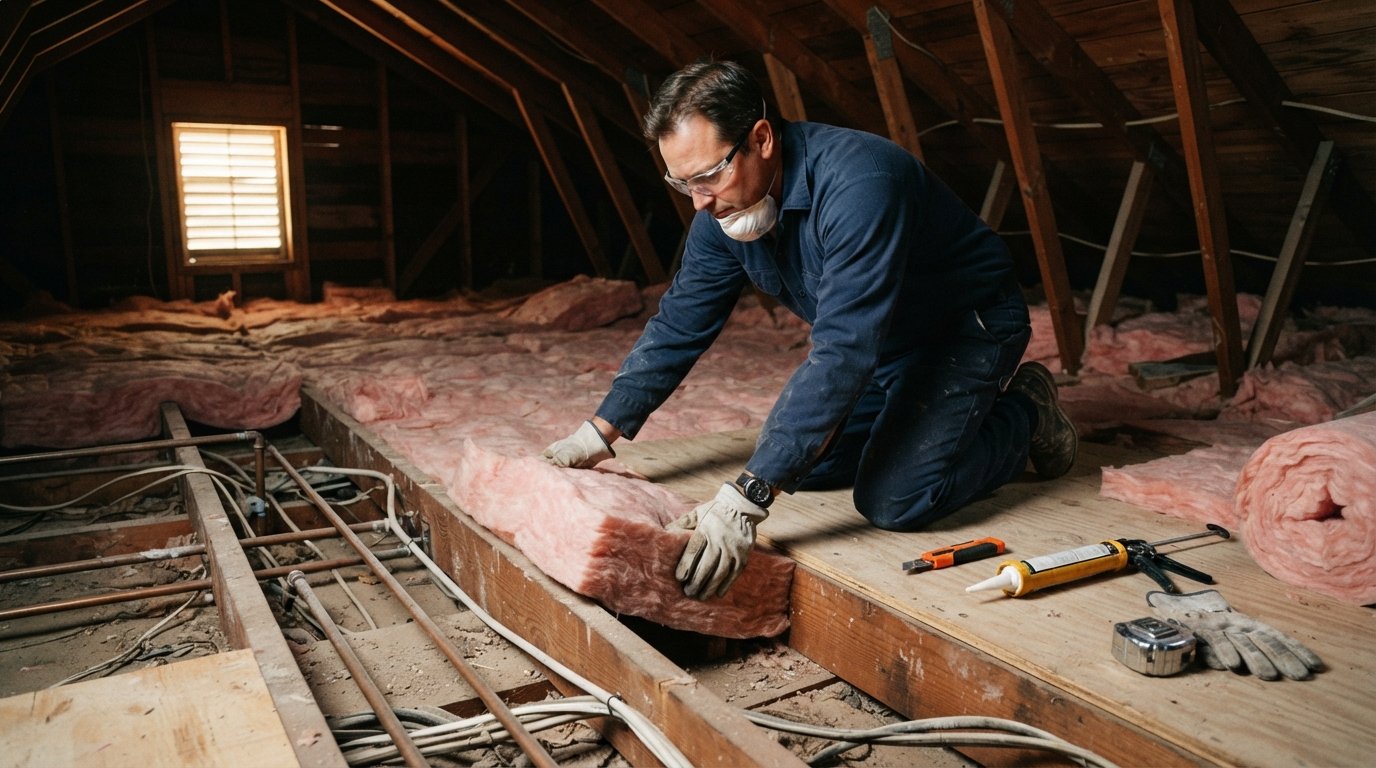
How to Lower Energy Bills with Insulation Upgrades
Insulation upgrades can cut heating and cooling costs by up to 20 percent. Here is how to lower energy bills with insulation upgrades that pay for themselves.
By Danica Leslie
Learn more about Insulation Installation or Upgrade for guides, costs, and what to expect.
Compare Insulation Installation or Upgrade Pros Near You

Enter your ZIP code to compare top-rated local professionals and request free quotes.
Your heating and cooling systems work hardest when your home leaks air like a sieve. According to the U.S. Department of Energy, heating and cooling account for roughly half of the average American home's energy consumption, and poor insulation is often the silent culprit behind those stubborn monthly bills. If you have ever felt a draft near an outlet, noticed uneven room temperatures, or cringed at your utility statement in January, your home's thermal envelope may be overdue for attention. The good news is that insulation upgrades deliver some of the highest returns of any home improvement project, and with the right plan, you can cut energy costs, improve comfort, and increase resale value without a full-scale renovation.
Why Insulation Is the Foundation of Energy Savings
Insulation works by slowing the transfer of heat. In winter, it keeps warmth inside. In summer, it keeps heat out. When insulation is missing, compressed, or damaged, your HVAC system compensates by running longer and cycling more frequently, which drives up both energy consumption and wear on expensive equipment. The Environmental Protection Agency estimates that homeowners can save an average of 15 percent on heating and cooling costs by sealing air leaks and adding insulation in attics, floors, and crawl spaces.
The savings compound over time. A well-insulated home also maintains more consistent indoor temperatures, reduces noise transmission, and lowers the risk of moisture problems that can lead to mold and structural damage. For homeowners planning a larger renovation, insulation is one of those invisible upgrades that pays dividends long after the paint dries. Whether you are working with a general contractor on a basement finishing project or simply addressing a drafty attic, prioritizing insulation is a smart financial move.
Before you call a contractor, it helps to understand the two main metrics used to evaluate insulation: R-value and U-factor. R-value measures thermal resistance, and higher numbers mean better insulation. U-factor measures how well a material conducts heat, and lower numbers are better. Different climates demand different R-values, so a home in Arizona will have different requirements than one in Minnesota. The DOE publishes recommended R-values by zone, and a qualified insulation contractor can help you match the right material to your climate and budget.
Signs Your Home Needs an Insulation Upgrade
Not every home announces its insulation problems with obvious drafts. Some warning signs are subtle, and recognizing them early can save you from years of unnecessary energy waste. If you notice any of the following, it may be time to schedule a professional energy assessment or insulation inspection.
- Rooms that feel too hot in summer or too cold in winter, especially rooms above garages or in attics.
- High monthly utility bills compared to similar homes in your neighborhood.
- Drafty areas near windows, doors, electrical outlets, and baseboards.
- Visible gaps, compressed insulation, or bare joists in the attic or crawl space.
- Ice dams forming on the roof in winter, which often indicate poor attic insulation and ventilation.
These symptoms often point to a combination of insufficient insulation and air leakage. Air sealing and insulation work together: sealing cracks and gaps stops the airflow, while insulation slows heat conduction. If you address only one, you leave savings on the table. A blower door test, often included in a professional energy audit, can quantify exactly how leaky your home is and identify the most cost-effective improvements.
Older homes are especially prone to insulation deficiencies. Many were built before modern energy codes, and some have insulation that has settled or been disturbed during renovations. Even newer homes can have gaps around plumbing penetrations, recessed lights, and attic hatches. The only way to know for sure is to inspect. Many insulation contractors offer free or low-cost assessments, and some utilities provide rebates for energy audits, so the upfront cost of diagnosis is often minimal.
Choosing the Right Insulation for Your Home
Insulation comes in several forms, and the best choice depends on where you are installing it, your climate, and your budget. Understanding the options helps you have a more productive conversation with contractors and compare bids accurately. Here are the most common types used in residential retrofits.
- Fiberglass batts: Affordable and widely available, best for open wall cavities and attics with standard joist spacing.
- Blown-in cellulose or fiberglass: Ideal for attics and existing walls because it conforms to irregular spaces and fills gaps around pipes and wires.
- Spray foam: Provides the highest R-value per inch and acts as both insulation and air sealant, great for rim joists, crawl spaces, and hard-to-reach areas.
- Rigid foam boards: Useful for basement walls, exterior sheathing, and areas where space is tight.
- Mineral wool: Durable, fire-resistant, and moisture-tolerant, often used in attics and interior walls.
Each material has trade-offs. Spray foam costs more upfront but can deliver superior performance and air sealing in one step. Blown-in insulation is cost-effective for attics and can be installed quickly. Fiberglass batts are the most budget-friendly but require careful installation to avoid gaps and compression. Your contractor should recommend a solution based on your home's construction, existing insulation, and local code requirements.
It is also worth considering the environmental impact. Cellulose insulation is made largely from recycled paper and has a lower carbon footprint than foam products. Some spray foams use blowing agents with high global warming potential, though newer formulations are improving. If sustainability matters to you, discuss material options with your contractor and ask about off-gassing and indoor air quality.
DIY vs. Professional Installation: What Makes Sense
Some insulation projects are within reach for a confident DIYer, particularly in unfinished attics where access is easy and the work involves laying batts or blowing loose fill. However, most homeowners underestimate the complexity of proper air sealing, vapor management, and safety considerations. Crawl spaces and walls often require specialized equipment and protective gear. Spray foam, in particular, should be applied by trained professionals because incorrect mixing can lead to health hazards and poor performance.
Hiring a professional also gives you access to warranties, rebates, and expertise that can maximize your return on investment. Many utilities and state programs offer incentives for insulation upgrades, but they often require installation by a certified contractor. A pro can also identify hidden issues like moisture intrusion or pest infestations that could compromise your new insulation. If you decide to hire, it pays to gather multiple quotes and compare not just price but also scope of work, materials, and warranty terms.
When you are ready to find qualified insulation contractors, using a platform that connects you with pre-vetted local professionals can save time and reduce risk. USremodel is a home improvement lead generation platform that connects homeowners across the United States with a network of independent contractors for remodeling, renovation, and repair projects, including insulation, HVAC, roofing, and more. It allows you to request multiple quotes and compare options without pressure. Similarly, Homes.Contractors offers a comprehensive directory and educational resources to help you navigate contractor selection, project planning, and budgeting, with localized content and ratings by state.
How to Lower Energy Bills with Insulation Upgrades: A Step-by-Step Approach
Lowering your energy bills with insulation is not just about adding material. It is a systematic process that starts with understanding your home's current performance and ends with verification. Following a structured approach ensures you invest wisely and capture the maximum savings. Here is a practical framework you can follow.
- Schedule a professional energy audit. A certified auditor will inspect your insulation, perform a blower door test, and use thermal imaging to find leaks and weak spots. This gives you a prioritized list of improvements.
- Air seal before you insulate. Seal gaps around windows, doors, plumbing penetrations, and electrical outlets with caulk, spray foam, or weatherstripping. This prevents warm air from bypassing your insulation.
- Upgrade attic insulation first. The attic is usually the easiest and most cost-effective place to start. Adding or replacing insulation to meet DOE-recommended R-values can yield immediate savings.
- Address crawl spaces and basements. These areas can account for significant heat loss. Encapsulation and rigid foam or spray foam insulation can make a big difference.
- Consider wall insulation for older homes. If your walls are uninsulated, dense-pack cellulose or injection foam can be installed through small holes without major disruption.
- Verify and monitor. After installation, ask your contractor to verify performance. Track your utility bills for a few months to confirm savings and adjust as needed.
This sequence matters because air sealing amplifies the effectiveness of insulation. If you insulate a leaky attic without sealing, you still lose conditioned air. Similarly, addressing the attic before the walls often delivers faster payback. Your contractor can help you prioritize based on your home's specific deficiencies and your budget.
It is also important to pair insulation upgrades with other efficiency measures. Sealing ductwork, upgrading to a programmable thermostat, and improving ventilation can further reduce energy waste. In some cases, replacing old windows or adding storm windows may be necessary if they are a major source of leakage. However, insulation and air sealing typically offer the best return on investment, so start there.
Costs, Rebates, and Return on Investment
The cost of insulation upgrades varies widely depending on your location, the type of insulation, and the square footage involved. As a rough guide, blown-in attic insulation might cost between $1,500 and $3,500 for a typical home, while spray foam in a crawl space could range from $2,000 to $6,000. Wall insulation retrofits can cost more due to the labor involved. These are general estimates, and your actual quotes will depend on your home's specifics.
Fortunately, many homeowners do not pay the full price. Federal tax credits, utility rebates, and state programs can offset a significant portion of the cost. The Inflation Reduction Act, for example, offers tax credits for certain insulation and air sealing improvements. Your contractor or a local energy office can help you identify available incentives. Some utilities also offer on-bill financing or low-interest loans for efficiency upgrades.
The return on investment is compelling. The DOE estimates that proper insulation and air sealing can save homeowners 10 to 20 percent on heating and cooling costs, and in some cases more. Over a decade, those savings can easily exceed the upfront cost. Insulation also improves comfort and reduces noise, which are benefits you enjoy every day. If you plan to sell your home, energy-efficient upgrades are increasingly attractive to buyers and can command a premium.
Common Mistakes to Avoid
Even with good intentions, homeowners sometimes make mistakes that undermine their insulation investment. One common error is installing insulation without addressing air leaks. Another is compressing insulation, which reduces its R-value. Using the wrong type of insulation for a given space, such as using batts in an irregular crawl space, can leave gaps that waste energy. Vapor barriers are another area where mistakes happen: installing a vapor barrier in the wrong climate or in the wrong location can trap moisture and cause mold.
Hiring an unqualified contractor is perhaps the biggest risk. Insulation work may seem simple, but proper installation requires knowledge of building science, local codes, and safety protocols. Always verify that your contractor is licensed, insured, and experienced with the specific type of insulation you need. Ask for references and check ratings. Homes.Contractors provides a directory of pre-vetted contractors and a ratings-by-state feature to help you find reputable professionals in your area.
Another mistake is ignoring ventilation. A tightly sealed and insulated home needs proper mechanical ventilation to maintain indoor air quality. Without it, pollutants and moisture can build up. Your contractor should assess your ventilation needs and recommend solutions such as an energy recovery ventilator (ERV) or a fresh air intake if necessary.
Insulation Upgrades and Home Value
Energy efficiency is a selling point. According to the National Association of Realtors, energy-efficient features are among the top priorities for homebuyers. A home with updated insulation, air sealing, and efficient HVAC systems often sells faster and for a higher price than comparable homes without these upgrades. If you are planning to sell in the next few years, insulation is a low-disruption improvement that can boost your home's marketability.
Beyond resale, insulation upgrades contribute to a healthier living environment. By reducing drafts and maintaining consistent temperatures, you reduce the likelihood of condensation and mold growth. Better insulation also filters out some outdoor noise, making your home quieter and more comfortable. These quality-of-life benefits are hard to quantify but are felt every day.
For homeowners in hot climates like Arizona or Texas, insulation is especially critical. Attic temperatures can soar above 140 degrees Fahrenheit, and without proper insulation, your air conditioner works overtime. Adding insulation and sealing ducts can dramatically reduce cooling costs and extend the life of your HVAC system. In colder regions, insulation prevents heat loss and protects pipes from freezing. No matter where you live, insulation is a year-round investment.
Working with Contractors: What to Expect
When you hire a professional insulation contractor, the process typically begins with an assessment. The contractor will inspect your attic, walls, crawl spaces, and basement, and may perform a blower door test. They will then provide a written estimate that outlines the scope of work, materials, R-values, and timeline. A good estimate should be detailed and transparent, with no vague line items.
Once you approve the estimate, the contractor will schedule the work. Most attic and crawl space insulation projects can be completed in one day. Wall insulation may take longer. During installation, the crew should take care to protect your home from dust and debris. Afterward, they should clean up and walk you through what was done. Ask for documentation of the materials used and any warranties.
Payment terms vary, but it is standard to pay a deposit and the remainder upon completion. Avoid paying the full amount upfront. If your contractor offers financing, review the terms carefully. Homes.Contractors and similar platforms can help you compare multiple quotes and choose a contractor who fits your budget and timeline. Remember that the lowest bid is not always the best; consider experience, reviews, and warranty coverage.
Finally, keep records of your insulation upgrade, including receipts, warranties, and before-and-after photos. These documents are useful for tax credits, rebates, and future home sales. They also help you track the performance of your investment over time.
Insulation upgrades are one of the most reliable ways to lower energy bills and improve home comfort. By understanding your options, working with qualified professionals, and taking advantage of available incentives, you can turn a drafty house into an efficient, cozy home. Start with an energy audit, prioritize air sealing and attic insulation, and watch your savings grow.
Learn more about Insulation Installation or Upgrade for guides, costs, and what to expect.
Compare Insulation Installation or Upgrade Pros Near You
Enter your ZIP code to compare top-rated local professionals and request free quotes.