
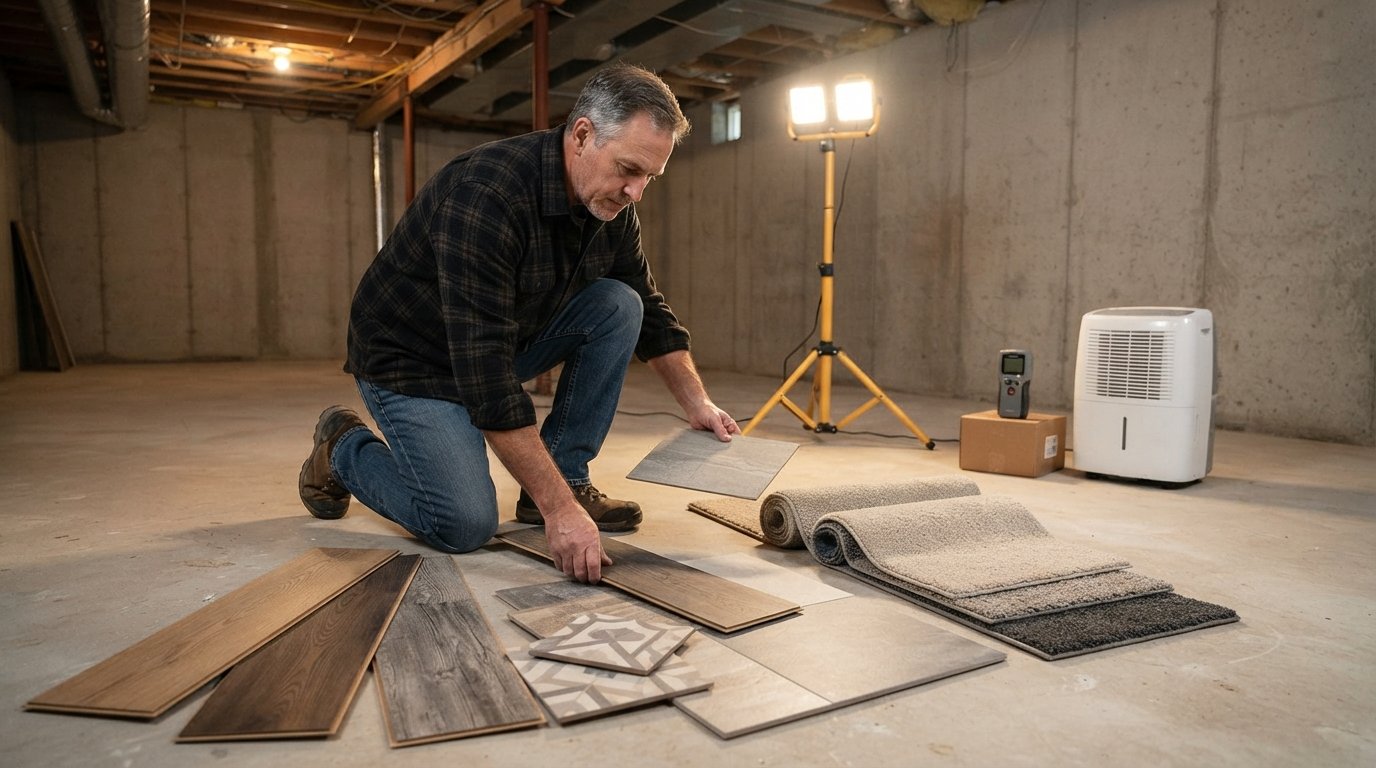
How to Choose Basement Flooring: A 2026 Homeowner Guide
Learn how to choose flooring for a basement remodel with our moisture-tolerant options and cost tips. Call (833)-439-3727 for expert help.
By Adnan Nazir
Learn more about Basement Finishing or Remodeling for guides, costs, and what to expect.
Compare Basement Finishing or Remodeling Pros Near You

Enter your ZIP code to compare top-rated local professionals and request free quotes.
Finishing a basement can add valuable living space to your home, but the wrong flooring choice can turn that dream into a costly nightmare. Basements are unique environments prone to moisture, temperature swings, and potential water intrusion. Unlike above-grade rooms, the flooring you select must withstand these challenges while still looking great and fitting your budget. This guide will walk you through how to choose flooring for a basement remodel, covering moisture-tolerant options, subfloor systems, cost considerations, and testing methods. By the end, you will have a clear framework to make an informed decision that balances durability, comfort, and style.
Understanding the Basement Environment
Before you start shopping for flooring, it is crucial to understand what makes basements different from other rooms. Basements are below grade, meaning they are surrounded by soil and subject to hydrostatic pressure from groundwater. Even in dry climates, concrete slabs can wick moisture from the ground, leading to high humidity and condensation. Temperature fluctuations are also more pronounced; basements tend to be cooler in summer and can be drafty in winter. These conditions can cause many flooring materials to warp, mold, or fail prematurely.
Moisture is the number one enemy of basement flooring. It can come from several sources: poor drainage, cracks in the foundation, high water tables, or even just humid air. Before installing any flooring, you must address any existing moisture issues. Otherwise, even the most moisture-resistant flooring will eventually succumb. Testing for moisture is a critical step that many homeowners overlook, and we will cover that in detail later.
Another factor is the subfloor. Most basements have a concrete slab, which is hard, cold, and unforgiving. Adding a subfloor system can improve comfort, provide a vapor barrier, and create a level surface for the finished flooring. The type of subfloor you choose will depend on the flooring material and your budget. We will explore subfloor options in a later section.
Moisture-Tolerant Flooring Options
When selecting basement flooring, prioritize materials that resist moisture and can handle occasional dampness. Here are the top contenders:
Luxury Vinyl Plank (LVP) and Tile (LVT)
Luxury vinyl has become a favorite for basements due to its exceptional moisture resistance. LVP and LVT are composed of layers of PVC with a photographic top layer that mimics wood or stone. They are 100% waterproof, meaning they will not swell, warp, or delaminate when exposed to water. This makes them ideal for basements where minor leaks or dampness may occur. LVP is also comfortable underfoot, easy to clean, and can be installed floating over a vapor barrier or glued down. Many products come with attached underlayment for added cushioning and sound absorption. The cost of LVP ranges from $2 to $5 per square foot, making it a budget-friendly option. Installation is relatively straightforward, especially for floating click-lock systems, which can be a DIY project for handy homeowners.
Porcelain or Ceramic Tile
Tile is naturally water-resistant and will not be damaged by moisture. Porcelain tile is particularly dense and impervious to water, making it an excellent choice for basements. Ceramic tile is also suitable but may be slightly more porous. Tile is durable, easy to clean, and comes in a wide variety of styles and colors. However, tile can be cold and hard underfoot, so consider adding radiant heating or area rugs for comfort. Installation requires a skilled tiler and a proper substrate, such as a cement backer board, to prevent cracking. The cost of tile flooring ranges from $5 to $10 per square foot installed, but DIY installation can save on labor. Keep in mind that tile can be slippery when wet, so choose a textured finish for safety.
Engineered Wood
Engineered wood offers the look of real wood with a plywood or HDF core and a real wood veneer top. It is more dimensionally stable than solid hardwood, meaning it can handle minor humidity fluctuations better. However, not all engineered wood is suitable for basements. Look for products specifically rated for below-grade installation and with a moisture-resistant core. Some engineered wood floors can be glued down to a concrete slab with a moisture barrier, while others are floating. Expect to pay $4 to $9 per square foot. While engineered wood is more moisture-tolerant than solid hardwood, it is still susceptible to water damage if exposed to standing water or prolonged dampness. Therefore, it is best for basements with well-controlled moisture levels.
Other options include epoxy coatings, which are extremely durable and waterproof, but they can be slippery and are not as warm or quiet as other flooring. Rubber or foam tiles are soft and moisture-resistant, often used in gyms or playrooms, but they may not suit all decor styles. Laminate flooring is generally not recommended for basements because its core is made of wood fiber, which can swell if exposed to moisture.
Why Carpet and Solid Hardwood Fail in Basements
Carpet and solid hardwood are popular flooring choices for above-grade rooms but are typically poor choices for basements. Understanding why can save you from costly mistakes.
Carpet is soft, warm, and comfortable, but it is a magnet for moisture. In a humid basement, carpet fibers can trap moisture, leading to mold and mildew growth. If the basement ever floods, carpet is often a total loss. Even with regular cleaning, carpet in a basement can develop musty odors over time. While there are moisture-resistant carpets and carpet tiles with synthetic backings, they still carry risk. Many flooring experts advise against carpet in basements unless you use a specialized product and maintain strict humidity control.
Solid hardwood is even more problematic. Wood expands and contracts with changes in humidity, and in a basement, humidity levels can fluctuate significantly. This can cause hardwood floors to cup, crown, or gap. Solid hardwood also requires a plywood subfloor over concrete, which adds cost and complexity. If any moisture penetrates, the wood can warp and rot. For these reasons, most manufacturers void warranties for solid hardwood installed below grade. Engineered wood is a better alternative, but even then, you must choose products specifically rated for basements.
Subfloor Systems and Vapor Barriers
A proper subfloor and vapor barrier are essential for protecting your basement flooring from moisture. A vapor barrier is a plastic sheet or coating that prevents moisture from migrating from the concrete slab into the flooring. Without one, even moisture-resistant flooring can be compromised by trapped moisture underneath.
There are several types of subfloor systems designed for basements:
- Plastic Sheeting Vapor Barrier: A simple 6-mil polyethylene sheet laid over the concrete slab, overlapping seams and sealed with tape. This is often used under floating floors.
- Dimpled Membrane: A rolled plastic membrane with dimples that create an air gap, allowing moisture to drain away and evaporate. This is ideal for basements with minor moisture issues.
- Interlocking Subfloor Panels: These are typically made of OSB or plywood with a plastic or foam base. They create a flat, insulated surface and can be installed over a vapor barrier. They are more expensive but provide warmth and a nail base for hardwood or carpet.
- Insulated Subfloor Tiles: Foam or cork tiles that provide insulation and a cushion underfoot. They are often used under laminate or engineered wood.
When installing a subfloor, always follow the manufacturer's instructions and local building codes. If you have significant moisture issues, you may need to address drainage or waterproofing before installing any flooring. Consulting a professional can help you determine the best approach.
Cost Per Square Foot and Installation Complexity
Budget is a major consideration for any remodel. Basement flooring costs vary widely depending on the material and installation method. Here is a general breakdown:
- Luxury Vinyl Plank/Tile: $2 to $5 per square foot for materials; installation $1 to $3 per square foot if hired out.
- Porcelain/Ceramic Tile: $5 to $10 per square foot for materials; installation $4 to $8 per square foot.
- Engineered Wood: $4 to $9 per square foot for materials; installation $3 to $6 per square foot.
- Epoxy Coating: $3 to $7 per square foot, including professional application.
- Carpet (moisture-resistant): $2 to $5 per square foot installed, but higher risk.
Installation complexity also affects cost. LVP and laminate are often DIY-friendly, while tile and hardwood require more skill and specialized tools. If you choose a floating floor over a vapor barrier, you can save on labor. However, if you need to install a subfloor system, add $2 to $5 per square foot for materials and labor. Always get multiple quotes from contractors to compare prices and ensure you are getting a fair deal. When hiring a contractor for your basement remodel, it is wise to verify their credentials and experience with basement projects. For homeowners in Michigan, our guide to basement remodeling contractors in Michigan offers local insights that can help you find trusted professionals.
For a broader search, consider using a directory like PlanRemodel to find pre-vetted contractors in your area. They provide comprehensive listings and educational resources to help you make informed decisions.
Testing for Moisture Before Installation
Before you install any flooring, you must test the concrete slab for moisture. Skipping this step can lead to flooring failure, mold growth, and costly repairs. There are two common tests: the plastic sheet test and the calcium chloride test.
The plastic sheet test is a simple DIY method. Tape a 2-foot by 2-foot piece of clear plastic sheeting to the concrete floor, sealing all edges with tape. Leave it for 24 to 48 hours. If condensation appears on the underside of the plastic or the concrete beneath is dark, you have a moisture problem. This test is qualitative but gives you a good indication.
The calcium chloride test is more precise and should be performed by a professional. It measures the rate of moisture vapor emission from the slab. The results are expressed in pounds per 1,000 square feet per 24 hours. Most flooring manufacturers specify a maximum allowable emission rate, often around 3 to 5 pounds. If your slab exceeds this, you need to address the moisture before installing flooring. Other methods include electrical impedance meters and relative humidity probes. Regardless of the method, always test before installation and document the results. If moisture is high, consider applying a moisture mitigation coating or installing a dimpled membrane to protect your flooring.
Additional Considerations for Basement Flooring
Beyond moisture and cost, think about comfort, style, and maintenance. Basements are often used as living spaces, so choose a flooring that feels good underfoot and complements your decor. LVP and engineered wood offer warmth and realism, while tile provides a clean, modern look. Consider the room's function: a home gym might benefit from rubber flooring, while a playroom could use foam tiles. Also, think about sound insulation; adding underlayment can reduce noise transfer. Maintenance is another factor: tile and LVP are easy to clean, while carpet requires regular vacuuming and deep cleaning. Finally, consider the resale value; moisture-resistant flooring is a smart investment that can make your basement more appealing to future buyers.
If you are planning a basement remodel, it is important to work with experienced contractors who understand the unique challenges of below-grade spaces. Whether you are in Michigan or elsewhere, taking the time to research and hire qualified professionals can save you time and money. For a seamless experience, visit Homes.Contractors to request free quotes from local experts and compare options.
In summary, choosing flooring for a basement remodel requires careful consideration of moisture resistance, subfloor systems, cost, and installation complexity. By following the guidelines in this article, you can select a flooring that is both beautiful and durable, ensuring your basement remains a comfortable and valuable part of your home for years to come.
Learn more about Basement Finishing or Remodeling for guides, costs, and what to expect.
Compare Basement Finishing or Remodeling Pros Near You
Enter your ZIP code to compare top-rated local professionals and request free quotes.