
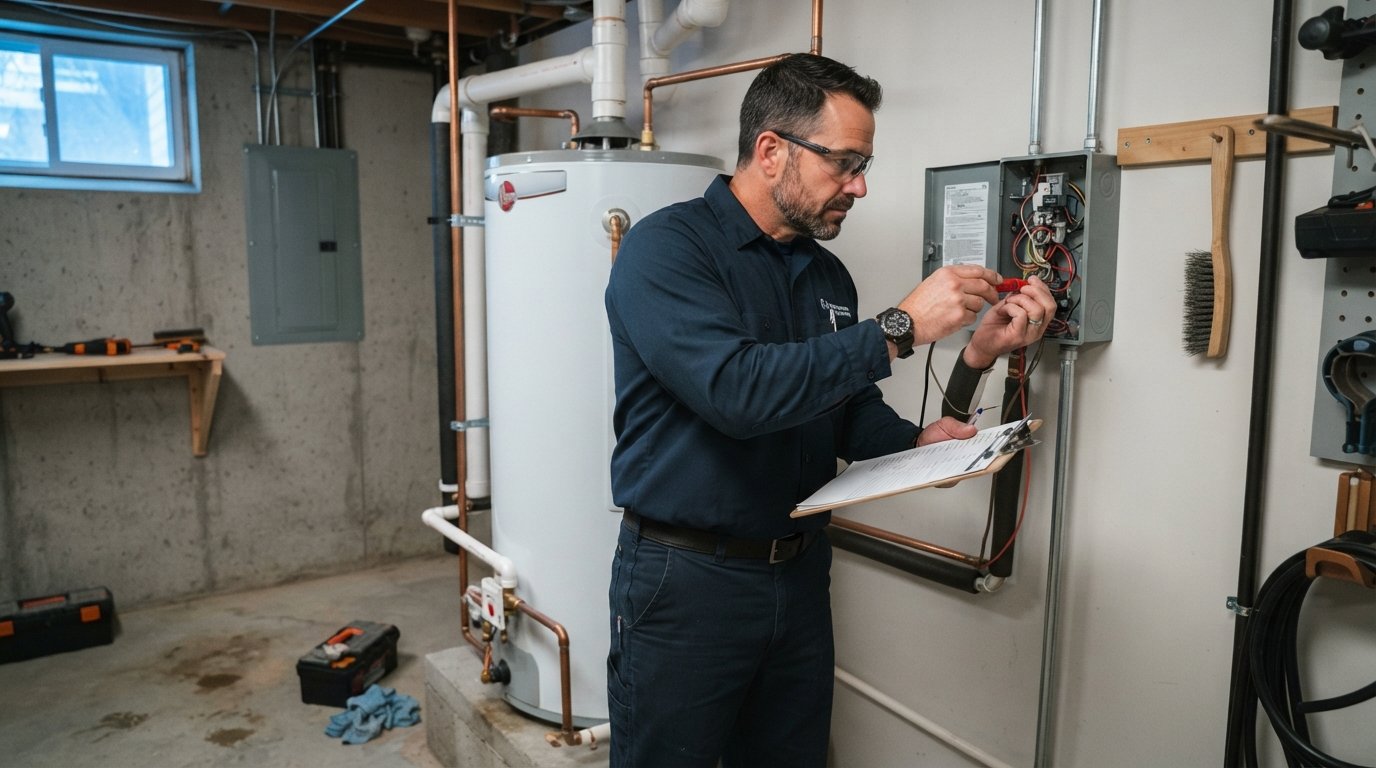
How to Choose a Heat Pump Water Heater for a Cold Climate Home
Match a heat pump water heater to your cold climate home with sizing, electrical, and drainage tips. Call (833)-439-3727 for provider guidance.
By Adnan Nazir
Learn more about Water Heater Installation or Replacement for guides, costs, and what to expect.
Compare Water Heater Installation or Replacement Pros Near You

Enter your ZIP code to compare independent local professionals and request free quotes.
A heat pump water heater can cut water heating costs by more than half in many households, but in a cold climate those savings depend on where the unit sits, how it is sized, and whether your electrical panel can carry the load. Homeowners replacing a failing tank often hear that heat pump water heaters are not built for cold regions, which is only partly true. The technology works in cold climates, but it needs the right installation conditions and a contractor who understands them. This guide walks through the decisions that matter most so you can compare quotes with confidence and avoid a unit that underperforms in January.
How Heat Pump Water Heaters Handle Cold Climates
A heat pump water heater does not generate heat the way a gas burner or electric resistance element does. It moves heat from the surrounding air into the tank, which is why it is often called a hybrid unit. In a cold climate, that surrounding air is cooler, so the unit works harder and runs less efficiently. The key detail is that most models have a backup resistance element that kicks in when the heat pump cannot keep up. That backup keeps hot water flowing, but it also raises operating costs during the coldest stretches.
Manufacturers publish an operating range that generally starts around 37 to 42 degrees Fahrenheit for the heat pump mode. Below that range, many units rely more heavily on the resistance element or switch to a standard electric mode. That does not mean the water heater stops working. It means the efficiency advantage shrinks. The practical takeaway is that a heat pump water heater in a cold climate should be installed where the air stays above the unit's minimum operating temperature, and where it has enough volume of air to draw from.
Where you place the unit is therefore the first real decision. A cold basement that stays in the 50s or a garage that never drops below freezing can work well. An unheated crawl space or a shed exposed to freezing air will not. Before choosing a model, measure the winter temperature of the intended location over several days. If the space drops near or below freezing, you need a different plan, such as enclosing the space, insulating it, or choosing a unit rated for colder operation.
Choosing the Right Location in a Cold Basement or Garage
Heat pump water heaters need air volume and clearance. Most manufacturers recommend at least 450 to 700 cubic feet of air space for standard models, though some units with ducted intake can draw air from another room. A typical unfinished basement meets that requirement easily. A tight utility closet usually does not. In a cold climate, the location also affects efficiency, because the unit cools the air around it as it extracts heat. That is a benefit in summer and a drawback in winter if the space is already cold.
In a basement, the best spot is usually away from exterior walls and near the center of the space, where temperatures stay more stable. Keep the unit at least 6 to 12 inches from walls and clear the top and front for airflow. If the basement is finished, consider a unit with a ducted intake and exhaust so it can pull air from a warmer part of the house and discharge cold air elsewhere. In a garage, place the unit on a raised platform if flooding is possible, and confirm the garage stays above the unit's minimum temperature. An attached garage that shares a wall with the house often stays warmer than a detached one.
Condensate is the other location issue. Heat pump water heaters pull moisture from the air and produce condensate, typically a few gallons per day depending on humidity. That water must drain by gravity or be pumped to a floor drain, sump pit, or exterior line. In a cold climate, never route condensate to an exterior line that can freeze. A condensate pump with a freeze-protected interior discharge is the safer choice. Confirm the drainage path before the unit is delivered, because a missing drain can add cost and delay to the project.
Sizing a Heat Pump Water Heater for Your Household
Tank size and first-hour rating are the two numbers that matter most. Tank size is the stored volume, but first-hour rating tells you how much hot water the unit can deliver in an hour of heavy use. A family of four with two showers running back to back needs a higher first-hour rating than a couple living in a small home. As a rough starting point, allow 12 to 15 gallons of tank capacity per person, then check the first-hour rating against your peak demand.
Heat pump water heaters recover more slowly than gas or resistance units, so a slightly larger tank is often the better choice in a cold climate. A 65 to 80 gallon model gives the heat pump more time to recover between draws and reduces reliance on the backup element. The tradeoff is physical size and a higher purchase price. Measure the available footprint and height before you settle on a tank size, especially in a basement with low ceilings or ductwork overhead.
To size accurately, count the fixtures that might run at the same time and estimate their flow. A standard shower uses about 2 gallons per minute, a bathroom faucet about 1, and a dishwasher or clothes washer draws several gallons per cycle. A household with two simultaneous showers and a morning laundry habit sits at the high end. A household with staggered schedules sits lower. Bring those numbers to your contractor conversations, because first-hour ratings vary widely between models with the same tank size.
Electrical Panel and Circuit Requirements
Most heat pump water heaters need a dedicated 240 volt circuit, typically 30 amps, though some models run on 120 volt household current. The 120 volt units are easier to install because they often plug into an existing outlet, but they recover more slowly and may not suit larger households. A 240 volt unit usually requires a new circuit and breaker, and sometimes a panel upgrade if the service is already near capacity.
Before choosing a model, have an electrician confirm available capacity. A panel that is full or a service that is maxed out can turn a simple swap into a major expense. Ask the electrician to check the panel rating, the available breaker slots, and the distance to the installation spot. Wire runs through finished space cost more than short runs in an unfinished basement. If the panel needs an upgrade, factor that into the total project budget before comparing unit prices.
Also confirm whether the chosen model has a standard cord or requires hardwiring. Some units come with a plug, while others must be hardwired by an electrician. That detail affects labor cost and scheduling. If you are comparing quotes, make sure each contractor is pricing the same electrical scope, because one quote may include a new circuit while another assumes an existing one.
Rebates and Tax Credits for Heat Pump Water Heaters
Financial incentives can change the math significantly, but the rules vary by location and change over time. Many utilities offer rebates for heat pump water heaters, and federal tax credits have historically covered a portion of the cost for qualifying models. The amount depends on the unit's efficiency rating and the program year. Because program details shift, confirm current offers with your utility and a tax professional rather than relying on older figures.
To capture available incentives, keep the paperwork organized. Most programs require the model number, proof of purchase, installation date, and sometimes a receipt from a licensed contractor. Some utilities require the unit to be installed by a participating contractor, while others allow homeowner installation. Check the requirements before you buy, because installing first and applying later can disqualify you.
Incentives should not drive the entire decision, but they can shorten the payback period. A unit that costs more upfront may cost less after a rebate and tax credit than a cheaper model that does not qualify. Compare the net cost after incentives, not just the sticker price. If you are planning a larger project, such as a basement finish that includes the water heater closet, coordinate the incentive paperwork with the rest of the project so nothing is missed.
Questions to Ask an HVAC or Plumbing Contractor
The contractor you choose matters as much as the unit. Heat pump water heaters are different enough from standard tanks that experience with them is a real advantage. Ask each contractor how many heat pump water heaters they have installed, whether they handle the electrical work or subcontract it, and how they handle condensate. A contractor who has not installed one before may underestimate the electrical and drainage work, which leads to change orders later.
Use this list as a starting point for your conversations:
- What is the first-hour rating of the model you recommend, and how does it match my household size?
- Will the installation require a new circuit or panel upgrade, and is that included in the quote?
- How will condensate be drained, and what happens if the drain freezes?
- What is the minimum operating temperature for the unit, and will my basement or garage stay above it?
- Which permits are required, and who pulls them?
- What is the warranty on labor, and who handles service calls?
Compare at least three quotes and make sure each one lists the same scope: unit model, electrical work, condensate routing, permit fees, and haul-away of the old tank. A low quote that omits the electrical work is not really lower. If you are also considering other efficiency upgrades, our guide on geothermal heat pump pros and cons for homes explains how ground-source systems compare for whole-home heating and cooling.
For homeowners who want to compare independent local providers without pressure, a free matching service can simplify the process. You can request quotes from providers in your area and compare scope and pricing side by side. For broader project planning, resources such as PlanRemodel offer directories and educational articles that help homeowners navigate provider selection and budgeting. The goal is to gather enough information to make an informed decision, not to accept the first quote you receive.
Weighing Operating Costs and Cold-Climate Performance
The savings from a heat pump water heater depend on how much the unit runs in heat pump mode versus resistance mode. In a cold climate, a unit installed in a 50 degree basement may run in heat pump mode most of the year, with resistance backup only during the coldest weeks. A unit installed in a 35 degree garage may lean on resistance mode far more often, eroding the savings. That is why location and temperature control matter as much as the efficiency rating on the label.
If the installation space runs cold, consider insulating the space or enclosing the unit in a small mechanical closet with a louvered door. Some homeowners add a ducted intake that pulls air from a warmer part of the house, which keeps the unit in heat pump mode longer. These upgrades add cost, but they can protect the efficiency advantage that justified the purchase. Discuss them with your contractor before the unit is ordered, because retrofitting ductwork later is more expensive.
Finally, think about noise. Heat pump water heaters produce a hum similar to a refrigerator or a small air conditioner, usually in the 45 to 55 decibel range. In a basement, that is rarely a problem. In a garage attached to a bedroom wall, it can be. Listen to a running unit if possible, or check the decibel rating and place the unit away from sleeping areas. A unit that annoys the household often gets switched to resistance mode, which defeats the purpose.
Choosing a heat pump water heater for a cold climate home comes down to matching the unit to the space, the household, and the electrical system. Confirm the winter temperature of the installation spot, size the tank and first-hour rating for your peak demand, plan the electrical circuit and condensate drain, and ask contractors the questions that reveal whether they have done this before. With the right preparation, a heat pump water heater can deliver reliable hot water and meaningful savings even in a cold region.