
Geothermal Heat Pump Pros and Cons for Homes
Weigh geothermal heat pump pros and cons for residential homes, from big savings to high upfront costs. Call 8334393727 for contractor quotes.

By Leo Dawson
Learn more about Heating System Installation or Replacement for guides, costs, and what to expect.
Compare Heating System Installation or Replacement Pros Near You

Enter your ZIP code to compare top-rated local professionals and request free quotes.
A geothermal heat pump is one of the most efficient ways to heat and cool a house, but it is also one of the most expensive systems to install. That tension sits at the heart of every homeowner decision about this technology. You may have heard that geothermal systems can cut energy bills by 30 to 70 percent compared with traditional heating and cooling equipment, or that they last for decades with minimal maintenance. You may also have heard that the upfront cost can run two to three times higher than a conventional furnace and air conditioner, and that not every yard can accommodate the ground loop. Both sets of claims are true, which is why a clear, honest look at geothermal heat pump pros and cons for residential homes matters before you commit.
This guide walks through how geothermal systems work, what they cost, where they excel, where they fall short, and how to decide whether one makes sense for your property and budget. It also covers the practical steps for getting accurate quotes, because the price of a geothermal installation depends heavily on soil conditions, lot size, local labor rates, and available incentives in your area.
How a Geothermal Heat Pump Works in a Home
A geothermal heat pump does not burn fuel to create heat. Instead, it moves heat between your home and the ground. A few feet below the surface, soil and rock stay at a relatively stable temperature year round, typically between 45 and 75 degrees Fahrenheit depending on your region. In winter, the system extracts that stored heat from the ground and concentrates it indoors. In summer, the process reverses and the system deposits excess indoor heat back into the cooler earth.
The equipment has two main parts. The ground loop is a network of buried pipes filled with a water and antifreeze solution that circulates underground. The indoor unit, often called the heat pump, contains a compressor and refrigerant circuit that transfers heat between the loop and your ductwork or radiant floor system. Because the ground temperature is milder than outdoor air in both winter and summer, the compressor does not have to work as hard as it would in an air source heat pump or a standard air conditioner.
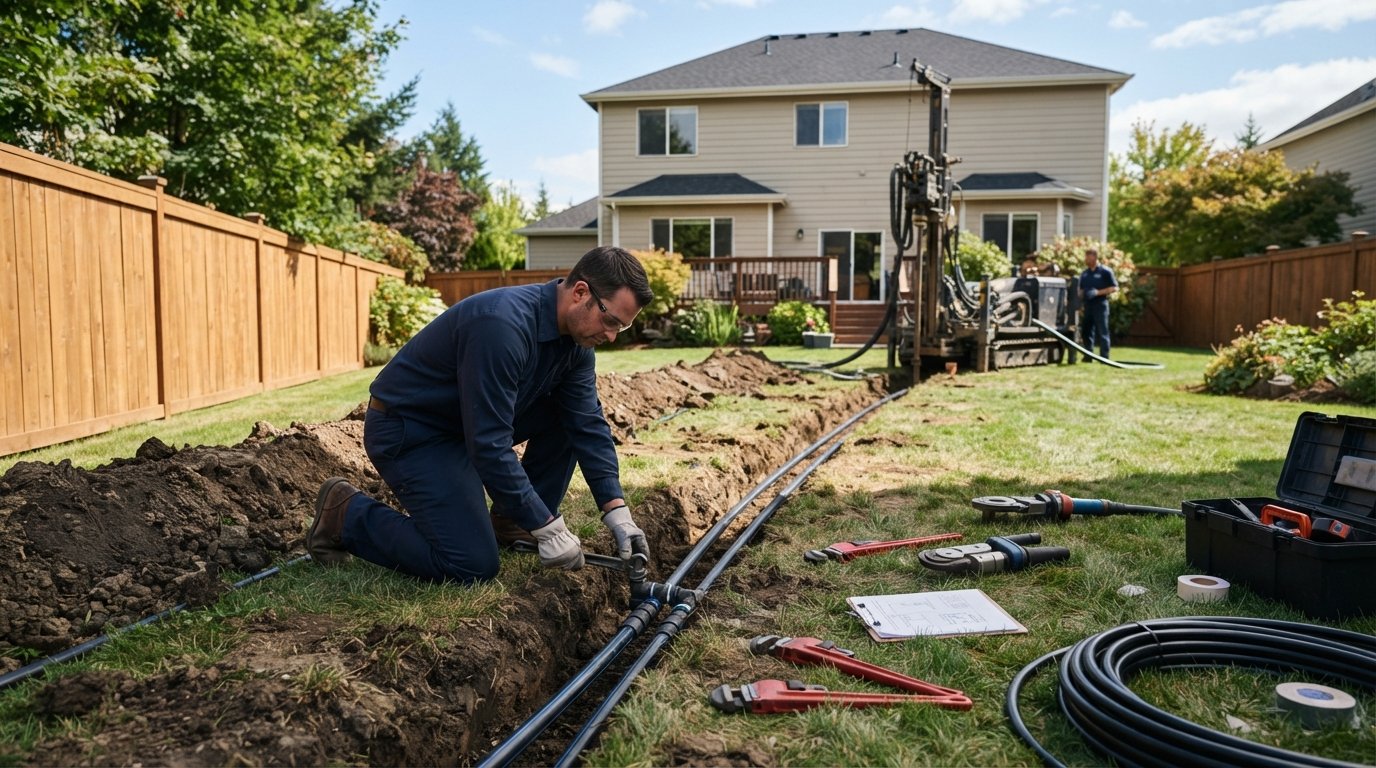
There are four common loop configurations. Horizontal loops run in trenches about four to six feet deep and need a fair amount of land. Vertical loops are drilled 100 to 400 feet down and suit smaller lots. Pond loops use a nearby body of water if one is available and permitted. Open loop systems draw groundwater from a well and return it to a separate well or surface discharge. Each type has different installation costs, permitting requirements, and site constraints, and a qualified contractor will recommend the best fit after a site assessment.
The Strongest Advantages of Geothermal Systems
The efficiency case for geothermal is genuinely compelling. According to the U.S. Department of Energy, geothermal heat pumps can achieve efficiencies 30 to 70 percent higher than conventional heating systems and can reduce cooling costs by 20 to 50 percent compared with standard air conditioners. Because they move heat rather than generate it, they deliver more heating or cooling energy per unit of electricity consumed. That translates into lower monthly utility bills, especially in climates with extreme winter cold or summer heat.
Longevity is another major plus. The indoor heat pump unit typically lasts 20 to 25 years, and the buried ground loop can last 50 years or more. Compare that with a conventional air conditioner that may need replacement every 12 to 15 years and a furnace that lasts 15 to 20 years. Over a 20 year horizon, you may replace one geothermal unit while a traditional setup would require two or more system replacements. The loop itself is rarely the failure point, which means your biggest installation expense is also your longest lasting asset.
Geothermal systems also score well on comfort and quiet operation. There is no outdoor condenser unit, so you avoid the fan noise and vibration that come with traditional air conditioners. Indoor temperatures tend to be more even because the system runs in longer, gentler cycles rather than short bursts. Humidity control is generally better as well, which matters in humid climates. Many homeowners also value the environmental profile: geothermal systems use electricity, and if your grid is relatively clean or you have solar panels, your home's carbon footprint for heating and cooling drops sharply.
Here is a quick summary of the main benefits homeowners report:
- Energy savings of 30 to 70 percent on heating and 20 to 50 percent on cooling compared with conventional systems
- Ground loop lifespan of 50 plus years and indoor unit lifespan of 20 to 25 years
- Quiet operation with no outdoor condenser noise
- Even indoor temperatures and strong humidity control
- Lower carbon emissions, especially when paired with renewable electricity
These advantages are real, but they come with tradeoffs that can be deal breakers for some properties. The next sections cover the cost, site, and installation challenges in detail.
Cost: The Biggest Drawback of Geothermal Heat Pumps
The upfront cost of a geothermal system is the single most common reason homeowners walk away. A typical residential installation ranges from about $15,000 to $40,000 before incentives, depending on system size, loop type, and local labor rates. By contrast, a new furnace and central air conditioner might cost $6,000 to $12,000 installed. That gap of $8,000 to $25,000 or more is significant, and it is why payback periods often stretch to 5 to 15 years depending on energy prices and how much you save each month.
The ground loop is the main cost driver. Drilling vertical boreholes is expensive because it requires specialized rigs and skilled crews. Horizontal loops need more land but fewer specialized drilling hours, so they can be cheaper if you have the space. Soil and rock conditions matter too: rocky ground or hard clay can slow drilling and raise costs. In some areas, permitting and inspection fees add several hundred to a few thousand dollars. If your home needs ductwork modifications or a new distribution system, that adds more.
Federal tax incentives have improved the math considerably. The Residential Clean Energy Credit covers 30 percent of the cost of a geothermal heat pump installation, with no dollar cap for eligible systems placed in service through 2032. Some states, utilities, and local programs add rebates or low interest financing on top of that. A $30,000 system could see a $9,000 federal credit, bringing the net cost to $21,000. That still leaves a meaningful premium over conventional equipment, but it shortens the payback period and makes the investment more attractive.
Financing options can also ease the sting. Some contractors offer payment plans, and specialized green lenders provide loans for energy efficiency upgrades. If you are comparing financing routes for a larger renovation, our guide on DIY vs Contractor: Pros and Cons for Homeowners explains how to weigh labor costs against professional installation, which is especially relevant because geothermal work is not a DIY friendly project.
Site Requirements and Installation Disruption
Geothermal systems need ground access, and that is not always available. A horizontal loop typically requires a trench system covering several hundred to a few thousand square feet. If your lot is small, heavily landscaped, or dominated by hardscape, a horizontal loop may not fit. Vertical loops solve the space problem but require drilling equipment that needs clear access to the drilling site. In dense urban neighborhoods, that access may be impossible or may require permits and coordination with neighbors.
Installation is also disruptive. A horizontal loop installation tears up the yard, and while the contractor will restore the surface, the lawn and landscaping may take a season or two to recover. Vertical drilling is less invasive on the surface but can still involve significant noise and equipment traffic for several days. If you have mature trees, irrigation systems, or underground utilities, those must be located and protected, which adds planning time and cost.
Water availability matters for open loop systems. They require a sufficient groundwater supply and a discharge plan that meets local regulations. In some jurisdictions, open loop systems are restricted or require additional permits. Pond loops depend on having a suitable body of water with adequate depth and legal access. These constraints mean that a geothermal system is not a one size fits all solution, and a site assessment is essential before you assume it will work on your property.
Maintenance, Repairs, and Contractor Availability
Geothermal systems have relatively low maintenance needs. The ground loop is sealed and buried, so it rarely needs attention. The indoor unit should be serviced annually, with filter changes and coil cleaning similar to any heat pump. Over time, the compressor and fan motor may need repair or replacement, and those costs can be higher than for conventional equipment because geothermal specific parts are less common.
The bigger practical issue is finding qualified installers and technicians. Geothermal work requires specialized training in loop design, drilling coordination, and system commissioning. In many markets, there are far fewer geothermal contractors than HVAC companies that handle conventional systems. That can mean longer wait times for service, fewer competing bids, and higher labor rates. If you live in an area with a thin geothermal market, you may struggle to get timely repairs when something goes wrong.
When you request quotes, ask each contractor about their certifications, experience with your loop type, and local references. You can also use a platform like FreeQuotes.Contractors to request multiple free quotes from pre-vetted local contractors, which makes it easier to compare pricing and credentials side by side. Always verify licenses, insurance, and warranty terms independently, and do not assume that any single quote reflects the full range of options available to you.
When a Geothermal Heat Pump Makes Sense
Geothermal is most attractive when several conditions line up. You plan to stay in the home long enough to recoup the upfront premium through lower energy bills. You have a suitable lot with space for a loop or the budget for vertical drilling. You live in a climate with significant heating or cooling loads, so the efficiency gains translate into meaningful savings. You can take advantage of the 30 percent federal tax credit and any state or utility incentives. And you are comfortable with a longer planning and installation timeline in exchange for lower operating costs and a longer equipment lifespan.
It makes less sense if you are on a tight budget, plan to move within a few years, have a very small or difficult lot, or live in a mild climate where heating and cooling loads are low. In those cases, a high efficiency air source heat pump or a conventional system with good insulation and air sealing may deliver better value. The right answer depends on your numbers, not on a general rule.
Here is a simple decision framework to help you evaluate your situation:
- Estimate your current annual heating and cooling costs and the potential savings from a geothermal system.
- Get at least three quotes that include loop type, system size, and all permitting and restoration costs.
- Subtract available federal, state, and utility incentives to find your net cost.
- Divide the net cost by your estimated annual savings to estimate the payback period.
- Compare that payback against your expected time in the home and your comfort with the upfront investment.
If the payback is longer than your expected ownership horizon, geothermal may still appeal for comfort, quiet operation, or environmental reasons, but you should go in with clear eyes about the financial tradeoff.
Getting Accurate Quotes and Avoiding Pitfalls
The quality of your installation depends heavily on the contractor you choose. A poorly designed loop or an undersized system can erase the efficiency advantages and lead to comfort problems. Ask each contractor for a Manual J load calculation, a loop design based on soil and climate data, and a detailed scope of work that includes landscaping restoration and permitting. Compare not just the total price but also the equipment brands, warranty terms, and expected performance.
Be wary of quotes that seem unusually low. They may cut corners on loop length, skip proper load calculations, or exclude restoration work that will cost you later. On the other hand, a high price does not guarantee quality. Check references, look for certifications from organizations such as the International Ground Source Heat Pump Association, and ask how the contractor handles service calls after installation.
Finally, remember that geothermal is one part of a whole home energy strategy. Insulation, air sealing, and duct improvements can reduce your load and make any system perform better. If you are planning a broader renovation, coordinating those upgrades with your HVAC project can improve comfort and lower costs. With careful planning and realistic expectations, a geothermal heat pump can be a strong long term investment for the right home and the right homeowner.