
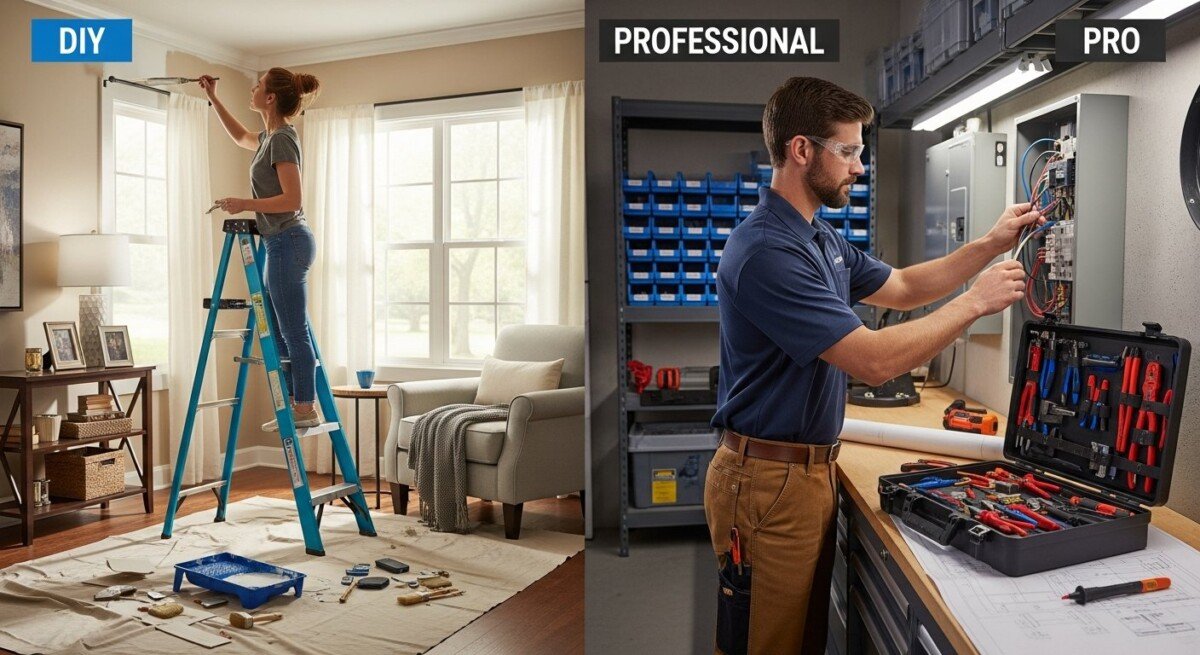
DIY vs Contractor: Pros and Cons for Homeowners
Deciding between DIY and hiring a contractor? Our guide breaks down the pros, cons, and key factors to help you choose wisely for your home project.
By Alexia Mabel
Learn more about Exterior Painting for guides, costs, and what to expect.
Compare Exterior Painting Pros Near You

Enter your ZIP code to compare top-rated local professionals and request free quotes.
Every homeowner faces the same big question when a project comes up: should I tackle this myself or hire a professional? It’s a choice between saving money and ensuring quality, between personal satisfaction and peace of mind. Making the right call can protect your budget, your home’s value, and your own time and safety.
Schedule your free, no-obligation assessment today by calling 📞833-439-3727 or visiting Get Free Assessment.
A Simple Breakdown of DIY vs Hiring a Contractor
At its heart, the DIY vs contractor decision is about balancing your skills, budget, and the project’s complexity. DIY (Do-It-Yourself) means you are the project manager, laborer, and quality control. Hiring a contractor means you are bringing in a trained expert to handle the job from start to finish.
There is no one-size-fits-all answer. A simple paint job might be a perfect DIY weekend, while rewiring your kitchen is almost always a job for a licensed electrician. The key is to honestly assess the project’s demands against your own abilities.
What Counts as a DIY Project?
Generally, DIY projects are those that are low-risk, don’t require specialized permits, and have clear instructions. Think cosmetic updates, basic landscaping, or assembling furniture. If a mistake is easy and inexpensive to fix, it’s likely in the DIY-friendly zone.
Why It Matters for Homeowners
This decision has real, lasting impacts on your home and wallet. Choosing DIY for the wrong project can lead to costly mistakes, safety hazards, and even lower your home’s resale value. Conversely, hiring a pro for every tiny task can drain your savings unnecessarily.
Getting it right means your home improvements are done safely, correctly, and add value. It also means you avoid the stress of a project spiraling out of control. Your home is your biggest investment; how you care for it directly affects your comfort, safety, and financial future.
Let our team of licensed professionals provide a free, no-obligation assessment. We’ll help you understand what’s involved so you can make the best choice for your home and peace of mind. Schedule your consultation online.
Common Issues and Their Causes
Many homeowner headaches start with underestimating a project. What seems straightforward on a tutorial video can hide complexities once you open up a wall or pull up old flooring. The most common issues stem from a lack of experience, proper tools, or understanding of building codes.
For example, a DIY plumbing fix might stop a leak temporarily but use the wrong fitting, leading to a major burst pipe months later. An electrical project done without a permit can void your home insurance if something goes wrong. These problems often have a single cause: the project was beyond the homeowner’s skill level.
- Unforeseen Complications: Hidden water damage, faulty wiring, or structural issues not visible at the start.
- Code Violations: Work that doesn’t meet local safety standards, creating hazards and problems during a future home sale.
- Tool Limitations: Lacking the professional-grade equipment needed for a precise, durable result.
- Time Overruns: Life gets busy, turning a weekend project into a months-long eyesore.
- Cost Creep: Multiple trips to the hardware store for parts and tools you didn’t know you needed.
How Professionals Fix the Problem
When you hire a reputable contractor, you’re not just hiring hands,you’re hiring a process. It begins with a detailed assessment and estimate. A pro will identify not just the obvious issue but potential related problems, providing a complete solution.
The process is systematic. They pull necessary permits, ensuring all work is legal and up to code. They source the right materials, often at better prices. Their skilled labor, backed by experience, means the job is done efficiently and correctly the first time. Finally, they clean up and often provide a warranty on their work, giving you long-term assurance.
- Consultation & Estimate: A thorough evaluation and a clear, written quote.
- Planning & Permitting: Handling logistics, schedules, and legal requirements.
- Execution: Skilled work using proper techniques and tools.
- Inspection & Cleanup: Final review and leaving your home tidy.
Don’t let a small repair turn into a major headache. Our vetted contractors have the expertise to get it done right, saving you time and stress. Contact us for a precise quote to discuss your project.
Signs You Should Not Ignore
Some projects give clear warning signs that they are firmly in “call a pro” territory. If your project involves the structural integrity of your home, major systems, or significant safety risks, DIY is not the safe or smart path.
Listen to your instincts. If you feel uneasy, unsure, or overwhelmed just thinking about the steps, that’s a sign. If a mistake could cause flooding, fire, or injury, the risk is too high. Your safety and your home’s integrity are worth the investment in professional service.
- Permits Are Required: Any project needing a permit (electrical, plumbing, structural) legally and practically needs a pro.
- You’re Messing with Load-Bearing Walls: One wrong move can compromise your home’s structure.
- Major Systems Are Involved: This includes HVAC, main electrical panels, and sewer lines.
- The Project is Dangerous: Working high on a roof, with natural gas lines, or with asbestos.
- You Lack the Specialized Tools: If you need to rent expensive equipment you’ll never use again, a pro likely already has it.
Cost Factors and What Affects Pricing
The cost of hiring a contractor isn’t arbitrary; it reflects the value they provide. Key factors include the project’s scope and complexity, materials, labor time, and permit fees. A pro’s overhead,insurance, licensing, and business costs,is also part of the price, protecting you from liability.
Schedule your free, no-obligation assessment today by calling 📞833-439-3727 or visiting Get Free Assessment.
While the upfront cost is often higher than a DIY attempt, it’s crucial to consider the long-term value. Professional work comes with durability, warranties, and the assurance that it’s done to code. A botched DIY job can cost double to fix. Always get multiple detailed, written estimates to understand the market rate for your specific project.
How To Choose the Right Professional or Service
Once you decide to hire a contractor, choosing the right one is critical. Start by verifying they are licensed, bonded, and insured for your protection. Check online reviews and ask for references from past clients. A trustworthy pro will be happy to provide them.
Look for clear, detailed communication. They should answer your questions patiently and provide a written contract that outlines the project scope, timeline, payment schedule, and warranty. Avoid anyone who asks for full payment upfront or pressures you to make a quick decision. Your comfort and confidence in them are as important as their technical skills.
Long-Term Benefits for Your Home
Investing in professional work for the right projects pays dividends for years. It ensures safety for your family, preventing electrical fires, water damage, or structural failures. It protects and increases your home’s resale value, as documented, permitted work is a strong selling point.
Professionals also provide durability. Their work lasts longer, performs better, and comes with guarantees. This means fewer callbacks, repairs, and headaches down the road. Ultimately, the peace of mind that comes from knowing a job is done correctly is perhaps the greatest long-term benefit of all.
Frequently Asked Questions
How much money can I really save with DIY?
You can save on labor costs, which are a significant part of a contractor’s quote. For simple, cosmetic tasks, savings can be 50% or more. However, for complex jobs, mistakes can erase all savings and cost more to fix. Always factor in the cost of tools, materials, and your own time.
When is a permit required, and why does it matter?
Permits are typically required for electrical, plumbing, structural changes, and major renovations. They matter because they ensure work meets safety codes. Unpermitted work can be forced to be torn out, cause insurance issues, and create major problems when you sell your home.
What questions should I ask a contractor before hiring?
Always ask for proof of license and insurance, references from similar projects, who will be doing the work, the projected timeline, and details about the warranty. Get everything in writing, especially the payment schedule.
Can I do part of the project myself and hire a pro for the rest?
This is called “being your own GC” and is possible but challenging. You are responsible for scheduling, coordinating, and the quality of your own work. It can create liability and warranty issues. Clear communication with the contractor is essential.
What are the biggest risks of a DIY project?
The biggest risks are personal injury, creating safety hazards (fire, electrical shock, structural collapse), causing costly damage to your home, and violating building codes which can lead to fines and complications when selling.
How do I know if a project is within my skill level?
Be brutally honest. Have you successfully completed a similar task before? Do you fully understand all the steps and potential pitfalls? Are you comfortable obtaining permits and inspections? If you answer “no” to any of these, it’s likely beyond your current skill level.
What does “licensed, bonded, and insured” mean?
Licensed means they are legally approved to do the work. Bonded provides financial protection if they don’t complete the job. Insured means they have liability and workers’ compensation insurance, protecting you if someone is injured or property is damaged.
Is a handyman a good alternative to a contractor?
For small, handyman tasks like hanging shelves or minor drywall repair, yes. For specialized, permitted, or major work, you need a licensed contractor in that specific trade (plumbing, electrical, etc.). Handymen often have limits on the scope of work they are legally allowed to perform.
Whether you roll up your sleeves or call in the experts, the goal is the same: a safe, functional, and beautiful home. By carefully weighing the DIY vs contractor pros and cons for each project, you make informed decisions that protect your investment and give you confidence. When in doubt, consulting with a professional is always a wise first step toward a successful outcome.
Schedule your free, no-obligation assessment today by calling 📞833-439-3727 or visiting Get Free Assessment.
Learn more about Exterior Painting for guides, costs, and what to expect.
Compare Exterior Painting Pros Near You
Enter your ZIP code to compare top-rated local professionals and request free quotes.