
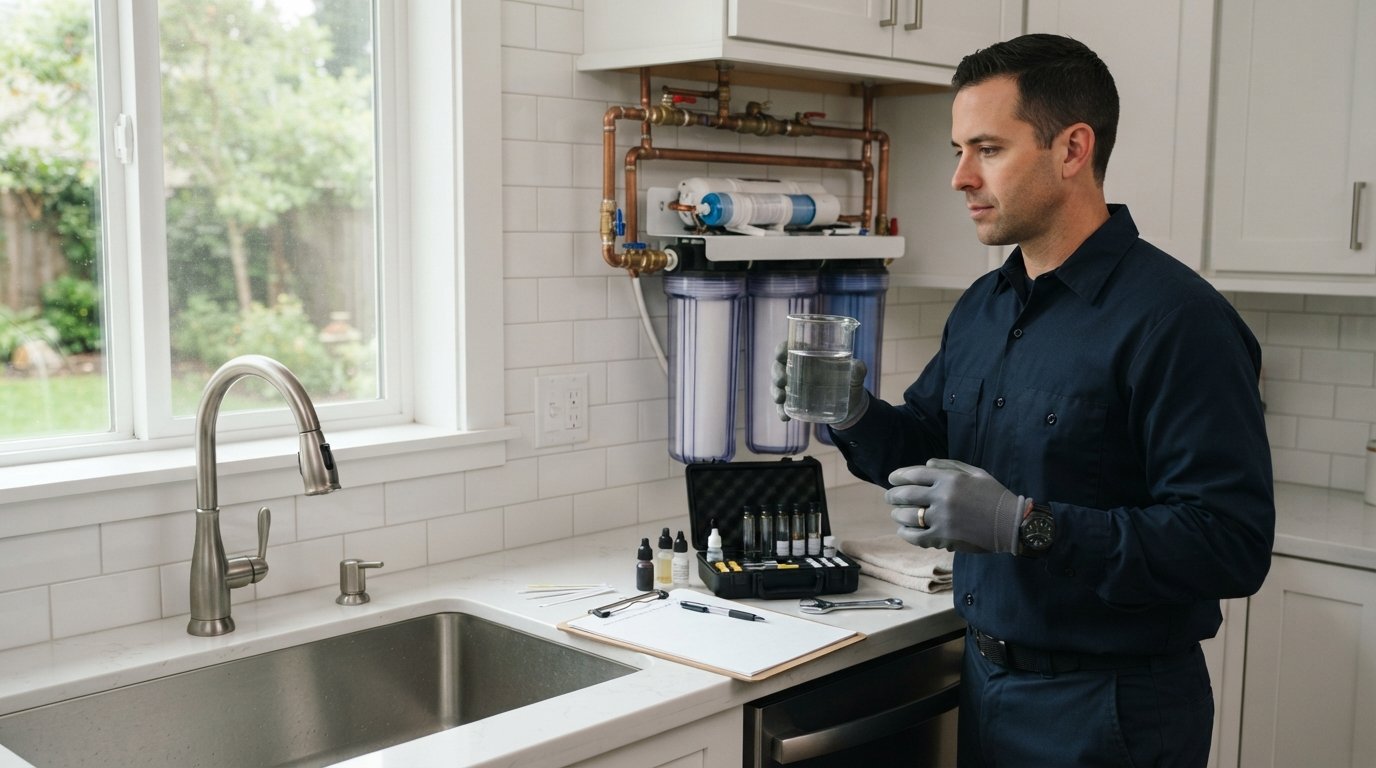
Home Water Quality Testing and Whole House Filtration Systems
Home water quality testing and whole house filtration systems protect your family from hidden contaminants. Call 8334393727 to find local installation pros.
By Danica Leslie
Learn more about Water Treatment System Installation or Replacement for guides, costs, and what to expect.
Compare Water Treatment System Installation or Replacement Pros Near You

Enter your ZIP code to compare top-rated local professionals and request free quotes.
The water that flows from your tap might look crystal clear, but appearances can be dangerously deceiving. Across the United States, millions of homeowners unknowingly consume water laced with lead, chlorine byproducts, agricultural runoff, and even microscopic pathogens that standard municipal treatment does not fully eliminate. Whether your home draws from a private well or a city water supply, understanding what is actually in your water is the first step toward protecting your family's health and your plumbing's longevity. This guide walks you through the essentials of home water quality testing and whole house filtration systems, from identifying common contaminants to selecting the right equipment for your household's specific needs.
Why Water Quality Matters More Than Most Homeowners Realize
Municipal water treatment plants are designed to meet EPA standards for potable water, but those standards address a limited set of contaminants and do not guarantee that water arriving at your faucet is free from all impurities. Aging infrastructure, corroded pipes, and seasonal runoff can introduce new contaminants after water leaves the treatment facility. Private well owners face even greater uncertainty, since their water is not regulated by the EPA at all and can vary dramatically from one season to the next.
The health consequences of contaminated water range from immediate gastrointestinal illness to long-term organ damage. Lead exposure, for instance, is particularly dangerous for children and can impair cognitive development even at low levels. Chlorine byproducts like trihalomethanes have been linked to increased cancer risk with prolonged exposure. Beyond health concerns, poor water quality damages appliances, stains fixtures, and shortens the lifespan of water heaters and dishwashers. Hard water alone costs American homeowners billions annually in premature appliance replacement and increased energy consumption.
Testing your water is not a one-time task reserved for new homeowners. Water quality changes over time due to environmental shifts, infrastructure repairs, and seasonal variations. A comprehensive approach to home water quality testing and whole house filtration systems begins with regular assessment and ends with targeted treatment that addresses your specific water profile.
Common Contaminants Found in American Homes
Understanding what you are testing for helps you interpret results and choose appropriate filtration. Contaminants fall into several broad categories: microbial, chemical, mineral, and radiological. Each requires different testing methods and different treatment solutions.
The following list covers the most frequently detected contaminants in residential water supplies across the country. If you notice any of these in your test results, targeted filtration can address them effectively.
- Lead and copper: Typically leach from corroded pipes and solder, especially in homes built before 1986.
- Chlorine and chloramine: Added as disinfectants but create harmful byproducts and affect taste and odor.
- Nitrates and nitrites: Common in agricultural areas, linked to methemoglobinemia in infants.
- Arsenic: Naturally occurring in some regions, associated with cancer and cardiovascular issues.
- Hard water minerals (calcium and magnesium): Cause scale buildup, reduce appliance efficiency, and dry out skin.
- Volatile organic compounds (VOCs): Industrial solvents and fuels that can contaminate groundwater.
- Microorganisms: Bacteria, viruses, and parasites that can cause acute illness.
Once you know which contaminants are present, you can match them to filtration technologies designed to remove them. For example, activated carbon excels at removing chlorine and VOCs, while reverse osmosis is highly effective against nitrates, arsenic, and heavy metals. Water softeners address hardness, and UV purification neutralizes biological threats. No single filter handles everything, which is why whole house systems often combine multiple stages.
How to Test Your Home Water Quality
Home water quality testing can be approached in several ways, each with trade-offs in cost, accuracy, and convenience. The method you choose depends on what you need to know and how much you are willing to invest. For basic screening, DIY test kits available at hardware stores provide quick results for common parameters like pH, hardness, and chlorine. These kits are affordable and easy to use, but they lack the precision and breadth of professional laboratory analysis.
For a more thorough assessment, you can order a mail-in laboratory test kit that covers dozens of contaminants. These kits typically cost between $50 and $300 and involve collecting water samples at your tap, shipping them to a certified lab, and receiving a detailed report within a few weeks. This approach is ideal if you suspect specific contaminants or want a comprehensive baseline before investing in filtration equipment.
If you are on a private well or have specific health concerns, hiring a certified water testing professional is the most reliable option. A trained technician will collect samples properly, ensure chain-of-custody protocols, and interpret results in the context of your household's needs. Many state health departments also offer free or low-cost testing for well owners, so check local resources before paying out of pocket.
When interpreting results, pay attention to both the detected levels and the EPA's maximum contaminant levels (MCLs) or health advisory thresholds. A contaminant may be present below the MCL and still cause concern for sensitive individuals, such as pregnant women or immunocompromised family members. Use your test results as a guide for selecting filtration stages, not as a simple pass or fail grade.
Whole House Filtration Systems: How They Work and What They Remove
A whole house filtration system treats all water entering your home, not just the water from a single faucet. This means every shower, laundry cycle, and appliance benefits from cleaner water. Whole house systems typically install at the main water line, often in a basement, garage, or utility closet. They can range from a single large cartridge filter to multi-stage systems combining sediment filtration, carbon adsorption, reverse osmosis, and UV disinfection.
The core components of a typical whole house system include a sediment pre-filter that captures sand, rust, and debris; a carbon block or granular activated carbon stage that removes chlorine, chloramine, and many organic chemicals; and a final polishing stage that may involve reverse osmosis or specialized media for specific contaminants like arsenic or lead. Some systems also incorporate water softeners to address hardness, which protects pipes and appliances from scale buildup.
Choosing the right system requires matching its capabilities to your test results and household water usage. A large family with high water demand needs a system with sufficient flow rate, measured in gallons per minute (GPM), to avoid pressure drops during simultaneous showers and laundry. Systems that are too small will force water through filtration media too quickly, reducing contact time and effectiveness.
Maintenance is another critical consideration. Filters must be replaced on schedule, typically every 6 to 12 months for carbon stages and every 3 to 6 months for sediment pre-filters. Some systems use backwashing to clean media, which reduces cartridge waste but requires a drain connection and periodic regeneration with salt or other chemicals. Failing to maintain a whole house system can lead to bacterial growth, reduced filtration performance, and even contamination from exhausted media.
Costs for whole house filtration systems vary widely based on complexity and capacity. A basic sediment and carbon system might cost $500 to $1,500 installed, while a comprehensive system with reverse osmosis, UV, and softening can exceed $5,000. Ongoing filter replacement adds $100 to $500 annually. While the upfront investment is significant, the benefits in health protection, appliance longevity, and improved taste and odor often justify the expense for many homeowners.
If you are planning a larger home improvement project that involves plumbing upgrades or a remodel, coordinating your filtration installation with other work can save money and ensure proper integration. In our guide on how long it takes to get home repair quotes, we explain how to time contractor visits for efficiency, which applies equally to filtration system installations.
Point-of-Use vs. Whole House: Which Is Right for You?
Not every household needs a full whole house system. Point-of-use filters, such as under-sink reverse osmosis units or pitcher filters, target specific taps and are far less expensive. They are ideal if your primary concern is drinking and cooking water, and your other water uses (showering, laundry) are not affected by contaminants of concern. However, point-of-use systems do not protect your plumbing, water heater, or washing machine from hard water or corrosive agents.
Whole house systems offer comprehensive protection but come with higher upfront costs and more maintenance. They are particularly valuable if your water has high sediment, iron, or hardness that damages appliances, or if you want the peace of mind that every tap in your home delivers safe water. For families with young children or immunocompromised members, the extra investment in whole house treatment is often worthwhile.
A hybrid approach is also possible: install a whole house sediment and carbon filter to address broadly problematic contaminants, then add point-of-use reverse osmosis at the kitchen sink for drinking water. This balances cost and performance while ensuring the most critical water uses receive the highest level of treatment.
When evaluating your options, consider the long-term cost of ownership, including filter replacements, maintenance time, and potential plumbing modifications. Also factor in the value added to your home. A well-installed water treatment system can be a selling point for buyers concerned about water quality, particularly in areas with known contamination issues.
Installation and Maintenance: What Homeowners Should Know
Installing a whole house filtration system is not a typical DIY project for most homeowners. It involves cutting into the main water line, ensuring proper pressure regulation, and sometimes adding drain lines and electrical connections for UV or backwashing components. Mistakes can lead to leaks, pressure loss, or contamination. Hiring a licensed plumber or water treatment specialist is strongly recommended.
Before installation, verify that your contractor has experience with water treatment systems and can provide references. Ask about warranty terms, service agreements, and emergency support. A reputable installer will also retest your water after installation to confirm the system is performing as expected.
Ongoing maintenance is straightforward but must be consistent. Set calendar reminders for filter replacements, and keep spare cartridges on hand. If your system includes a UV lamp, replace it annually even if it still lights up, as UV output diminishes over time. For softeners, monitor salt levels and clean the brine tank periodically.
If you need help finding qualified contractors for installation or related plumbing work, FreeQuotes.Contractors connects homeowners with pre-vetted local professionals. You can request multiple free quotes for water treatment installation, plumbing upgrades, or any other home improvement project, ensuring you get competitive pricing and qualified service providers.
Making an Informed Decision for Your Home
The journey to cleaner water begins with testing, moves through informed system selection, and continues with diligent maintenance. Home water quality testing and whole house filtration systems work together to give you control over what enters your home. By understanding your water's unique profile and matching it to the right technology, you protect your family's health, extend the life of your appliances, and improve the overall quality of life in your home.
Start with a comprehensive test, interpret the results carefully, and consult with water treatment professionals before committing to a system. The investment you make today in water quality will pay dividends for years to come, both in tangible savings and in the intangible peace of mind that comes from knowing your water is safe.