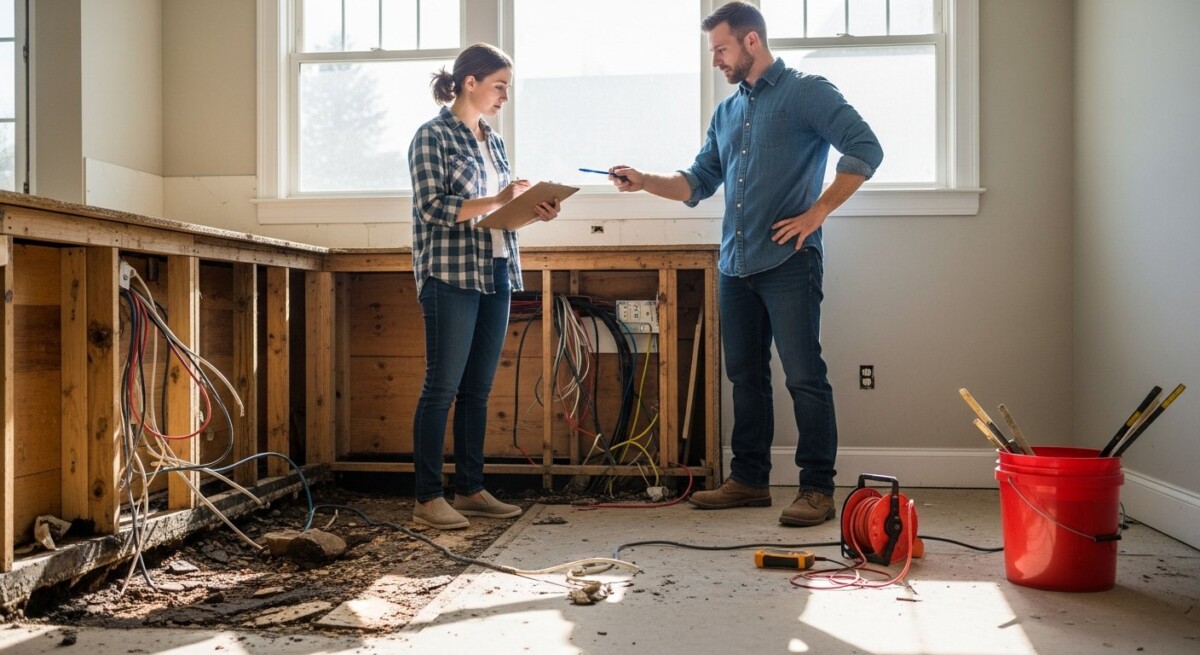
Home Repair Estimates: A Guide for Smart Homeowners

You notice a small crack in the ceiling after a heavy rain, or your bathroom floor feels a bit soft near the tub. A nagging feeling sets in. Is this a simple cosmetic issue or a sign of something serious? For most homeowners, this moment of discovery is followed by a big question: “How much is this going to cost?” Guessing can lead to stress, budget surprises, and even bigger problems if a minor issue is ignored. Understanding the value of a professional home repair estimate service is your first, most practical step toward protecting your home and your peace of mind.
Understanding Home Repair Estimate Service
A home repair estimate service is simply the process of having a qualified contractor assess a problem in your home and provide a detailed breakdown of the projected costs to fix it. It’s not a final bill, but a professional forecast. This document translates your worry into clear information, outlining the scope of work, materials needed, labor costs, and a timeline.
This service is crucial because most home repair issues are not fully visible. What looks like a small water stain could hint at hidden mold or rotting wood. A professional estimate brings that hidden reality to light. It turns the unknown into a defined plan, empowering you to make an informed decision.
Why This Matters for Your Home
Ignoring a repair or guessing at its severity is a gamble with your largest investment. A small leak today can become a major structural issue tomorrow, multiplying repair costs exponentially. More importantly, many household problems pose direct safety risks to your family, from electrical faults to weakened floors.
Beyond safety and cost, timely repairs protect your home’s comfort and value. Drafty windows, inefficient plumbing, or a damaged roof make your home less enjoyable to live in and can significantly lower its market value. Proactive care is an investment in your quality of life and your financial future. For those managing a tight budget, exploring affordable home repair strategies often starts with a clear estimate that helps prioritize the most critical work.
If you notice signs of this issue in your home, it may help to speak with a qualified contractor. Request a free quote or call to explore your repair or remodeling options.
Common Problems Homeowners Experience
Home repair needs often fall into predictable categories that every homeowner will face eventually. These problems rarely fix themselves and typically worsen over time. The challenge is that symptoms can be misleading, making a professional assessment invaluable.
For instance, a constantly running toilet might seem like a nuisance, but it could indicate a failing flapper wasting hundreds of gallons of water, or a more serious issue with the fill valve. Without a proper diagnosis, you might buy the wrong part or miss the root cause entirely.
- Water Damage & Leaks: From roof leaks and plumbing drips to foundation seepage, water is a home’s most persistent enemy.
- Structural Concerns: Settling foundations, sagging floors, or cracks in walls and ceilings that change over time.
- Exterior Wear: Damaged siding, rotting trim, failing gutters, or an aging roof that compromises your home’s shell.
- System Failures: Aging electrical wiring, inefficient HVAC systems, or outdated plumbing that struggles with modern demand.
- Interior Deterioration: Worn-out flooring, cracked tiles, damaged drywall, or cabinets and counters past their prime.
- Safety Hazards: Faulty wiring, loose railings, broken steps, or malfunctioning carbon monoxide and smoke detectors.
How Professionals Solve the Problem
Professional contractors don’t just fix what you see; they diagnose the underlying cause. This systematic approach is what separates a lasting repair from a temporary patch. They bring experience, proper tools, and knowledge of building codes to ensure the work is done safely and correctly the first time.
The process typically follows a logical sequence that ensures thoroughness and clarity for the homeowner. Understanding this process, as detailed in resources like our guide on what every homeowner should see in an estimate, demystifies the contractor’s work and builds trust.
- Inspection & Diagnosis: The contractor thoroughly examines the problem area, often looking for related issues you haven’t noticed.
- Scope of Work Definition: They clearly outline every task required to complete the repair, from prep work to final cleanup.
- Material Selection: They specify the quality, type, and quantity of materials needed, often offering options at different price points.
- Labor & Timeline Projection: Based on the scope, they estimate the skilled labor hours required and provide a realistic completion schedule.
- Detailed Quote Presentation: All these elements are compiled into a written estimate you can review and compare.
A professional inspection can reveal hidden issues before they become expensive repairs. Compare contractor quotes here or call to discuss your project.
Warning Signs You Should Not Ignore
Your home often sends clear signals when something is wrong. Learning to recognize these early warnings is key to preventing minor issues from becoming major emergencies. Acting quickly can save you significant money and stress.
Listen to your instincts. If something feels “off”,a new sound, smell, or visual change,it’s worth investigating. Regular home maintenance checks can help you spot these signs early. Incorporating preventive home repairs into your routine is a powerful way to catch problems at this early, more manageable stage.
- New or Growing Cracks: In drywall, plaster, foundation, or exterior brick/mortar.
- Water Stains or Dampness: On ceilings, walls, or around fixtures. Musty odors can also indicate hidden moisture.
- Electrical Issues: Frequently tripping breakers, flickering lights, buzzing outlets, or outlets that are warm to the touch.
- Doors & Windows That Stick: New difficulty opening or closing can signal foundation shift or moisture-related swelling.
- Unexplained Increase in Utility Bills: Can point to insulation problems, HVAC inefficiency, or hidden water leaks.
- Sagging or Bouncy Floors: Indicates potential problems with floor joists or support structures.
What Affects the Cost of Repairs or Installation
The cost of a home repair is rarely a single number. Several factors combine to create the final estimate, which is why personalized quotes are so important. Understanding these variables helps you interpret estimates and make budget-conscious choices.
Material quality is a major driver. Opting for builder-grade versus premium fixtures, or standard shingles versus architectural ones, changes the price. Labor complexity also plays a huge role. A repair in an easy-to-access crawl space will cost less than the same repair in a finished, hard-to-reach area of your home.
- Extent of Damage: A small section of repair vs. a full-room or whole-system replacement.
- Materials Chosen: The quality, brand, and availability of flooring, fixtures, roofing, etc.
- Labor Intensity: The skill required and the number of hours/days projected for the job.
- Access & Preparation: Ease of accessing the work area and any necessary prep work (e.g., demolition, moving furniture).
- Permits & Codes: Local building permit fees and the cost of ensuring work meets current building codes.
- Age & Condition of Home: Older homes may have outdated systems (like knob-and-tube wiring) that require special handling or upgrades.
Costs can vary depending on the condition of your home. The best way to know the price is to get a personalized estimate. Request free quotes from contractors or call today.
How to Choose the Right Contractor
Getting multiple estimates is only helpful if you’re comparing qualified professionals. The lowest price isn’t always the best value if it comes from an inexperienced or unreliable contractor. Taking time to vet your options protects your investment.
Look for a contractor who communicates clearly, answers your questions patiently, and provides a detailed, written estimate. They should view the estimate as the start of a transparent partnership, not just a sales document. Trust your gut feeling about their professionalism and reliability.
- Verify Licenses & Insurance: Always ask for proof of current liability insurance and, where required, a state or local contractor’s license.
- Check Reviews & References: Read online reviews and ask for references from past clients with similar projects.
- Request Detailed, Written Estimates: Avoid vague verbal quotes. A good estimate itemizes labor, materials, and other costs.
- Compare Multiple Quotes: Get at least three estimates for any significant project to understand the market rate and scope.
- Ask About Experience & Warranty: Ensure they have specific experience with your type of repair and ask about warranties on both labor and materials.
Long-Term Benefits of Professional Work
Investing in professional repairs delivers value that lasts far beyond the day the workers leave. Quality workmanship with the right materials solves the immediate problem and builds a stronger, more resilient home for the future. It’s an investment in predictability and security.
Well-executed repairs enhance your daily life through improved comfort, such as consistent temperatures and better water pressure. They also boost your home’s energy efficiency, lowering monthly bills. Most importantly, they preserve and often increase your property’s market value, ensuring a strong return when it’s time to sell.
How long does it take to get a home repair estimate?
Most contractors can provide an initial estimate within a few days of contacting them. The timeline depends on their schedule and the complexity of your project. For simple repairs, you might get a quote in 24-48 hours, while larger remodels may require a more detailed assessment and take a week or more to prepare a comprehensive estimate.
Is there a fee for a repair estimate?
For most standard repair jobs, reputable contractors provide free estimates. However, for very complex projects, full home inspections, or detailed architectural plans, some may charge a consultation or design fee, which is often credited toward the project if you hire them. Always ask about fees when scheduling the estimate visit.
What should a good repair estimate include?
A thorough estimate should include a detailed description of the work to be done, a complete list of materials (including brands/quality levels), a breakdown of labor costs, the projected start and completion dates, payment schedule terms, and information about the contractor’s license and insurance. It should be clear, itemized, and in writing.
Can I negotiate a home repair estimate?
Yes, you can discuss the estimate with the contractor. Instead of just asking for a lower price, ask if there are areas where costs can be reduced, such as using different materials or phasing the project. Be wary of estimates that seem drastically lower than others, as this can indicate lower-quality materials or hidden costs.
How many estimates should I get for a home repair?
It’s wise to get at least three detailed estimates for any significant repair project. This allows you to compare not only the price but also the proposed scope of work, materials, and the contractor’s professionalism. This comparison gives you confidence in your final decision and helps ensure a fair market price.
What’s the difference between an estimate and a quote?
In home repair, the terms are often used interchangeably. However, an “estimate” is typically a professional’s best guess at the cost based on a visual assessment, while a “quote” or “bid” is usually a firmer, fixed-price offer for the job. Always clarify with the contractor whether the price they provide is an approximation or a fixed cost.
Why are estimates from different contractors so different?
Large price differences often stem from variations in the scope of work, material quality, labor rates, and overhead costs. One contractor may plan to fix only the visible damage, while another includes addressing the root cause. Always ensure you are comparing estimates for the exact same repair specifications and material quality.
Should I get an estimate for small repairs?
Yes, it’s still a good practice. Even for small jobs, a quick professional estimate confirms the diagnosis, provides a clear price, and prevents “scope creep” where the price increases once work begins. It establishes clear expectations for both you and the contractor, leading to a smoother experience.
Taking control of your home’s maintenance starts with knowledge. A professional home repair estimate service transforms uncertainty into a clear path forward, protecting your budget, your safety, and your home’s value. Don’t let a small concern become a major headache. The most practical step you can take today is to gather information from experienced local contractors. By comparing detailed quotes, you empower yourself to make the best decision for your home and family.