
Energy Saving Home Upgrades That Lower Utility Bills
Cut your utility bills with energy saving home upgrades that lower monthly utility bills. Call (833)-439-3727 for expert contractor guidance.

By Aaron Turner
Learn more about Insulation Installation or Upgrade for guides, costs, and what to expect.
Compare Insulation Installation or Upgrade Pros Near You

Enter your ZIP code to compare top-rated local professionals and request free quotes.
Your utility bill is not just a monthly expense; it is a diagnostic tool. Every spike in cost and every season of high usage tells a story about where your home is losing energy. The good news is that you do not need a full-scale renovation to see real savings. Strategic, affordable upgrades, sequenced correctly, can cut your monthly bills without draining your savings. This guide walks you through the most effective energy saving home upgrades that lower monthly utility bills, starting with the cheapest fixes and building toward bigger investments that pay you back over time.
Start With the Cheapest Wins: Air Sealing and Weatherstripping
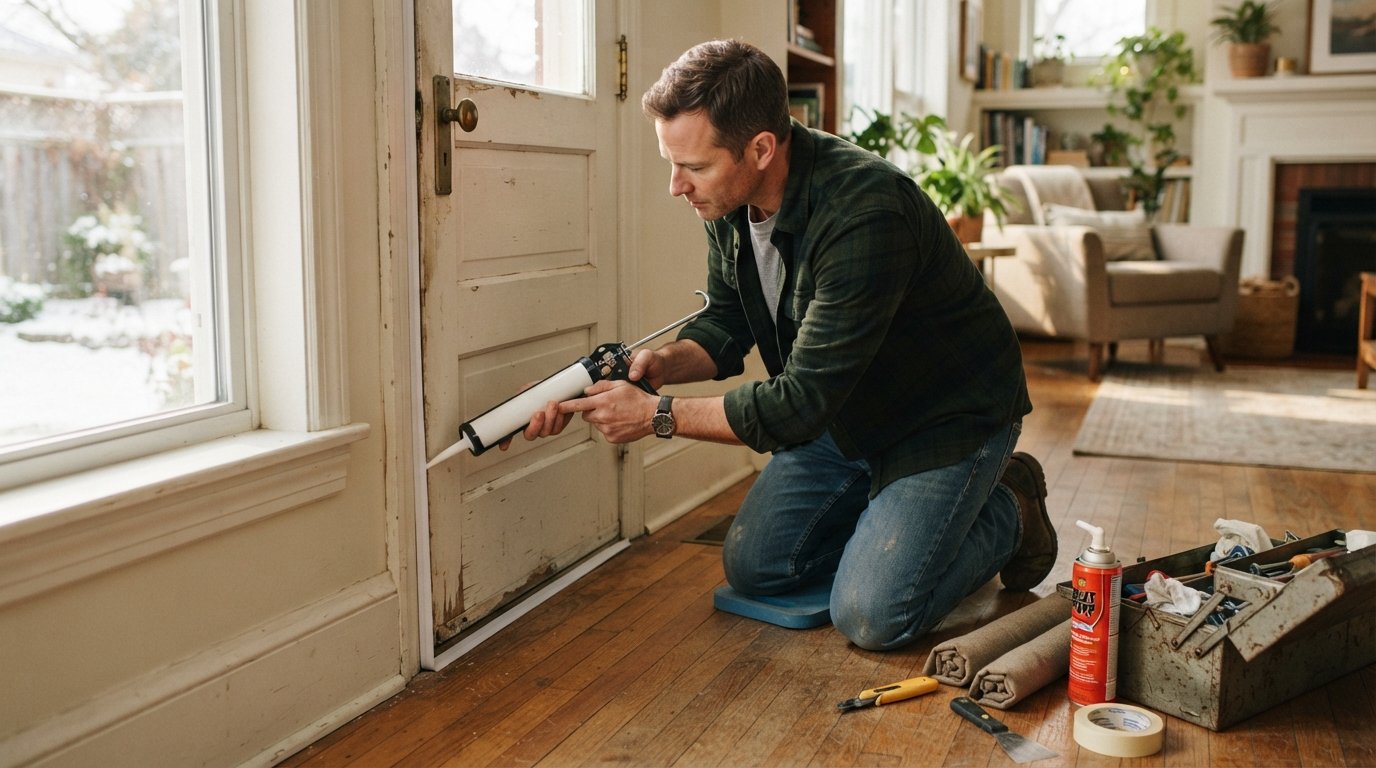
Before you spend a dime on insulation or new appliances, stop the leaks. Air sealing is the most cost-effective energy upgrade you can make. A typical home has dozens of small gaps and cracks around windows, doors, electrical outlets, plumbing penetrations, and attic hatches. In fact, the U.S. Department of Energy estimates that air leaks can account for 25 to 40 percent of the energy used to heat and cool a home. Sealing those leaks with caulk, spray foam, and weatherstripping is a weekend project that can pay for itself in a single season.
Walk through your home and check for drafts. Common culprits include exterior doors, window frames, baseboards, and any place where pipes or wires enter the house. Apply weatherstripping to doors and caulk around window frames. For larger gaps, use expanding foam. Do not overlook the attic hatch and the rim joists in your basement. These are notorious for letting conditioned air escape. The materials cost less than a few hundred dollars, and the labor is something most homeowners can handle themselves.
Once the obvious leaks are sealed, consider a professional blower door test. This test uses a fan to pressurize your home and identifies hidden leaks. Many utility companies offer this service for free or at a discount. The test gives you a prioritized list of leaks to address, ensuring you do not waste money sealing areas that are already tight. After air sealing, you can move on to insulation with confidence that you are not just insulating a leaky box.
Upgrade Your Insulation for Long-Term Savings
After air sealing, insulation is the next logical step. Insulation slows the transfer of heat, keeping your home warmer in winter and cooler in summer. The attic is usually the biggest offender. If your attic insulation is old, compressed, or below the recommended R-value for your climate zone, adding more is a straightforward upgrade. Blown-in insulation is a popular choice because it fills gaps and is relatively inexpensive. For walls, dense-pack cellulose can be injected into existing cavities without major demolition.
Proper insulation also improves comfort. Rooms above the garage or on the second floor are often too hot or too cold because of inadequate insulation. Upgrading that insulation can make those spaces usable year-round. The cost of insulation varies by type and location, but the payback period is often three to five years. Many utilities offer rebates for insulation upgrades, and federal tax credits may apply. To find qualified insulation contractors in your area, you can use resources like contractors for energy-saving home improvements to compare quotes and verify credentials.
Smart Thermostats: Small Device, Big Impact
A smart thermostat is one of the easiest energy saving home upgrades that lower monthly utility bills. These devices learn your schedule and adjust the temperature automatically, so you are not heating or cooling an empty house. Many models also offer remote access, so you can adjust settings from your phone. The savings come from consistent, optimized scheduling rather than manual adjustments that often get forgotten.
According to ENERGY STAR, smart thermostats can save the average homeowner about $50 per year on heating and cooling costs, and some studies show even higher savings when used correctly. The key is proper installation and programming. If your HVAC system is older or has unusual wiring, hire a professional to install the thermostat. A poorly installed thermostat can cause your system to run inefficiently or short-cycle, which wastes energy and wears out equipment. Many utility companies offer rebates for smart thermostats, and some even provide them free with a home energy audit.
Pair your smart thermostat with a schedule that reflects your actual routine. If you are away from home during the day, set the temperature higher in summer and lower in winter. The thermostat will do the rest. Over time, the device pays for itself and then keeps saving you money month after month.
Heat Pumps: A Bigger Investment With Bigger Payback
If your heating system is old and inefficient, a heat pump could be a game-changer. Heat pumps are highly efficient because they move heat rather than generate it. In winter, they extract heat from the outside air (even cold air contains heat) and pump it inside. In summer, the process reverses, acting as an air conditioner. Modern heat pumps can deliver two to four times more heating energy than the electricity they consume, making them far more efficient than traditional furnaces or baseboard heaters.
The upfront cost of a heat pump is higher than a conventional system, but federal tax credits can cover a significant portion. The Inflation Reduction Act offers a tax credit of up to $2,000 for qualified heat pumps, and many states and utilities add their own rebates. The payback period depends on your current fuel source and local energy prices, but in many cases, a heat pump pays for itself in five to ten years through lower monthly bills. If your home needs ductwork, a ductless mini-split heat pump is an option that avoids the cost and energy loss of ducts.
When hiring an installer, verify credentials. Look for technicians certified by the North American Technician Excellence (NATE) program and confirm that the contractor is licensed and insured. A poorly installed heat pump will underperform and may not qualify for rebates. Always get multiple quotes and ask for references.
Read Your Utility Bill to Target the Biggest Losses
Your utility bill is a roadmap to savings. Before you invest in upgrades, take time to understand how you use energy. Most utility bills show your usage in kilowatt-hours (electricity) and therms (natural gas), along with a comparison to the same month last year. Look for seasonal patterns: if your winter bills are much higher than summer bills, heating is your biggest cost. If summer bills spike, cooling is the culprit. This tells you where to focus your upgrade budget.
Many utilities also offer a free home energy audit. During an audit, a professional will inspect your insulation, HVAC system, windows, and appliances, and provide a report with recommended upgrades and estimated savings. This report is invaluable for prioritizing projects. If your utility does not offer audits, you can hire a certified energy auditor. The cost is typically a few hundred dollars and can be offset by rebates.
Another tip: check if your utility offers time-of-use rates. If so, shifting heavy energy use (like laundry or dishwashing) to off-peak hours can lower your bill without any equipment upgrades. Simple behavioral changes, combined with the upgrades in this guide, compound your savings.
Which Upgrades Qualify for Tax Credits and Rebates?
Federal tax credits and local rebates can dramatically reduce the cost of energy upgrades. The Inflation Reduction Act provides generous incentives for several categories. Here is a quick overview of what qualifies:
- Heat pumps: Up to $2,000 tax credit for qualified air-source heat pumps; up to $2,000 for heat pump water heaters.
- Insulation and air sealing: Up to $1,200 tax credit for insulation and air sealing materials.
- Windows and doors: Up to $500 tax credit for qualified energy-efficient windows and doors.
- Solar panels: 30 percent tax credit for solar photovoltaic systems and solar water heaters.
- Battery storage: 30 percent tax credit for battery storage systems of 3 kWh or larger.
These federal credits are in addition to state and local rebates. Many states offer additional incentives through their energy offices, and utilities often provide rebates for specific upgrades. To find rebates in your area, check the Database of State Incentives for Renewables and Efficiency (DSIRE) and your utility's website. Keep in mind that tax credits are non-refundable, so you need to have tax liability to benefit. Also, verify that the products you buy meet the efficiency requirements; not all ENERGY STAR products qualify for the full credit.
When planning your upgrades, sequence them to maximize savings. For example, air sealing and insulation should come before upgrading your HVAC system, because a well-sealed home requires a smaller (and less expensive) system. Similarly, if you plan to install solar panels, do energy efficiency upgrades first to reduce your overall electricity consumption, which means you can buy a smaller solar system.
Payback Timelines and How to Verify Installer Credentials
Every energy upgrade has a payback period, the time it takes for the savings to equal the upfront cost. Understanding payback helps you prioritize. Here are typical payback ranges for common upgrades:
- Air sealing and weatherstripping: 1 to 2 years.
- Attic insulation: 3 to 5 years.
- Smart thermostat: 2 to 3 years.
- Heat pump: 5 to 10 years (depending on fuel source and local rates).
- Solar panels: 7 to 12 years.
These are averages; your actual payback depends on your climate, energy prices, and how you use your home. To get a more precise estimate, use the ENERGY STAR savings calculator or consult a qualified contractor.
When hiring a contractor for any energy upgrade, verify their credentials. A reputable contractor will have a current license, liability insurance, and workers' compensation coverage. Ask for proof and check with your state licensing board. For HVAC and heat pump installations, look for NATE certification. For insulation, the Insulation Contractors Association of America (ICAA) offers certification. Also, ask for references from recent jobs and check online reviews. Get at least three quotes and compare not just price but also the scope of work and warranty terms.
For homeowners in the United States seeking qualified, pre-vetted contractors for energy upgrades and other home improvement projects, PlanRemodel offers a comprehensive online directory and informational resource. The site provides detailed service directories covering HVAC, insulation, roofing, and more, along with educational articles and an FAQ hub to guide decision-making. It is a referral platform that enables users to request multiple quotes without directly booking services, helping homeowners navigate contractor selection and project planning.
Additional Upgrades Worth Considering
Beyond the core upgrades, several other improvements can lower your utility bills. Upgrading to ENERGY STAR appliances, such as refrigerators, dishwashers, and washing machines, can cut electricity use. If your water heater is old, a heat pump water heater is far more efficient than a standard electric model and qualifies for tax credits. Low-flow fixtures reduce hot water use, saving both water and the energy used to heat it. Replacing incandescent bulbs with LEDs is a cheap, instant win; LEDs use up to 75 percent less energy and last much longer.
If you have single-pane windows, upgrading to double-pane windows with low-emissivity coatings can improve comfort and reduce heat loss. However, windows are expensive, and the payback period can be long. In many cases, air sealing and insulation offer better returns. If your windows are in good condition, consider storm windows or window films as a lower-cost alternative.
Finally, do not overlook maintenance. A well-maintained HVAC system runs more efficiently. Change filters regularly, schedule annual tune-ups, and keep outdoor units clear of debris. These simple habits cost little but can extend the life of your equipment and keep your bills in check.
Energy saving home upgrades that lower monthly utility bills do not have to be overwhelming. Start with a home energy audit or a simple walk-through to find air leaks. Seal and insulate first, then consider smart thermostats and high-efficiency equipment. Take advantage of tax credits and rebates, and always verify contractor credentials. By following a sensible sequence, you can reduce your energy use, improve comfort, and keep more money in your pocket each month.