
Deck and Porch Repair Before Summer: A Homeowner's Checklist
Get your deck and porch repair before summer season with our checklist. Call (833)-439-3727 for expert contractor referrals and avoid costly structural surprises.

By Alice Miller
Learn more about Deck or Porch Repair for guides, costs, and what to expect.
Compare Deck or Porch Repair Pros Near You

Enter your ZIP code to compare top-rated local professionals and request free quotes.
Your deck has survived another winter, but that does not mean it is ready for summer. Freeze-thaw cycles, moisture, and UV exposure quietly weaken wood and fasteners, turning a safe gathering space into a liability. A thorough deck and porch repair before summer season is not just about curb appeal; it is about preventing costly structural failures and ensuring your family and guests are safe. This guide walks you through the critical inspections, repairs, and finishing touches that should happen before the first barbecue.
Start with the Structure: Posts, Ledger Boards, and Fasteners
The structural integrity of your deck or porch rests on a few key components that are often out of sight. Before you worry about stain color or loose boards, you need to verify that the deck is firmly attached to the house and that the posts are sound. The ledger board, which connects the deck to your home, is a common failure point. Look for gaps, rusted bolts, or signs of water damage where the board meets the siding. If you see any of these, stop and call a professional: a failing ledger can lead to a catastrophic collapse.
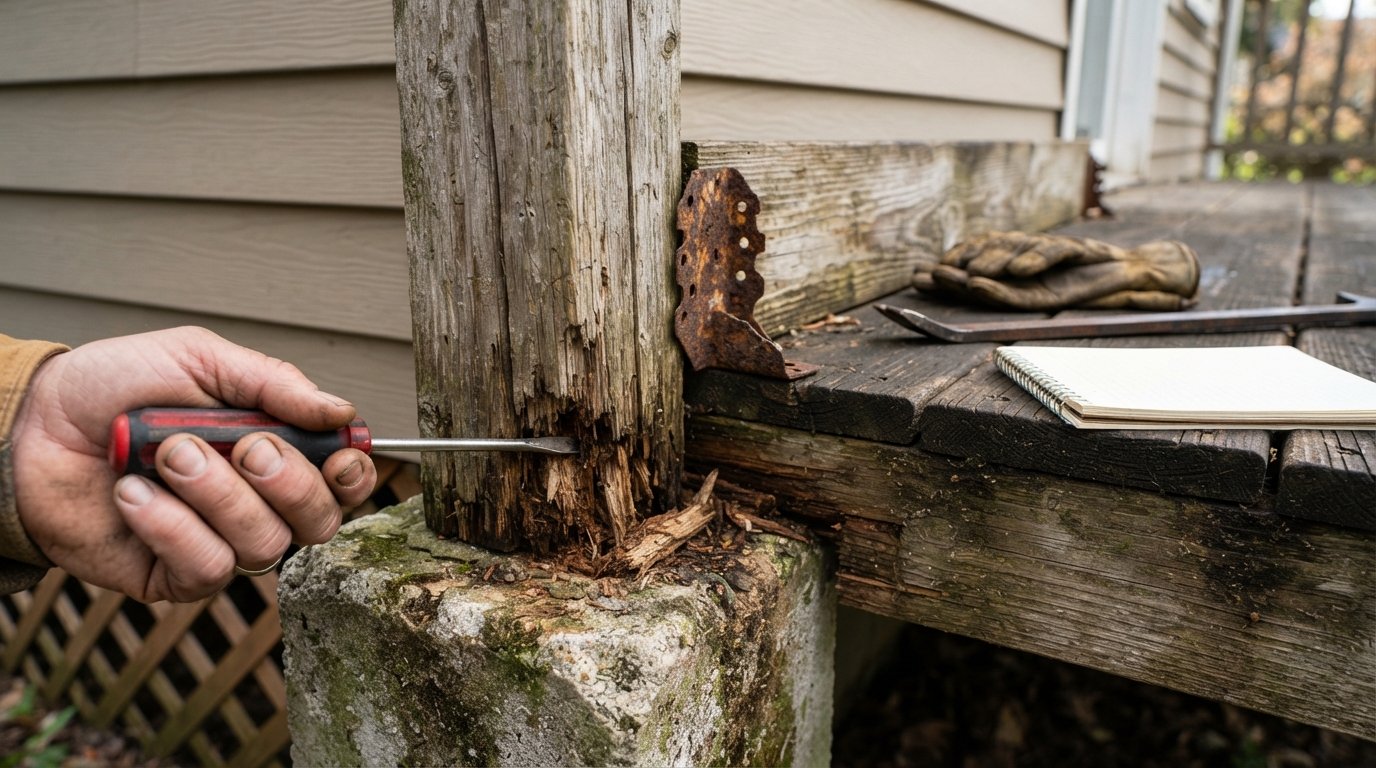
Posts and footings also deserve close attention. Check for rot at the base of each post, especially where wood meets concrete. Probe the wood with a screwdriver; if it sinks in easily, the wood is soft and likely rotten. Fasteners, including joist hangers and screws, should be free of rust and tightly secured. Loose or corroded fasteners can compromise the entire structure. For a comprehensive overview of how to vet professionals for structural work, see our guide on how to compare deck construction contractor quotes.
Inspect for Rot, Loose Railings, and Surface Board Damage
Rot is the silent enemy of any wooden deck or porch. It thrives in areas where moisture lingers: around railings, stair stringers, and where boards butt against each other. Perform a visual inspection and a physical probe. Pay special attention to the ends of boards, which absorb water more readily. If you find soft spots, you will need to replace those boards. For small areas, you can cut out the rotten section and patch with a new piece of wood, but for larger areas, replacing the entire board is safer and more durable.
Railings are a critical safety feature. Push and pull on each railing section; it should not wobble. Check that balusters are secure and that the spacing meets local code (usually less than 4 inches). Loose railings are a common cause of falls, so tighten or replace any loose hardware immediately. Surface boards should be checked for cracks, splinters, and protruding nails. A quick pass with a hammer and a screwdriver can identify many issues. For a deeper dive into hiring specialists for deck repairs, explore our resources on finding qualified contractors through PlanRemodel.
Timing and Preparing for Staining and Sealing
Once structural and surface repairs are complete, you can turn your attention to protection. Staining and sealing are essential to extend the life of your deck and porch, but timing matters. The wood should be clean, dry, and free of old finish. Use a deck cleaner and a stiff brush to remove dirt, mildew, and loose stain. If you need to strip old finish, use a chemical stripper designed for decks. After cleaning, allow the wood to dry for at least 48 hours, or longer if humid.
Check the weather forecast: you need a stretch of 48 to 72 hours with no rain and temperatures between 50 and 80 degrees Fahrenheit. Apply stain or sealant with a brush, roller, or sprayer, following the manufacturer's instructions. A quality sealant will repel water and UV rays, preventing future rot and fading. Remember that a fresh coat of stain not only protects your investment but also enhances the appearance of your outdoor space.
When to Call a Professional: Permits and Engineers
Not all repairs are DIY-friendly. If you discover significant structural damage, such as a failing ledger board, cracked footings, or widespread rot, you should consult a licensed contractor or structural engineer. Many municipalities require permits for deck repairs that involve structural changes, such as replacing posts or adding new footings. Even if a permit is not required, an engineer's inspection can give you peace of mind and ensure your repairs meet safety standards.
Hiring a deck specialist versus a general handyman is another important decision. A specialist has deep experience with deck materials, local codes, and structural requirements. A handyman might be suitable for minor repairs like tightening railings or replacing a few boards, but for anything beyond that, a specialist is the safer choice. Ask for proof of insurance and licensing, and get multiple quotes before committing. For more tips on selecting the right pro, visit Homes.Contractors.
Your Pre-Summer Repair Action Plan
To stay organized, break your deck and porch repair before summer season into a logical sequence. Start with a thorough inspection, then prioritize repairs based on safety and structural impact. Here is a simple checklist to follow:
- Inspect the structure: Check ledger board, posts, footings, and fasteners for damage or looseness.
- Probe for rot: Use a screwdriver to test for soft wood, especially around railings and stair stringers.
- Secure railings and boards: Tighten or replace loose railings, and replace cracked or rotten surface boards.
- Clean and prep for finish: Remove dirt, mildew, and old stain, then let the wood dry completely.
- Apply stain or sealant: Choose a product suitable for your wood type and climate, and apply during dry weather.
Following this plan will help you address issues in the right order, ensuring that cosmetic work does not hide underlying problems. Remember that safety comes first; if you are unsure about any structural aspect, consult a professional.
Hiring the Right Help for Deck and Porch Repairs
If your inspection reveals the need for professional help, take the time to hire a qualified contractor. Start by asking for recommendations from neighbors or searching a reputable directory like Homes.Contractors, which connects homeowners with pre-vetted local pros. Get at least three quotes, and ask each contractor about their experience with deck repairs, licensing, and insurance. A detailed written estimate should outline the scope of work, materials, and timeline.
Be wary of contractors who demand large upfront payments or who cannot provide references. A professional will be transparent about costs and will welcome your questions. Once you hire someone, schedule the work well before summer to avoid the peak-season rush. Early spring is ideal because contractors are less busy and the weather is often suitable for staining and sealing.
By taking proactive steps now, you can enjoy a safe, beautiful deck and porch all summer long. Whether you tackle minor repairs yourself or bring in a specialist, investing time in deck and porch repair before summer season pays off in safety, longevity, and peace of mind.
Learn more about Deck or Porch Repair for guides, costs, and what to expect.
Compare Deck or Porch Repair Pros Near You
Enter your ZIP code to compare top-rated local professionals and request free quotes.