
Wildfire Emergency Preparedness: Protect Your Home
Emergency preparedness for wildfires protecting your home starts with defensible space and hardening. Call 8334393727 for expert contractor help.

By Grace Ingram
Learn more about Home Remodeling for guides, costs, and what to expect.
Compare Home Remodeling Pros Near You

Enter your ZIP code to compare top-rated local professionals and request free quotes.
The smell of smoke on a dry summer afternoon is more than an inconvenience: it is a warning. For millions of homeowners across the American West and increasingly in other regions, wildfire season has grown longer, hotter, and more unpredictable. Emergency preparedness for wildfires protecting your home is no longer a niche concern for rural residents; it is a core responsibility of homeownership. The difference between a house that survives a wildfire and one that does not often comes down to the actions taken long before flames appear on the horizon. This guide walks you through the most effective, research-backed steps you can take to harden your property, plan your evacuation, and dramatically improve your home's odds of coming through a wildfire intact.
Understanding the Wildfire Threat to Your Home
Wildfires do not typically consume homes in a single wall of flame. Most structures ignite from embers, small pieces of burning debris that can travel more than a mile ahead of the fire front. These embers land on roofs, in gutters, on decks, and against siding, smoldering quietly until they find enough fuel to start a fire. Understanding this ember-driven mechanism is the foundation of any serious emergency preparedness for wildfires protecting your home. When you know how homes actually catch fire, you can prioritize the improvements that matter most.
The second major threat is radiant heat. Even if flames never touch your walls, intense heat can shatter windows, melt vinyl siding, and ignite curtains or furniture inside. The third is direct flame contact, which usually happens when vegetation, fencing, or outbuildings carry fire right up to the structure. A comprehensive protection plan addresses all three pathways. The good news is that many of the most impactful measures are affordable and can be completed over a single weekend.
It also helps to understand your local risk profile. Fire behavior varies dramatically based on topography, wind patterns, and the type of vegetation surrounding your property. Homes on slopes, in canyons, or near chaparral and pine forests face different challenges than homes on flat lots with irrigated lawns. Contacting your local fire department or a certified wildfire mitigation specialist can give you a site-specific assessment that turns generic advice into a targeted action plan.
Creating Defensible Space Around Your Property
Defensible space is the buffer you create between your home and the grass, trees, shrubs, and other vegetation that can feed a wildfire. Experts generally divide this buffer into zones, each with its own maintenance rules. The goal is not to strip your landscape bare but to break the continuous chain of fuel that allows fire to travel from wildland to structure. This is one of the most proven elements of emergency preparedness for wildfires protecting your home, and it is something you can start today.
In the first zone, extending roughly five feet from your foundation, use only noncombustible materials. Replace wood mulch with gravel or stone, remove any flammable plants, and keep this area free of leaves, pine needles, and debris. In the second zone, from five to thirty feet, keep lawns mowed, remove dead vegetation, and space out trees and shrubs so fire cannot jump easily between them. In the third zone, from thirty to one hundred feet or more, thin dense vegetation, remove ladder fuels that carry fire from the ground into tree canopies, and maintain horizontal spacing between plantings.
A practical way to think about defensible space is to work from the house outward. Start with the five-foot zone, which delivers the highest return on effort, then expand your clearing as time and budget allow. Here are the core tasks that make the biggest difference:
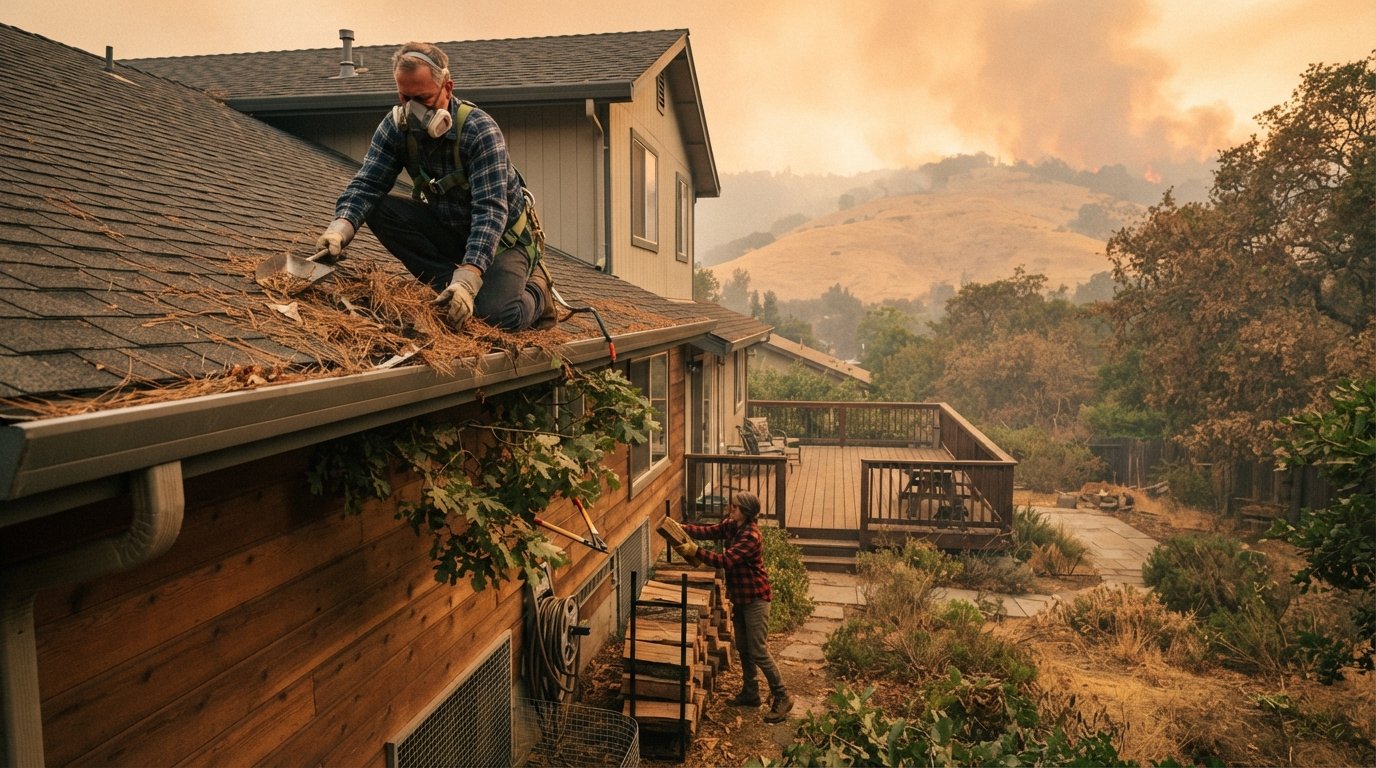
- Clear roofs and gutters of pine needles, leaves, and twigs at least twice during fire season.
- Remove any tree limbs within ten feet of your chimney and keep branches at least ten feet from other trees.
- Move firewood piles, propane tanks, and gas cans at least thirty feet from the structure.
- Replace flammable bark mulch within five feet of the foundation with gravel or stone.
After completing these tasks, walk your property monthly during fire season to catch new growth and debris. Defensible space is not a one-time project; it is an ongoing habit. Many homeowners find it helpful to hire a landscaping or vegetation management contractor to handle the heavy thinning work, especially on larger lots. If you need help finding a qualified local professional for this or any other hardening project, you can use a service like FreeQuotes.Contractors to request multiple free quotes from pre-vetted contractors in your area.
Hardening Your Home Against Embers and Heat
Once your landscape is under control, the next layer of protection is the building itself. Home hardening focuses on the materials and details that determine whether embers find a vulnerable entry point. Roofs are the single most important surface. Class A roofing assemblies, which include asphalt shingles, metal, tile, and slate, offer the highest resistance to fire. If your roof is wood shake or shingle, replacing it is one of the most valuable investments you can make in wildfire safety.
Vents are another critical vulnerability. Standard soffit, gable, and crawlspace vents can pull embers into your attic or underfloor area. Installing ember-resistant vents with fine metal mesh, or retrofitting existing vents with quarter-inch or smaller screening, closes this gap at modest cost. Windows should be dual-pane with tempered glass on at least the most exposed sides of the house, and all window screens should be metal rather than fiberglass. Decks deserve special attention: remove anything stored underneath, enclose the underside with noncombustible skirting if possible, and consider replacing wood decking with composite or metal products.
Siding and trim also matter. Fiber cement, stucco, and masonry offer strong resistance, while wood siding and vinyl can fail under intense heat. Gaps around doors, garage doors, and eaves should be sealed with fire-resistant caulk or weatherstripping. Even small openings can admit embers that ignite insulation or stored materials. If you are planning a larger retrofit, such as replacing a roof or re-siding your home, coordinate the work so that multiple hardening improvements happen at once, which reduces labor costs and disruption.
Emergency Preparedness for Wildfires: Protecting Your Home with a Solid Plan
Physical hardening buys time, but a written emergency plan saves lives. Every household in a wildfire-prone area should have a clear, practiced evacuation strategy. The plan should identify at least two routes out of your neighborhood, a meeting location, and a communication method if cell service fails. Keep a go-bag in each vehicle with water, nonperishable food, medications, phone chargers, important documents, and N95 masks for smoke. Pets need their own supplies, including carriers, leashes, food, and vaccination records.
Inside the home, prepare for the possibility that you will not be there when fire arrives. Close all windows and doors, leave interior doors open to slow fire spread, and shut off gas at the meter if authorities advise it. Move flammable furniture and cushions away from windows and sliding doors. If you have time before evacuating, place a ladder against the house for firefighter access and leave exterior lights on so your home is visible in heavy smoke.
Insurance and documentation are part of preparedness too. Photograph or video every room, closet, and outbuilding, and store those records in the cloud. Review your homeowners policy annually to confirm that your dwelling coverage reflects current rebuild costs, which have risen sharply in many regions. Keep digital copies of your policy, deed, and identification in your go-bag and in a secure online folder. When you hire contractors for hardening or defensible space work, take the same care you would with any home project. Our guide on how to avoid contractor scams and protect your home explains the red flags to watch for and the verification steps that keep your money and property safe.
Maintaining Your Wildfire Defense Year-Round
Wildfire preparedness is not a seasonal sprint; it is a year-round cycle. Set a recurring calendar reminder to inspect your roof, gutters, vents, and defensible space at the start of spring and again in late summer. After any windstorm, clear fallen branches and debris immediately. If you live in an area with a formal wildfire risk rating or homeowner insurance requirements, document your mitigation work with photos and receipts, because some insurers offer discounts for verified hardening measures.
Community-level action amplifies individual effort. Join or form a local Firewise community, attend neighborhood preparedness meetings, and coordinate vegetation clearing with adjacent property owners. Fire does not respect property lines, so a neighbor's overgrown lot can undermine your own defensible space. Working together also strengthens your collective voice when advocating for better local emergency planning, evacuation routes, and warning systems.
Finally, revisit your plan after every near miss or evacuation drill. What worked? What caused delays? Did everyone know where the go-bags were? Small refinements each year compound into a level of readiness that feels automatic when it matters most. Emergency preparedness for wildfires protecting your home is ultimately about control: you cannot stop the fire, but you can control how much fuel it finds, how easily embers enter, and how quickly your family gets to safety.
Start with the five-foot zone around your foundation this weekend. Schedule a roof and gutter inspection. Confirm your evacuation routes and refresh your go-bags. Each of these steps is simple on its own, but together they form a shield that gives your home a fighting chance when the smoke appears on the ridge.