
Residential Heating Replacement Signs and Contractor Selection
Spot the signs your heating system needs replacement and learn how to choose a qualified contractor. Call (833)-439-3727 for expert guidance today.

Learn more about Heating System Installation or Replacement for guides, costs, and what to expect.
Compare Heating System Installation or Replacement Pros Near You

Enter your ZIP code to compare top-rated local professionals and request free quotes.
A heating system that quits in the middle of a cold snap turns a comfortable home into an urgent problem. But the real challenge often starts before the system fails: knowing whether to repair or replace, and then finding a contractor you can trust with a major purchase. This guide walks you through the warning signs that a residential heating replacement is unavoidable, how to compare bids and load calculations, what to ask about equipment and warranties, the permits and inspections you should expect, and the maintenance that protects your investment for years to come. Along the way, we will show how Homes.Contractors helps homeowners connect with pre-vetted local HVAC professionals and gather multiple quotes, so you can make a confident, informed decision.
Warning Signs Your Heating System Is Beyond Repair
Heating systems rarely fail without warning. Most give plenty of hints that they are nearing the end of their useful life, but those hints are easy to ignore when the system still produces some heat. Catching the signs early gives you time to plan a residential heating replacement instead of making a panicked decision in the middle of winter.
Start by looking at age and repair history. A conventional furnace typically lasts 15 to 20 years, while a boiler may last 20 to 30 years with proper maintenance. If your system is in that range and has needed two or more repairs in the past two years, replacement is usually more economical than another fix. Rising energy bills with no change in usage are another clue: as heat exchangers crack or burners degrade, efficiency drops and your utility costs climb.
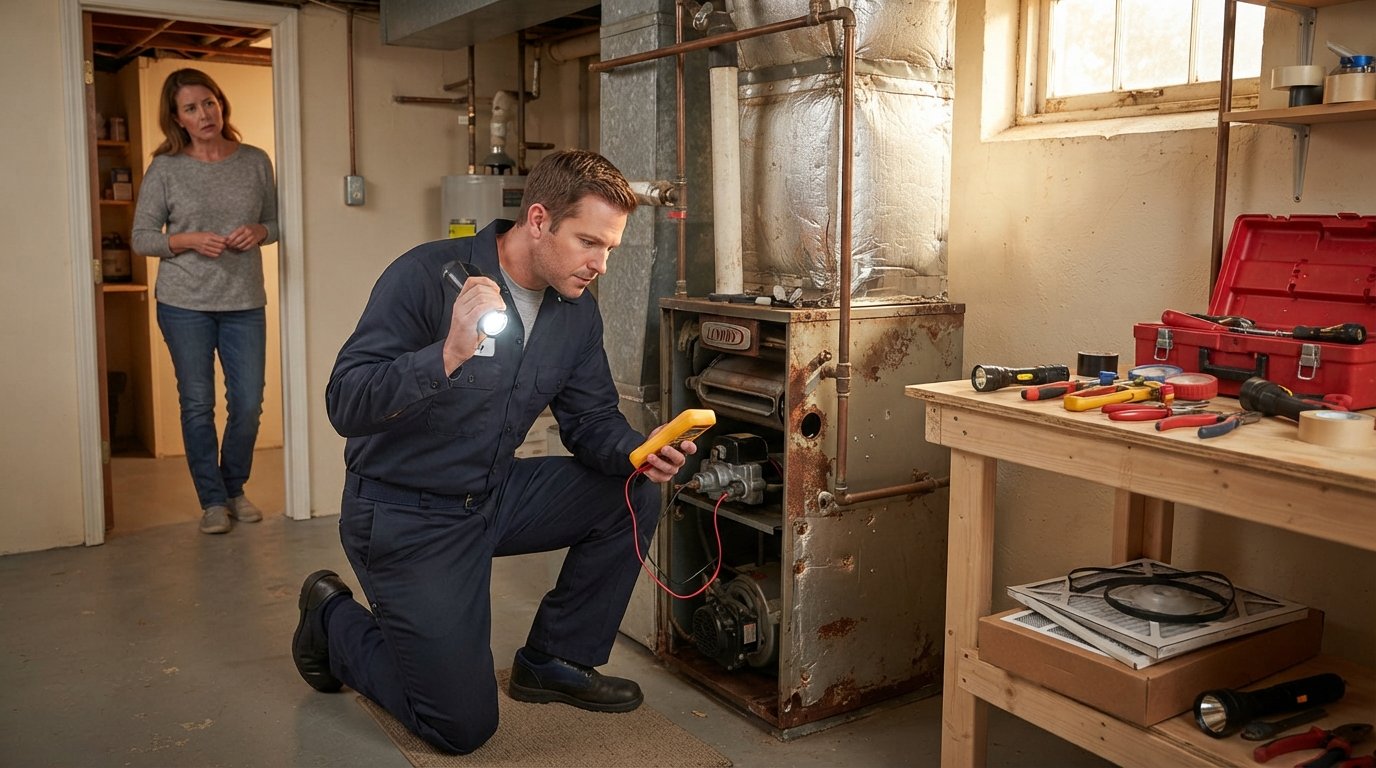
Then pay attention to comfort and safety. Cold spots, uneven heating, strange noises, and frequent cycling all point to a system that is struggling. So do visible signs like rust, soot, or a yellow burner flame instead of a crisp blue one. Any smell of gas or combustion byproducts warrants an immediate call to a professional, because carbon monoxide is a serious health risk. The table below summarizes the most common red flags and what they usually mean.
- Age over 15 years with rising repair costs: replacement is often the smarter financial move.
- Uneven heating or cold rooms: could indicate duct problems, but on an old system it often signals failing components.
- Yellow flame or soot: incomplete combustion, a safety concern that requires immediate professional attention.
- Loud bangs, rattles, or squeals: mechanical wear that may not be worth repairing.
- Frequent cycling or short run times: the system cannot keep up, or a major component is failing.
If you notice several of these signs at once, start planning now. A planned replacement, even in the off-season, is almost always less stressful and less expensive than an emergency swap during a cold snap. That planning window also gives you time to compare contractors carefully rather than accepting the first available bid.
How to Compare Heating Replacement Bids and Load Calculations
Once you decide to replace, the quality of your contractor selection will determine whether the new system performs as promised. The first step is to gather multiple written bids, ideally three or more, so you can compare scope, equipment, and pricing on equal terms. Homes.Contractors makes this easier by letting you submit one project request and receive quotes from qualified local professionals, saving you hours of phone calls and guesswork.
When you review bids, look for a room-by-room load calculation, often called a Manual J calculation. This is the engineering step that determines the right system size for your home based on square footage, insulation, windows, and local climate. A contractor who simply matches the old unit's size or guesses based on square footage is cutting corners. An oversized system short-cycles, wastes energy, and wears out faster, while an undersized one never keeps up. Ask each bidder to show the load calculation and explain the assumptions behind it.
Compare the bids line by line. A low headline price can hide missing items like duct sealing, permits, or a new thermostat. Here is a simple framework for evaluating each proposal:
- Scope of work: Does it include removal and disposal of the old unit, ductwork inspection, and any needed repairs?
- Equipment specifications: Are model numbers, efficiency ratings, and warranties listed clearly?
- Load calculation and sizing: Was a proper Manual J performed, and does the bid reflect it?
- Permits and inspections: Are permit fees included, and who schedules the inspection?
- Payment terms and timeline: Is the deposit reasonable, and are start and completion dates specified?
If you also need to replace a well pump or water system at the same time, the same comparison discipline applies. Our guide on well pump replacement signs costs and contractor selection walks through parallel steps for evaluating bids and vetting pros, which can help you coordinate multiple projects without getting overwhelmed.
Questions to Ask About Equipment Brands and Warranties
Equipment choice matters, but installation quality matters more. A premium furnace installed poorly will underperform a mid-range unit installed correctly. Still, you want to understand what you are buying and how it will be supported. Ask each contractor which brands they carry, why they recommend them, and whether parts are readily available locally. A contractor who stocks common brands can often complete repairs faster.
Warranties deserve close attention because they vary widely. Most manufacturers offer a limited parts warranty, often five to ten years, while labor warranties come from the contractor and may range from one to five years. Ask for the warranty terms in writing and confirm whether the warranty is voided if maintenance is not performed annually. Also ask whether the contractor offers a written satisfaction guarantee or a workmanship warranty that covers installation errors.
Efficiency ratings are another key comparison point. Look for the AFUE (Annual Fuel Utilization Efficiency) rating on furnaces and boilers. Higher efficiency usually costs more upfront but can lower energy bills, especially in cold climates. Ask the contractor to estimate annual operating costs for the models they propose, and check whether any local utility rebates or tax credits apply. A good contractor will help you weigh upfront cost against long-term savings without pushing the most expensive option by default.
Permits and Inspections Required for Heating Replacement
Heating replacement is regulated work, and permits are not optional. Most jurisdictions require a mechanical permit for installing or replacing a furnace, boiler, or heat pump, and the work must be inspected by a local code official. Permits protect you: they confirm the installation meets safety and efficiency standards, and they create a record that can matter when you sell your home or file an insurance claim.
Ask each contractor whether the bid includes permit fees and who is responsible for scheduling the inspection. A reputable contractor will pull the permit in their name and coordinate the inspection as part of the job. Be wary of any bid that offers to skip the permit to save money. Unpermitted work can void warranties, complicate insurance claims, and create liability if something goes wrong later.
Inspection requirements vary by location, but common checkpoints include proper venting, gas line connections, electrical connections, and clearance from combustible materials. Some areas also require a final inspection after the system is running. Ask the contractor to provide the inspection report once the work is complete, and keep it with your home records along with the warranty documents and maintenance receipts.
Post-Installation Maintenance to Protect Your Investment
A new heating system is a significant investment, and routine maintenance is what keeps it efficient and safe. Schedule professional service annually, ideally in early fall before the heating season begins. During a tune-up, a technician should clean components, check combustion, test safety controls, and verify airflow. Regular maintenance also keeps most manufacturer warranties valid.
Homeowners can handle simple tasks between professional visits. Replace or clean filters every one to three months depending on the type and your home's dust levels. Keep vents and returns clear of furniture and rugs. Listen for new noises and note any changes in performance so you can describe them accurately when you call for service. If you notice a gas smell or suspect a carbon monoxide leak, leave the home and call emergency services or your utility provider immediately.
Finally, keep a simple maintenance log. Record the date of each service, the technician's name, and any parts replaced. That log helps you spot recurring issues, supports warranty claims, and gives future buyers confidence in the home's care. If you ever need to find a new contractor for service or a future replacement, a directory like PlanRemodel can help you locate pre-vetted professionals in your area and compare options without starting from scratch.
Making a Confident Contractor Selection
Contractor selection is where residential heating replacement projects succeed or fail. Verify that each bidder is licensed and insured, and ask for proof before signing anything. Check references from recent jobs, read online reviews, and confirm the business has a physical local presence. Get everything in writing, including the scope, equipment model numbers, warranty terms, payment schedule, and completion date. Avoid large upfront deposits, and never pay in full before the job is inspected and running to your satisfaction.
Homes.Contractors is built for exactly this moment. Instead of calling contractors one by one, you can submit a single request, receive multiple free quotes from pre-vetted local pros, and compare them side by side. That competition gives you leverage on price and helps you spot outliers, whether a bid is suspiciously low or unnecessarily high. With the warning signs, bid comparison framework, equipment questions, permit checks, and maintenance habits covered here, you have a complete roadmap for replacing your heating system with confidence and protecting that investment for years to come.