
Preventative Maintenance for Septic Systems: Homeowner Guide
Preventative maintenance for septic systems saves homeowners thousands. Call 8334393727 to find local septic pros and protect your investment.

By Maya Griffin
Learn more about Septic System Repair, Maintenance or Inspection for guides, costs, and what to expect.
Compare Septic System Repair, Maintenance or Inspection Pros Near You

Enter your ZIP code to compare top-rated local professionals and request free quotes.
A septic system is one of the most expensive components of a home, yet it is also one of the most neglected. Unlike a furnace or a water heater, a septic system operates silently underground, giving homeowners no daily feedback that it needs attention. That silence is deceptive. The average septic system replacement costs between $3,000 and $10,000 or more depending on soil conditions, tank size, and local regulations, while routine preventative maintenance rarely exceeds a few hundred dollars annually. The gap between those two numbers is the entire argument for a proactive maintenance plan.
This homeowner guide breaks down exactly what preventative maintenance for septic systems looks like in practice, from monthly habits to multi-year service intervals. It also explains how a well-documented maintenance record can protect your property value, strengthen your position during a home sale, and help you avoid the emergency calls that always seem to arrive on a holiday weekend. Whether you just bought your first home with a septic tank or you have lived on a rural property for decades, the fundamentals here apply to almost every system type.
How a Septic System Works and Why Maintenance Matters
A conventional septic system has two main parts: a tank and a drain field (also called a leach field). Wastewater flows from the house into the tank, where solids settle to the bottom as sludge and lighter materials float to the top as scum. The middle layer, clarified effluent, exits the tank and enters perforated pipes buried in the drain field. Soil microbes then treat the effluent as it percolates downward. The system relies on gravity, bacteria, and healthy soil, and all three can be disrupted by neglect.
When the tank fills with too much sludge, solids escape into the drain field and clog the soil pores. Once that happens, no amount of pumping will fully restore the field. Effluent backs up into the house, sewage surfaces in the yard, and the repair bill shifts from a few hundred dollars to full system replacement. This is why preventative maintenance is not about convenience. It is about protecting the single most expensive underground asset on your property.
The frequency of required maintenance depends on tank size, household size, and what goes down the drain. A family of four with a 1,000-gallon tank typically needs pumping every three to five years, while a two-person household with a 1,500-gallon tank might stretch to five or seven years. These are estimates, not rules. The only way to know your actual interval is to have the tank inspected and measured.
Monthly Habits That Protect Your System
The most effective preventative maintenance happens daily and costs nothing. What enters the tank determines how fast it fills and how well bacteria can process waste. Homeowners who treat the drain like a trash can pay for it later through more frequent pumping and shortened drain field life.
Here are the habits that matter most month to month:
- Never flush wipes, paper towels, feminine products, cat litter, or medication, even if the package says flushable.
- Scrape grease and food scraps into the trash rather than the sink, and avoid pouring cooking oil down the drain.
- Spread laundry loads across the week instead of doing five loads in one day, which can shock the system with too much water at once.
- Use a lint trap on your washing machine discharge hose to keep synthetic fibers out of the tank.
- Skip antibacterial soaps and harsh drain cleaners, which kill the beneficial bacteria that break down waste.
Water conservation is the other half of the equation. Every gallon that enters the tank must eventually leave through the drain field. Low-flow showerheads, dual-flush toilets, and prompt repair of leaking faucets reduce hydraulic load and extend the life of the entire system. A single running toilet can send hundreds of gallons per day into the tank, which is enough to overwhelm a drain field over time.
It also helps to know where your tank and drain field are located. Keep a sketch of the layout with your home records. Never park vehicles, plant trees, or build structures over the drain field, and direct downspouts and sump pumps away from the area so stormwater does not saturate the soil.
Scheduling Professional Inspections and Pumping
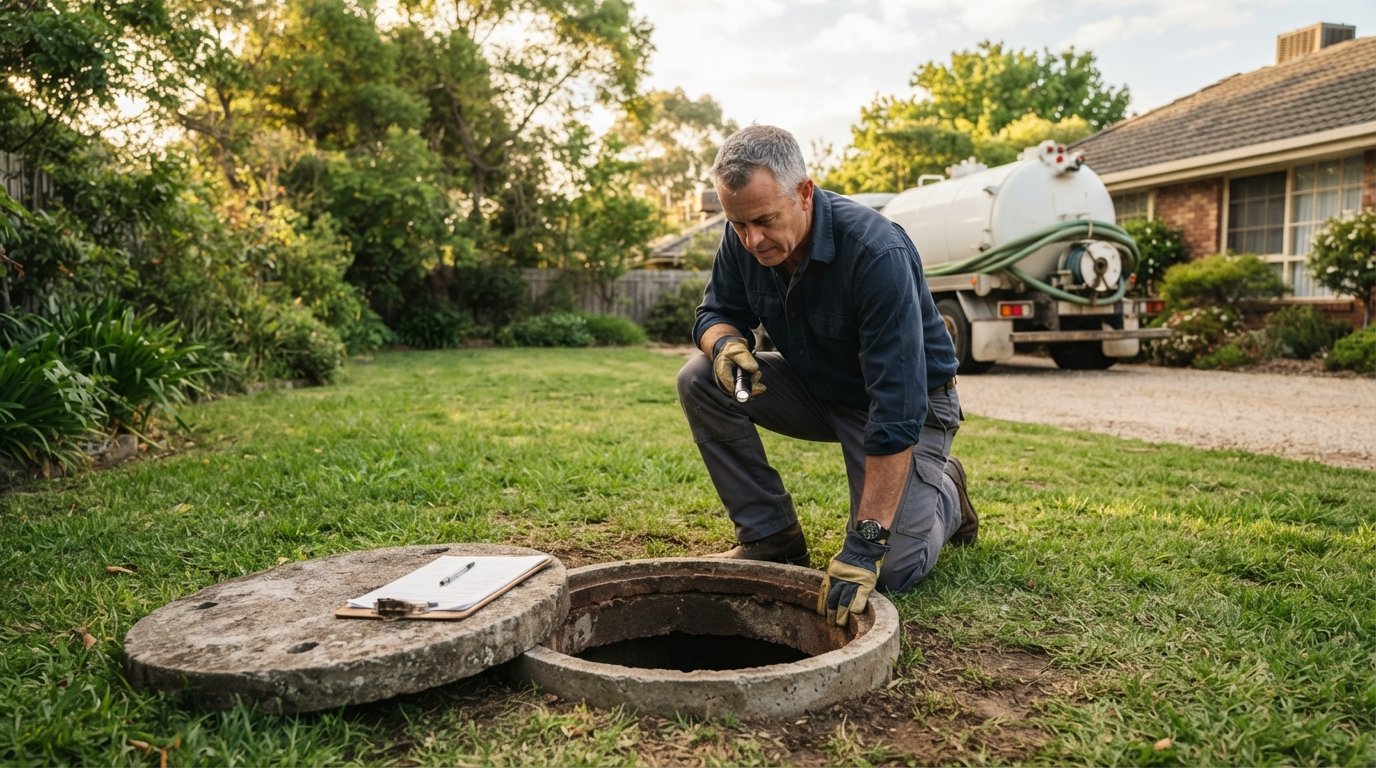
DIY habits slow the accumulation of solids, but they cannot replace professional service. A licensed septic contractor inspects the tank, measures sludge and scum levels, checks baffles and inlet tees, and confirms the drain field is accepting effluent properly. Most experts recommend a professional inspection every one to three years and pumping every three to five years, adjusted for household size and usage.
A typical inspection covers several checkpoints. The contractor will:
- Open the tank and measure the depth of sludge and scum layers.
- Inspect baffles, risers, and tank walls for cracks or deterioration.
- Check the outlet and distribution box for blockages or uneven flow.
- Evaluate the drain field for signs of surfacing effluent or soggy ground.
- Review your maintenance history and recommend a pumping date.
If you do not have risers installed to grade, consider adding them. Risers make future inspections and pumping faster and cheaper because contractors do not have to excavate the tank lid each time. The upfront cost is modest and is usually recovered within one or two service visits.
Finding a qualified septic contractor follows the same logic as hiring any home service professional. Verify licensing, ask for references, confirm liability insurance, and get written estimates from more than one provider. Platforms like USremodel connect homeowners with vetted contractors across the country, which is useful when you need septic service alongside other home repair or renovation work. Homes.Contractors follows a similar referral model, letting you request multiple quotes from local professionals so you can compare pricing and scope before committing.
Warning Signs You Should Never Ignore
Septic problems rarely appear without warning. The system usually gives several signals before it fails completely, and catching them early is the difference between a routine pump-out and a drain field replacement. Slow drains throughout the house (not just one fixture) often indicate the tank is nearing capacity or the outlet is partially blocked. Gurgling sounds from toilets and drains after flushing point to venting or flow issues.
Sewage odors inside the home or near the tank are a clear red flag. So are wet, spongy patches in the yard above the drain field, especially during dry weather. If grass over the drain field grows noticeably greener and faster than the rest of the lawn, that can also signal effluent rising toward the surface. Any of these symptoms warrants a call to a septic professional within days, not weeks.
Backups into the lowest drains in the house are the final stage before a full failure. If you see this, stop using water immediately, avoid chemical drain cleaners, and schedule an emergency pump-out. Continuing to run water into a backed-up system can push solids into the drain field and cause permanent damage.
Seasonal Maintenance Checklist for Homeowners
Septic systems respond to weather, and each season brings specific tasks. Following a simple calendar keeps maintenance from becoming an afterthought.
Spring: After snowmelt or heavy rains, walk the drain field and check for soggy spots. Inspect the tank lid and risers for cracks. Schedule your inspection or pumping if it is due.
Summer: Watch for unusually lush grass over the drain field. Keep vehicles and heavy equipment off the area. If you are planning landscaping, confirm the drain field boundaries before digging.
Fall: Rake leaves away from the tank and drain field so the soil can breathe. Winterize if you live in a cold climate by adding insulation over the tank lid or risers. Avoid dumping large volumes of water from gutter cleaning into the system.
Winter: Keep snow cleared from the tank lid area, but do not compact it. If the ground freezes deeply and you notice slow drains, call a professional before the system backs up.
Record every service visit, including the date, contractor name, sludge measurements, and any recommendations. This log becomes valuable documentation when you sell your home, since buyers and inspectors ask about septic history. It also helps new service providers understand your system quickly.
What Preventative Maintenance Costs and What It Saves
Routine septic maintenance is inexpensive relative to the alternatives. A standard pump-out costs roughly $300 to $600 depending on tank size and location, while an inspection typically runs $100 to $300. Adding risers may cost a few hundred dollars once. Compare that to drain field replacement at $5,000 to $20,000 or a full system replacement that can exceed $30,000 in some regions.
Regular maintenance also protects your home's value. A septic inspection is a standard part of rural and suburban real estate transactions, and a system with documented care is far less likely to derail a sale. Buyers are increasingly cautious about septic systems, and a clean maintenance record signals that the property has been responsibly managed. That documentation can also help with certain insurance claims and warranty disputes.
Beyond money, there is the health and environmental factor. Failing septic systems can contaminate groundwater and nearby wells, which is a serious concern for rural homeowners. Keeping the system healthy protects your drinking water and your neighbors' water supply.
If you are unsure where to start, a practical approach is to call a licensed septic contractor for a baseline inspection, learn your tank size and current sludge levels, and build a pumping schedule from there. Combine that with the monthly habits above, and you will get decades of service from a system that most homeowners ignore until it fails. For homeowners managing multiple projects, from septic service to bathroom remodeling or roofing repairs, Homes.Contractors and similar directories can help you find qualified local professionals and compare quotes without pressure.
Preventative maintenance for septic systems is not complicated, but it does require consistency. The homeowners who avoid five-figure repair bills are almost never the ones who spend the most money. They are the ones who flush less, spread out laundry, schedule inspections on time, and pay attention when the yard or the drains start sending signals. Put the checklist on your calendar, keep your records in one place, and your septic system will quietly do its job for years.