
HVAC Contractors for Seasonal Maintenance and Repairs
Keep your home comfortable year-round with professional HVAC contractors. Learn how seasonal maintenance and timely repairs save money, prevent breakdowns, and ensure safety.
By Alexia Mabel
Learn more about Central Air Conditioning Repair or Maintenance for guides, costs, and what to expect.
Compare Central Air Conditioning Repair or Maintenance Pros Near You

Enter your ZIP code to compare top-rated local professionals and request free quotes.
Your heating and cooling system works hard all year to keep your home comfortable. But just like your car, it needs regular check-ups to run efficiently and avoid unexpected breakdowns. Finding the right HVAC contractor for seasonal maintenance and repairs is the key to a comfortable, safe, and cost-effective home.
Don’t wait for a breakdown. Schedule your seasonal HVAC tune-up today by calling 📞833-439-3727 or visiting Schedule Maintenance.
Understanding HVAC Contractors for Seasonal Maintenance and Repairs
HVAC stands for Heating, Ventilation, and Air Conditioning. An HVAC contractor is a trained professional who installs, maintains, and repairs these complex systems. When we talk about seasonal services, we mean the specific tasks needed to prepare your system for the upcoming weather extremes—cooling in the spring and heating in the fall.
Seasonal maintenance is a proactive visit, while repairs are reactive fixes for problems that have already occurred. A reliable contractor offers both, ensuring your system is tuned up to prevent issues and ready to step in quickly if something goes wrong.
The Two-Part Approach of a Quality Contractor
A great HVAC service provider doesn’t just fix broken parts. They follow a two-part approach: planned seasonal maintenance to minimize problems, and expert repairs when necessary. This comprehensive care is what keeps your air clean, your bills manageable, and your home consistently comfortable.
Why It Matters for Homeowners
Ignoring your HVAC system can lead to more than just an uncomfortable day. A poorly maintained system works much harder, leading to skyrocketing energy bills. It’s also more likely to fail at the worst possible time, like during a summer heatwave or a winter freeze, leaving you facing an emergency repair bill.
Regular care from a professional extends the life of your expensive equipment. More importantly, it ensures safety. Furnaces can develop cracked heat exchangers, leading to dangerous carbon monoxide leaks, and air conditioners with electrical issues can be a fire risk. A contractor’s inspection catches these hazards early. For more on choosing trustworthy professionals, see our guide on what makes a home contractor trustworthy.
Ready for peace of mind? Don’t wait for a breakdown. Schedule your seasonal HVAC tune-up today to speak with a comfort specialist.
Common Issues and Their Causes
Many HVAC problems start small and are easily preventable. Understanding common issues helps you see the value in maintenance.
One major culprit is dirty filters and coils. When airflow is restricted, the system strains, freezes up, or overheats. Another frequent issue is worn electrical components, like capacitors and contactors, which can prevent the system from starting or cause it to short cycle. Refrigerant leaks in AC units reduce cooling power and damage the compressor.
- Reduced Airflow: Caused by clogged filters, blocked vents, or a failing blower motor.
- Strange Noises: Squealing, grinding, or banging often points to belt, bearing, or motor issues.
- Uneven Heating/Cooling: Can be due to ductwork leaks, poor insulation, or an undersized unit.
- Constant Cycling: Short cycling (frequent on/off) strains the system and is often thermostat or sensor-related.
- High Humidity in Summer: Usually means the AC isn’t running long enough to dehumidify properly.
How Professionals Fix the Problem
A certified HVAC technician follows a systematic approach to diagnose and resolve issues. They start by listening to your description of the problem and then perform a thorough inspection of the entire system.
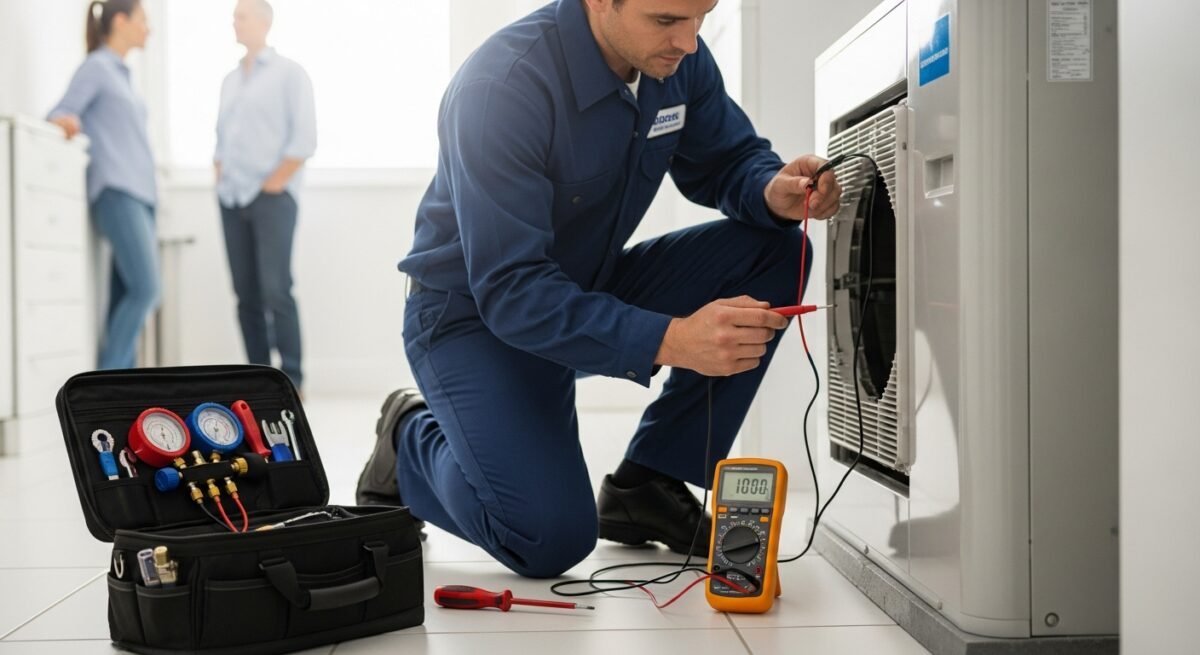
For repairs, they use specialized tools like multimeters, manifold gauges, and leak detectors to pinpoint the exact cause. The repair process is clean and respectful of your home, with the technician explaining the issue, the needed fix, and your options before any work begins. For maintenance, they follow a detailed checklist specific to the season.
- Inspection & Diagnosis: Checking thermostat, electrical components, refrigerant levels, airflow, and system controls.
- Clear Explanation & Quote: Providing a straightforward estimate for the necessary repairs or maintenance plan.
- Professional Service: Performing the work using proper tools and replacement parts.
- System Testing: Ensuring everything operates correctly and efficiently before leaving.
Signs You Should Not Ignore
Your HVAC system often sends clear signals when it needs attention. Acting quickly on these signs can prevent a minor issue from becoming a major, costly repair.
If you notice a sudden spike in your energy bill with no change in usage, your system is likely losing efficiency. Any unusual smells, like burning (electrical) or musty odors (mold), require immediate investigation. Similarly, if you see ice forming on the refrigerant lines or the indoor coil, turn the system off and call a professional.
Don’t wait for a breakdown. Schedule your seasonal HVAC tune-up today by calling 📞833-439-3727 or visiting Schedule Maintenance.
- Weak or No Airflow: From your vents, indicating a blockage or blower failure.
- Unusual Sounds: Such as grinding, screeching, or loud rattling.
- Frequent Cycling: The system turning on and off more than usual.
- Water Leaks or Pooling: Around the indoor furnace or air handler.
- Thermostat Issues: The room temperature doesn’t match the thermostat setting.
Cost Factors and What Affects Pricing
Understanding HVAC service pricing helps you budget and avoid surprises. The cost varies based on the type of service, the complexity of the repair, and the parts required.
A seasonal maintenance tune-up is typically a flat-rate, preventative investment. Repair costs depend on the faulty component—replacing a capacitor is less expensive than replacing a compressor or a heat exchanger. The age and accessibility of your system also play a role; older units or systems in tight attics may require more labor. Always choose a contractor who provides transparent, upfront quotes. For a broader look at working with professionals, learn about contractor availability and scheduling.
How To Choose the Right Professional or Service
Selecting the right HVAC contractor is crucial. Look for proper licensing and insurance to protect your home and your investment. Strong local reviews and references speak volumes about reliability and quality of work.
A trustworthy contractor will offer a detailed written estimate, never pressure you into unnecessary services, and have technicians who are clean, polite, and willing to answer your questions. They should also discuss maintenance plans that can save you money over time. It’s wise to get multiple quotes to compare, but remember, the lowest price isn’t always the best value if it compromises quality.
Long-Term Benefits for Your Home
Partnering with a skilled HVAC contractor for seasonal care pays off for years. Your system will use less energy, lowering your monthly bills. It will also last significantly longer, delaying the major expense of a full replacement.
Beyond savings, you gain consistent comfort with balanced temperatures and improved indoor air quality. Most importantly, you ensure the safety of your family by preventing carbon monoxide and electrical hazards. This proactive care is a small investment that protects your home’s value and your family’s well-being through every season.
Frequently Asked Questions
How often should I schedule HVAC maintenance?
You should schedule professional maintenance twice a year: once in the spring for your cooling system and once in the fall for your heating system. This ensures each part is ready for its season of heavy use.
What does a seasonal maintenance tune-up include?
A typical tune-up includes cleaning coils and components, checking refrigerant levels, testing system controls and safety devices, inspecting electrical connections, lubricating moving parts, and verifying overall system operation for efficiency.
Can I perform any maintenance tasks myself?
Yes, homeowners can reliably change the air filter every 1-3 months and keep the outdoor condenser unit clear of leaves and debris. All other inspections and services should be left to a certified technician for safety and warranty reasons.
What’s the average lifespan of an HVAC system?
With proper seasonal maintenance, a well-installed system can last 15-20 years. Without regular care, components fail faster, often reducing lifespan to 10 years or less.
Are maintenance plans worth the cost?
Yes, HVAC maintenance plans are usually a great value. They often include priority scheduling, discounts on repairs, and ensure you never forget a tune-up, ultimately saving money by preventing major failures and extending system life.
What should I do if my system stops working completely?
First, check your thermostat settings and circuit breaker. If those are fine, turn the system off to prevent damage and call a professional HVAC contractor immediately for an emergency repair diagnosis.
How can I improve my HVAC system’s efficiency?
Regular professional maintenance is the top way. Additionally, keep filters clean, ensure vents are unblocked, use a programmable thermostat, and seal leaks in your home’s ductwork. For related home efficiency projects, our guide on finding trusted home contractors for repairs and remodeling can be helpful.
Your HVAC system is a vital part of your home’s infrastructure. By partnering with a qualified, professional HVAC contractor for seasonal maintenance and repairs, you’re not just fixing a machine—you’re investing in year-round comfort, safety, and savings for your entire household.
Don’t wait for a breakdown. Schedule your seasonal HVAC tune-up today by calling 📞833-439-3727 or visiting Schedule Maintenance.
Learn more about Central Air Conditioning Repair or Maintenance for guides, costs, and what to expect.
Compare Central Air Conditioning Repair or Maintenance Pros Near You
Enter your ZIP code to compare top-rated local professionals and request free quotes.