
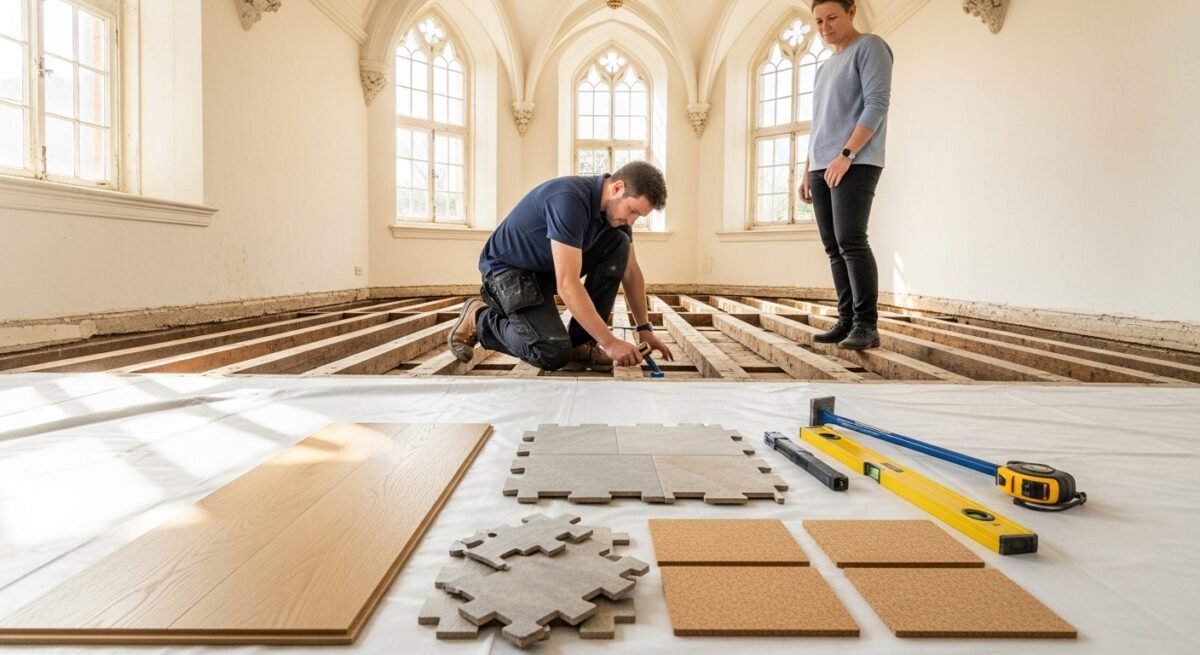
Flooring Replacement Options for Older Homes Explained
Explore the best flooring replacement options for older homes. Learn how to balance historic charm with modern durability and safety for a lasting upgrade.
By Alexia Mabel
Learn more about Floor Installation or Replacement for guides, costs, and what to expect.
Compare Floor Installation or Replacement Pros Near You

Enter your ZIP code to compare top-rated local professionals and request free quotes.
Your older home has character, history, and charm. But when it comes to the floors, you might be dealing with creaks, uneven surfaces, or outdated materials that no longer suit your lifestyle. Choosing new flooring isn’t just about looks; it’s about finding a solution that respects the home’s structure while bringing modern comfort and durability. This guide will walk you through the best options, what to consider, and how a professional approach ensures your home’s beauty and integrity last for years to come.
Schedule a free, in-home consultation to explore your options. Call 📞833-439-3727 or visit Get a Professional Assessment to get started.
A Simple Breakdown of Flooring Replacement Options for Older Homes
Replacing flooring in an older home is different from a new construction project. You’re working with a unique foundation,often original subfloors that may be uneven, have moisture variations, or hide historical layers. The goal is to select a material and installation method that addresses these quirks without compromising the home’s stability or aesthetic.
The right option balances historical appropriateness with modern performance. For example, you might want the authentic look of hardwood but need a material that handles a basement’s humidity. Understanding the core choices helps you make an informed decision that adds value and function.
Key Considerations Before You Choose
Before picking a material, a professional will assess three critical things: the subfloor condition, moisture levels, and the home’s overall structural integrity. This step prevents future problems like buckling, mold, or squeaks. It ensures your new flooring has a solid, lasting foundation.
Why It Matters for Homeowners
Getting your flooring right directly impacts your daily life. New, well-installed floors eliminate tripping hazards from uneven boards, reduce dust and allergens trapped in old carpets, and improve your home’s insulation,making it quieter and more energy-efficient. It’s an investment in your family’s safety and comfort.
Beyond livability, it protects your financial investment. Proper flooring replacement preserves the structural bones of your historic home and significantly boosts its resale value. Potential buyers appreciate the blend of classic charm with worry-free, modern flooring. Ignoring failing floors, on the other hand, can lead to costly structural repairs down the line.
Ready to explore flooring that honors your home’s past and secures its future? Our expert team is here to guide you from assessment to flawless installation. Schedule a free, in-home consultation today.
Common Issues and Their Causes
Older homes often present specific flooring challenges that stem from their age and construction methods. Recognizing these issues is the first step toward a successful replacement.
The most frequent problems include severe unevenness in the subfloor, persistent moisture from lacking modern vapor barriers, and the presence of multiple layers of old flooring. You might also encounter unexpected surprises like asbestos in old adhesives or lead paint on original wood, which require special handling.
- Uneven and Sagging Floors: Caused by settling over decades, joist shrinkage, or past water damage.
- Excessive Moisture: Basements and crawl spaces without proper encapsulation lead to wood rot and mold.
- Multiple Flooring Layers: Years of renovations can mean linoleum, tile, and carpet stacked over the original wood, creating height issues.
- Squeaks and Gaps: Nails loosening over time, wood planks drying out, and subfloor separation from joists.
How Professionals Fix the Problem
A professional flooring installation for an older home starts with a thorough inspection. We don’t just look at the surface; we assess the subfloor, check for level, and measure moisture content throughout the space. This diagnosis informs the entire plan.
The process then involves careful preparation. This may include:
- Safe Demolition and Disposal: Removing old layers, often by hand to avoid structural damage, with proper containment for hazardous materials.
- Subfloor Repair and Leveling: Sistering new joists to weak ones, using leveling compounds, or installing a new plywood underlayment to create a perfectly flat base.
- Moisture Mitigation: Installing vapor barriers, improving ventilation, or using moisture-resistant underlayments specific to the chosen flooring.
- Precision Installation: Using techniques that allow for natural expansion and contraction, ensuring a tight, secure, and beautiful finish.
Don’t tackle the complexities of an older home’s floors alone. Let our skilled technicians handle the prep and installation with precision. Learn more about our specialized flooring services.
Signs You Should Not Ignore
Your floors often give clear warnings before a minor issue becomes a major repair. Paying attention to these signs can save you time, money, and stress. It’s not just about aesthetics; it’s about the health of your home’s foundation.
If you notice any of the following, it’s time to consider a professional assessment for replacement. These symptoms indicate underlying problems that new surface flooring alone won’t fix.
Schedule a free, in-home consultation to explore your options. Call 📞833-439-3727 or visit Get a Professional Assessment to get started.
- Persistent, Loud Squeaks or Creaks: Especially when walking across normal traffic areas.
- Visible Sloping or Bouncing: When floors feel springy or you can see a noticeable dip.
- Warping, Cupping, or Buckling Boards: Signs of significant moisture intrusion or failure.
- Large Gaps or Cracked Tiles: Indicating excessive movement in the subfloor.
- A Musty Odor: Often signaling mold or mildew growth beneath the surface.
Cost Factors and What Affects Pricing
The cost of replacing flooring in an older home varies widely because each project is unique. The final price isn’t just about the square footage of new material; it’s heavily influenced by the condition of what’s underneath. Transparency about these factors helps you budget realistically.
Key elements that affect your quote include the extent of subfloor repair needed, the discovery and abatement of hazardous materials like asbestos, and the complexity of the installation around historic fixtures or irregular room shapes. The flooring material itself,from luxury vinyl plank to solid hardwood,is just one part of the equation.
Want a clear, upfront estimate tailored to your home’s specific needs? We provide detailed quotes that explain every cost, so there are no surprises. Get your free, no-obligation quote now.
How To Choose the Right Professional or Service
Selecting the right contractor is the most important decision in your flooring project. Look for a company with specific, proven experience in older homes. They should ask detailed questions about your home’s age, construction, and past issues during the initial consultation.
Always check for proper licensing and insurance, and ask for references from similar projects. A trustworthy professional will spend time explaining the preparation process, not just showcasing finish samples. They should provide a detailed written estimate that clearly separates material, labor, and potential prep-work costs.
Long-Term Benefits for Your Home
Investing in a proper flooring replacement pays dividends for years. You’ll enjoy improved home safety with level, secure surfaces that prevent falls. The right materials enhance indoor air quality by eliminating hiding spots for dust and allergens. Your energy bills may even decrease with better-insulated floors.
Most importantly, you protect the structural integrity and historical value of your property. You gain peace of mind knowing the job was done correctly, with materials suited to your home’s environment. This isn’t just a cosmetic update; it’s a foundational improvement that increases comfort, safety, and value for the long haul.
Frequently Asked Questions
Can I install new flooring directly over my old floors?
Sometimes, but it depends. A professional must check for levelness, moisture, and stability. Adding height can also cause issues with doors and transitions. In many older homes, removing old layers is best for a lasting result.
What is the most durable flooring for an old house?
For high durability and moisture resistance, luxury vinyl plank (LVP) is a top choice. Engineered hardwood is also excellent, as it’s more dimensionally stable than solid wood on uneven subfloors. The “best” choice depends on your specific room and subfloor condition.
How do you handle uneven floors in an old home?
Professionals use various techniques like grinding high spots, using self-leveling concrete compounds, or screwing down and reinforcing the subfloor. The method depends on how severe the unevenness is and the type of new flooring being installed.
Will replacing my floors be very disruptive?
There will be some disruption, but a professional team will contain the work area with dust barriers, follow a efficient schedule, and handle all debris removal. The timeline varies but is typically a few days to a week for most rooms.
Is it worth refinishing my original hardwood instead of replacing?
Absolutely, if the boards are thick enough and structurally sound. Refinishing preserves the home’s original character and can be more cost-effective. A professional can assess if your wood is a good candidate for sanding and sealing.
What flooring is best for a damp basement in an old home?
Moisture is the enemy. Porcelain tile, luxury vinyl plank (LVP), or engineered wood with a waterproof core are ideal choices. Proper subfloor preparation with a vapor barrier is critical in these spaces.
How long does a typical flooring replacement project take?
For an average-sized room, expect 2-4 days, including prep work. Larger areas or complex repairs may take a week. Your contractor should provide a clear timeline after the initial assessment.
Choosing new flooring for your older home is a significant step toward preserving its legacy while enhancing your daily life. With the right information and a trusted professional by your side, you can navigate this project with confidence. The result will be a beautiful, functional foundation that honors the past and welcomes the future for your family.
Schedule a free, in-home consultation to explore your options. Call 📞833-439-3727 or visit Get a Professional Assessment to get started.
Learn more about Floor Installation or Replacement for guides, costs, and what to expect.
Compare Floor Installation or Replacement Pros Near You
Enter your ZIP code to compare top-rated local professionals and request free quotes.