
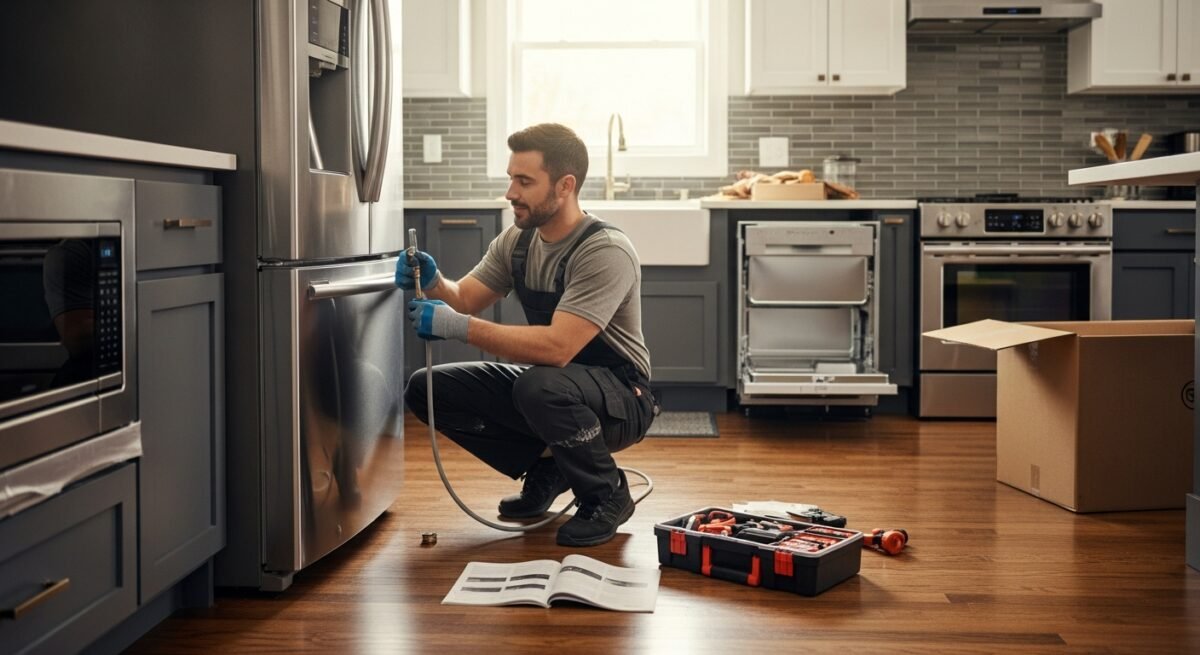
Appliance Installation Contractors for New Homeowners
Ensure your new home’s appliances are installed safely and correctly. Professional contractors prevent leaks, damage, and warranty voids for lasting peace of mind.
By Alexia Mabel
Learn more about Appliance Repair or Maintenance for guides, costs, and what to expect.
Compare Appliance Repair or Maintenance Pros Near You

Enter your ZIP code to compare top-rated local professionals and request free quotes.
Moving into a new home is exciting, but the final step—getting your brand-new appliances safely installed and running—can be surprisingly stressful. It’s not just plugging in a toaster. Modern refrigerators, ovens, washers, and dishwashers require precise hookups to water, gas, venting, and electrical systems. A small mistake during installation can lead to leaks, damage, or even safety hazards, turning your dream move into a costly headache.
Ensure a safe and seamless installation for your new home. Call 📞833-439-3727 or visit Schedule Professional Installation to schedule your professional appliance setup today.
A Simple Breakdown of Appliance Installation Contractors
Appliance installation contractors are specialized technicians who handle the delivery, setup, and initial testing of major household appliances. For a new home, this service is crucial because you’re often dealing with multiple high-value items that need to connect to your home’s permanent utilities all at once.
These professionals do much more than just unbox a machine. They ensure each appliance is level, securely connected, and functioning according to the manufacturer’s specifications and local building codes. This goes beyond basic DIY and requires specific tools, knowledge, and often certification, especially for gas lines or complex electrical work.
More Than Just a Hookup
Think of them as the bridge between your appliance purchase and its safe, long-term operation. They handle the heavy lifting, remove packaging, configure settings, and provide a final walk-through. For integrated or luxury appliances, their expertise in cabinetry fitting and custom installation is invaluable to achieve that seamless, built-in look.
Why Professional Installation Matters for Homeowners
Getting it right the first time protects your investment. Modern appliances are significant purchases, and their warranties often require professional installation to remain valid. An improper DIY job can void that warranty before you even use the appliance, leaving you fully responsible for any future repairs.
Safety is the paramount concern. Incorrectly connecting a gas range or dryer vent can create risks of carbon monoxide poisoning or fire. Water line connections that aren’t sealed properly can cause slow leaks behind walls, leading to mold and structural damage that you might not discover until it’s a major problem. A professional installer knows exactly what to look for and how to secure every connection.
Ultimately, hiring a specialist saves you time, prevents damage, and gives you peace of mind. You can focus on unpacking and settling in, confident that your kitchen and laundry room are ready for action without any hidden surprises. For even more integrated technology, our guide to smart home installation covers connecting these appliances into your home’s broader automated systems.
Common Installation Issues and Their Causes
Many post-installation problems stem from simple errors that a professional is trained to avoid. A frequent issue is an appliance that doesn’t seem to work at all upon first use, which is often due to a missed step like not turning on the water supply valve behind the refrigerator or forgetting to remove shipping bolts from a washing machine.
Improper leveling is another common culprit. A washer that isn’t level will vibrate excessively and “walk” across the floor during spin cycles, which is noisy and can damage floors and the machine itself. Similarly, a refrigerator that isn’t level may have doors that don’t seal or close properly, forcing the compressor to work harder and increasing energy bills.
- Water Leaks: Caused by loose hose connections, cracked supply lines, or missing drain hose clamps.
- Gas Odors: Result from poorly fitted gas line connections or using the wrong type of connector.
- Poor Performance: Often due to incorrect venting for dryers, inadequate electrical amperage for ovens, or kinked water lines for ice makers.
- Damage to Floors/Cabinets: Happens when heavy appliances are dragged instead of properly lifted and guided into place.
How Professional Contractors Fix the Problem
A professional installation follows a meticulous, step-by-step process designed to eliminate the issues mentioned above. It starts with a pre-installation site check. The contractor will verify that the space is ready—checking for the correct electrical outlet, water shut-off valve, gas line, or vent duct—before the appliance even arrives.
Once on site, the process is thorough. They carefully unpack the appliance, removing all internal and external packaging materials and shipping restraints. They then properly position the unit, using specialist tools like appliance dollies and leveling feet. Each connection is made with care: water lines are hand-tightened and then given a final quarter-turn with a wrench, gas lines are checked with leak detection solution, and vents are secured with proper clamps.
- Delivery & Inspection: Careful handling and inspection of the appliance for transit damage.
- Preparation & Connection: Setting up the utility connections, ensuring proper fittings and seals.
- Testing & Demonstration: Running the appliance through a full cycle, checking for leaks, unusual noises, and proper operation before showing you the basic controls.
Signs You Should Not Ignore After Installation
Even with a professional install, it’s wise to know what to watch for in the first few days of use. Some problems might manifest only after the appliance has run through several cycles. Being alert helps you catch minor issues before they escalate.
Any sign of water where it shouldn’t be is a red flag. Check for puddles or dampness under the dishwasher, refrigerator, or washing machine. For gas appliances, the smell of rotten eggs (added to natural gas) means you should turn off the gas supply at the appliance valve immediately and contact the installer or your gas company.
Ensure a safe and seamless installation for your new home. Call 📞833-439-3727 or visit Schedule Professional Installation to schedule your professional appliance setup today.
- Unusual Noises: Loud banging, grinding, or screeching from a new washer, dryer, or dishwasher.
- Inconsistent Operation: A refrigerator not cooling evenly, an oven that doesn’t reach set temperature, or a dryer that takes forever to dry clothes.
- Error Codes: Modern appliances will display specific error codes; note these down for your service provider.
- Excessive Vibration or Movement: Any appliance that shakes or moves significantly during operation.
Cost Factors and What Affects Pricing
The cost of professional appliance installation isn’t one-size-fits-all. The primary factor is the type and number of appliances. A basic refrigerator hookup (water line and plug-in) is typically less complex and costly than installing a gas range, which requires connecting a gas line and possibly adjusting cabinetry.
Other key factors include the need for additional parts or modifications. If your new home lacks the necessary outlet, water line, or vent, the contractor will need to install these, which adds to the project time and material cost. The complexity of the installation, such as navigating tight spaces, stairs, or installing built-in or integrated units that require custom fitting, will also influence the final price.
How To Choose the Right Installation Professional
Selecting the right contractor is as important as choosing the appliances themselves. Always verify that they are licensed, insured, and bonded. This protects you from liability in case of accidents and ensures they meet local regulatory standards, especially for gas and electrical work.
Look for experience with your specific appliance brands and models. Ask about their process: Do they offer a site check beforehand? Do they handle removal of old appliances and packaging? Read reviews from other new homeowners to see if they are noted for being punctual, careful, and thorough. A reputable contractor will be happy to answer all your questions and provide a detailed written estimate before starting work.
Long-Term Benefits for Your Home
Investing in professional installation pays dividends for years. Properly installed appliances operate more efficiently, which lowers your monthly utility bills. A well-vented dryer uses less energy, and a correctly leveled refrigerator lasts longer.
Most importantly, it ensures safety and preserves your manufacturer’s warranty. You gain the confidence that your family is safe from potential gas or electrical hazards, and you’re protected if an appliance defect arises. This foundational step in your new home sets the stage for reliable performance, preventing inconvenient breakdowns and costly emergency repairs down the line. For a holistic approach to your home’s systems, exploring options like professional smart home installation services can further enhance efficiency and convenience.
Frequently Asked Questions
Should I tip my appliance installation contractors?
Tipping is not generally expected for standard appliance installation services, as you are paying for a professional job. However, if the crew goes above and beyond—handling exceptionally difficult circumstances with great care and courtesy—a small tip or offering cold drinks is a kind gesture that is always appreciated.
How long does a typical new home appliance installation take?
For a single, standard appliance like a refrigerator or dishwasher, plan for about 1 to 1.5 hours. A full suite of kitchen appliances (range, dishwasher, refrigerator) may take 3 to 4 hours. Complex installations, like a gas cooktop or wall oven, or dealing with multiple units across the house, can take half a day or more.
Do I need to be home during the installation?
Yes, an adult homeowner or representative must be present for the entire installation. You need to provide access, approve any necessary modifications, sign paperwork, and receive the final demonstration on how to operate your new appliances.
What happens to the packaging and my old appliances?
Most professional installation services include removal of all new appliance packaging and, if arranged in advance, haul-away of your old appliances. Always confirm this service when booking, as there may be an additional fee for old appliance removal and recycling.
What if my new home isn’t “prepped” for the appliances?
A good contractor will identify this during a site check or at the start of the job. They can often perform the necessary prep work—like installing a new outlet, water line, or gas shut-off—but this will add to the project’s scope, time, and cost. It’s always best to verify requirements with your contractor before delivery day.
Can I install my own appliances to save money?
While you can install some plug-in appliances, we strongly advise against DIY for any appliance requiring water, gas, or 240-volt electrical connections. The risks of leaks, fire, gas exposure, and voided warranties far outweigh the potential savings. Professional installation is an investment in safety and longevity.
What is the most commonly missed step in DIY installation?
Failing to remove the shipping bolts or transit brackets from a washing machine is a very common and costly error. Running the washer with these in place causes massive, immediate internal damage. Professionals always check for and remove these restraints.
Do installers also handle the appliance warranty registration?
Typically, warranty registration is the homeowner’s responsibility. The installer may provide you with the necessary model and serial number information, but you should complete the registration with the manufacturer yourself to ensure coverage.
Starting life in your new home should be about excitement and comfort, not appliance anxiety. By trusting certified appliance installation contractors, you secure the safety, efficiency, and warranty of your major investments from day one. It’s the smart, final step to ensure your home is truly ready for you and your family to create lasting memories.
Ensure a safe and seamless installation for your new home. Call 📞833-439-3727 or visit Schedule Professional Installation to schedule your professional appliance setup today.
Learn more about Appliance Repair or Maintenance for guides, costs, and what to expect.
Compare Appliance Repair or Maintenance Pros Near You
Enter your ZIP code to compare top-rated local professionals and request free quotes.