
Wildfire Evacuation: Prepare Your Home and Repair Guide
Prepare your home for wildfire evacuation and repair with this practical guide. For contractor help, call (833)-439-3727.
By Danica Leslie
Learn more about General Contracting for guides, costs, and what to expect.
Compare General Contracting Pros Near You

Enter your ZIP code to compare top-rated local professionals and request free quotes.
When a wildfire evacuation order arrives, you may have minutes to act. The difference between a home that survives and one that does not often comes down to preparation done weeks or months earlier, not frantic decisions made in the final hour. This guide walks you through how to prepare your home for a wildfire evacuation and repair, covering everything from creating defensible space to documenting your property for insurance claims and rebuilding smarter after the flames are out.
Understanding Wildfire Risk and Your Home's Vulnerability
Wildfires do not discriminate, but they do follow patterns. Homes ignite from three primary pathways: direct flame contact, radiant heat, and ember showers. Of these, ember showers pose the greatest threat to most properties. Wind can carry burning embers more than a mile ahead of a fire front, and these tiny firebrands slip through vents, settle in gutters, and land on roofs. Understanding this reality shapes every preparation decision you make.
Your home's vulnerability depends on several factors: the materials used in its construction, the vegetation surrounding it, and the maintenance practices you follow. A home with a wood shake roof and unpruned shrubs pressed against the siding is far more likely to ignite than one with Class A roofing and a five-foot noncombustible perimeter. The good news is that most of these risk factors are within your control.
Before diving into specific preparations, assess your property honestly. Walk around your home and note where embers could enter, where vegetation touches or nearly touches the structure, and where debris accumulates. This assessment becomes your roadmap for the work ahead.
Creating Defensible Space: Your First Line of Defense
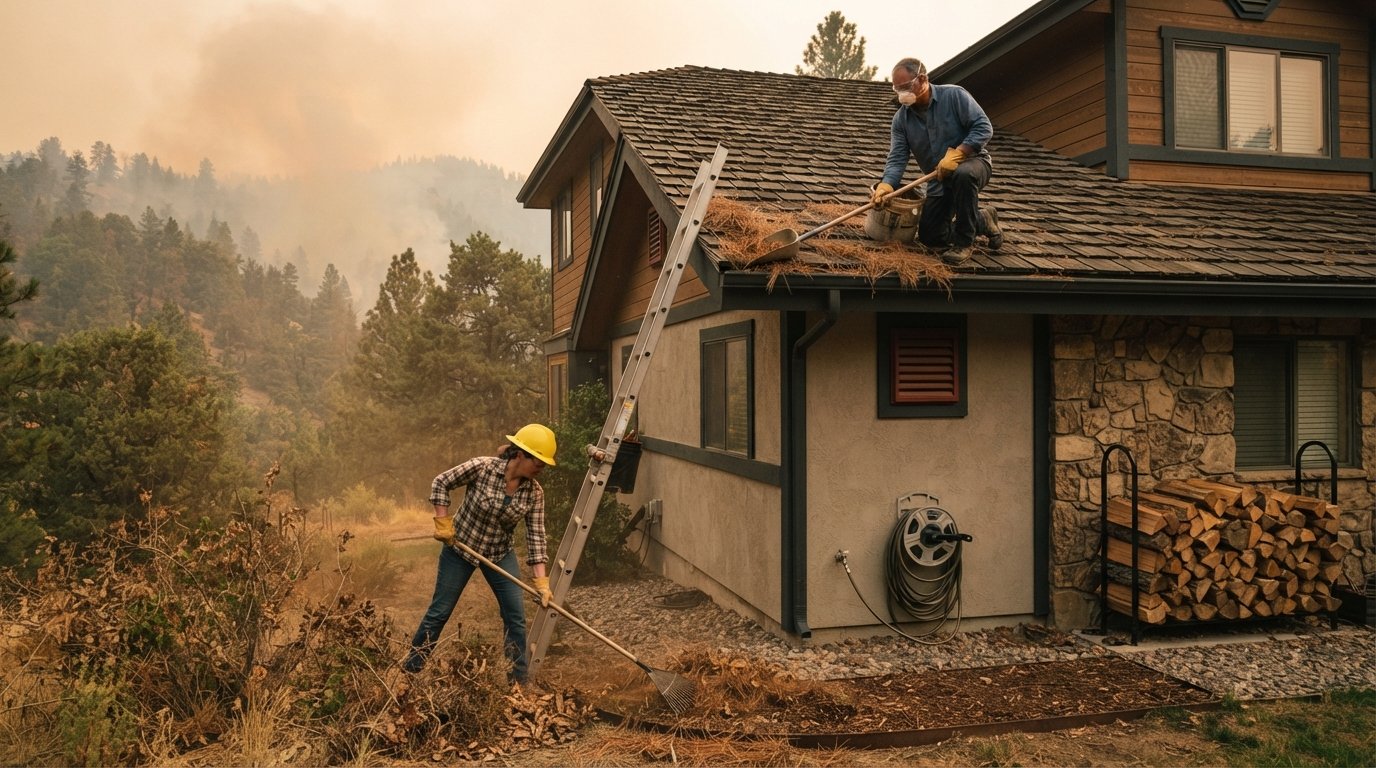
Defensible space is the buffer you create between your home and the grass, trees, shrubs, and any wildland area that surrounds it. This space slows or stops the spread of wildfire and protects your home from catching fire, either from direct flame contact or radiant heat. Most fire agencies recommend three zones of defensible space, each with specific requirements.
Zone 1, often called the ember-resistant zone, extends zero to five feet from your home's foundation. In this zone, use only noncombustible materials. Remove all vegetation except for isolated shrubs or trees, and ensure nothing flammable touches the structure. This includes mulch, which can smolder for hours and ignite siding. Replace bark mulch with gravel or stone.
Zone 2 extends five to thirty feet from the home. Here, maintain low-growing, well-irrigated plants. Remove dead vegetation, mow grass to four inches or less, and create horizontal and vertical spacing between shrubs and trees. The goal is to prevent fire from climbing from the ground into tree canopies, where it can spread rapidly.
Zone 3 extends thirty to one hundred feet or more, depending on your slope and local regulations. This zone focuses on reducing the density of vegetation and removing dead trees and debris. On steep slopes, extend your defensible space further, as fire moves uphill faster than on flat ground.
Creating and maintaining defensible space requires ongoing effort. Schedule regular cleanups, especially before fire season begins. For homeowners planning larger projects like roof replacement or siding upgrades, working with qualified contractors ensures the job is done safely and to code. Platforms like Homes.Contractors connect homeowners with pre-vetted local professionals who understand wildfire-resistant construction.
Retrofitting Your Home with Fire-Resistant Materials
If your home was built before modern fire codes, retrofitting with fire-resistant materials can dramatically improve its chances of survival. Start with the roof, which is the most vulnerable part of any structure during a wildfire. Class A roofing materials, including asphalt shingles, metal, tile, and slate, offer the highest resistance to fire. If you have a wood shake roof, replacing it should be a priority.
Next, address your vents. Standard attic and crawl space vents can allow embers to enter your home. Install ember-resistant vents with one-eighth-inch or smaller mesh screens, or use baffled vents that block embers while allowing airflow. Check dryer vents and any other openings that could admit embers.
Windows also matter. Dual-pane windows with tempered glass resist breaking from radiant heat better than single-pane windows. If replacing windows is not in your budget, consider installing fire-resistant shutters or screens. Similarly, ensure your garage door has a tight seal and consider upgrading to a fire-rated door if yours is older.
Decks and porches present another risk. Embers can lodge in the gaps between deck boards and ignite the framing beneath. Use fire-resistant decking materials or apply fire-retardant treatments to existing wood decks. Keep the area beneath decks clear of debris and consider enclosing the underside with noncombustible screening.
For homeowners budgeting for these upgrades, understanding contractor estimates is essential. A detailed contractor budget estimate guide can help you compare quotes and plan your spending effectively.
Preparing Your Home for Evacuation: A Step-by-Step Checklist
When an evacuation order comes, you need a plan you can execute under stress. Preparation done in advance makes this possible. The following steps outline what to do when wildfire threatens your area.
- Activate your evacuation plan. Know your route, have a meeting point, and ensure all family members know what to do. Keep your vehicle fueled and parked facing outward.
- Move flammable items inside or away from the home. Bring patio furniture, cushions, doormats, and trash bins inside. If you cannot bring them in, move them as far from the structure as possible.
- Close all windows, doors, and vents. This prevents embers from entering. Close fireplace dampers and any other openings.
- Shut off gas and propane. If instructed by authorities, turn off your gas meter and move propane tanks away from the structure.
- Leave interior lights on. This helps firefighters see your home through smoke. Leave exterior lights on as well if you have time.
- Document your home's condition. Take photos or video of each room and your property before you leave. This documentation is invaluable for insurance claims later.
- Evacuate early. Do not wait for a mandatory order if you feel threatened. Roads become congested quickly, and early departure saves lives.
After the fire passes, do not return until authorities declare it safe. Downed power lines, hot spots, and structural damage create serious hazards. When you do return, document everything before you begin cleanup. Your insurance company will need detailed records of the damage.
Navigating Insurance Claims After a Wildfire
Filing an insurance claim after a wildfire can feel overwhelming, but a systematic approach helps you maximize your recovery. Start by contacting your insurer as soon as possible. Many companies have dedicated catastrophe teams that mobilize after major fires. Provide your policy number and a summary of your situation.
Before cleanup begins, photograph and video every part of your property. Capture wide shots of each room and close-ups of damaged items. Create an inventory of lost or damaged possessions, including approximate values and dates of purchase if you can find receipts. This inventory supports your personal property claim.
Keep all receipts for expenses related to your evacuation and temporary housing. Most policies include additional living expenses coverage, which reimburses you for hotels, meals, and other costs incurred while you cannot live in your home. Track everything, even small purchases.
If your claim is denied or underpaid, you have options. Request a detailed explanation from your adjuster, and consider hiring a public adjuster who works on your behalf. In some states, you can appeal to the department of insurance. Do not accept a settlement until you understand what it covers and whether it reflects the true cost of rebuilding.
Repairing and Rebuilding After the Fire
Once the immediate crisis passes, the repair and rebuilding process begins. This phase requires patience, careful planning, and qualified contractors. If your home sustained partial damage, you may be able to repair rather than rebuild. If the damage is extensive, you will need to navigate permits, inspections, and construction from the ground up.
Start by hiring a licensed contractor experienced in post-fire reconstruction. These professionals understand the unique challenges of smoke damage, structural assessment, and working with insurance adjusters. Get multiple bids and compare them carefully. A thorough contractor budget estimate helps you understand where costs come from and whether a bid is reasonable.
When rebuilding, consider upgrading to fire-resistant materials and design features. This is your opportunity to build back better. Use Class A roofing, ember-resistant vents, and noncombustible siding. Create defensible space as part of your landscaping plan. These investments reduce future risk and may lower your insurance premiums.
Throughout the repair process, maintain detailed records. Keep copies of contracts, change orders, receipts, and correspondence with your insurer. If disputes arise, documentation protects your interests. Work with contractors who communicate clearly and provide written estimates before starting work.
Maintaining Wildfire Readiness Year-Round
Wildfire preparation is not a one-time task. It requires ongoing attention, especially in regions with extended fire seasons. Set a schedule for regular maintenance: clear gutters and roofs of debris, prune vegetation, and inspect your home for new vulnerabilities.
Stay informed about local fire conditions and evacuation zones. Sign up for emergency alerts and know your community's evacuation routes. Participate in neighborhood fire awareness programs if available. These steps keep you ready to act quickly when needed.
Review your insurance coverage annually. As construction costs rise, your policy limits may no longer reflect the true cost of rebuilding. Discuss inflation guard endorsements or increased dwelling coverage with your agent. Being underinsured can leave you covering a significant gap out of pocket.
Finally, connect with trusted contractors before you need them. Having a relationship with a reliable roofer, landscaper, or general contractor saves time when emergencies strike. Homes.Contractors makes it easy to find and compare local professionals, so you can build your network of trusted service providers today.
Building a Wildfire-Resilient Future
The threat of wildfire is not going away, but homeowners who prepare are not powerless. By creating defensible space, retrofitting with fire-resistant materials, and having a clear evacuation plan, you significantly improve your home's odds of survival. When damage does occur, understanding the insurance and repair process helps you recover faster and rebuild stronger.
Take action now, before the next red flag warning. Every hour spent preparing is an investment in your home's future and your family's safety. Whether you are clearing brush, upgrading your roof, or simply documenting your belongings, each step matters. Start today, and face fire season with confidence. PlanRemodel