
Storm Damage Emergency Repairs: What to Do First
Learn the critical first steps for storm damage emergency repairs, from documenting the damage to hiring pros, and how to protect your claim.
By Alexia Mabel
Learn more about Roof Repair or Maintenance for guides, costs, and what to expect.
Compare Roof Repair or Maintenance Pros Near You

Enter your ZIP code to compare top-rated local professionals and request free quotes.
When a severe storm tears through your neighborhood, the immediate aftermath can feel overwhelming. Between the sound of sirens, the sight of downed trees, and the steady drip of water through your ceiling, panic can easily set in. However, your actions in the first few hours after the storm passes can significantly impact your safety, your property's condition, and your insurance claim. This guide walks you through the critical steps for storm damage emergency repairs, what to do first, and how to protect your home from further harm while ensuring you are positioned for a fair recovery.
Assess Your Safety Before Anything Else
Your first priority is never the building itself; it is the safety of you and your family. Before you even think about tarping a roof or moving furniture, you must ensure that your immediate environment is secure. Downed power lines, structural instability, and gas leaks are all silent dangers that can turn a manageable emergency into a tragedy. If you suspect a gas leak, you may smell rotten eggs or hear a hissing sound. In that case, evacuate immediately and call your gas company from a safe distance. Similarly, if you see sparking wires or snapped poles, do not approach them. Assume they are live and call 911 right away.
Once you have established that the immediate area is safe, you should conduct a careful visual inspection of your home from the outside. Look for obvious signs of structural damage, such as a sagging roofline, cracks in the foundation, or a leaning chimney. If the structure looks compromised, do not re-enter the home. If it appears safe to enter, proceed with caution, using a flashlight to check for water around electrical panels and outlets. If you find standing water near any electrical source, turn off the main power breaker only if you can do so without stepping in water. If you cannot, call an electrician immediately.
Document the Damage Thoroughly for Your Insurance Claim
Once you have confirmed it is safe to move around, your next task is documentation. This step is critical for your insurance claim and should be done before you begin any storm damage emergency repairs. Your goal is to create a visual record of the damage that shows the storm's impact and the condition of your property. Start by taking wide-angle photos of the exterior of your home, capturing the roof, siding, windows, and yard. Then, move inside and document every affected room, including ceilings, walls, floors, and personal belongings. Do not move items or clean up before you have taken these photos; you need to show the adjuster the full extent of the mess.
In addition to photos, create a detailed written inventory of all damaged items. List each item, its approximate age, its original cost if you know it, and its current condition. This list will become the backbone of your claim. Be as specific as possible. For example, instead of writing "sofa," write "brown leather three-seat sofa, purchased in 2019 for $1,200, waterlogged and stained." This level of detail will help you get a more accurate settlement. For an in-depth look at the claims process, including how to handle your roof claim specifically, you can refer to our guide on storm damage roof claim steps.
Mitigate Further Damage with Temporary Repairs
After you have documented everything, your focus must shift to preventing additional damage. Insurance policies typically cover the cost of temporary repairs to protect your property from further harm, but they do not cover damage that occurs because you failed to make reasonable efforts to prevent it. This is where the "what to do first" part of storm damage emergency repairs becomes practical. Your immediate goal is to stop water from entering, secure openings, and stabilize unsafe conditions.
Here are the most common temporary repairs you may need to perform:
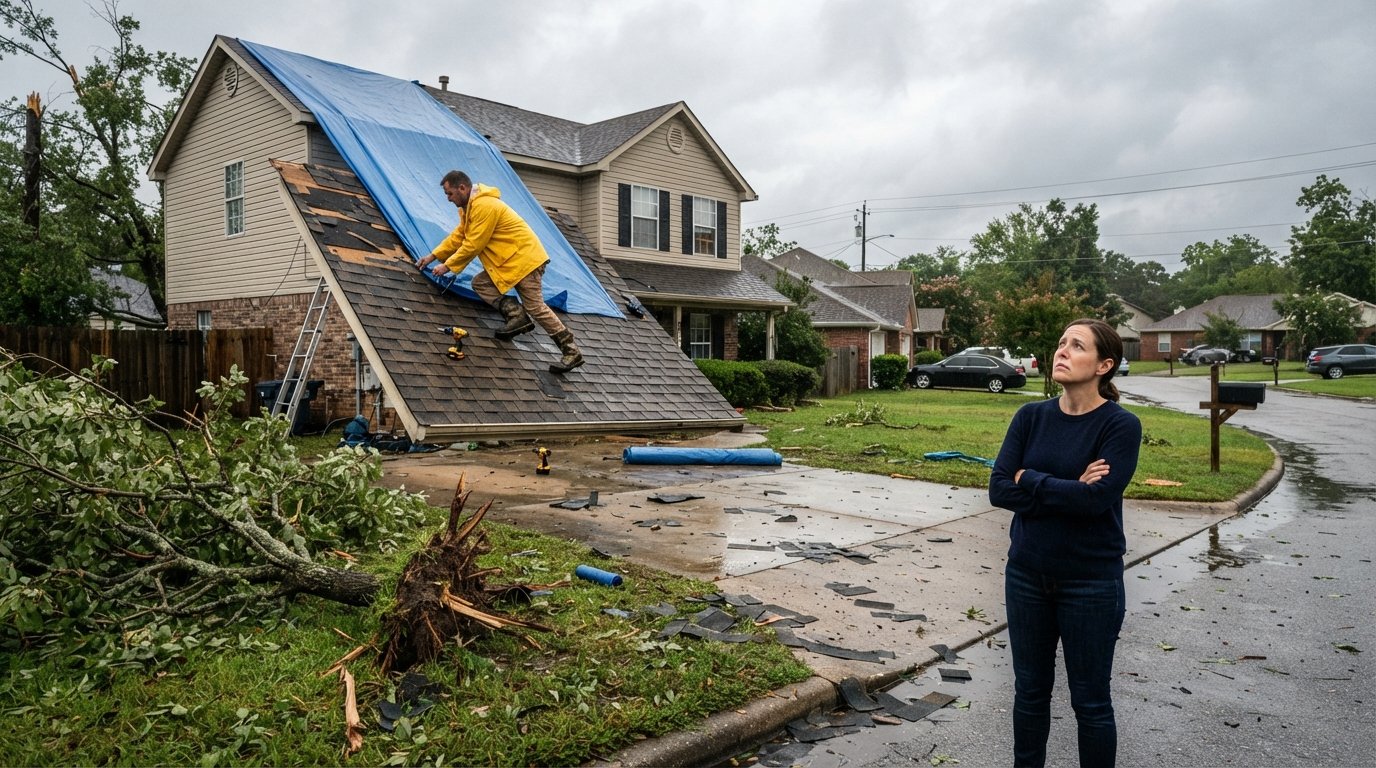
- Tarps for roof damage: If your roof has missing shingles or a visible hole, cover it with a heavy-duty tarp. Secure the tarp with lumber and nails, or use rope tied to sturdy anchors, to prevent wind from lifting it.
- Board up windows and doors: If a window is broken or a door is damaged, use plywood to board it up. This secures your home from intruders and prevents rain from blowing in.
- Water extraction: If there is standing water indoors, use a wet/dry vacuum or a sump pump to remove it. This is crucial to prevent mold growth and further structural damage.
- Turn off utilities: If you suspect a leak, turn off your main water valve. If there is an electrical hazard, turn off the power at the breaker panel.
- Move valuable items: Relocate furniture, electronics, and important documents to a dry, safe area away from leaks.
These temporary fixes are not just about keeping the elements out. They also demonstrate to your insurance company that you acted responsibly to minimize your loss. Keep all receipts for materials you purchase, such as tarps, plywood, and cleaning supplies, as these are reimbursable expenses under most policies. Do not attempt permanent repairs until your insurance adjuster has inspected the property, as this could invalidate your claim.
Hiring a Professional for Emergency Repairs
Some emergency repairs are too dangerous or complex for a homeowner to handle alone. For example, if a tree has fallen on your house, it is not a DIY job. You need a professional who can safely remove the tree and assess the structural integrity of your roof and framing. Similarly, if your electrical panel was flooded or your gas line is damaged, you must call licensed professionals. Attempting these repairs yourself can lead to severe injury or even death.
When hiring a contractor for storm damage emergency repairs, you need to act quickly but also carefully. In the aftermath of a storm, there is a surge in demand for services, and unfortunately, this is also a time when unlicensed and unscrupulous individuals may appear in the area. To protect yourself, always verify a contractor's license, insurance, and references before signing any agreement. A legitimate contractor will have no problem providing you with proof of coverage. You should also get multiple quotes, even in an emergency, to ensure you are not overcharged. Platforms like FreeQuotes.Contractors can help you connect with pre-screened local contractors who are ready to handle urgent repairs, saving you the risk of hiring an unknown door-to-door operator.
When you do hire a professional, make sure you get a written contract that outlines the scope of work, the materials to be used, the timeline, and the total cost. Be wary of contractors who demand a large upfront payment or who only accept cash. A typical deposit is a small percentage of the total cost, and the final payment should only be made once the work is completed to your satisfaction. Do not let the pressure of a damaged home force you into a bad decision. Taking an extra hour to vet a contractor is far better than dealing with shoddy workmanship or a legal dispute later.
Navigating the Insurance Claims Process
Filing a storm damage claim is a multi-step process that requires patience and organization. Once you have documented the damage and made temporary repairs, you should contact your insurance company to file a claim. Most insurers have a 24-hour claims hotline, so you can report the damage immediately, even if it is late at night. When you call, be prepared to provide your policy number, the address of the property, and a general description of the damage. The insurance company will then assign a claims adjuster to your case, who will contact you to schedule an inspection.
Before the adjuster arrives, you should have all your documentation ready, including your photo and video evidence, your inventory list, and receipts for any emergency repairs you have already made. Walk through the property with the adjuster and point out every piece of damage. Do not be afraid to ask questions or to challenge an estimate if you believe it is too low. Remember, the adjuster works for the insurance company, and their initial offer is not the final word. You have the right to negotiate, and you can also hire an independent public adjuster to represent your interests if you feel overwhelmed. However, public adjusters typically charge a fee, usually a percentage of your final settlement, so weigh that cost against the potential benefit.
It is also important to understand the difference between replacement cost and actual cash value. Replacement cost coverage will pay for the full cost of repairing or replacing your damaged property, minus your deductible, without deducting for depreciation. Actual cash value coverage, on the other hand, will only pay you the depreciated value of your items, which may be significantly less than what you need to replace them. Review your policy to see which type of coverage you have, and be prepared to discuss this with your adjuster. Your goal is to maximize your claim so you can rebuild your life without a significant financial burden.
Choosing the Right Contractor for Permanent Storm Damage Repairs
Once your insurance claim is approved, you will move from emergency repairs to permanent restoration. This is a larger project that requires careful contractor selection. In addition to verifying licenses and insurance, you should consider the contractor's experience with storm damage specifically. A roofer who has handled dozens of insurance claims will be more familiar with the process and can help you navigate the paperwork. They will also know how to properly document the damage and communicate with your adjuster.
When you have narrowed down your list of candidates, ask each one for a detailed written estimate. Compare the estimates line by line, looking at materials, labor, and timelines. Do not automatically choose the lowest bid; a low price can sometimes mean lower-quality materials or workmanship. Instead, look for a contractor who provides a clear, transparent breakdown and who communicates well. You should also ask for references from recent storm repair jobs and follow up with those homeowners to ask about their experience. This due diligence will give you peace of mind that your home is in good hands.
Finally, before you sign a contract, make sure the contractor will provide a warranty on both materials and labor. A typical warranty covers workmanship for one year and materials for the duration of the manufacturer's warranty. Get the warranty details in writing. With a qualified contractor and a clear contract, you can be confident that your home will be restored to its pre-storm condition, protecting your investment for years to come.
Dealing with storm damage is stressful, but taking the right steps in the first 24 hours can make a huge difference. From ensuring your family's safety to documenting the damage and securing your property, each action you take puts you in a stronger position for recovery. Remember to act promptly, stay organized, and never hesitate to call in professionals for dangerous tasks. With a clear plan, you can navigate this challenging time and emerge with your home and your finances intact.