
Spring HVAC Maintenance Tips for Homeowners
Spring HVAC maintenance tips for homeowners to cut energy bills, prevent breakdowns, and improve air quality before summer heat arrives.
By Danica Leslie
Learn more about Central Air Conditioning Repair or Maintenance for guides, costs, and what to expect.
Compare Central Air Conditioning Repair or Maintenance Pros Near You

Enter your ZIP code to compare top-rated local professionals and request free quotes.
As winter fades and warmer days arrive, your heating and cooling system deserves attention. Spring is the perfect time to prepare your HVAC unit for the heavy workload ahead, especially in regions where summer heat drives energy bills upward. Many homeowners overlook routine care until a breakdown occurs, but a little proactive effort now can prevent expensive emergency repairs later. By following a few practical spring HVAC maintenance tips for homeowners, you can extend the life of your equipment, improve indoor air quality, and keep your utility costs in check.
Your HVAC system works hard all year, cycling between heating and cooling while filtering dust, pollen, and other airborne particles. Over time, components become dirty, connections loosen, and refrigerant levels can drop. Without regular upkeep, efficiency declines, which means your system uses more energy to produce the same comfort. Worse, neglected systems are more likely to fail during peak usage periods, leaving you without air conditioning in the middle of July. The good news is that most maintenance tasks are simple and affordable, and many can be completed in a single afternoon.
Why Spring Maintenance Matters for Your HVAC System
Spring sits in a sweet spot between the demands of winter heating and summer cooling. This is the ideal window to address any issues that developed during the colder months and to optimize performance before the heat arrives. A well-maintained system runs more efficiently, which directly translates to lower monthly energy bills. According to the U.S. Department of Energy, proper maintenance can reduce HVAC energy consumption by 5% to 15%, a meaningful saving over the course of a cooling season.
Beyond cost savings, regular maintenance prevents unexpected breakdowns. A small problem, such as a worn capacitor or a dirty coil, can escalate into a major repair if left unchecked. By inspecting and servicing your system in spring, you catch these issues early, when they are inexpensive to fix. Additionally, a clean system promotes better indoor air quality, which is especially important for households with allergies or asthma. Pollen counts rise sharply in spring, and your HVAC system is your first line of defense against outdoor allergens entering your living space.
Step-by-Step Spring HVAC Maintenance Checklist
To make the process manageable, break your spring maintenance into a few key areas. Start with the simplest tasks and work your way toward more technical checks. If you are comfortable with basic tools and safety precautions, many of these steps can be done yourself. However, for anything involving refrigerant, electrical components, or gas connections, always call a licensed professional.
1. Replace or Clean the Air Filter
The air filter is the most important component for both efficiency and air quality. A clogged filter restricts airflow, forcing your blower to work harder and reducing cooling capacity. It also allows dust and debris to bypass the filter and settle on sensitive parts like the evaporator coil, which can lead to freeze-ups and reduced lifespan.
Check your filter every month during peak usage seasons and replace it at least every 90 days. If you have pets or live in a dusty area, change it more frequently. High-efficiency pleated filters capture smaller particles but can restrict airflow if they become dirty quickly, so choose the right MERV rating for your system and consult your owner's manual if unsure.
2. Clean the Condenser Coil and Unit Exterior
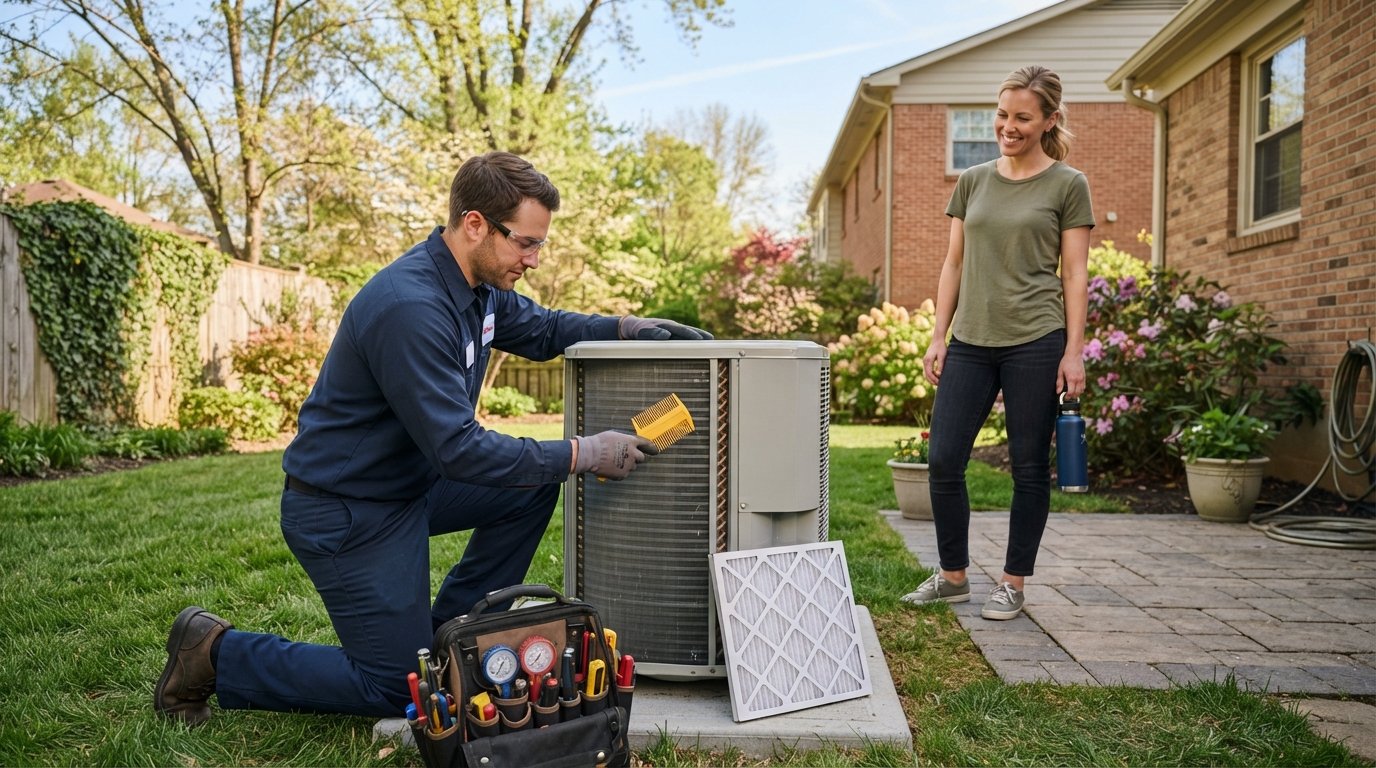
Your outdoor condenser unit works hard during summer, dissipating heat from the refrigerant. Over winter, leaves, grass clippings, and dirt accumulate on the coil fins, reducing heat transfer and making the system work harder. Turn off power to the unit at the disconnect switch, then gently clean the fins with a soft brush or vacuum attachment. Avoid using a pressure washer, as high water pressure can bend the delicate fins.
Also, trim back any shrubs, grass, or weeds so there is at least two feet of clearance around the unit. This ensures proper airflow and makes it easier for a technician to access the unit during repairs. Finally, check that the unit is level, as settling can cause the compressor to work inefficiently.
3. Inspect the Thermostat and Settings
Your thermostat controls the entire operation, so it deserves attention. If you have a programmable or smart model, verify that the cooling schedule aligns with your daily routine. Resetting the temperature for times when the house is empty can save a significant amount of energy.
For non-digital thermostats, remove the cover and gently dust the interior. Check that the anticipator setting matches your system's current rating. If you notice temperature inconsistencies between rooms, it may be time to upgrade to a smart thermostat that offers zoning capabilities. Many modern units also provide energy usage reports, helping you track performance.
4. Check the Condensate Drain Line
As your air conditioner removes humidity from the air, it produces condensation, which drains through a small pipe. Algae and mold can grow inside this drain, causing clogs that lead to water damage or shutdowns. Locate the drain line near your indoor unit, usually a PVC pipe running to a floor drain or outside. Inspect the end for any blockage and pour a cup of distilled vinegar into the line to break up slime. Do this quarterly to keep the line clear.
If you notice standing water near the indoor unit or a musty odor, the drain may already be clogged. A wet/dry vacuum can often clear the blockage. For persistent issues, consider installing a float switch safety device, which shuts off the system before overflow occurs.
5. Test the System Before the Heat Arrives
After completing the visual checks, turn the system back on and set the thermostat to cool. Let it run for at least 15 minutes and listen for unusual noises like grinding, squealing, or rattling, which indicate worn belts or loose parts. Feel the air coming from the vents; it should be noticeably cooler than room temperature. Check the outdoor unit to confirm the fan is spinning and warm air is blowing upward from the top.
If the system does not cool effectively, or if you notice ice forming on refrigerant lines, shut it off and call a professional. Running a damaged system can cause further harm to the compressor, which is the most expensive component to replace.
When to Call a Professional for Spring Service
While many maintenance tasks are DIY-friendly, some require the expertise of a licensed HVAC technician. Annual professional tune-ups are recommended, and spring is the perfect time to schedule one. A technician will perform a comprehensive check that includes measuring refrigerant levels, testing electrical connections, lubricating moving parts, and verifying safety controls. They can also detect carbon monoxide leaks if you have a gas furnace.
If you have not had a professional inspection in over a year, or if your system is more than 10 years old, book a service call now. Technicians tend to be less busy in spring than in summer, so you will have better availability and possibly lower rates. When you search for a qualified contractor, use a platform that connects you with vetted professionals, such as our guide on seasonal home upkeep for broader home maintenance advice.
Before the technician arrives, write down any concerns you have noticed, such as unusual odors, uneven cooling, or high energy bills. Clear the area around your indoor unit and ensure the outdoor unit is accessible. This allows the technician to work efficiently and reduces the risk of an incomplete diagnosis.
Improve Efficiency with Smart Upgrades
Spring maintenance is also an opportunity to consider upgrades that enhance efficiency and comfort. One of the most impactful changes is installing a programmable or smart thermostat. These devices learn your schedule and adjust temperatures automatically, reducing energy waste when you are away. Some models even send alerts when your filter needs changing, helping you stay on track.
Another upgrade is sealing your ductwork. Leaky ducts can lose up to 30% of conditioned air before it reaches your living spaces. A professional can test your ducts and seal gaps with mastic or metal tape. This not only improves comfort but also reduces allergens that enter through leaks. Additionally, consider adding attic insulation if your home feels drafty in summer; proper insulation keeps cool air inside and reduces the load on your HVAC system.
For homeowners with older systems, spring is the time to evaluate whether a replacement is more cost-effective than repeated repairs. If your unit is over 15 years old and requires frequent fixes, a new high-efficiency model can pay for itself through lower energy bills. Look for systems with a SEER rating of 16 or higher, and check for rebates from your utility company or state government.
Seasonal Habits That Reduce Wear and Tear
Beyond the annual deep clean, daily habits can extend the life of your HVAC system. During spring, keep windows and doors closed on hot afternoons to prevent cool air from escaping. Use ceiling fans to circulate air, allowing you to set the thermostat a few degrees higher without sacrificing comfort. Close blinds or curtains on sunny windows to block solar heat gain.
Also, be mindful of what you place near your thermostat. Heat-generating appliances like lamps or televisions can trick the thermostat into running longer than necessary. Keep the area clear so the sensor reads the true room temperature. Finally, schedule regular filter changes every month during peak usage, even if you have a reminder system, because a clean filter is the single most cost-effective maintenance step.
The Financial and Comfort Benefits of Regular Maintenance
Investing a few hours each spring yields measurable returns. A well-maintained system can operate at near-peak efficiency, reducing your cooling costs by up to 15%. At an average annual cooling bill of $500, that is a saving of $75 per year, which quickly adds up. More importantly, you avoid the inconvenience and expense of emergency repairs, which often cost several hundred dollars for a simple service call.
Comfort is another major benefit. A clean system cools your home more evenly, eliminating hot spots and humidity issues. Proper airflow also reduces the strain on your blower motor, meaning fewer breakdowns and a longer overall system lifespan. With average HVAC system lifespan between 15 and 20 years, regular maintenance can help you get the most out of your investment.
Finally, regular maintenance supports better indoor air quality. Clean filters and coils remove allergens, dust, and mold spores from the air, which is especially important for allergy sufferers. Breathing easier and sleeping better are intangible benefits that are just as valuable as dollar savings.
When to Consider a Full System Replacement
Even with diligent maintenance, every system reaches the end of its useful life. If your HVAC unit is more than 15 years old and requires frequent repairs, or if your energy bills are steadily climbing despite maintenance, it may be time to replace it. Newer models are significantly more efficient, with SEER ratings up to 26, and they use environmentally friendlier refrigerants.
Replacement is also worth considering if your system uses R-22 refrigerant, which is being phased out and becomes increasingly expensive to handle. A professional can evaluate your home's cooling load and recommend the right size system. An oversized unit will short-cycle, wasting energy, while an undersized unit will run constantly, failing to cool effectively. Proper sizing is critical for both efficiency and comfort.
When you decide to replace, use a referral service to compare quotes from multiple contractors. Obtain at least three estimates, and ask about warranties and energy rebates. A reputable contractor will perform a Manual J calculation to determine the correct capacity, rather than guessing based on square footage alone.
Prioritize Spring HVAC Maintenance for Year-Round Peace of Mind
Spring HVAC maintenance is not just about preparing for summer; it is about protecting one of the most expensive systems in your home. By following the steps outlined in this article, you can ensure your system runs efficiently, lasts longer, and keeps your family comfortable. Whether you choose to handle the basics yourself or hire a professional for a full tune-up, the effort pays off in lower bills, fewer repairs, and better indoor air quality.
Remember to schedule your maintenance before the peak season arrives, as technicians become busier and less flexible as temperatures rise. If you are looking for a trusted contractor to perform a comprehensive inspection, platforms like USremodel connect you with qualified professionals in your area. Their network covers a wide range of home services, including HVAC repair and maintenance, so you can find the right expert for your needs.
Take the time this spring to give your HVAC system the care it deserves. A few simple steps now can save you hundreds of dollars and countless hours of discomfort later. Your home will stay cool, your energy bills will stay lower, and you will enjoy peace of mind knowing your system is ready for whatever the summer brings.
Learn more about Central Air Conditioning Repair or Maintenance for guides, costs, and what to expect.
Compare Central Air Conditioning Repair or Maintenance Pros Near You
Enter your ZIP code to compare top-rated local professionals and request free quotes.