
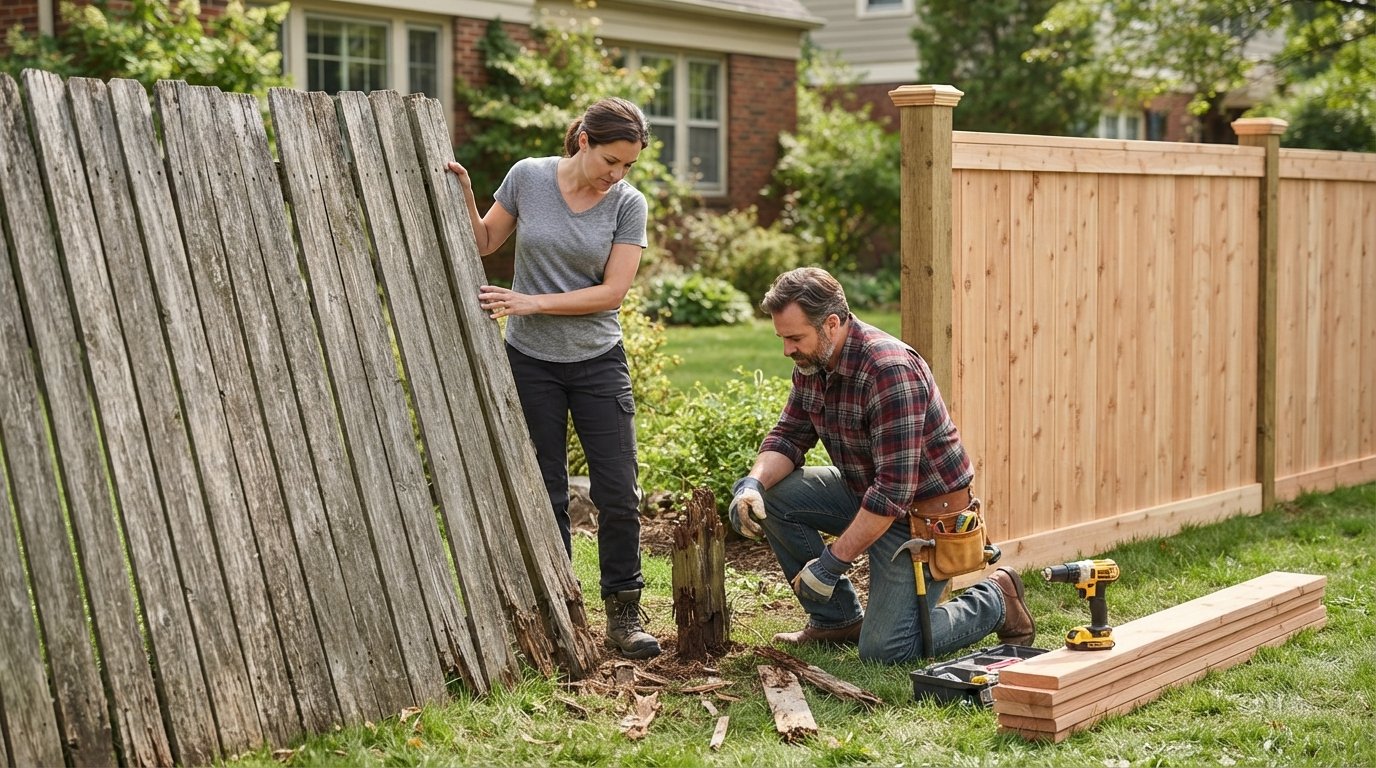
Fence Renovation Cost for Backyard Privacy: 2026 Guide
Discover what drives fence renovation cost for backyard privacy and learn how to plan a budget-friendly project that boosts your home's value.
By Danica Leslie
Learn more about Fence and Gate Installation for guides, costs, and what to expect.
Compare Fence and Gate Installation Pros Near You

Enter your ZIP code to compare top-rated local professionals and request free quotes.
Your backyard should be your sanctuary, a private retreat from the world. But when your fence starts to lean, rot, or show its age, that feeling of seclusion can quickly disappear. You might be staring at warped boards, wondering if a full replacement is inevitable or if a strategic renovation can restore both function and beauty. Understanding the true fence renovation cost for backyard privacy is the first step toward making a smart, budget-conscious decision that enhances your home's value and your daily comfort.
Renovating a fence is rarely a simple fix. It involves assessing structural integrity, choosing materials that balance durability with aesthetics, and often navigating local regulations. The final price tag can vary dramatically based on your location, the size of your yard, and the scope of work. This guide breaks down every cost factor, from material choices to labor rates, so you can approach your project with confidence and avoid surprise expenses.
Key Factors That Determine Your Total Project Cost
Before you get a single quote, it helps to understand what drives the price of a fence renovation. The national average for a full fence replacement ranges from $1,500 to $4,000, but this figure can climb higher for larger properties or premium materials. However, a renovation might cost significantly less if you only need to replace a few panels or posts. The most significant variables include the fence's linear footage, the height, the material, and the condition of the existing structure.
Labor costs are another major component, typically accounting for 50% to 70% of the total expense. Local labor rates vary, with urban areas often commanding higher prices. Additionally, if your old fence requires extensive demolition or if the ground is rocky and difficult to dig, expect your labor estimate to rise. You should also consider permit fees, which many municipalities require for fence work, and potential costs for removing and disposing of old materials.
To get an accurate picture, you need to evaluate your specific situation. Here are the primary factors that will shape your budget:
- Extent of Damage: A few rotten boards and a sagging gate are far cheaper to address than a fence with multiple leaning posts and widespread decay.
- Material Choice: Wood is generally the most affordable upfront, while vinyl, aluminum, and composite materials cost more but offer lower maintenance over time.
- Fence Height and Length: Taller fences and longer runs require more materials and labor, directly increasing your costs.
- Access and Terrain: Sloped yards, tight spaces, and existing landscaping can complicate installation and add to the price.
- Local Regulations: Permit fees, setback requirements, and homeowners association (HOA) rules can affect both your timeline and your budget.
Once you have a handle on these elements, you can start to estimate whether a partial repair or a complete replacement is more cost-effective. A professional contractor can provide a precise assessment, but understanding these basics will help you have a more informed conversation.
Material Costs: Choosing the Right Balance of Price and Privacy
Your choice of material is the single biggest factor in your fence renovation cost for backyard privacy. Each option offers a different trade-off between upfront price, lifespan, and maintenance. Let's examine the most popular choices for residential privacy fences.
Wood remains a classic and cost-effective choice. Cedar and redwood are naturally resistant to rot and insects, but they still require regular staining or sealing to maintain their appearance and structural integrity. Pressure-treated pine is more affordable but may warp or crack over time. A wood fence typically costs between $15 and $30 per linear foot for materials, with installation adding another $10 to $20 per foot.
Vinyl fencing has surged in popularity due to its low maintenance and long lifespan. It never needs painting or staining and resists rot, pests, and fading. The initial investment is higher, usually $20 to $40 per linear foot for materials, but the lack of ongoing upkeep can make it more economical over the long term. Vinyl also offers excellent privacy with no gaps between boards.
Composite fencing, made from a blend of wood fibers and recycled plastic, offers the look of wood without the maintenance. It is durable, eco-friendly, and resistant to moisture and insects, but it is also one of the most expensive options, often costing $30 to $45 per linear foot for materials alone. Aluminum and wrought iron are primarily used for decorative or security fencing, not privacy, as they have open designs. For solid privacy, wood, vinyl, or composite are your best bets.
Repair vs. Full Replacement: Which Saves You More?
One of the most critical decisions you will make is whether to repair your existing fence or tear it down and start fresh. A repair is often the more economical choice if the structural framework, specifically the posts, is still sound. Replacing a few pickets, a section of rails, or a damaged gate can cost anywhere from $200 to $800, depending on the extent of the work and the materials used.
However, repairs can become a money pit if the underlying problems are widespread. If multiple posts are rotting at the base, the entire fence is at risk of collapsing. In this case, patching individual sections is only a temporary solution. A full replacement ensures a uniform appearance and a new warranty, which can be invaluable for peace of mind. The cost of a full replacement is higher upfront but can prevent recurring expenses down the road.
Consider this example: a homeowner notices a few leaning panels and decides to replace just those sections. A year later, a post on the other side of the yard fails, requiring another repair. After several years of piecemeal fixes, they have spent nearly as much as a full replacement would have cost, and the fence still looks patchwork. In many cases, investing in a complete renovation or replacement is the wiser financial move, especially if your fence is over 15 years old.
To make an informed choice, have a professional inspect the fence. They can tell you exactly which parts are salvageable and which need to be replaced. This inspection is often free or low-cost, and it can save you from making a costly mistake.
Step-by-Step Guide to Planning Your Fence Renovation
Once you have decided to move forward, a structured plan will help you manage costs and avoid delays. Here is a practical step-by-step approach to planning your fence renovation:
- Assess Your Needs: Determine the primary goal. Is it privacy, security, or curb appeal? This will guide your material and height choices.
- Set a Realistic Budget: Based on your research and the factors above, establish a maximum budget. Include a 10% to 15% contingency for unexpected issues.
- Check Local Codes and HOA Rules: Contact your local building department to understand permit requirements and height restrictions. Review your HOA's guidelines to avoid fines or forced removal.
- Get Multiple Quotes: Reach out to at least three licensed and insured contractors. Ask for detailed, itemized quotes that break down material and labor costs.
- Schedule the Work: Plan the renovation for a time when the weather is favorable and your schedule allows for the project to be completed without rushing.
Following this plan will help you feel in control of the project. It also demonstrates to contractors that you are a serious, prepared client, which can lead to better communication and more accurate proposals. Remember, the cheapest quote is not always the best value; consider the contractor's reputation, experience, and warranty offerings.
When you are ready to gather quotes, platforms like ContractorHomeQuotes can simplify the process. They connect you with pre-vetted local professionals, making it easier to compare estimates and find a contractor who fits your needs and budget.
Hidden Costs and How to Avoid Them
Even with careful planning, unexpected expenses can arise. The most common hidden costs include underground utilities, which can be damaged during post-hole digging. Always call your local utility locating service before any excavation begins. This service is typically free, but ignoring it can result in expensive repairs and potential fines.
Another hidden cost is the disposal of old fencing materials. Some contractors include this in their quote, while others charge an extra fee. Make sure to ask about debris removal and recycling options. Additionally, if your soil is particularly rocky or clay-heavy, the contractor may need special equipment to dig post holes, adding to the labor cost.
Finally, don't forget about the cost of a new gate. If your renovation includes replacing a gate, the hardware and installation can add $150 to $500 to the total. Automated gate openers are even more expensive. By asking detailed questions upfront, you can minimize these surprises and ensure your final bill aligns with your initial estimate.
For a deeper dive into managing renovation budgets and maximizing your return on investment, you might find our guide on bathroom renovation costs and ROI helpful, as it shares similar principles of cost planning and value assessment.
DIY vs. Hiring a Professional: A Cost-Benefit Analysis
The temptation to save money by doing the work yourself is strong, especially when you see labor costs on a quote. For a simple panel replacement, a DIY approach is feasible if you have the necessary tools and skills. However, a full fence installation is physically demanding and requires precise leveling, concrete setting, and alignment. Mistakes can lead to a crooked fence that fails prematurely, costing you more in the long run.
Hiring a professional ensures the job is done correctly and safely. Contractors have the experience to handle challenging terrain, local building codes, and unexpected complications. They also carry insurance, protecting you from liability if an accident occurs on your property. While you pay a premium for this expertise, it often translates to a longer-lasting, more attractive fence.
Consider the value of your time as well. A professional crew can often complete a standard fence installation in a few days, whereas a DIY project might take you several weekends. If you have a busy schedule or lack experience with construction, hiring a pro is usually the more practical and cost-effective choice. For complex projects, the peace of mind alone justifies the expense.
When you decide to hire help, be sure to verify licenses and insurance, ask for references, and get everything in writing. A detailed contract protects both you and the contractor. By investing in professional installation, you are investing in the longevity and functionality of your new fence.
In conclusion, the fence renovation cost for backyard privacy is influenced by a complex mix of material, labor, and project scope. By taking the time to assess your needs, research your options, and gather competitive quotes, you can transform your outdoor space without breaking the bank. A well-planned renovation not only enhances your privacy and enjoyment but also adds lasting value to your home. Whether you choose a simple repair or a full replacement, the result will be a beautiful, functional boundary that you can appreciate for years to come.
Learn more about Fence and Gate Installation for guides, costs, and what to expect.
Compare Fence and Gate Installation Pros Near You
Enter your ZIP code to compare top-rated local professionals and request free quotes.