
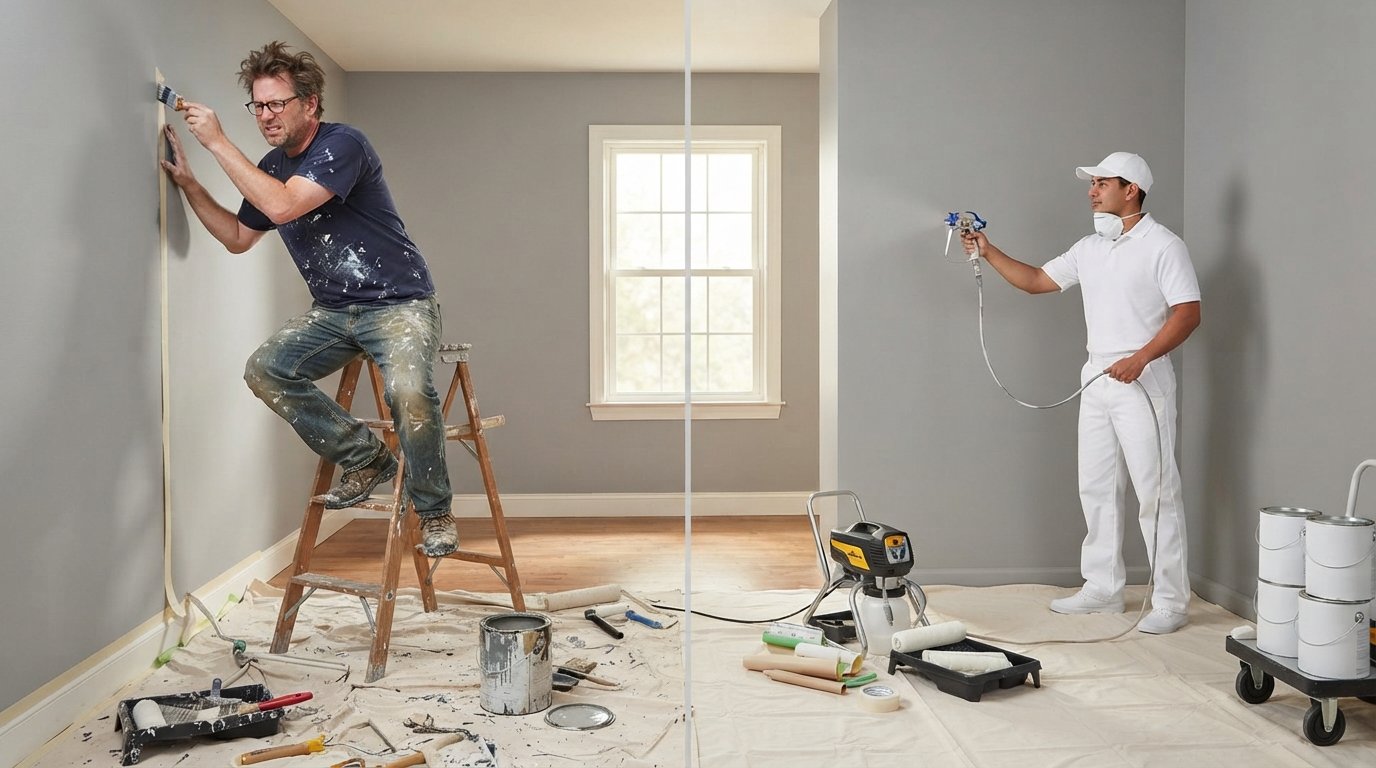
DIY vs Professional Painting: Cost Comparison
Weigh the true costs of DIY vs professional painting, including materials, labor, time, and hidden expenses, to make a smart choice for your home.
By Adnan Nazir
Learn more about Interior Painting for guides, costs, and what to expect.
Compare Interior Painting Pros Near You

Enter your ZIP code to compare top-rated local professionals and request free quotes.
When a fresh coat of paint can transform a room, the first question many homeowners ask is whether to pick up a brush themselves or hire a professional. The answer is rarely simple, because the true cost of painting goes far beyond the price of a gallon of paint. This article offers a detailed DIY vs professional painting cost comparison, breaking down materials, labor, time, and hidden expenses so you can make a confident choice for your home and budget.
Understanding the Real Costs of Painting
Painting seems straightforward: cover the walls, let it dry, and enjoy the new look. But the expenses add up quickly. A DIY project requires paint, primer, brushes, rollers, tape, drop cloths, and possibly ladders or extension poles. Professional painters, on the other hand, include these materials in their quotes, along with labor, preparation work, and cleanup. To compare fairly, you need to look at the total cost per square foot, not just the sticker price of paint.
On average, homeowners spend between $1.50 and $4.00 per square foot for professional interior painting, while DIY costs typically range from $0.50 to $1.50 per square foot for materials alone. That gap narrows when you factor in your time, the cost of tools you might need to buy, and the value of a flawless finish. For a 12x12 room with 400 square feet of wall space, a professional job might cost $600 to $1,600, whereas DIY could run $200 to $600 in supplies, plus your weekends.
Before you decide, consider the scope of your project. A single accent wall is a perfect DIY candidate, but a full exterior repaint or a two-story stairwell demands professional expertise. Our house painting guide explains how to assess prep work and hiring considerations in more detail.
DIY Painting: The Hidden Expenses
Many homeowners choose DIY to save money, but the savings can evaporate when you overlook certain costs. Here are the expenses that often surprise first-time painters:
- Tools and equipment: Brushes, rollers, trays, painter's tape, drop cloths, and a ladder can cost $100 or more. Quality tools are essential for a smooth finish, but they add to your upfront investment.
- Prep materials: Spackle, sandpaper, caulk, and primer are necessary for repairing cracks and ensuring adhesion. Skipping these steps leads to a poor finish and wasted paint.
- Paint quantity: You will likely buy more paint than you think. Two coats are standard, and textured walls absorb more paint. A gallon covers about 350 square feet, so a large room may need four to six gallons.
- Time and opportunity cost: Your hours have value. A professional crew finishes a room in a day, while DIY might take several weekends, especially if you have a busy schedule.
- Mistakes and rework: Uneven strokes, drips, and missed spots require extra paint and time to fix. In severe cases, you may need to hire a pro to correct the job, doubling your costs.
For small projects, these costs are manageable. For example, painting a single bathroom with a $40 paint kit and a few hours of your time is a satisfying weekend project. But when you scale up to a living room or an entire house, the hidden expenses multiply, and the risk of an amateur-looking result increases.
Professional Painting: What You Pay For
Professional painters charge more than the cost of materials, but their quotes reflect a comprehensive service. The typical price includes labor, which covers surface preparation, priming, cutting in, rolling, and cleanup. Professionals also bring commercial-grade equipment, such as sprayers and high-quality brushes, which produce a smoother, more durable finish than most DIY tools.
Another key benefit is experience. A professional knows how to handle tricky surfaces like popcorn ceilings, crown molding, or exterior siding. They also spot issues you might miss, such as water damage, mildew, or peeling paint that needs scraping. By addressing these problems before painting, they prevent costly repairs down the road.
Most reputable painters provide a detailed estimate that breaks down labor, materials, and any additional charges. This transparency allows you to compare bids and understand exactly what you are paying for. When you request quotes through a referral platform like Homes.Contractors, you can receive multiple estimates from pre-vetted local painters, making the comparison process easier.
Comparing Costs: Room by Room
To illustrate the difference, let us examine typical costs for common painting projects. These figures are national averages and may vary by region, paint quality, and labor rates.
Interior Room (12x12 Bedroom)
A standard 12x12 bedroom with 400 square feet of wall space usually takes a professional one to two days. A pro might charge $600 to $1,200, depending on ceiling height, trim work, and paint selection. DIY materials for this room cost roughly $150 to $300, but you will spend 10 to 20 hours of your time. If you value your weekend at $50 per hour, the true DIY cost approaches $650 to $1,300, nearly matching the professional quote.
Living Room and Hallway
Larger areas with open walls and high ceilings present more challenges. A professional might quote $1,000 to $2,500 for a combined living room and hallway, while DIY supplies run $300 to $600. However, the risk of uneven coverage on tall walls is high, and renting a ladder or scaffolding adds $50 to $150. The time commitment for a novice can stretch to three or four weekends, making professional help more attractive for busy homeowners.
Exterior of a Single-Story Home
Exterior painting is where the cost gap widens dramatically. A professional exterior job for a 1,500 square foot home might cost $2,500 to $5,000, including pressure washing, scraping, priming, and two coats of high-quality paint. DIY supplies for the same project could be $800 to $1,500, but you must factor in renting a pressure washer, buying a sprayer (or many brushes), and dealing with weather delays. The physical demands and safety risks of working on ladders are also significant.
For complex projects like this, hiring a professional is often the wiser investment, as a poor exterior paint job can lead to wood rot and costly structural repairs.
When DIY Makes Sense
DIY painting is not always the wrong choice. There are scenarios where rolling up your sleeves saves real money without sacrificing quality. Consider these situations:
- Small accent walls or touch-ups: A single wall or a few scuffed areas can be handled with a quart of paint and a brush in an afternoon.
- Low-stakes rooms: Guest bedrooms, home offices, or basements where minor imperfections are less noticeable are perfect for DIY.
- You have experience: If you have painted before and own quality tools, your efficiency and finish improve significantly.
- Your time is flexible: Retirees, stay-at-home parents, or those with ample free time can absorb the hours without stress.
In these cases, the DIY route can cut costs by 50% or more, especially if you already own ladders and brushes. Just be honest about your skill level and the project's complexity before committing.
When to Hire a Professional
Professional painters earn their fees in several key situations. If any of the following apply, it is usually worth the investment:
- Large or multi-story projects: Exteriors, stairwells, and rooms with vaulted ceilings require specialized equipment and safety training.
- Detailed trim and cabinets: Achieving crisp lines on crown molding or a smooth finish on kitchen cabinets takes practice and patience.
- Surface repairs needed: Cracks, holes, water stains, or peeling paint must be repaired before painting. Professionals are skilled at these prep tasks.
- Time constraints: If you need the job done quickly, a crew can finish in days what might take you weeks.
- Rental properties or resale: A flawless finish can increase property value and attract tenants or buyers, making professional quality a smart financial move.
When you decide to hire, use a service like 180Remodel to connect with experienced painting contractors who can provide accurate quotes and reliable workmanship. Their network of vetted professionals ensures you receive competitive bids without the hassle of searching blindly.
How to Get the Best Value
Whether you choose DIY or professional, you can control costs with smart planning. Start by getting multiple quotes from painters. A detailed estimate should list the paint brand, number of coats, prep work, and cleanup. Compare these bids carefully, not just the bottom line, because a low quote may mean thinner coats or skipped prep.
If you decide to paint yourself, invest in quality supplies. Cheap brushes and rollers leave streaks and shed fibers, ruining your finish. Buy primer and paint from reputable brands, and do not skip the prep work. Clean and sand surfaces, tape off trim, and use drop cloths to protect floors. These steps take time but prevent costly mistakes.
Another way to save with professionals is to do some prep yourself. You can move furniture, remove switch plates, and wash walls before the painter arrives. This reduces the crew's labor time, which is often the largest part of the quote. However, always ask the painter if they allow homeowner prep, as some prefer to handle all surfaces to guarantee their warranty.
Final Thoughts on DIY vs Professional Painting Cost Comparison
The right choice depends on your budget, skills, and the scope of your project. A DIY vs professional painting cost comparison shows that small, simple jobs favor the homeowner, while large or intricate projects often justify professional rates. The key is to calculate the total cost, including your time and the risk of mistakes, before making a decision.
For most homeowners, a balanced approach works best: tackle small rooms yourself, and call in professionals for the big jobs. This strategy keeps your renovation budget in check while ensuring the areas that matter most look polished and last for years. If you are ready to hire, request free quotes from local contractors through Homes.Contractors and compare offers to find the best fit for your home.
Learn more about Interior Painting for guides, costs, and what to expect.
Compare Interior Painting Pros Near You
Enter your ZIP code to compare top-rated local professionals and request free quotes.