
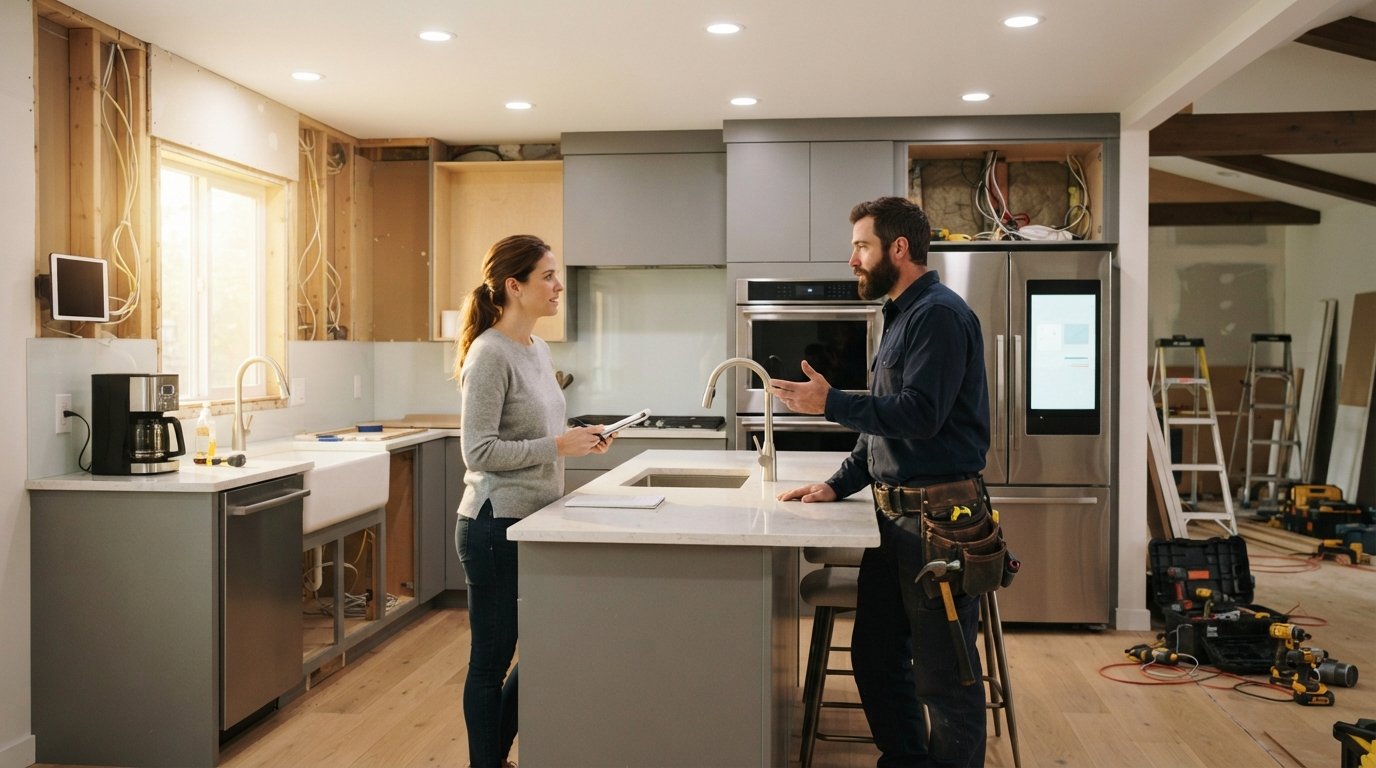
Smart Home Tech to Add in Your Kitchen Remodel
Discover the essential smart home technology to integrate during kitchen remodel for convenience, safety, and energy savings.
By Chelsea Kris
Learn more about Smart Home Installation or Repair for guides, costs, and what to expect.
Compare Smart Home Installation or Repair Pros Near You

Enter your ZIP code to compare top-rated local professionals and request free quotes.
Imagine walking into your kitchen and having the lights adjust to your preferred brightness, the coffee maker start brewing, and the oven preheat to the exact temperature you need, all before you even touch a switch. This is no longer a scene from a futuristic movie; it is the reality of a modern kitchen remodel. As you plan your renovation, integrating technology is not just about adding gadgets, it is about enhancing how you cook, entertain, and manage your daily life. This guide explores the essential smart home technology to integrate during kitchen remodel, ensuring your new space is beautiful, functional, and future-ready.
Before you select cabinet hardware or choose a backsplash, think about your daily routines and pain points. Do you struggle with meal planning? Are you worried about leaving the oven on? Do you want to monitor energy usage? Your answers will help you decide which technologies offer the most value. In this comprehensive guide, we will walk you through key considerations, from lighting and climate control to smart appliances and water safety, so you can prioritize features that align with your lifestyle and budget. We will also show you how to work with a contractor who understands these systems, turning your renovation into a seamless integration of style and smarts.
Why Integrate Smart Technology in Your Kitchen?
Integrating smart technology during a kitchen remodel is a strategic decision that offers numerous benefits beyond simple convenience. It can significantly increase your home's value, as modern buyers often look for energy-efficient and connected features. A smart kitchen can also save you money over time, primarily through optimized energy consumption. For example, smart lighting and thermostats adjust based on your presence and habits, reducing wasted electricity. Smart appliances are designed to operate more efficiently, and features like leak detectors can prevent costly water damage, which is one of the most common and expensive home insurance claims.
Beyond financial benefits, smart technology enhances safety and accessibility. You can control appliances remotely, turning off an oven or receiving an alert if the refrigerator door is left open. For families, this means peace of mind. For individuals with mobility challenges, voice control and automated features make the kitchen more usable and enjoyable. In fact, a well-planned smart kitchen can be a central part of an accessible home, allowing you to adjust lighting, check appliance status, or request help with a simple voice command.
When planning your remodel, it is helpful to understand that smart technology is not an all-or-nothing proposition. You can start with a few core elements and expand later. However, the key is to plan the infrastructure now, such as electrical wiring, network access points, and space for smart panels, because retrofitting these after the remodel is significantly more expensive and disruptive. This is why a thoughtful approach is essential, and you can learn more about strategic planning in our overview of kitchen remodeling contractor quotes and smart planning.
Core Systems to Plan for Before the Build
The most successful smart kitchen integrations start with a solid foundation. This means thinking about power, connectivity, and placement before the walls are closed up. Here are the core systems you should discuss with your contractor early in the design phase.
Electrical and Wiring Infrastructure
Smart devices require power, and many need a neutral wire for continuous connectivity. Your electrician should ensure that all switch boxes have a neutral wire, which is standard in newer homes but may be absent in older ones. For built-in appliances like a smart oven or refrigerator, dedicated circuits are a must. Also, consider installing USB-C charging outlets on the counter or inside drawers for your devices. Plan for additional outlets in unexpected places, such as under upper cabinets for under-cabinet lighting or inside a pantry for charging small appliances.
Reliable Wi-Fi and Network Coverage
A smart kitchen is only as good as its network. Kitchen appliances, from refrigerators to coffee makers, all compete for bandwidth, and a weak signal can lead to frustratingly unresponsive devices. Invest in a mesh Wi-Fi system that provides strong coverage throughout your home, especially in the kitchen, which is often located far from the router. If possible, run Ethernet cable to a central location in the kitchen for a dedicated access point. This ensures that your smart hub, streaming devices, and appliances have a stable, high-speed connection, which is critical for real-time monitoring and voice commands.
Smart Hubs and Voice Assistants
To unify all your smart devices, you will need a central hub. This could be a dedicated smart display (like an Amazon Echo Show or Google Nest Hub) or a compatible voice assistant. These devices serve as the control point for your entire kitchen ecosystem. You can use them to set timers, play podcasts, watch recipe videos, control lights, and even view camera feeds from your front door. During the remodel, plan a designated spot for your smart display on the counter, ideally near the main food prep area, with a dedicated power outlet and a clear line of sight for the screen.
Lighting and Climate Control: Setting the Mood and Saving Energy
Once your infrastructure is ready, you can start integrating smart systems that directly impact daily comfort and efficiency. Lighting and climate control are the two most impactful areas to start with because they are visible and usable every single day.
Smart Lighting for Function and Ambiance
Smart lighting goes far beyond turning lights on and off with your phone. It allows you to create scenes that match your activities. For instance, a "Cooking" scene might use bright, cool white light over the countertops, while a "Dining" scene dims the overhead fixtures and adds warm under-cabinet lighting. You can program these scenes to activate with a voice command or automatically at specific times of day. Motion sensors are also valuable in a kitchen, turning on lights as you enter and off when you leave, which is perfect for late-night snacks or when your hands are full. When choosing bulbs and fixtures, look for those that are compatible with your chosen smart home platform, such as Zigbee, Z-Wave, or Wi-Fi, and also consider the color temperature, as adjustable white light is a versatile feature.
Smart Thermostats and Ventilation
A smart thermostat is not exclusive to the living room; it plays a vital role in the kitchen's comfort. Cooking generates significant heat, and a smart thermostat can adjust the HVAC system to compensate. Some systems even have room-specific sensors, allowing you to balance temperatures between the kitchen and other areas. For ventilation, consider a smart range hood that automatically activates based on heat or smoke detection. This not only improves air quality but also reduces noise, as it can run at lower speeds when cooking is light and ramp up when needed. Integrating these with your smart home hub allows for voice control, such as "Turn on the exhaust fan" when you are searing a steak.
Smart Appliances: The Heart of the Connected Kitchen
When you think of a smart kitchen, appliances likely come to mind first. The market for smart refrigerators, ovens, and dishwashers has matured, offering features that genuinely enhance the cooking and cleaning experience. Here are the appliances that offer the most practical benefits.
- Smart Refrigerators: These often feature internal cameras so you can see what is inside from your phone at the grocery store, touchscreens for family calendars and recipes, and even the ability to order groceries. Look for models with energy-efficient compressors and door-in-door designs that preserve cold air.
- Smart Ovens and Ranges: Imagine preheating your oven on your drive home or receiving a notification when your roast reaches the perfect internal temperature. Smart ovens offer remote preheating, recipe-guided cooking, and voice control. Some models have built-in temperature probes that monitor the food and automatically adjust cooking time.
- Smart Dishwashers: These allow you to start a load from your phone, receive alerts when the cycle is done, and even schedule washes for off-peak energy hours. Some models have smart sensors that adjust water and detergent based on soil levels, saving resources.
- Smart Coffee Makers and Small Appliances: From coffee makers that sync with your alarm clock to smart slow cookers and air fryers, these smaller devices are easy to integrate and provide daily convenience.
When selecting appliances, decide early on the communication protocol you want to use. Most high-end appliances now support Wi-Fi and work with Alexa or Google Assistant. However, some may use proprietary apps. To avoid a fragmented experience, choose appliances that are compatible with your primary smart home ecosystem. Also, consider the energy rating. Smart appliances are typically more efficient, and you can track their energy usage through the manufacturer's app, helping you make adjustments to save money.
Enhancing Safety and Efficiency with Smart Sensors
Safety is a paramount concern in any kitchen, and smart technology offers powerful tools to protect your home and family. These systems are relatively low-cost and can be easily installed during a remodel. Moreover, they provide practical benefits that extend beyond mere monitoring, such as preventing small issues from becoming major disasters.
Water Leak Detectors
Water damage is a leading cause of home insurance claims, and the kitchen is a high-risk area. Installing water leak sensors under the sink, near the dishwasher, and behind the refrigerator can give you an early warning. These sensors can send an immediate alert to your phone and, in some systems, automatically shut off the main water valve to prevent flooding. This feature alone can save you thousands of dollars in potential repairs and is a wise investment during any remodel. Some advanced systems also monitor for humidity and temperature changes, which can indicate a hidden leak or a failure in your refrigerator's water line.
Smart Smoke and Carbon Monoxide Detectors
While standard detectors are essential, smart versions offer significant advantages. They can send alerts to your phone when you are not home, distinguish between smoke from cooking and a real fire, and even provide voice alerts that tell you the location of the danger. Interconnected smart detectors also communicate with each other, so if one alarm sounds in the basement, you hear the alert in the kitchen. This is particularly useful in larger homes. During the remodel, ensure these detectors are installed according to code and are positioned away from vents and cooking appliances to avoid false alarms.
Smart Plugs and Energy Monitoring
For smaller appliances and devices, smart plugs are an inexpensive way to gain control and monitor energy usage. You can turn off a crockpot that you forgot about, schedule coffee maker operation for the morning, or track how much energy your electric kettle consumes. These plugs can be integrated into your smart hub, allowing you to create routines. For example, you can set a "Goodnight" routine that turns off all non-essential kitchen plugs and ensures the lights are out. This level of control contributes to an efficient and safe home.
Entertainment and Connectivity: Making the Kitchen a Living Space
Modern kitchens are often the social heart of the home, and smart technology enhances this role. Integrating entertainment and communication tools makes the kitchen a place where you can cook, work, and connect with others.
Consider installing a built-in sound system or a high-quality smart speaker that can fill the room with music or podcasts. Many homeowners choose to add a television, either as a countertop model or a sleek mount under a cabinet. With a smart hub, you can control the media with your voice, pausing a show when the phone rings or switching to a recipe video without using your hands. Video calling is another popular feature, especially for families. Smart displays with cameras allow you to video chat with relatives while you cook, or you can check in on the kids doing homework at the island. These connectivity features transform the kitchen from a purely functional area into a versatile living space.
Step-by-Step Integration Plan for Your Remodel
Successfully integrating smart technology requires a systematic approach. Here is a step-by-step plan to guide you through the process, ensuring you do not miss critical details and that your investment is both effective and future-proof.
- Define Your Goals: Start by listing what you want to achieve. Is it convenience, energy savings, safety, or entertainment? This will help you prioritize and avoid spending on unnecessary features.
- Set a Realistic Budget: Smart technology can range from affordable sensors to high-end appliances. Allocate a specific portion of your remodel budget for tech. Remember to include costs for wiring, smart panels, and installation.
- Choose a Smart Home Platform: Early on, decide whether you will use Amazon Alexa, Google Home, Apple HomeKit, or another ecosystem. This choice will dictate which devices are compatible, so it is best to select your primary platform before buying anything.
- Consult with Your Contractor: Share your plans with your contractor and electrician. They need to know where you will place smart panels, outlets for hubs, and wiring for sensors. A professional will help you ensure code compliance and proper placement.
- Select and Purchase Devices: With your plan in place, choose devices that are compatible with your platform. Look for products that have good reviews for reliability and ease of use. Buy items like routers, smart switches, and sensors early, as they may be needed during rough-in.
- Install Infrastructure First: During the remodel, the electrician will install all necessary wiring, outlets, and wall boxes. Ensure that smart switches and dimmers are installed at this stage.
- Set Up and Test: After the cabinets and appliances are installed, set up your smart hub and connect each device. Test all functionalities, including voice commands and routines, to ensure everything works seamlessly together.
This step-by-step approach helps you avoid common pitfalls, such as buying devices that do not communicate with each other or realizing you forgot a needed outlet after the drywall is up. Working with a professional contractor who has experience with smart home installations is crucial. Companies like 180Remodel specialize in connecting homeowners with contractors who can handle these complex integrations, from initial planning to final setup.
Achieving a Truly Connected Kitchen
As you finalize your kitchen remodel plans, remember that the ultimate goal of smart technology is to create a space that is responsive to your needs and lifestyle. By carefully planning the infrastructure, selecting compatible devices, and focusing on systems that offer real benefits (such as energy savings, safety, and convenience), you will create a kitchen that is not only modern and stylish but also a joy to use every day. The integration of smart technology is an investment in your home's future, and when done thoughtfully, it enhances your daily routines and overall living experience.
Before you break ground, take the time to consult with a qualified contractor who can guide you through the technical aspects and help you make informed choices. With the right team and a solid plan, your remodeled kitchen will be a testament to the perfect blend of form and function, ready to support your culinary adventures and family gatherings for years to come.
Learn more about Smart Home Installation or Repair for guides, costs, and what to expect.
Compare Smart Home Installation or Repair Pros Near You
Enter your ZIP code to compare top-rated local professionals and request free quotes.