
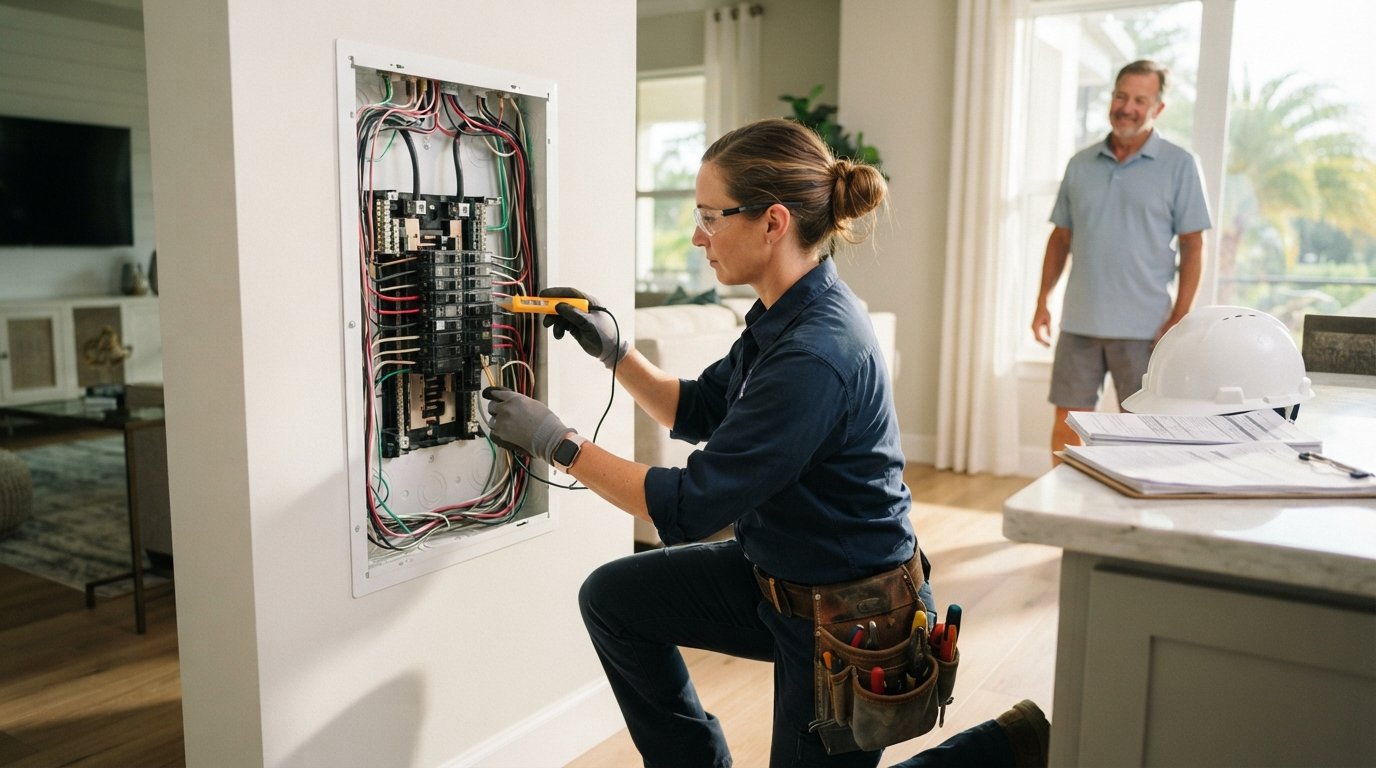
How to Find Licensed Electrician in Florida: 2026 Guide
Learn how to find licensed electrician in Florida with this step-by-step guide. Verify credentials, avoid scams, and hire a safe pro for your home.
By Adnan Nazir
Learn more about Electrical and Wiring Repair for guides, costs, and what to expect.
Compare Electrical and Wiring Repair Pros Near You

Enter your ZIP code to compare top-rated local professionals and request free quotes.
When a breaker keeps tripping or a light fixture flickers, the temptation to call the first handyman in your contacts is real. But in Florida, electrical work is regulated for a reason. Hiring an unlicensed contractor can lead to faulty wiring, failed inspections, and even house fires. More importantly, your homeowner's insurance may deny a claim if the work was performed without a proper license. This guide walks you through the exact steps to verify credentials, ask the right questions, and find a qualified professional who meets Florida's strict standards.
Why Florida's Licensing System Matters
Florida has one of the most structured contractor licensing systems in the country, overseen by the Department of Business and Professional Regulation (DBPR) and the Electrical Contracting Licensing Board (ECLB). Unlike many states where a single license covers all trades, Florida separates electrical licenses into distinct categories based on scope of work and experience level. Understanding these categories is the first step in learning how to find licensed electrician in Florida without wasting time on unqualified candidates.
An electrical contractor's license ensures the individual has passed rigorous exams, completed thousands of hours of supervised work, and carries liability insurance and workers' compensation. This protection matters because electrical errors are not always visible. A loose connection inside a wall can go unnoticed for months, then start a fire. A licensed electrician also pulls permits and schedules inspections, which provides an independent layer of safety that unlicensed workers simply skip.
Step-by-Step: How to Find Licensed Electrician in Florida
Step 1: Check the DBPR License Database
Every licensed electrical contractor in Florida is listed in the DBPR's online verification system. You can search by name, license number, or business name. Before you call anyone, run a search and confirm the license is active and in good standing. Look for any disciplinary actions, suspensions, or fines. A clean record is a strong indicator of reliability, while a history of violations should raise immediate red flags.
The database also tells you the exact license type. For example, an EC (Electrical Contractor) license allows the holder to work on commercial and residential projects, while an ER (Electrical Specialty Contractor) license covers limited categories like residential only. Knowing the difference helps you match the contractor to your project's needs, not just the license status.
Step 2: Verify Insurance and Bonding
A license alone does not protect you from property damage or on-the-job injuries. Florida requires licensed electrical contractors to carry general liability insurance and, if they have employees, workers' compensation coverage. Ask for a certificate of insurance directly from the contractor's carrier, not just a photocopy. The certificate should list your property address and the policy's effective dates. If the contractor hesitates or offers excuses, move on to the next candidate.
Bonding is another layer of financial protection. A license bond (often called a surety bond) ensures that the contractor will complete the work according to code and pay any fines or judgments. If the contractor abandons the job or does substandard work, you can file a claim against the bond to recover losses. This is especially important for larger projects, such as a full panel upgrade or a new home circuit installation.
Step 3: Ask for Local References and Recent Projects
While online reviews are helpful, they are not enough. A licensed electrician in Florida should be able to provide three to five references from jobs completed in the last six months. Call those references and ask about punctuality, communication, adherence to budget, and whether the city inspector passed the work on the first visit. Also, ask to see photos of recent panel upgrades or wiring jobs. A professional will be happy to share proof of their craftsmanship.
For larger jobs, you can also check with your local building department to see if the contractor has pulled permits on similar projects in your area. Frequent permit activity signals an established business that follows the rules. In contrast, a contractor who avoids permits may be cutting corners, which could cause major problems when you sell your home.
Key Differences: Licensed vs. Unlicensed Electricians
The gap between licensed and unlicensed electricians is not just about credentials. It often comes down to the quality of work and the long-term safety of your home. Licensed contractors are required to pass the National Electrical Code (NEC) exam every few years, ensuring they stay current with changing safety standards. Unlicensed workers may have years of practical experience, but they are not accountable to any regulatory body. If a fire occurs and the work was done by an unlicensed person, your insurance company can legally deny the claim, leaving you with thousands of dollars in repair costs.
Another critical difference is the ability to pull permits. In Florida, only licensed contractors can obtain an electrical permit from your local building department. Permits trigger inspections, which catch mistakes that might otherwise go undetected. Unlicensed work often skips this step entirely, which means no one ever verifies that the wiring is safe. Even if the work looks fine cosmetically, hidden errors can pose serious hazards.
Consider the financial angle as well. Unlicensed electricians often charge lower rates because they have no overhead for insurance, bonding, or continuing education. However, a single failed inspection or a future wiring fire will cost far more than any upfront savings. In the long run, hiring a licensed professional is the most cost-effective decision you can make for your home.
Red Flags to Avoid During Your Search
Even when you know how to find licensed electrician in Florida, you might still encounter a few bad actors. One common red flag is a contractor who demands full payment upfront or asks for cash only. Legitimate businesses typically require a deposit and then collect the balance upon completion. Another warning sign is a contractor who refuses to provide a written contract. A detailed contract protects both parties and should include the scope of work, materials list, timeline, payment schedule, and warranty terms.
Be cautious of bids that come in significantly lower than the competition. While everyone loves a bargain, an unusually low bid often means the contractor plans to use cheaper materials, skip permits, or rush through the job. A fair estimate reflects the cost of quality materials, labor, and overhead. Similarly, be wary of electricians who show up in an unmarked vehicle or cannot provide a physical business address. These are often signs of a fly-by-night operation that will disappear if problems arise.
Questions to Ask Every Candidate
To streamline your vetting process, prepare a list of questions before making calls. Here are five essentials:
- What is your exact license number, and when does it expire?
- Can you provide a certificate of insurance and a bond?
- Will you pull a permit for this project, and who schedules the inspection?
- Do you offer a workmanship warranty, and what does it cover?
- Can you provide three references from similar jobs completed in the last year?
Take notes during the conversation. A confident, experienced contractor will answer these questions without hesitation. Hesitation, vague responses, or attempts to change the subject are signs that the candidate may not be fully licensed or insured. Trust your instincts and move on if something feels off.
Local Rules and Variations Across Florida
Florida's licensing system is statewide, but local jurisdictions can add their own requirements. For example, Miami-Dade County and Broward County have separate certification processes for electrical contractors in addition to the state license. If you live in a large city or county, check with your local building department to see if additional permits or registrations are required. This is especially important for homeowners in unincorporated areas where county rules may differ from city rules.
Also, note that some municipalities require a local business tax receipt for contractors operating within their borders. While this is not a direct safety measure, it confirms that the contractor is formally established in your area. When you search for a licensed electrician in Florida, you can ask the contractor if they are registered with your local municipality. A professional who works in your area regularly will know the local code officials and inspection schedules, which often leads to smoother project approvals.
How to Handle Emergency Electrical Repairs
Electrical emergencies, such as a sparking outlet or a complete power outage, do not always allow time for a lengthy vetting process. Still, you can take quick steps to ensure you are calling a qualified professional. First, ask the dispatcher for the contractor's license number before they send anyone out. You can verify the license online while the electrician is driving to your home. Second, ask about overtime or emergency service fees upfront so you are not surprised by the final bill. Third, after the work is done, request a detailed invoice that includes the contractor's license number, the scope of work, and any warranty information.
For urgent but non-life-threatening issues, it is worth waiting a few extra hours to hire a licensed professional rather than accepting the first person who answers the phone. In our guide on finding licensed home contractors for safe repairs, we explain how to balance speed with thorough vetting. The same principles apply to electrical work, even in an emergency.
Cost Expectations for Licensed Electrical Work in Florida
Hiring a licensed electrician is an investment, but it is a predictable one. In 2026, Florida homeowners typically pay between $150 and $500 for minor repairs, such as installing a new outlet or replacing a light fixture. Larger projects, such as a panel upgrade or adding a new circuit, range from $1,000 to $3,500. Whole-home rewiring can cost anywhere from $8,000 to $20,000, depending on the size of the house and the complexity of the work. These figures are higher than what an unlicensed handyman might quote, but they include insurance, permits, inspections, and warranty coverage.
One way to protect your budget is to request multiple quotes. A reputable platform like 180Remodel connects you with pre-vetted contractors who provide free estimates for a range of home improvement projects. Comparing at least three bids helps you identify the fair market price for your job and gives you leverage in negotiations. Remember, the lowest bid is not always the best value. Look for a contractor who explains the cost breakdown clearly and answers your questions patiently.
Maintaining a Long-Term Relationship With Your Electrician
Once you find a reliable, licensed electrician, treat them as a valued partner. Keep their contact information in a home maintenance file, and do not hesitate to call for small follow-up issues. Many contractors offer a 1-year workmanship warranty, but they are more likely to honor it promptly if you have an ongoing relationship. Also, ask for maintenance tips after every job. Simple actions, like labeling your breaker panel and testing GFCI outlets monthly, can prevent future emergencies.
When you eventually plan a larger project, such as a kitchen remodel or a solar panel installation, your trusted electrician will already understand your home's wiring layout. This familiarity reduces the risk of miscommunication and ensures that the new work integrates seamlessly with existing systems. In the end, the effort you put into finding a licensed professional pays off through years of safe, reliable electrical service.
The process of learning how to find licensed electrician in Florida may seem tedious, but it is a small price for the safety of your family and your property. Start with the DBPR database, verify insurance and bonding, ask for references, and trust your instincts when something feels off. By following these steps, you will find a qualified expert who respects your home and your budget. And if a project ever feels overwhelming, remember that professional referral platforms exist to streamline the search, so you can focus on enjoying the results rather than worrying about the process.